 Ferndale Siding
 What Board and Batten Actually Is
Board and batten started as a practical way to cover a barn or outbuilding cheaply: wide vertical boards nailed up with the gaps between them covered by narrower strips, called battens, to keep wind and rain out. Over the last couple of decades it's moved from farm siding to one of the most requested looks on new builds and remodels in Whatcom County, especially on modern farmhouse and craftsman-style homes. The vertical lines read as clean and a little more custom than standard horizontal lap siding, and it pairs well as an accent on gables, dormers, and entry features even on homes that are lapped everywhere else.
The look is simple, but the way it's built matters more than most homeowners expect. Vertical siding handles water differently than horizontal lap, and how a contractor details the batten joints, the flashing behind them, and the gap behind the panel determines whether the siding looks good for thirty years or starts showing problems in five.
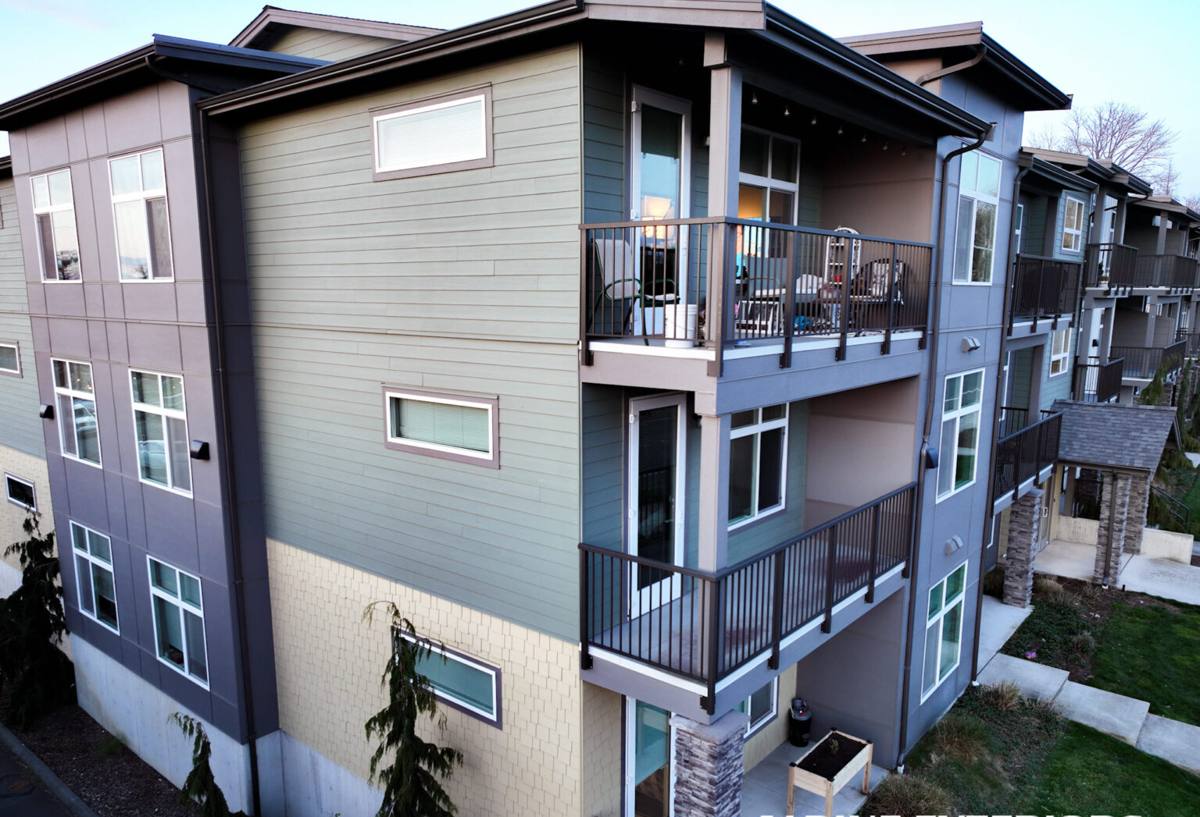
How Hardie Builds Board and Batten
James Hardie doesn't make individual boards and battens the way a mill would cut cedar. Instead, the system is built from HardiePanel vertical siding — a 4-by-8 or 4-by-10 fiber cement panel installed vertically — with separate batten strips fastened over the panel seams. This gives you the board-and-batten look with far fewer joints than true board siding, which means fewer places for water to find its way in.
Panel Textures
HardiePanel is available in a few surface textures, most commonly a smooth or lightly textured finish and a stucco-look texture. The texture is a style choice — it doesn't change the panel's performance — but it does change how the battens read against the field, so it's worth looking at samples in person rather than off a screen.
Batten Spacing and Reveal
Batten placement is usually set to a consistent spacing — commonly somewhere in the 12 to 16 inch range on center — which lines up with common stud spacing and keeps the proportions looking intentional rather than random. Wider spacing reads more modern and minimal; tighter spacing reads closer to the traditional farmhouse look. This is a decision worth making on paper before installation starts, since respacing after the fact means new panels.
Color and Finish
Almost all board and batten jobs we do use Hardie's ColorPlus finish — color baked onto the fiber cement at the factory under conditions a job-site paint crew can't replicate. That matters more on vertical siding than horizontal, because battens and panel edges catch light and weather differently than a lapped surface, and a factory finish holds its color and adhesion more evenly across those transitions. Hardie's ColorPlus palette includes both neutral farmhouse tones and deeper accent colors, which is part of why board and batten gets used as a contrast material against a home's main siding color.
Battens can be ordered in the same ColorPlus color as the panel for a monochrome look, or a contrasting trim color can be used to make the batten lines stand out. Either way, factory-finished edges reduce the number of field-cut, unpainted edges exposed to weather — which brings us to the part of board and batten that actually determines how it performs here.
Why the Detailing Matters More in Ferndale
Ferndale sits close enough to Bellingham Bay and the Strait of Georgia that salt-laden air is a real factor on the exterior of a home, and Whatcom County's rain doesn't just fall straight down — a lot of it comes in sideways off Pacific weather systems. Add in a moss season that can run most of the year on north- and west-facing walls, and you've got an environment that's genuinely harder on exterior materials than most of the country deals with.
Vertical siding is more exposed to driving rain along its length than horizontal lap, which is designed from the ground up to shed water downward, lap over lap. That's not a reason to avoid board and batten — it's a reason to insist on correct behind-the-scenes detailing.
What Correct Moisture Management Looks Like
- A rainscreen gap (typically furring strips or a drainage wrap) behind the panel so any moisture that gets past the surface can drain and dry instead of sitting against the sheathing
- Flashing or sealant at every horizontal joint where panels stack, not just at the top and bottom of a wall
- Battens fastened with enough gap or sealant at the panel seam to allow drainage rather than trapping water behind the strip
- All field-cut panel edges sealed or caulked before the batten goes over them, since a raw cut edge on fiber cement will wick moisture over time
- Careful flashing at window and door heads on vertical runs, where water is more likely to be moving down the wall in a continuous sheet
None of this shows up on a finished wall. It only shows up ten or fifteen years later, in the form of either a wall that's still tight and dry or one that isn't. We install every board and batten job with this detailing because it's the difference between the style holding up in this climate and it not.
Board and Batten Material Comparison
Board and batten shows up in several materials besides fiber cement. Here's how they generally compare for a coastal Whatcom County home:
| Material | Moisture behavior | Maintenance | Typical lifespan |
|---|---|---|---|
| James Hardie fiber cement | Non-combustible, dimensionally stable, doesn't rot; performance depends on correct rainscreen/flashing detail | Occasional rinse; ColorPlus finish resists fading and chalking | 30+ years with factory finish, longer with proper install |
| Vinyl board and batten | Won't rot, but panels expand/contract with temperature and can warp or bow over time | Low, but scratches and fades can't be spot-repaired | Variable; often shows UV wear sooner in bright, wide temperature swings |
| LP SmartSide (engineered wood) | Wood-based core; performs well when sealed edges stay intact, vulnerable if that seal fails | Field-applied paint needs monitoring and eventual repainting | Solid, but edge and seam integrity is the long-term risk factor |
| Real cedar board and batten | Natural material; absorbs and releases moisture, prone to cupping and checking in a wet climate | Requires regular refinishing/staining to hold up | Shorter without diligent upkeep in a marine climate |
We install James Hardie exclusively, so we're not a neutral source comparing these products in a vacuum — but the reasoning is straightforward. Fiber cement doesn't rot, doesn't attract wood-boring insects, and holds a factory finish through the kind of freeze-thaw and driving-rain cycles this area sees every winter, without the edge-sealing vulnerabilities of engineered wood or the expansion behavior of vinyl.
Installation Checklist for Board and Batten
If you're getting quotes for a board and batten project, these are the things worth asking any contractor about directly:
- Is there a drainage gap behind the panel, or is it installed flat against the wrap?
- How are horizontal panel joints flashed?
- Are cut edges sealed before the batten is installed over them?
- What's the fastening pattern — are battens fastened into studs, or just into the panel and sheathing?
- Is the batten spacing laid out and confirmed before any panel goes up?
- What warranty covers the ColorPlus finish separately from the siding substrate itself?
A contractor who can answer these without hesitation has done this before. A vague answer on flashing or drainage is the single biggest red flag on a board and batten quote.
Maintenance and Warranty
One of the practical advantages of Hardie board and batten is how little upkeep it asks for. An occasional rinse to knock off pollen, salt residue, and moss spores is generally all that's needed — there's no repainting cycle the way there is with wood or field-painted products. James Hardie backs the siding itself with a long-term non-prorated warranty, and the ColorPlus finish carries its own separate finish warranty covering fading and peeling. Both are transferable to a new owner if you sell, which matters if board and batten is part of a full exterior remodel rather than a small accent.
Cost Factors to Expect
Board and batten costs more than plain lap siding on the same wall, mainly because of the extra batten material and labor to install and align it. Rough cost drivers to expect in a quote:
| Factor | Why it moves the price |
|---|---|
| Batten spacing and quantity | Tighter spacing means more battens, more fasteners, more labor hours |
| Panel texture and color | Custom or less common ColorPlus colors can carry a premium over standard stock colors |
| Accent vs. full-house application | Board and batten used only on gables or an entry feature costs far less than covering an entire home |
| Wall height and accessibility | Two-story gables and steep rooflines add scaffolding and labor time |
| Existing wall condition | Sheathing repair or added rainscreen furring adds cost but is what makes the moisture detailing work |
We won't quote a made-up number here since every home and layout is different, but a homeowner should expect board and batten to run higher per square foot than standard horizontal Hardie lap, largely due to the batten labor rather than the base material.
If you're weighing board and batten for a full remodel, an accent gable, or a new build here in Ferndale, we're happy to walk the exterior with you, talk through spacing and color options, and put together a straightforward, no-pressure estimate.