 Ferndale Siding
 Birch Bay Sits Right at the Edge of the Weather
Birch Bay is one of the more exposed pockets of Whatcom County. The homes closest to the water take on a mix of conditions that inland Ferndale properties see in a milder form: salt-laden air off the bay, wind-driven rain that comes in sideways during winter storms, and long stretches of damp, low-light weather that keep exterior surfaces wet for days at a time. None of that is unusual for the Pacific Northwest coast, but it adds up differently on a house than it does a few miles inland, and it changes what "good siding" actually means for a Birch Bay property.
We work throughout Ferndale and the surrounding Whatcom County area, and Birch Bay is one of the neighborhoods where we see the clearest difference between exteriors that were built for this climate and exteriors that were built for a climate somewhere else. This page is about what that difference looks like and how we approach siding, roofing, windows, and decks on homes that sit closer to the salt air.
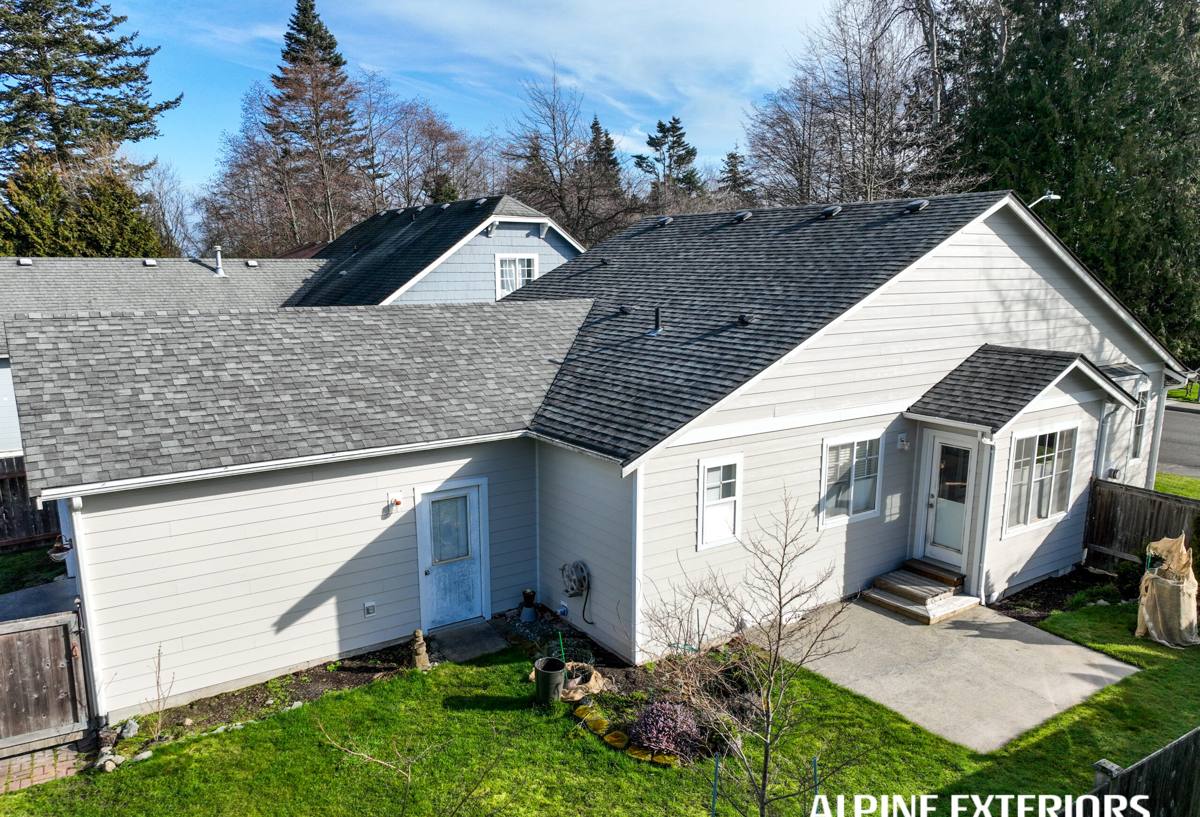
What Salt Air Actually Does to a House
Salt air is not just "humid air." It carries fine airborne salt that settles on every exterior surface — siding, trim, fasteners, flashing, window hardware, deck railings. Over time that salt does a few specific things:
- Corrodes exposed metal. Fasteners, hinges, screen frames, and any unprotected flashing corrode faster near the water than they would a few miles inland.
- Holds moisture against surfaces longer. Salt is hygroscopic — it pulls moisture out of the air and keeps surfaces damp even when it isn't actively raining.
- Accelerates finish breakdown. Paint and coatings that aren't formulated for coastal exposure tend to chalk, fade, and fail earlier near the bay than they do inland.
Combine that with the rain and moss pressure that's normal for Whatcom County, and a Birch Bay exterior is being asked to handle more than most manufacturers design for by default. That's a big part of why product selection matters more here than it does on a typical inland remodel.
Siding That's Built for This, Not Adapted to It
Why We Install Only James Hardie Fiber Cement
We standardized on James Hardie fiber cement siding for every home we work on, including the ones closest to the water in Birch Bay. Hardie is non-combustible, dimensionally stable, and manufactured in engineered HZ product lines built for specific climate zones — the HZ5 formulation used in our region is designed for freeze-thaw cycling and sustained moisture exposure rather than a generic, one-size-fits-all climate. The ColorPlus factory finish is baked on under controlled conditions and backed by a color warranty that outperforms most field-applied paint in coastal exposure, which matters directly for a neighborhood where salt air is hard on painted finishes.
We don't install LP SmartSide, vinyl siding, Cemplank, Allura, primed spruce, or cedar. That's a deliberate professional standard, not a knock on every homeowner who has one of those products on their house today. Each of those materials has real strengths. But we've made a call that on the coastal and rain-heavy conditions we build for, fiber cement from James Hardie gives us the most consistent, longest-lasting result, and we'd rather stand behind one product system we know thoroughly than install several we'd have to caveat.
What This Looks Like in Practice on a Birch Bay Home
On homes closer to the water, correct installation detail matters more than it does inland. That means proper flashing at every horizontal joint, a rainscreen or drainage gap where the wall assembly calls for it, stainless or hot-dip galvanized fasteners rated for coastal exposure, and careful attention to butt joints and trim intersections where wind-driven rain tends to find its way in. Hardie siding installed to manufacturer spec, with the right fastener and flashing details for a coastal exposure, is what gives a Birch Bay home the best shot at decades of low-drama performance.
Roofing in a Wet, Mossy Climate
Whatcom County's moss season is long, and Birch Bay's proximity to the water and tree cover in some areas keeps roofs damp longer than they'd stay in a drier, sunnier location. Moss and algae growth isn't just cosmetic — left unaddressed, moss holds moisture against roofing material and can work its way under shingle edges over time, shortening the life of the roof.
Our roofing work focuses on the details that matter most in this climate: proper ventilation so the roof deck can dry out between rain events, correct underlayment and flashing at valleys and penetrations, and material choices that hold up under sustained moisture rather than just looking good on a dry install day. We also talk homeowners through realistic moss management — what a reasonable maintenance interval looks like, and what's actually worth doing versus what's just upsell.
Windows: Where Wind-Driven Rain Finds the Gaps
Older or improperly flashed windows are one of the most common places we find hidden water damage on coastal Whatcom County homes. Wind-driven rain off the bay doesn't just fall on a window — it drives sideways and upward into the smallest gaps in trim, sealant, and flashing. A window that's fine on a calm day can leak during a winter storm if it wasn't installed with the right flashing sequence.
When we replace windows, we treat the flashing and integration with the surrounding siding as seriously as the window unit itself. A high-quality window installed with poor flashing detail will still leak; a modest window installed correctly, with proper head flashing and integration into the drainage plane, will usually outperform it. That installation discipline matters more in Birch Bay than it does on a sheltered inland lot.
Decks: Salt Air, Ground Contact, and Fastener Choice
Decks near the bay face their own version of the same problem: salt air accelerates corrosion on fasteners and hardware, and sustained moisture is hard on any wood that isn't properly treated or spaced for drainage. A few things matter more for a Birch Bay deck than they would elsewhere:
- Fasteners and structural hardware rated for coastal or salt-air exposure, not just standard exterior-grade.
- Proper board spacing and ledger flashing so water doesn't sit against the house or the deck framing.
- Material choice that accounts for the deck's sun exposure, tree cover, and distance from the water.
We walk each site individually — a deck tucked under trees a block off the water has different needs than one with open bay exposure — and spec the framing and fastener details accordingly rather than using the same generic approach everywhere.
How Siding Materials Compare Under Coastal Exposure
| Material | Behavior Near Salt Air | Finish Durability | Long-Term Maintenance |
|---|---|---|---|
| James Hardie fiber cement | Dimensionally stable, non-combustible, engineered HZ5 line for this region | Factory ColorPlus finish, warrantied against fading | Low — periodic cleaning, no repainting cycle in most cases |
| Vinyl siding | Can warp or become brittle with temperature swings; seams are a moisture entry point | Color is through-body but can chalk over time | Low labor, but limited repair options if damaged |
| Cedar | Natural material, absorbs moisture, needs consistent sealing near salt air | Requires refinishing on a recurring cycle | Higher — recurring stain/seal, more vulnerable to rot if neglected |
| Primed spruce/wood composites | Sensitive to sustained moisture exposure; primer is a maintenance-dependent barrier | Field-applied paint, prone to earlier failure in salt air | Higher — repainting cycle, moisture monitoring needed |
This isn't a claim that the other materials are unusable — plenty of homes around Whatcom County have them and are maintained well. It's a summary of why, given the specific exposure a Birch Bay home deals with, we've chosen to specialize in one product system rather than offer several with very different maintenance profiles.
Why a Local Crew Matters for This Neighborhood
A crew that works Whatcom County regularly knows which details actually matter in Birch Bay versus a drier, more sheltered part of the county. That shows up in small decisions — fastener spec, flashing sequence, how much drainage gap to build into a wall assembly — that a crew unfamiliar with coastal exposure might skip or underbuild. It also means we're not guessing about seasonal timing; we know when moss pressure builds, when storm season tends to hit, and how to sequence a project so it isn't caught mid-install by a bad weather window.
What to Ask Any Contractor Bidding Coastal Work
- What fastener and flashing spec do you use for homes near the water, and how does it differ from an inland install?
- Are you licensed and insured to work in Washington, and can you provide proof?
- What manufacturer warranty applies to the materials you're installing, and is it transferable?
- How do you handle drainage planes and rainscreen detailing on a re-side?
- Can you walk me through how you'd sequence this project around our typical winter weather?
A Simple Maintenance Checklist for Coastal Whatcom County Homes
- Rinse siding and trim periodically to remove salt buildup, especially on sides facing the water.
- Inspect and clear gutters before the fall rains arrive to keep water moving off the roof and away from siding.
- Check flashing at windows, doors, and deck ledgers annually for signs of gaps or corrosion.
- Address moss on roofing and decking before it spreads rather than after it's established.
- Inspect deck fasteners and hardware for corrosion, particularly on structures with direct bay exposure.
Regular attention like this is what keeps a well-built exterior performing for decades in a climate that doesn't give a house much of a break. Materials matter, but maintenance habits matter almost as much.
Get a Straight Answer for Your Birch Bay Property
Every home in Birch Bay sits a little differently relative to the water, tree cover, and prevailing wind, so a walkthrough tells us far more than a generic estimate ever could. If you're dealing with aging siding, a roof that's holding onto moss longer than it should, windows that leak in a storm, or a deck that's showing its age, we're happy to take a look and give you a straightforward, no-pressure assessment. Use the form below to request a free estimate.