 Ferndale Siding
 Composite Decking for Birch Bay Homes
Birch Bay sits right on the water, and that changes what a deck has to deal with compared to a build even a few miles inland. Salt-laden air, near-constant onshore moisture, and Whatcom County's long gray stretch of fall-through-spring rain all work on a deck at the same time. We build and replace composite decks for homeowners in this stretch of coastline out of our Ferndale shop, and the jobs here get detailed differently than a standard inland deck because the conditions demand it.
This page covers what composite decking actually needs to hold up in a Birch Bay setting, what a correctly built deck looks like under the surface, and how our process works from first look to final walk-through.
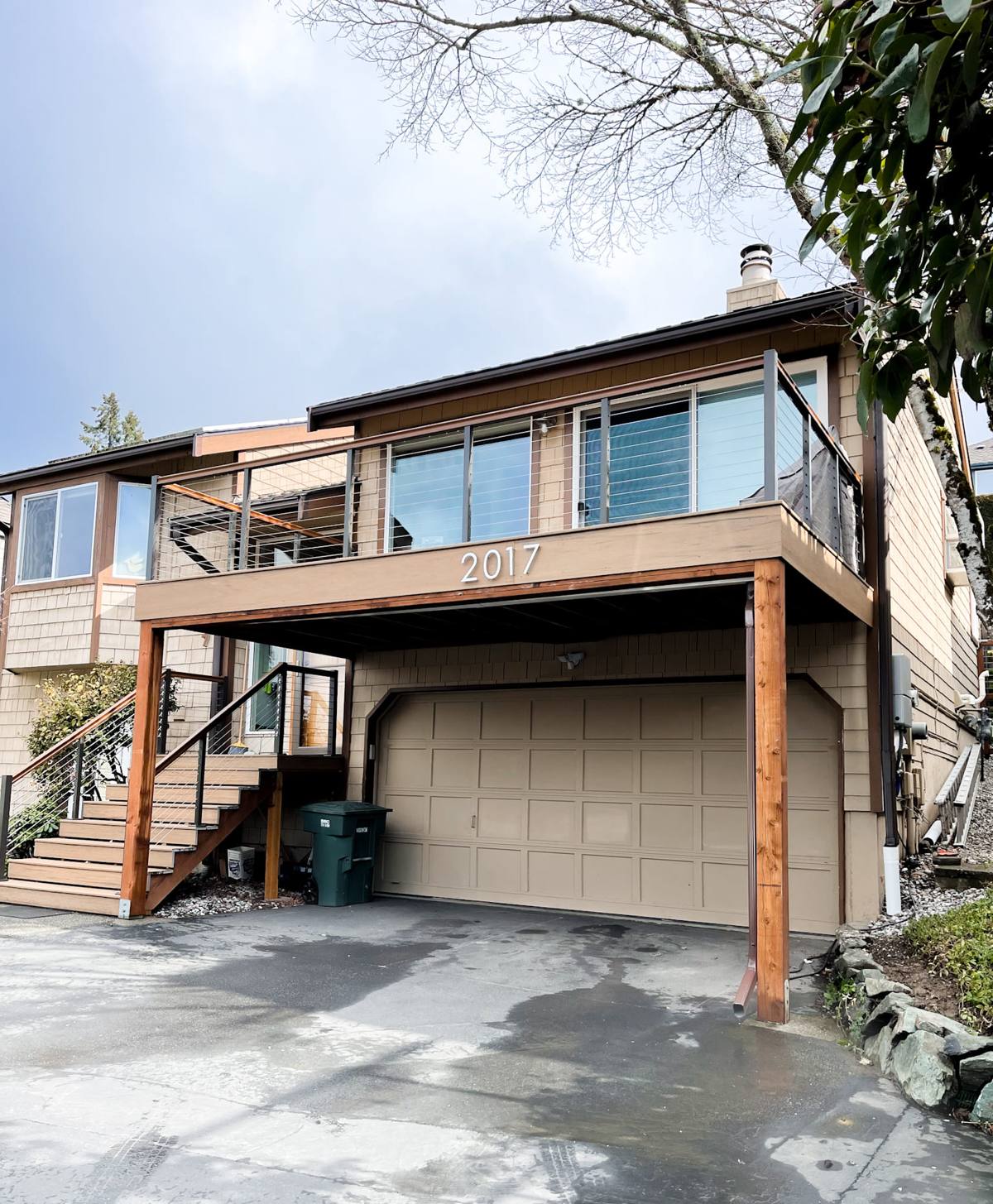
Why Birch Bay's Climate Is Harder on Decks
A few things stack up here that don't show up as strongly in other parts of Whatcom County:
- Salt air corrosion. Fasteners, joist hangers, and structural screws that would last decades inland can start corroding years sooner this close to Puget Sound if the wrong grade of hardware is used.
- Driving rain off the water. Wind-driven rain doesn't just fall on a deck, it gets pushed sideways into rail posts, ledger connections, and any gap where end-grain is exposed.
- Extended moss and algae season. Cool, damp, and shaded conditions for much of the year mean deck surfaces stay wet longer between dry spells, which is exactly what moss and mildew need to take hold.
- Temperature swings between seasons. Composite boards expand and contract with temperature. A deck built without the manufacturer's gap spec will buckle or gap unevenly once the weather turns.
None of this means composite decking is a bad fit for Birch Bay. It means the installation details matter more here than they would in a drier, more sheltered part of the county.
What Salt Air Does Specifically
Salt air accelerates corrosion on any exposed metal, but the damage is often hidden. A joist hanger or ledger bolt can look fine on the surface for a few years while it's actually thinning out from the inside. That's why hardware selection isn't a minor detail on a coastal build, it's one of the first decisions we make before a single board goes down.
What a Correctly Built Composite Deck Involves
Composite boards themselves are only part of the deck. The structure underneath and the hardware holding it together determine how long the whole system lasts, especially this close to the water.
Substructure and Framing
We frame with lumber rated for ground contact or exterior use, and on coastal jobs we're deliberate about joist spacing. Most composite manufacturers specify tighter joist spacing (commonly 12 inches on center for angled or picture-frame board patterns) than what's typical for wood decking, and skipping that spec is one of the most common causes of a bouncy or sagging composite deck a few years down the road.
Fasteners and Hardware
This is where a lot of corners get cut on coastal builds. We use stainless steel or coated fasteners rated for corrosive and treated-lumber contact, along with hidden fastener clip systems that are compatible with the specific board profile. Mixing incompatible metals (say, a standard galvanized screw against a stainless clip) sets up galvanic corrosion that eats away at the weaker metal, which is a slow failure you won't see until it's already a problem.
Moisture and Drainage Detail
Every ledger board connection to the house gets proper flashing so water is directed away from the wall framing, not into it. Under-deck drainage or spacing is planned so water doesn't pool against joists. On a covered or low-clearance deck near the water, we also think through airflow underneath, since stagnant damp air under a deck is what accelerates rot in the substructure even if the composite boards on top show nothing.
Expansion Gaps and Board Layout
Composite boards need consistent gapping at the ends and between boards to allow for thermal movement. We follow the manufacturer's spec exactly rather than eyeballing it, because an undersized gap is the most common reason a composite deck buckles after its first real heat wave or cold snap.
Comparing Composite to Other Decking Options in a Coastal Setting
Homeowners in Birch Bay often ask how composite stacks up against pressure-treated wood or cedar given the salt air and rain. Here's an honest breakdown based on how each material actually behaves in this environment.
| Material | Coastal Moisture Behavior | Maintenance | Typical Lifespan Here |
|---|---|---|---|
| Composite decking | Resists moisture absorption and doesn't rot; surface can still grow moss/mildew if not cleaned | Periodic cleaning, no staining or sealing | 25-30+ years with correct install |
| Pressure-treated wood | Absorbs moisture, prone to cupping and splitting in wet-dry cycles | Annual cleaning, re-staining/sealing every 2-3 years | 10-15 years before major repairs |
| Cedar | Naturally rot-resistant but still absorbs moisture; salt air accelerates graying | Regular sealing to maintain appearance and moisture resistance | 15-20 years with diligent upkeep |
We install all of these materials and won't tell a homeowner composite is the only right answer. Some people like the look and feel of real wood enough that they're willing to keep up with the maintenance. What we won't do is install any of these materials without the coastal-specific detailing above, because that's where the real difference in lifespan comes from, not just the board itself.
Choosing a Composite Board for a Birch Bay Deck
Not all composite products are built the same way, and the differences matter more here than in a sheltered inland yard.
Capped vs. Uncapped Composite
Fully capped composite boards have a polymer shell wrapped around the wood-fiber core, which blocks moisture from reaching the core and resists staining and fading. Uncapped or partially capped boards are more exposed at cut ends and edges. Given the amount of moisture Birch Bay sees, we generally steer homeowners toward fully capped products and pay close attention to sealing any exposed cut ends during installation, since a cut end is the one place moisture can still get into the core.
Color and Heat Considerations
Darker composite boards absorb more heat, which can matter on a west-facing deck that gets full afternoon sun. It's a smaller factor here than in hotter parts of the state, but worth a mention if bare feet on the deck matter to your household.
Surface Texture
A textured or grooved surface pattern helps with slip resistance, which is worth prioritizing on a deck that stays damp longer into the year from coastal humidity and shade.
Moss, Mildew, and Ongoing Care
Even the best-installed composite deck will get some moss or mildew growth in a Birch Bay location if it sits shaded and damp for months at a stretch. This isn't a defect in the product, it's biology responding to a wet, cool surface. The good news is composite doesn't rot or absorb the moisture the way wood does, so the fix is surface cleaning, not structural repair.
- Rinse and lightly brush the deck surface a few times during the wet season to keep organic buildup from setting in
- Keep gutters and downspouts near the deck clear so runoff isn't draining directly onto the boards
- Trim back overhanging branches or shrubs that keep sections of the deck shaded and slow to dry
- Use a composite-safe cleaner rather than a pressure washer on high setting, which can damage the board's cap layer
- Check railing posts and stair stringers annually for any sign of movement, which can indicate a hardware or connection issue underneath
Our Process for a Birch Bay Deck Project
Every coastal deck we build or replace follows the same sequence, adjusted for the specific site conditions.
- On-site assessment. We look at sun exposure, wind direction relative to the water, drainage slope, and the condition of any existing structure before recommending a plan.
- Material and hardware selection. Board profile, capping, and fastener grade are chosen together, not separately, so the whole system is matched to the site.
- Framing and structural work. Ledger flashing, joist spacing, and footing depth are set to code and to the manufacturer's spec for the board being installed.
- Installation with proper gapping. Boards go down with manufacturer-spec expansion gaps and hidden fastener systems where the product calls for them.
- Final walk-through. We go over basic care with the homeowner, including what to expect from moss and mildew in this climate and how to stay ahead of it.
Why a Crew That Already Works Birch Bay Matters
A deck built to a generic spec sheet without accounting for salt air, drainage, and wind-driven rain can look fine for the first year or two and then start showing problems that trace straight back to install-day shortcuts, corroding fasteners, an under-flashed ledger, or gapping that wasn't set for the actual temperature swings this area sees. We work this stretch of Whatcom County regularly enough to know which details can't be skipped here, and we build every coastal deck the same careful way whether it's a small platform off a back door or a full wraparound deck facing the water.
If you're planning a new composite deck or replacing an aging one in Birch Bay, we'd be glad to take a look and walk you through what your specific site needs. Reach out for a free, no-pressure estimate using the form below.