 Ferndale Siding
 Siding, Roofing, Windows, and Decks for Blaine Homes
Blaine sits at the northwest corner of Whatcom County, tucked between Semiahmoo Bay, Drayton Harbor, and the Canadian border. It's a different exposure than most of the county deals with — homes here catch onshore wind straight off the water, take on salt in the air, and sit under the same gray, wet stretch of fall-through-spring weather that defines this part of the Pacific Northwest. We're based in Ferndale and work throughout Whatcom County, and Blaine is a regular stop for us. We know what the exterior of a house looks like after a decade of this climate, and what it should look like instead.
Ferndale Siding Company handles siding, roofing, windows, and decks. For siding specifically, we install one product: James Hardie fiber cement. That's not a marketing angle — it's a standard we settled on after years of seeing which siding systems actually hold up in this exposure and which ones turn into a maintenance project.
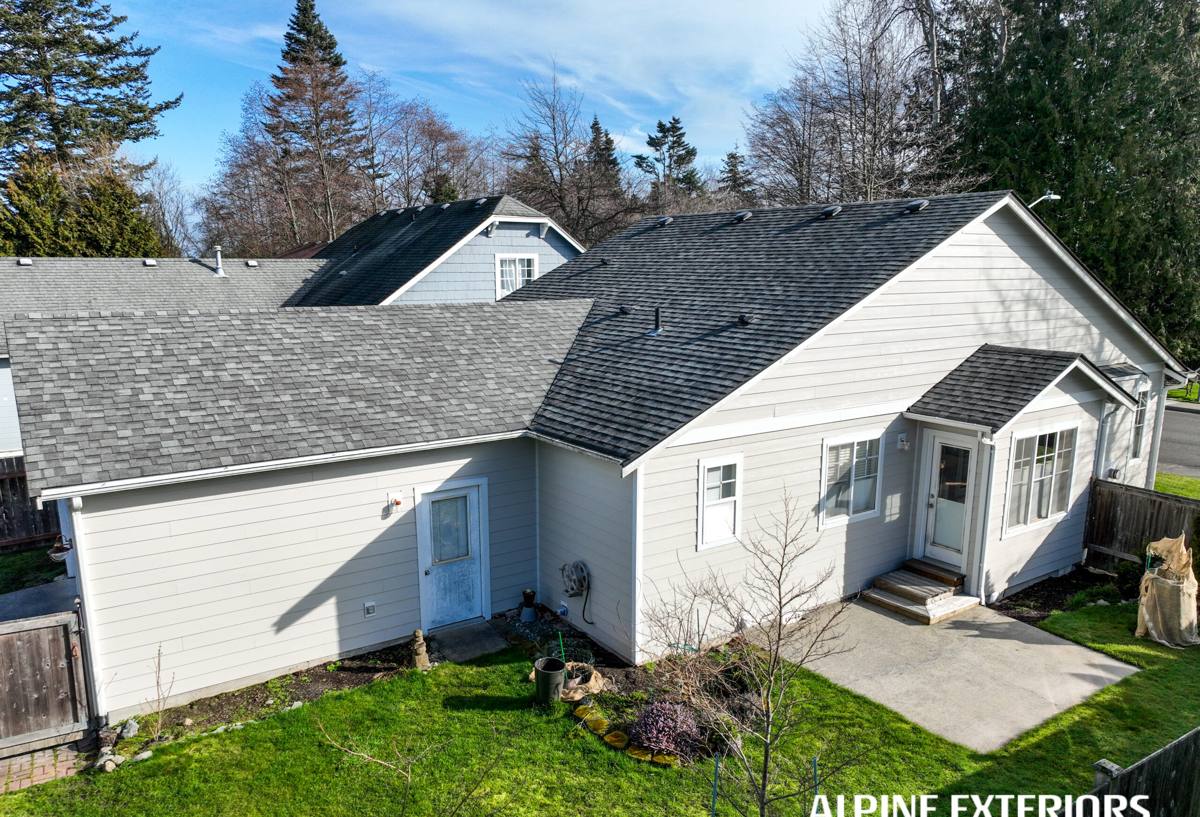
What Blaine's Climate Does to a House
Salt Air and Coastal Moisture
Blaine's proximity to Semiahmoo Bay and the Strait of Georgia means homes get a steady dose of salt-laden air, especially on west- and north-facing elevations. Salt is corrosive to fasteners and trim metal, and it accelerates the breakdown of coatings and caulk. Siding that isn't engineered to shed water and resist moisture intrusion tends to show it first in the corners and butt joints closest to the water.
Driving Rain
Wind off the water doesn't just bring rain — it drives it sideways into wall assemblies, especially on two-story homes and anything with minimal roof overhangs. That kind of wind-driven rain finds every gap in flashing, every under-caulked seam, and every spot where siding wasn't lapped correctly. Over time it's the single biggest cause of hidden rot behind exterior walls in this area.
A Long Moss and Mildew Season
Whatcom County's wet season runs long, and Blaine's coastal humidity stretches it further. Shaded north walls, areas under trees, and anything close to grade stay damp for weeks at a time. That's exactly the environment moss, algae, and mildew need. Siding that absorbs moisture — or that relies on a paint film to keep water out — gives that growth something to hold onto.
Why We Standardized on James Hardie
We used to install a wider range of siding products. We don't anymore, and it's worth explaining why, because it's the whole reason we do business the way we do.
Fiber Cement vs. the Alternatives
Vinyl siding is inexpensive and low-maintenance in mild climates, but it's a poor match for wind-driven rain exposure — it isn't a water barrier itself, it relies entirely on what's behind it, and it can warp or crack in temperature swings and impact. Wood-based siding products (primed spruce, cedar, engineered wood like LP SmartSide) can look great, but they're wood at the core, and wood plus sustained moisture plus a long wet season is a maintenance commitment most homeowners underestimate when they buy the house, not when they sign the contract.
What Hardie Gets Right
James Hardie fiber cement is cement, sand, and cellulose fiber — it doesn't rot, it isn't attractive to pests, and it holds paint and factory finish far longer than wood-based products in wet climates. It's also non-combustible, which matters increasingly to insurers and to homeowners thinking about wildfire smoke and ember exposure, even on the west side of the state. Hardie's HZ5 product line is specifically engineered for climates with sustained moisture exposure like ours, and the ColorPlus factory finish is baked on and warrantied separately from the substrate — it isn't a field-applied paint job you'll be redoing in eight years.
The Honest Trade-Offs
We're not going to pretend fiber cement has no downsides. It's heavier than vinyl or engineered wood, which means installation is more labor-intensive and less forgiving of shortcuts. It costs more upfront than vinyl. And it has to be installed to Hardie's spec — correct fastening, clearances, and joint treatment — or you lose the performance and warranty protection that make it worth choosing in the first place. That last point is why the installer matters as much as the product.
| Siding Material | Moisture Resistance in Coastal Exposure | Long-Term Maintenance | Fire Rating |
|---|---|---|---|
| James Hardie Fiber Cement | Strong — engineered for wet climates (HZ5) | Low — factory finish holds color for years | Non-combustible |
| Vinyl | Moderate — depends entirely on underlying water barrier | Low cost, but can warp/crack over time | Combustible |
| Engineered Wood (LP SmartSide) | Moderate — treated but wood-based core | Moderate — edge sealing and paint upkeep required | Combustible |
| Cedar / Primed Spruce | Weaker in sustained wet exposure without upkeep | High — regular refinishing needed | Combustible |
How We Approach Siding Work in Blaine
Every Blaine job starts the same way: we look at the wall assembly, not just the surface. Wind exposure and orientation, existing flashing condition, and any signs of moisture intrusion around windows, doors, and rooflines all factor into how we detail the install. On homes closer to the water, we pay particular attention to fastener selection and trim details, since that's where salt exposure does the most damage over time.
What Correct Hardie Installation Involves
- Proper water-resistive barrier and flashing at all penetrations, windows, and doors before any siding goes on
- Correct fastener type, spacing, and embedment per Hardie's published installation instructions
- Minimum clearances from grade, roofing, and decks to keep siding out of standing moisture
- Factory-cut and properly caulked or gapped joints, following Hardie's guidance for the specific product line
- Careful attention to inside and outside corners, which take the brunt of wind-driven rain
Roofing, Windows, and Decks: The Rest of the Envelope
Siding is only one piece of how a Blaine home holds up against the weather. We also handle roofing, window replacement, and decks, because a house's exterior works as a system — a failing roof or a leaking window will undermine even a perfectly installed wall of siding. When we're on-site for a siding estimate, we'll flag anything we notice on the roof or around window flashing that could be feeding moisture into the wall assembly, even if it's outside the scope of the original ask.
Decks in a Coastal, Wet Climate
Decks in Blaine take a similar beating to siding — salt air, sustained moisture, and UV exposure between rain events. Material choice and proper ledger flashing matter here too, and it's worth having the same crew that understands your siding's moisture management also look at how your deck ties into the house.
What to Expect When You Call Us
We'll walk the exterior with you, look at what's actually happening to your current siding or trim, and give you a straight answer about what's causing it — sun exposure, wind direction, a flashing detail, or just age. If a full re-side isn't warranted yet, we'll tell you that. If it is, we'll walk you through Hardie's product lines, color options, and what the installation timeline looks like for a home your size.
Questions Worth Asking Any Contractor Before You Hire
- Are you a factory-certified installer for the siding product you're proposing?
- Will you show me the manufacturer's installation instructions for fastener spacing and clearances?
- How do you handle flashing at windows, doors, and deck ledgers during a re-side?
- What's covered under the manufacturer's warranty versus your workmanship warranty, and for how long?
- Can I see how you detail inside corners and butt joints, since those are the first places problems show up?
Local Crew, Local Accountability
We're a Ferndale-based company, and Whatcom County — including Blaine — is our regular service area, not a stretch territory we drive into once a year. That matters for warranty follow-up, for knowing which parts of a property face the worst wind and salt exposure, and for being reachable if a question comes up two years after the job is done. A crew that only sees your climate occasionally is more likely to miss the details that a coastal Whatcom County home actually needs.
Get a Free Estimate
If your Blaine home's siding is showing its age — fading color, soft spots, moss buildup, or visible gaps at the corners — we're glad to come take a look. We'll give you a straightforward assessment and a free, no-pressure estimate for James Hardie fiber cement siding, along with any roofing, window, or deck work that would help protect the house. Use the form below to get started.