 Ferndale Siding
 Siding Built for Lynden's Weather, Not Just Its Curb Appeal
Lynden sits inland from the coast, but Whatcom County weather doesn't respect that distance. Marine air off the Salish Sea pushes inland on a regular basis, mixing with the moisture that rolls down off the foothills and settles over the Nooksack valley. The result is a climate that's milder than a lot of the country but relentlessly damp for long stretches of the year — driving rain in the fall and winter, heavy dew and fog in the shoulder seasons, and a moss season that can run half the year on shaded or north-facing walls. None of that is dramatic. It's just constant. And constant moisture exposure is exactly the kind of thing that separates siding that holds up for decades from siding that starts showing problems in five or six years.
We're a Ferndale-based crew that works throughout Whatcom County, and Lynden is a regular part of our service area. We know what the rural and semi-rural lots around here look like — larger setbacks, more tree cover, homes that catch runoff and shade in ways a tighter in-town lot might not. That matters when we're evaluating a siding job, because moisture management is at least as important as the material itself.
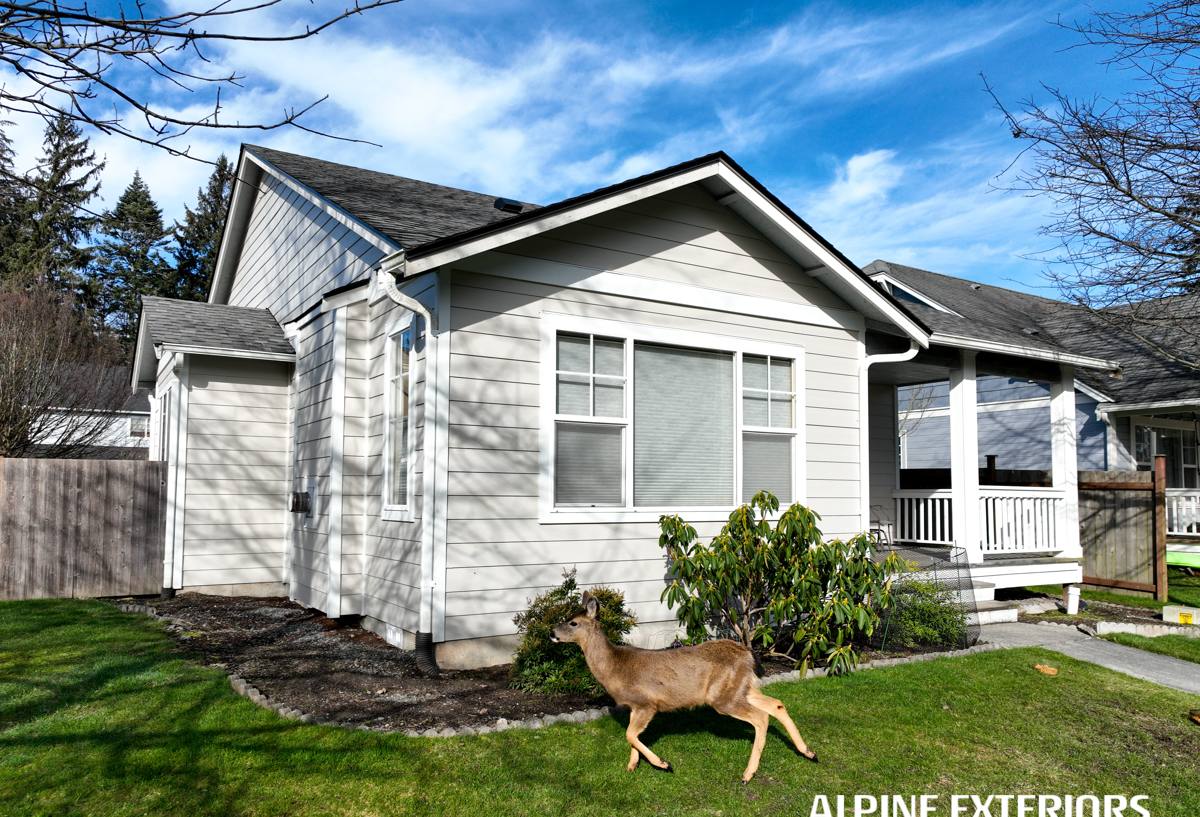
What Lynden Homes Actually Deal With
Driving Rain and Wind-Driven Moisture
Whatcom County doesn't get the heaviest rainfall totals in Washington, but it gets a lot of wind-driven rain — the kind that hits siding at an angle instead of just running straight down. That matters for lap siding, because wind-driven rain works its way behind poorly lapped boards, around undersized trim gaps, and into any seam that wasn't sealed or flashed correctly. Over years, that's how water gets behind siding without anyone noticing until there's a soft spot or a paint failure.
Moss, Algae, and Prolonged Dampness
Shaded exteriors, mature trees, and the valley's general humidity add up to long moss and algae seasons on north- and east-facing walls. Moss itself doesn't destroy siding, but it holds moisture against the surface for extended periods, which accelerates whatever weakness is already there — failing paint, swelling substrate, or caulk that's given out. A siding material that doesn't absorb and swell with that moisture is a much better long-term bet in these conditions than one that does.
Temperature Swings and UV
Summers in Lynden can get warm, and the difference between a hot, dry August afternoon and a cold, saturated December is a real stress cycle on exterior materials — expansion, contraction, and repeated wet-dry transitions. Siding and trim that can't handle that cycle without cracking, cupping, or losing paint adhesion will show it within a handful of years.
Why We Only Install James Hardie Fiber Cement
We made a deliberate decision as a company to install James Hardie fiber cement siding exclusively. We don't install vinyl, LP SmartSide, Cemplank, Allura, primed spruce, or cedar. That's not a marketing angle — it's a standard we hold because of what we've seen matters most in this climate: how a material handles sustained moisture exposure over decades, not just its first few years on the wall.
Fiber cement is cement, sand, and cellulose fiber. It doesn't absorb water the way wood-based products do, it doesn't soften or delaminate the way some engineered wood products can if a seam fails, and it's non-combustible — a genuine advantage during wildfire season, which has become a more regular consideration even on the wet side of the state. James Hardie's ColorPlus factory-applied finish also holds up better against UV and moisture cycling than most field-applied paint, which matters when you're trying to avoid a repaint every several years.
We're not going to tell you every other product on the market is junk — that wouldn't be honest, and most of them have real strengths. What we will say is that after weighing installation sensitivity, moisture behavior, long-term maintenance, and warranty structure, Hardie is the one product line we're willing to put our name behind on every job.
What We Chose Not to Install, and Why
- Vinyl siding: Inexpensive and low-maintenance in mild climates, but it can warp with heat exposure, fade over time, and doesn't offer the same fire performance or perceived home value as fiber cement.
- LP SmartSide and other engineered wood products: Improved a great deal over older wood products, but they remain wood-based, meaning cut edges and seams need to be sealed correctly and maintained — a single missed detail can lead to swelling.
- Cemplank and Allura (other fiber cement brands): Legitimate fiber cement products, but we've standardized on Hardie's specific HardieZone engineering, factory finish system, and warranty structure rather than mixing brands.
- Primed spruce and cedar: Beautiful, traditional materials, but they demand the most ongoing maintenance of anything on this list — repainting, sealing, and vigilance against moisture and insects — in a climate that doesn't give wood many breaks.
The Hardie Product Lines We Work With
James Hardie makes several distinct product lines, and part of doing this job right is matching the right one to the house and the budget rather than defaulting to a single option.
| Product | Best For | Notes |
|---|---|---|
| HardiePlank lap siding | Most homes, traditional look | Available in smooth or cedar-grain textures; the most common choice we install |
| HardiePanel vertical siding | Modern facades, accent walls, gables | Often paired with lap siding for a mixed-material look |
| HardieShingle | Craftsman and cottage-style homes | Staggered or straight-edge shingle profiles |
| HardieTrim | Window, door, and corner trim | Matches board thickness and finish to the siding for a consistent look |
All of it is manufactured in Hardie's HZ5 climate-engineered formulation appropriate for the Pacific Northwest, and it comes with ColorPlus factory finish in a range of standard colors, plus primed options for custom paint.
How We Approach a Siding Job in Lynden
Assessment First
Before we talk products or pricing, we look at the actual condition of the house — what's behind the existing siding, whether there's been water intrusion, how the roofline, gutters, and grading are directing water around the exterior. On a rural or larger Lynden lot, that often includes checking how tree cover and shade patterns affect specific walls, since those are usually the ones showing moss or premature wear first.
Installation Details That Actually Matter
- Correct lap spacing and fastener placement per Hardie's published installation specs
- Proper flashing and water management behind and around every window and door opening
- Rain-screen or drainage plane detailing where the wall assembly calls for it
- Correctly sealed and caulked joints, with attention to manufacturer-specified gaps and clearances
- Trim and corner details that shed water rather than trap it
Fiber cement is a durable material, but its long-term performance depends heavily on installation quality. A lot of the "fiber cement problems" people hear about trace back to installation shortcuts — wrong fasteners, no gap at trim, siding installed too close to grade — not the product itself.
Roofing, Windows, and Decks — The Rest of the Exterior
Siding doesn't work in isolation. We also handle roofing, window replacement, and deck construction, because a home's exterior is one connected system. A roof that's shedding water onto a wall, or windows that aren't flashed correctly, can undermine even a well-installed siding job. When we're on-site for a siding estimate, we'll flag anything we see on the roof, windows, or decking that's contributing to moisture problems, even if it's outside the original scope of the job.
What Siding Work Costs and What Drives the Number
| Factor | Why It Matters |
|---|---|
| Home size and number of stories | More surface area and access complexity (scaffolding, lifts) increase labor |
| Amount of existing damage | Rot or water damage found during tear-off requires repair before new siding goes on |
| Product mix | Lap siding, panel accents, and shingle sections all have different material and labor costs |
| Trim and detail work | Corner boards, window trim, and fascia detailing add labor beyond the flat wall area |
| Site access | Rural lots with more landscaping, fencing, or setback distance can affect logistics and staging |
We don't publish blanket per-square-foot pricing because these factors genuinely change the number from house to house. What we can tell you is that a full siding replacement is a multi-thousand-dollar project on almost any home, and the honest way to get a real number is a walk-through estimate, not a phone quote.
Why a Local Crew Matters Here
Working out of Ferndale, we're close enough to Lynden to be responsive — for estimates, for the job itself, and afterward if something needs a look. We're also familiar with how Whatcom County's permitting and inspection process works for exterior projects, and we know the specific weather patterns that affect this part of the county, from the Nooksack valley's dampness to the wind exposure on more open lots. That local familiarity shows up in small decisions throughout a job: where to add extra flashing, which walls need the most attention to moss and moisture, how to sequence work around the wetter months.
Get a Free, No-Pressure Estimate
If your Lynden home's siding is showing moss, fading, soft spots, or you're just planning ahead for a replacement, we're happy to come take a look. There's no pressure and no obligation — just an honest assessment of where things stand and what your options are, using the form below.