 Ferndale Siding
 Siding Built for Lynden's Weather, Not Just Installed on It
Lynden sits inland from Ferndale but still lives inside the same Whatcom County weather pattern: long wet winters, a marine air layer that carries salt and moisture well past the immediate coastline, and a moss and mildew season that can stretch from October through April. Homes here don't fail because of one bad storm. They fail slowly, from siding that was never matched to this climate in the first place, or that was installed with shortcuts that only show up two or three winters later. When we talk about siding installation for Lynden, we're talking about a system chosen and installed specifically to hold up to that slow, grinding exposure.
We install James Hardie fiber cement exclusively. Not because it's the only product on the market, but because after years of servicing homes across Whatcom County, it's the one we're willing to put our name behind in this climate. This page walks through what that actually means for a Lynden home — the moisture behavior, the install details, and the process from first look to finished wall.
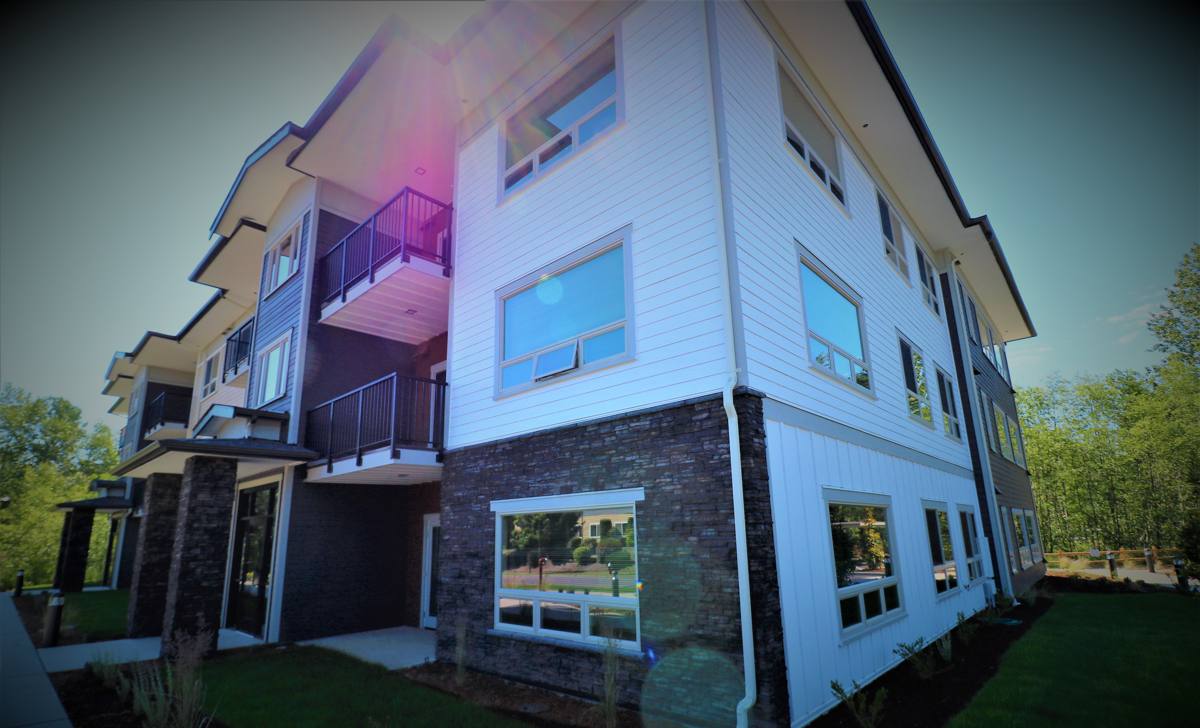
What Driving Rain and Salt Air Actually Do to Siding
Two forces do most of the damage to exterior siding in this part of Washington:
Driving Rain
Wind-driven rain doesn't just wet a wall — it forces water sideways and upward into laps, seams, and fastener points that were designed for water running straight down. Over time, siding that can't shed or dry out from that kind of exposure starts holding moisture behind the surface, where you can't see it until paint fails, boards swell, or rot sets into trim and sheathing.
Salt Air and Moss
Whatcom County's proximity to Puget Sound and the Strait of Georgia means airborne salt travels further inland than most homeowners expect, accelerating corrosion on fasteners and flashing and breaking down lower-grade coatings faster than manufacturers' published lifespans suggest. Combine that with a moss season that keeps north-facing and shaded walls damp for months at a stretch, and you get a wall assembly under near-constant low-grade moisture stress. Siding that's only rated for occasional wetting struggles here. Siding that's engineered for sustained damp cycles doesn't.
Why We Standardized on James Hardie for This Area
James Hardie fiber cement is non-combustible, dimensionally stable, and — critically for this region — built in HZ5 and HZ10 formulations specifically engineered for high-moisture, freeze-humid climates like the Pacific Northwest. The ColorPlus factory finish is baked on under controlled conditions, which gives it more consistent, longer-lasting color and better adhesion than field-applied paint on job-site-primed products. It also carries a strong, transferable limited warranty that follows the house, not just the original owner — a real factor if a Lynden homeowner sells within the warranty window.
We don't install LP SmartSide, vinyl, Cemplank, Allura, primed spruce, or cedar. Each of those has legitimate uses elsewhere, but we've made a professional call that fiber cement from Hardie is the product we're willing to stand behind on homes exposed to this specific combination of salt air, driving rain, and extended damp seasons. That's a standard we hold company-wide, not a sales pitch specific to this page.
How the Common Alternatives Compare on the Factors That Matter Here
| Factor | Vinyl | Primed Wood / Cedar | James Hardie Fiber Cement |
|---|---|---|---|
| Moisture behavior | Doesn't absorb, but can trap moisture behind panels; warps in heat | Absorbs water, prone to swelling and rot without diligent maintenance | Engineered for damp climates; resists swelling, cracking, and rot |
| Coastal/salt exposure | Fasteners and trim pieces corrode faster | Finish breaks down faster under salt-laden moisture | Corrosion-resistant fastening details; factory finish holds up longer |
| Fire resistance | Melts and can support flame spread | Combustible | Non-combustible material |
| Finish longevity | Fades, can crack in cold | Needs repainting every few years | ColorPlus factory finish holds color far longer than field paint |
| Warranty | Varies widely by manufacturer | Typically none beyond material defects | Strong, transferable limited warranty |
What Correct Installation Actually Involves
Fiber cement siding is only as good as the install behind it. Hardie's own installation instructions are detailed for a reason — skipped steps are where most premature failures start, especially in a wet climate like ours.
Water Management Comes First
Before a single piece of siding goes up, the wall needs a properly lapped weather-resistive barrier, correctly integrated flashing at windows, doors, and any wall penetrations, and a drainage plane that lets incidental moisture escape instead of pooling behind the cladding. This is the part of the job nobody sees once it's finished, and it's the part that matters most in a region with our rainfall.
Clearances and Gaps
Hardie specifies minimum clearances from grade, roofing, decks, and other abutting surfaces, plus gapping requirements at butt joints and trim. These aren't arbitrary — they give the material room to manage moisture and prevent wicking at ground contact or roof lines, both common failure points we see on older Lynden-area homes that were sided without them.
Fastening
Corrosion-resistant fasteners, driven at the correct spacing and depth, are non-negotiable this close to salt air. Overdriven or underdriven nails are one of the most common defects we find when reworking someone else's installation — they either crack the board or leave it loose enough to move and let water in.
Caulking and Paint Touch-Up
Factory-finished ColorPlus siding needs field touch-up only at cut edges and fastener heads, using Hardie's matched touch-up products, not generic exterior paint. Done right, the color match is seamless. Done wrong, you get visible patchwork within a year or two.
Our Process, Start to Finish
- Walkthrough and assessment — We look at the existing siding, sheathing, and trim to catch hidden rot or moisture damage before we quote the job, not after we've opened up a wall.
- Written estimate — Scope, product line, color, and timeline laid out clearly, with no vague allowances hiding behind a low number.
- Prep and tear-off — Removal of old siding, inspection and repair of sheathing, and correction of any existing water-management problems before new material goes on.
- Weather barrier and flashing — Properly lapped house wrap and flashing at every penetration, inspected before siding covers it.
- Hardie installation — Installed to manufacturer clearance, gapping, and fastening specifications, not shortcuts.
- Final detailing — Caulking, touch-up, and a walk-through so you know exactly what was done and why.
Why a Crew That Already Works This Area Matters
A crew that installs siding across Ferndale, Lynden, and the rest of Whatcom County on a regular basis has already seen how homes here age — which elevations take the worst of the driving rain, where moss builds up fastest, and which older installations are starting to show salt-air corrosion at the fasteners. That local pattern recognition changes how we detail flashing, where we pay extra attention during tear-off, and what we flag for you before it becomes a bigger repair. It's the difference between a crew reading a manufacturer's spec sheet for the first time and a crew that's applied it on dozens of homes in this exact climate.
Signs Your Current Siding Is Already Behind the Curve
- Paint peeling or bubbling in the same spots year after year, especially on north or west-facing walls
- Soft or spongy spots when you press on siding near the bottom courses or around windows
- Persistent moss or algae growth that comes back within weeks of cleaning
- Visible gaps, warping, or buckling at seams and butt joints
- Rust streaks below fastener heads or trim corners
- Rising energy bills that track with drafts or cold spots along exterior walls
If you're seeing two or more of these, it's worth having the siding looked at before another wet season adds to the damage.
What This Typically Involves for a Lynden-Area Home
Every home is different, but a few factors consistently drive scope and cost on projects in this area: the condition of the sheathing underneath the existing siding, the amount of trim and detail work around windows and doors, wall height and access, and whether existing water-management issues need correcting before new siding goes on. We won't give you a number that ignores what's actually going on behind your walls — the estimate reflects what your home needs, not a generic per-square-foot figure that falls apart once we open things up.
If your Lynden-area home is due for new siding, or you just want an honest read on what shape your current siding is in, we're happy to take a look. The estimate is free, there's no pressure, and you'll get a straight answer about what your home actually needs — use the form below to get started.