 Ferndale Siding
 Life on the Point: An Exterior Built for Salt Air and Rain
Point Roberts sits in a spot most Whatcom County homes don't have to deal with. It's a small peninsula, physically cut off from the rest of Washington by water on three sides and the Canadian border on the fourth, which means the marine exposure here is more constant and more direct than almost anywhere else we work. Wind comes off the water carrying salt with it, rain arrives sideways more often than straight down, and the tree cover on many lots keeps things shaded and damp long after storms have passed. That combination is hard on paint, hard on fasteners, and hard on any siding material that depends on a surface coating to keep water out.
None of that makes Point Roberts a bad place to own a home — it's one of the reasons people love it. But it does mean the exterior envelope has to work harder here than in a typical inland neighborhood, and the material you put on the walls matters more than it would somewhere drier and more sheltered.
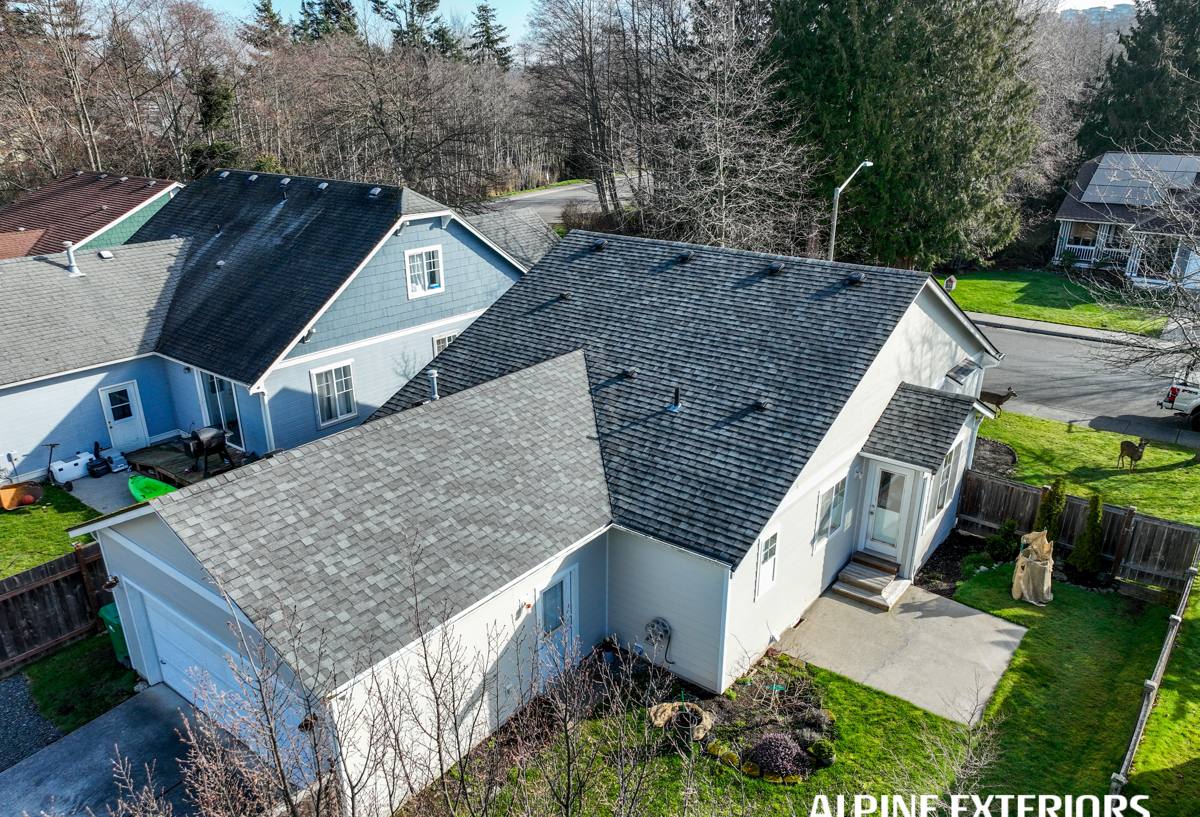
Why the Building Envelope Takes More Punishment Here
A few climate factors stack together on the peninsula in a way that's worth understanding before you plan any exterior work:
- Wind-driven rain pushes water horizontally into seams, laps, and trim joints instead of just running down the face of the wall — this is the condition that exposes weak caulking and poor flashing detail fastest.
- Salt air accelerates corrosion on exposed fasteners, staples, and metal trim, which is why fastener choice and installation detail matter as much as the siding panel itself.
- Shade and moss on tree-covered and north-facing lots keep siding surfaces damp longer after rain, which is exactly the environment moss and algae need to take hold.
- A long wet season — fall through spring — means siding gets less drying time between rain events than it would further inland, so anything with a weak moisture tolerance stays wet longer.
Individually these are manageable. Together, over years, they're what separates a siding job that still looks good at year fifteen from one that's chalking, cupping, or growing moss by year five.
What We Install: James Hardie Fiber Cement — and Why
We install James Hardie fiber cement siding exclusively. That's not a marketing preference — it's a standard we set because of what we've seen exposed exteriors do over time in exactly this kind of climate. Fiber cement is non-combustible, dimensionally stable in wet-dry cycling, and doesn't rely on a field-applied paint job to hold up against moisture the way wood does.
The HZ5 Product Line for Marine Exposure
Hardie's HZ5 product line is engineered specifically for climates with heavier moisture exposure — coastal and Pacific Northwest conditions being a core use case. It's a meaningful upgrade over generic siding built for a national average climate, which matters on a peninsula where the marine layer and wind exposure are part of daily weather, not an occasional event.
ColorPlus Factory Finish
Hardie's ColorPlus finish is baked on in a controlled factory setting rather than sprayed or brushed on site. That finish is formulated to resist fading and hold its color in direct UV and salt exposure far longer than field-applied paint, and it comes backed by its own finish warranty separate from the substrate warranty. For a home that only gets checked on occasionally — which describes a good number of properties out here — a finish that doesn't need repainting every several years is a real practical advantage, not just a cosmetic one.
Why We Don't Install Vinyl, LP SmartSide, or Cedar Here
We get asked about these regularly, and each has a legitimate place in the industry — we simply don't put them on homes in this climate, for specific reasons:
- Vinyl is inexpensive and low-maintenance in mild conditions, but it can warp or distort under sustained heat and doesn't offer the impact or fire resistance of fiber cement. In wind-driven rain it also relies heavily on correct overlap and fastening to shed water, which raises the stakes on installation quality.
- LP SmartSide is an engineered wood product with a resin-treated strand core, and manufacturer installation and maintenance requirements — sealing all cut edges, maintaining paint film integrity — are more demanding to keep up with over time in a wet, shaded environment than most homeowners realize going in.
- Cedar and primed spruce are attractive materials with a long history, but as solid wood products they need consistent refinishing to keep water out, and in a moss-prone, moisture-heavy environment like this one, that maintenance schedule tightens considerably.
Our standard came from watching how these materials actually age in coastal Whatcom County conditions, not from a general dislike of any of them. Fiber cement's combination of moisture tolerance, factory-cured finish, and dimensional stability is what we're comfortable standing behind on a home that's going to face this kind of weather for the next several decades.
More Than Siding: Roofing, Windows, and Decks in the Same Environment
Siding doesn't work in isolation — it's one part of an exterior envelope that also includes the roof, the windows, and any exposed deck structure, and all of them face the same salt air and wind-driven rain. We handle all four because they need to work together:
- Roofing sheds the bulk of the water load and its condition directly affects how much moisture ends up running down and behind the siding at the eaves and transitions.
- Windows are one of the most common places wind-driven rain finds its way into a wall assembly if flashing and integration with the siding isn't done correctly — this is a detail we pay close attention to on every install.
- Decks exposed to the same UV, salt, and moss conditions need materials and fastening that account for the same climate stresses as the siding above them.
Having one crew responsible for how these systems tie together — rather than four separate contractors who never talk to each other — is worth more in a climate like this than in a milder one, simply because there are more ways for water to find a gap.
Getting a Crew to Point Roberts: Why Local Experience Matters
Point Roberts is part of Whatcom County, but it isn't connected to the rest of the county by road — reaching it means crossing into Canada and back out again, whether you're a homeowner, a crew, or a material delivery truck. That's a logistical detail a lot of contractors haven't thought through until it's holding up their schedule. Scheduling crew time, coordinating material drop-offs, and planning around that crossing is just part of doing this work well out here, and it's something we build into the plan up front rather than discovering mid-project.
Maintenance Realities for Full-Time and Seasonal Homes
A meaningful share of homes on the peninsula are used seasonally or as weekend properties, which changes the maintenance equation. A siding or exterior problem that would get caught and addressed quickly on a full-time residence can sit unnoticed for months on a property that's only checked periodically. That's a strong argument for a durable, low-maintenance material to begin with — one that doesn't depend on someone being on-site to catch peeling paint or a failing caulk joint before it becomes water damage behind the wall.
Comparing Siding Materials for This Climate
| Factor | James Hardie Fiber Cement | Vinyl | Wood / Cedar |
|---|---|---|---|
| Moisture tolerance | Engineered for wet climates (HZ5 line) | Sheds water if installed correctly; can trap moisture behind panels | Absorbs moisture; needs consistent sealing |
| Finish durability | Factory-cured ColorPlus, resists fading | Color molded in but can fade/chalk over time | Field-applied paint/stain, shorter refinish cycle |
| Moss/algae resistance | Dense, stable surface resists growth | Can support surface growth in shaded, damp spots | Porous surface, prone to moss in shade |
| Fire resistance | Non-combustible | Combustible | Combustible |
| Typical maintenance interval | Long — inspect periodically, minimal repainting | Low but limited repair options if damaged | Refinish every few years |
Signs Your Siding May Be Struggling in This Climate
If you're not sure whether your current siding is holding up, a few warning signs are worth checking for before they turn into structural repair costs:
- Persistent moss or algae staining that comes back soon after cleaning
- Paint that's chalking, peeling, or bubbling, especially on the side facing prevailing wind and rain
- Soft spots, visible swelling, or delamination at panel edges and seams
- Rust streaking around fasteners or trim
- Visible gaps at corners, window trim, or butt joints where wind-driven rain can get behind the siding
Our Process
We start with an on-site look at the specific exposure your home faces — which direction takes the worst of the wind and rain, how much shade and moss pressure the lot has, and what condition the current siding, trim, and flashing are in. From there we put together a plan using the appropriate James Hardie product and profile for the home, and we install it to manufacturer spec, including the flashing and fastening details that matter most in a climate like this one. The same visit is a good time to flag anything we notice on the roof, windows, or deck while we're already looking at the whole exterior.
If you're weighing a siding project on the peninsula — or want a second opinion on what's already on the house — we're happy to come take a look. The estimate is free, there's no pressure attached to it, and you'll walk away with a clear picture of what your home actually needs.