 Ferndale Siding
 Lummi Island's Exterior Puts Real Demands on a Home
Lummi Island sits in the marine air of northern Puget Sound, just off the Whatcom County mainland near Ferndale and Bellingham. That location is beautiful, but it's also unforgiving on a house. Salt-laden air off the water, long stretches of driving rain, and a moss season that can run most of the year all work on exterior surfaces in ways that inland Whatcom County homes don't experience to the same degree. Siding, trim, roofing, and decking on the island take a steadier beating than the same materials would fifteen or twenty miles inland.
We've been serving homeowners across this part of Whatcom County long enough to know that "island house" and "mainland house" aren't the same maintenance conversation. A home on or near Lummi Island needs materials and installation details chosen with salt air, wind-driven moisture, and shade-driven moss growth specifically in mind — not just a generic Pacific Northwest approach.
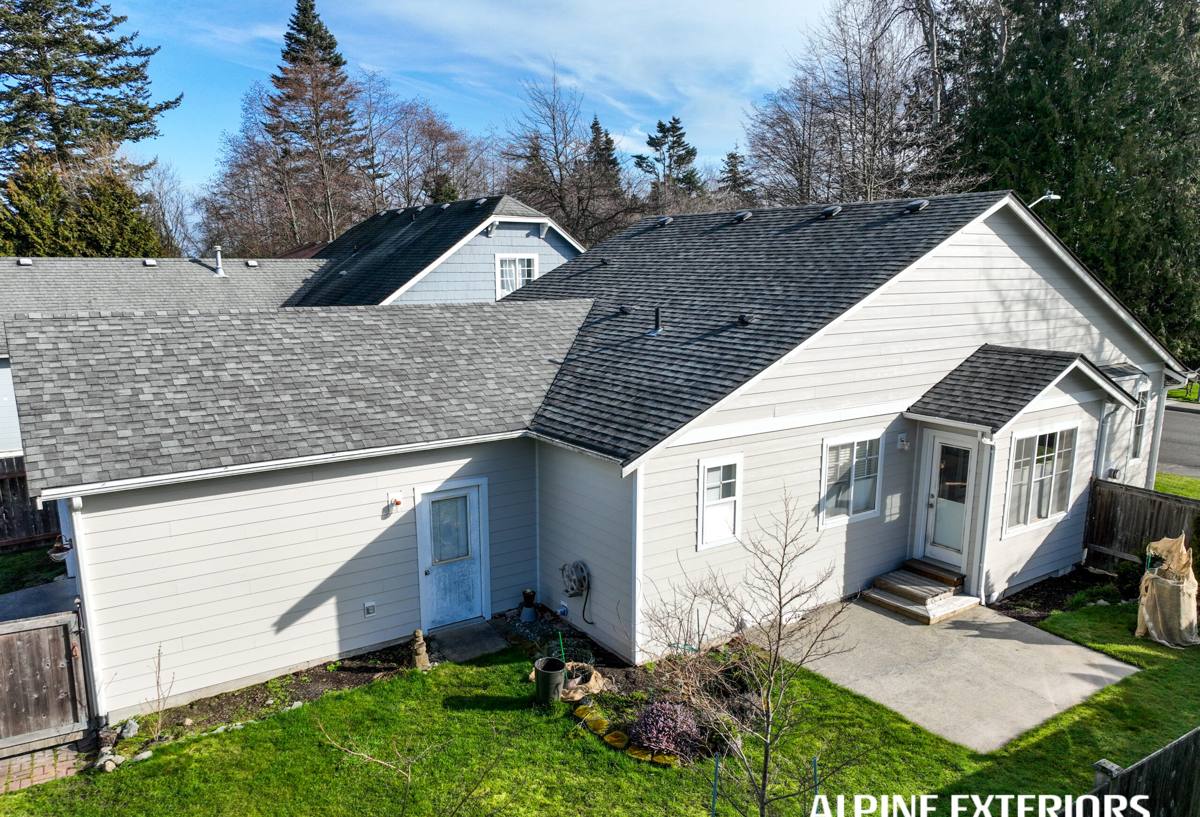
What Salt Air and Moisture Actually Do to a House
Salt Air
Airborne salt is a slow, steady corrosive. It accelerates the breakdown of unprotected metal fasteners, flashing, and hardware, and it degrades paint films and caulk faster than the same products age inland. Over years, a home that isn't built and finished with that exposure in mind will show it first at fasteners, corners, and any place two materials meet.
Driving Rain
Wind off the water doesn't just bring rain — it pushes it sideways, into joints, laps, and penetrations that a calmer climate would never test. Siding systems, window flashing, and roof details that rely on gravity alone to shed water are the ones that fail first in a driving-rain environment. Correct lap sequencing, flashing, and sealed penetrations matter more here than almost anywhere else in the county.
Moss and Shade
Many island and near-water properties sit under mature conifers or in the shade of neighboring terrain, which means roofs and north-facing siding stay damp longer after every rain. That extended damp period is exactly what moss and algae need to establish. Left unaddressed, moss holds moisture against the surface underneath it, which is a bigger problem than the moss itself.
Why We Install Only James Hardie Fiber Cement Siding
We don't install vinyl siding, LP SmartSide, Cemplank, Allura, primed spruce, or cedar. That's a deliberate standard, not a lack of options, and it matters even more in a salt-air, high-moisture environment like this one.
Vinyl
Vinyl siding can perform fine in mild conditions, but it's a thin material that expands and contracts significantly with temperature swings, and its seams and J-channels are places water and wind can work their way behind the surface over time. In a driving-rain climate, that's a real long-term liability, not a theoretical one.
Engineered Wood (LP SmartSide) and Cedar
Wood-based products — whether engineered wood or solid cedar — are organic materials, and organic materials in a persistently damp, salt-air environment are the most susceptible to moisture absorption, swelling, and eventual rot at cut edges, fastener points, and butt joints. Cedar in particular requires ongoing refinishing to keep its protective coating intact; skip a cycle in this climate and the clock starts running faster than it would inland.
Other Fiber Cement Brands
Cemplank and Allura are also fiber cement, and fiber cement as a category is the right general direction for this climate. Where we draw the line is the factory finish and product engineering behind it. We standardized on James Hardie because of its ColorPlus factory-applied finish (which resists fading and chipping far better than field-applied paint), its HZ5 product engineering for climates with sustained moisture exposure, and a transferable warranty backed by a manufacturer with a long track record. Fiber cement is non-combustible, dimensionally stable, and doesn't absorb moisture the way wood-based products do — which is exactly the profile a salt-air, high-rainfall property needs.
| Material | Salt Air Resistance | Driving Rain / Moisture | Long-Term Maintenance |
|---|---|---|---|
| James Hardie Fiber Cement | Strong — non-combustible, factory-finished | Strong when installed to spec | Low — occasional wash, no refinishing cycle |
| Vinyl | Moderate — seams vulnerable over time | Weak at laps and channels | Low cost but shorter effective life here |
| Cedar | Weak without diligent upkeep | Weak — absorbs moisture | High — refinishing every few years |
| LP SmartSide / Engineered Wood | Moderate | Moderate — edge sealing critical | Moderate — edge and joint monitoring |
Roofing for a Moss-Prone, Wind-Exposed Property
Roofing on the island needs to account for two separate stresses: wind-driven rain finding its way under improperly lapped shingles or flashing, and sustained shade that lets moss take hold. We pay close attention to underlayment quality, valley and penetration flashing, and ridge and edge details, since those are the spots that fail first when wind pushes rain uphill against the natural direction of shingle overlap. Where moss is a recurring issue because of tree cover, we'll talk through practical mitigation — including whether zinc or copper strips make sense for a given roof — rather than just replacing shingles and hoping for a different result.
Windows That Hold Up to Wind and Salt
Older or lower-grade windows on exposed, water-facing elevations tend to show their age first through failed seals, fogged glass, and drafts around the frame — all accelerated by the combination of wind pressure and salt air. When we replace windows as part of a broader exterior project, we're checking that flashing integrates correctly with the new siding, not just that the window unit itself is a good product. A window installed with poor flashing details will leak eventually in this climate, regardless of how good the window is.
Decks: Salt, Sun, and Standing Water
Decks facing the water get a double dose of exposure — salt air on top of the same driving rain everything else on the property deals with, plus UV where trees don't provide cover. The details that matter most are proper drainage away from ledger boards and framing connections, fastener and hardware selection suited to a corrosive environment, and gaps between boards that actually let water pass through instead of pooling. A deck built without those details in mind will show surface problems within a few seasons, even if the decking material itself is rated for outdoor use.
Why a Ferry Crossing Changes How We Plan Your Project
Reaching Lummi Island means a ferry crossing, and that's a real scheduling factor we plan around rather than treat as an afterthought. We batch material deliveries and crew trips so we're not making unnecessary back-and-forth runs, we build ferry schedules and sailing capacity into our project timeline up front, and we make sure the right materials and tools are on-site before we start rather than discovering a gap mid-project. For homeowners, that means fewer surprises and a crew that shows up prepared, not one that's improvising around ferry logistics on your dime.
Signs It's Time to Have Your Exterior Looked At
- Soft, spongy, or bubbling siding, especially near the bottom edge or around windows
- Persistent moss or dark staining on the roof or north-facing siding
- Peeling or chalking paint that keeps returning within a year or two of repainting
- Visible corrosion on fasteners, flashing, or deck hardware
- Musty smell or visible mold near exterior walls, particularly in less-ventilated rooms
- Gaps or separation at siding joints, corners, or trim boards
- Deck boards that stay damp long after rain has stopped, or fastener heads showing rust
What a Realistic Exterior Project Looks Like Here
Every property is different, but a few things consistently affect scope and cost on island and near-water homes in this area: the extent of any existing moisture damage under old siding (which often isn't visible until removal begins), the number and complexity of window and door openings that need proper flashing integration, roof condition and moss history, and the logistics of getting crews and materials to the site efficiently. We walk every property in person before giving a real number — we're not going to guess at a marine-climate project sight unseen, and we won't hand you a lowball estimate that grows once we open the walls.
A Local Crew Matters More on an Island
A contractor who only works inland properties, or who's never priced a project around a ferry schedule, is going to underestimate both the climate demands and the logistics of a Lummi Island job. We're based in Ferndale and work throughout Whatcom County, so we understand the difference between a standard exterior project and one that has to hold up to salt air, sustained moisture, and a moss-friendly microclimate — and we plan our scheduling and material staging accordingly, so your project moves efficiently instead of getting stretched out by avoidable trips back and forth.
If your siding, roof, windows, or deck are showing signs of wear from the marine climate, or you're planning ahead for a project on Lummi Island, we're happy to take a look and walk the property with you. Reach out for a free, no-pressure estimate — there's a form right below this page to get started.