 Ferndale Siding
 Why Siding Problems Sneak Up on Ferndale Homeowners
Siding failure rarely announces itself. There's no single dramatic moment — just a slow accumulation of small changes that most homeowners don't notice until a contractor points them out or, worse, until the sheathing underneath is already soft. In Ferndale, that slow creep happens faster than it does in drier parts of the country. Sitting close to Bellingham Bay, homes here deal with salt-laden air, long stretches of driving rain off the water, and a moss season that can run from October through May. That combination puts more moisture pressure on exterior walls than most siding products were ever designed to handle indefinitely.
This guide walks through the actual signs of failing siding — what to look for, what they mean, and when a repair is enough versus when replacement is the honest answer. None of this requires a ladder or special tools. Most of it you can check from the ground with a flashlight and a screwdriver.
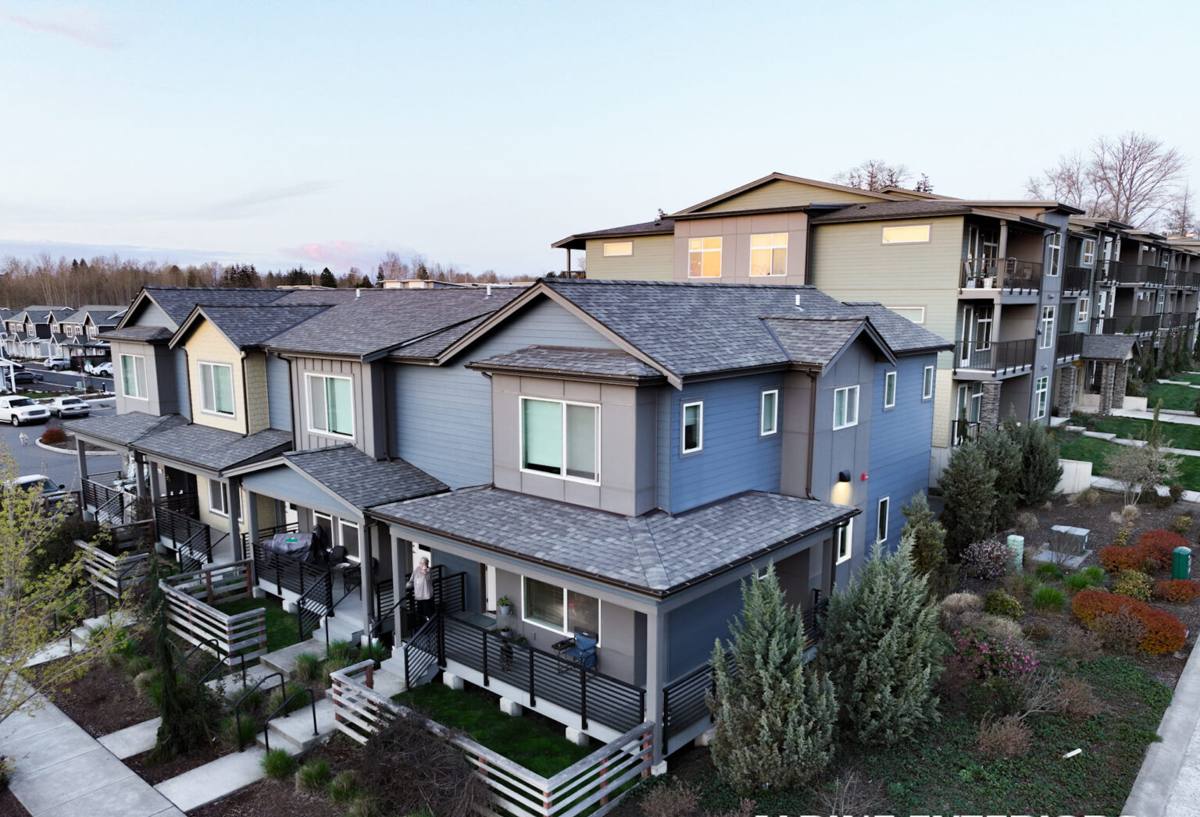
Visual Signs You Can Spot From the Ground
Surface Changes
Start with color and texture. Fading is normal and mostly cosmetic. What's not normal is chalking — a powdery residue that comes off on your hand when you touch the siding — which signals the surface coating has broken down and is no longer protecting the material underneath. Bubbling, blistering, or a rippled "washboard" look in the panels usually means moisture has gotten in behind the surface and is pushing the material apart from the inside.
Cracks, Gaps, and Warping
Hairline cracks matter more on siding than they do almost anywhere else on a house, because a crack is a direct path for water. Look along butt joints (where two pieces meet end to end), around window and door trim, and near the bottom courses closest to grade — these are the spots that take the most water exposure. Warping or bowing, where a panel no longer sits flat against the wall, almost always means the material has absorbed moisture and is swelling.
Signs You Can Feel, Hear, or Smell
Some of the most reliable indicators aren't visual at all.
- Press gently on the siding near the bottom of the wall or below windows — if it gives like cardboard or feels spongy, moisture has already reached the substrate.
- Tap the surface with a knuckle. A solid material gives a consistent sound; a hollow or dull thud in one spot but not others can mean delamination or hidden rot behind that section.
- A musty smell near an exterior wall, especially inside a closet or along a baseboard on that wall, often means moisture has worked its way past the siding and into the wall cavity.
- Peeling interior paint or wallpaper on an exterior wall is a strong clue that the problem started outside and has been going on for a while.
What's Actually Happening Behind the Siding
Visible symptoms are almost always downstream of something happening out of sight. Siding is the first line of defense, but it's the water-resistive barrier and flashing details behind it that do the real work of keeping a wall dry. When siding fails — through cracking, absorbing water, or losing its seal at seams — water gets past that first layer and starts working on the sheathing, framing, and insulation. By the time you see staining or soft spots on the outside, there's a good chance there's already some degree of rot or mold growth on the inside of that wall. This is why "it's just cosmetic" is rarely true once you're past the fading-and-chalking stage.
Trim, Corners, and Penetrations
Look closely at anywhere something interrupts the flat plane of the wall — outside corners, window and door trim, hose bibs, light fixtures, and vents. These are the highest-risk spots for water intrusion because they depend on caulk, flashing, and careful installation rather than just the siding material itself. Cracked caulk, gaps where trim has pulled away from the wall, or dark staining trailing down from a penetration point are all worth a closer look.
Moss, Algae, and the Whatcom County Climate Factor
Green or black streaking, especially on north-facing walls or under eaves that don't get direct sun, is common on homes throughout Whatcom County. On its own, surface algae or light moss growth is mostly a cosmetic and maintenance issue — it means the surface stays damp longer than it should, usually because of shade, poor airflow, or gutters that are dumping water where they shouldn't. Left alone for years, though, that constant dampness accelerates every other failure mode on this list, especially on materials that absorb moisture rather than shed it. A long moss season combined with driving rain off the water is exactly the kind of sustained exposure that separates siding materials that hold up from ones that don't.
Why Some Siding Materials Show These Signs Sooner
Not all siding ages the same way, and a lot of what looks like "bad luck" or "bad installation" is really the material reaching the end of what it was built to handle. Here's a general comparison of how common siding materials tend to behave in a wet, coastal climate like Ferndale's.
| Material | Common failure signs | Climate sensitivity |
|---|---|---|
| Vinyl | Warping, cracking in cold, fading, panels popping loose from expansion/contraction | Handles rain fine but is sensitive to temperature swings and impact; not moisture-absorbent itself, but seams and laps are weak points |
| Engineered wood (e.g., LP SmartSide) | Edge swelling, delamination, mold at seams if caulking or paint maintenance lapses | Performs well when maintained on schedule, but is more forgiving of neglect elsewhere and less so here |
| Primed spruce / solid wood | Cupping, splitting, rot at butt joints, repeated repainting needed | High moisture absorption; needs the most frequent maintenance in a wet climate |
| Cedar | Graying, cupping, checking, rot if not re-sealed regularly | Attractive but moisture-absorbent; long-term performance depends heavily on upkeep |
| Fiber cement (James Hardie) | Rare when installed to spec; mainly caulk/paint maintenance at joints over decades | Non-combustible, dimensionally stable, engineered for moisture exposure; factory-applied finish resists the fading and chalking common to field-painted materials |
None of this means every non-fiber-cement product is doomed — plenty of homes carry vinyl or wood siding for years without major issues. But moisture-absorbing materials in a climate with this much sustained rain and humidity have a narrower margin for error, and that margin shrinks further if maintenance slips even a little.
A Quick Self-Inspection Checklist
Walk the perimeter of your house on a dry day and check for these:
- Chalky residue that rubs off on your hand when you touch the siding
- Bubbling, blistering, or a rippled panel surface
- Visible cracks, especially at butt joints and near the ground
- Soft or spongy spots when pressed, particularly below windows and near the foundation
- Hollow-sounding areas when tapped, compared to the rest of the wall
- Peeling caulk or gaps at corners, trim, and penetrations
- Persistent green or black staining, especially on shaded or north-facing walls
- Musty odors or interior paint peeling on an exterior wall
Repair or Replace? How to Tell the Difference
A single cracked panel, a small area of caulk failure, or isolated algae staining is usually a repair — patch, reseal, clean, and move on. The picture changes once you find soft spots in more than one location, rot at multiple penetrations, or damage that shows up on more than one side of the house. At that point you're not looking at isolated damage, you're looking at a material or installation that's reached the end of its useful life across the board, and patching one section just delays the same conversation for the next section. A contractor worth hiring will tell you honestly which situation you're in rather than defaulting to a full replacement quote every time.
What We Install Instead, and Why
We install James Hardie fiber cement exclusively. It's non-combustible, holds its factory-applied ColorPlus finish without the repainting cycle that wood and some engineered products need, and Hardie's HZ product lines are engineered specifically for the kind of wet, coastal exposure Ferndale sees. That's not a knock on every other product on the market — it's a reflection of what we've seen hold up over decades of Pacific Northwest weather versus what tends to need attention sooner. When installed to spec, with correct flashing, clearances, and fastening, it gives homeowners a long runway before they're back to checking for the signs covered in this guide.
If you're seeing any of these signs on your home, or you just want a second opinion before they turn into a bigger problem, we're happy to take a look. Reach out for a free, no-pressure estimate — no obligation, just a straight answer about what's going on with your siding.