 Ferndale Siding
 Building an Exterior for a Peninsula Climate
Homes in and around Lummi Nation sit closer to open saltwater than almost anywhere else in Whatcom County. That location is part of what makes the area beautiful, and it's also what makes exterior materials work harder here than they do a few miles inland. Wind off Bellingham Bay and the Strait of Georgia carries salt spray onto siding and trim, rain arrives sideways more often than straight down, and the tree cover that shades so many properties keeps roofs, decks, and north-facing walls damp long after a storm has passed. We're based in Ferndale and have worked on homes throughout this stretch of the county, so this is the climate we build for every day, not a set of conditions we're guessing at.
This page walks through what that environment actually does to a home's exterior, how we approach siding, roofing, windows, and decks to hold up against it, and why we've standardized on one siding product instead of offering the full menu most contractors carry.
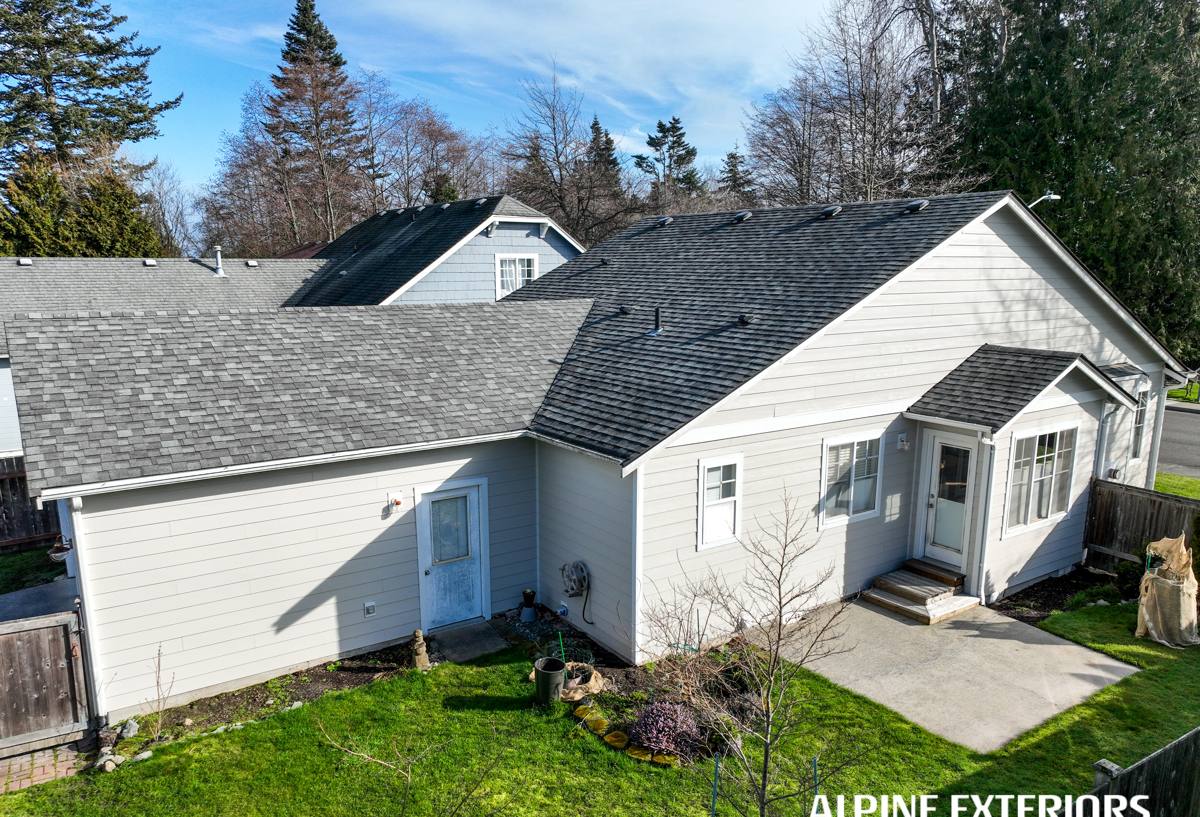
What Salt Air, Rain, and Moss Do to a Home's Exterior
Salt-laden wind
Airborne salt is corrosive to exposed metal fasteners, flashing, and hardware, and it accelerates the breakdown of finishes that aren't built to shed it. Paint films chalk and fade faster on homes with direct water exposure than they do on comparable homes set back from the shoreline. Over years, that means more frequent repainting, more scrutiny of fastener corrosion, and more attention to how trim and flashing details are sealed at the factory versus caulked together on site.
Driving rain
Storms coming off the water tend to push rain horizontally into wall assemblies rather than letting it run straight down and off. That puts real pressure on lap joints, window flashing, and any gap in the water-resistive barrier behind the siding. A material or installation detail that performs fine in a drier, more sheltered part of the county can fall short here if it wasn't built or installed with wind-driven rain in mind.
Moss and shade
Between the marine humidity and the tree canopy common to properties in this area, moss and algae growth is a near-constant maintenance issue on north- and east-facing surfaces, roofs, and decks. Materials that hold moisture at the surface give moss a foothold faster than materials that shed it, and once moss establishes itself it holds moisture against the surface underneath, which compounds the problem.
Siding: Why We Only Install James Hardie Fiber Cement
We get asked fairly often why we don't offer vinyl, LP SmartSide, or cedar as options. It's a fair question, and the honest answer is that we looked at how each of those materials performs specifically in a saltwater, high-moisture, high-moss environment like this one, and we decided we'd rather install one product well than several products with trade-offs we'd have to explain away later.
Why not vinyl
Vinyl siding is inexpensive and low-maintenance in a lot of climates, and it isn't a bad product on its own terms. But it's a petroleum-based plastic that expands and contracts with temperature swings, and in direct coastal wind it can rattle, warp, or pull away from fasteners over time if it isn't installed with enough clearance to move. It also isn't fire-resistant, which matters more each year as wildfire smoke and ember exposure become a broader concern even in wetter parts of the state. We'd rather not install a product whose long-term appearance depends on getting expansion gaps exactly right in a climate that stresses those gaps constantly.
Why not LP SmartSide or other engineered wood panels
Engineered wood siding has improved a lot over the years, but it's still a wood-strand product with a resin binder, and wood-based products are inherently more vulnerable to sustained moisture exposure than fiber cement. In a climate where wind-driven rain and high humidity are routine, any breach in the factory coating or field-cut edge sealing creates an entry point for moisture that can lead to swelling or edge deterioration. That's a maintenance risk we don't think is worth taking on a home that's going to see decades of marine weather.
Why not cedar or primed spruce
Real wood siding is beautiful, and there's a reason it's a regional tradition. But it's also the highest-maintenance option on this list, requiring regular refinishing and vigilant caulking to keep moisture out, and it's the most attractive substrate for moss and mildew of any of the common siding materials. On a shaded, humid lot near the water, a cedar or primed wood exterior can demand attention every year or two just to stay ahead of the climate. We'll always respect a homeowner's preference for a wood look, but we don't think it's responsible to install true wood siding as our standard product in this environment.
What James Hardie does differently
James Hardie fiber cement is made from cement, sand, and cellulose fiber, which makes it non-combustible and dimensionally stable — it doesn't expand and contract with humidity and temperature the way vinyl or wood does. Its ColorPlus factory-applied finish is baked on under controlled conditions rather than field-painted, which gives it more consistent fade and moisture resistance than a coating applied on site. Hardie also engineers specific product lines (its HZ5 line, for example) for harsher climate zones, which is the kind of climate-specific engineering that matters on a site exposed to salt spray and driving rain. It backs the product with a long transferable limited warranty on the substrate and a separate finish warranty on ColorPlus color. None of that makes it maintenance-free, but it's the product we're comfortable standing behind on a home that's going to face this coastline for the next several decades.
Roofing for Coastal Whatcom County Homes
Roofs here deal with the same moss and moisture pressure as siding, plus direct exposure to wind uplift during winter storms. We look closely at underlayment quality, ventilation, and edge and valley flashing on every roofing job, because those details do more to prevent leaks and moss buildup over time than the shingle brand alone. Proper attic and roof-deck ventilation also matters more in a humid marine climate — trapped moisture under a roof deck accelerates rot and shortens the life of the roofing system regardless of what's on top of it.
Windows That Hold Up to Wind-Driven Rain
Window failures on coastal homes are rarely about the glass itself — they're almost always about flashing and sealant details around the frame. When we replace windows, we pay particular attention to head flashing and sill pan details so that wind-driven rain gets directed back out rather than finding its way behind the trim. We also talk with homeowners about glass and frame options suited to a home that's regularly exposed to salt-laden wind, since some finishes and hardware hold up to that exposure better than others.
Decks Built for a Wet, Shaded Climate
Decks take the most direct, sustained beating of any exterior feature here, between standing rainwater, shade, and moss. Framing and fastener choice matter as much as the decking material itself — galvanized or stainless fasteners and properly flashed ledger connections prevent the hidden rot that shows up years later in a deck that looked fine on the surface. For decking material, proper board spacing and airflow underneath do more to control moss and mildew than any single product claim, so we design for drainage and ventilation first.
Cost Factors to Understand
Every property is different, and we'll always give you a specific number after walking your home, but these are the variables that most often move the price on exterior work in this area:
| Factor | Why It Matters Here |
|---|---|
| Wall and roof exposure to wind/water | Water-facing elevations often need more flashing detail and prep work |
| Existing moisture or moss damage | Rot repair or moss remediation adds labor before new material goes on |
| Home access and tree cover | Dense landscaping or limited access can slow staging and material handling |
| Material selection | Fiber cement siding, roofing systems, and window lines vary by product line and finish |
| Scope: single trade vs. combined project | Bundling siding, roofing, windows, or a deck in one project can reduce overlapping labor and site setup |
A Local Crew That Knows This Coastline
A contractor based inland or outside the county doesn't always think about how differently a home near open water behaves compared to one a few miles away. We're a Ferndale-based crew, and the homes we work on throughout Whatcom County — including properties in and around Lummi Nation — regularly deal with the same salt air, driving rain, and moss pressure we've described here. That's the frame of reference we bring to every estimate: what a given wall, roofline, window, or deck is going to face over the next twenty or thirty years in this specific climate, not a generic set of assumptions borrowed from a drier part of the state.
A Simple Checklist Before You Hire
- Ask what siding, roofing, and window materials the contractor actually installs, and why
- Ask how they detail flashing around windows, doors, and roof penetrations
- Ask how fastener corrosion and finish durability are handled on coastal-exposed walls
- Ask whether deck framing will include proper drainage and ventilation, not just decking material
- Get a clear, written scope before any work begins, including material lines and warranty terms
If you're weighing siding, roofing, window, or deck work on a home in or around Lummi Nation, we're happy to walk the property with you and talk through what your exterior is actually facing. There's no pressure and no cost to get a straight answer — just a local crew looking at your home with this climate in mind.