 Ferndale Siding
 Fairhaven and the Coastal Edge of Our Service Area
Fairhaven sits close enough to the water that its homes live with a different set of exterior conditions than houses a few miles inland. Salt-laden air off the Salish Sea, driving rain that comes in sideways during winter storms, and a moss season that seems to stretch longer every year all add up to faster wear on siding, trim, roofing, and anything wood-adjacent. We work throughout Whatcom County, and Fairhaven is one of the areas where we see the clearest evidence of what coastal exposure does to a house over ten or fifteen years.
None of this means Fairhaven homes need exotic materials or unusual construction. It means the basics — material choice, flashing detail, ventilation, and maintenance access — matter more here than they would in a drier, more sheltered part of the county. That's the lens we bring to every siding, roofing, window, and deck project in this area.
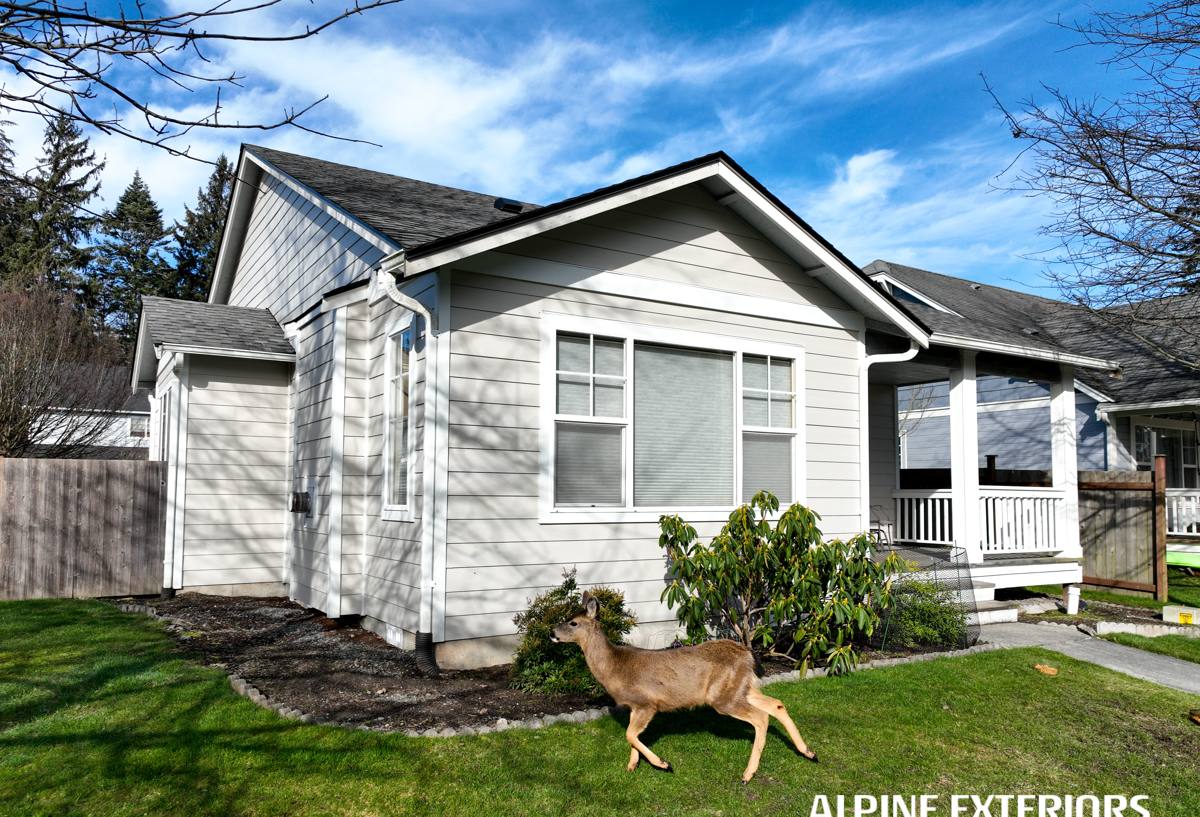
What Salt Air and Coastal Moisture Actually Do to a House
Salt and Metal Fasteners
Airborne salt accelerates corrosion on exposed metal — nail heads, flashing seams, hose bibs, light fixtures, and hardware. On siding, this shows up as rust streaking, staining around fastener points, and premature failure of trim pieces that weren't detailed with corrosion-resistant materials. It's a slow process, but it's constant, and it doesn't take a break in summer the way rain damage sometimes does.
Driving Rain and Wind-Driven Moisture
Storms that come off the water don't just fall straight down — wind pushes rain sideways into wall assemblies, around window and door openings, and up under lap siding edges that weren't installed with enough clearance. Over time, water finds any gap in flashing, caulking, or siding overlap and works its way behind the cladding. That's when you start seeing soft trim, staining at butt joints, and eventually rot in the sheathing behind the siding — problems that are expensive to fix because they're hidden until they're advanced.
Moss, Algae, and a Long Wet Season
Whatcom County's wet season runs long, and shaded, north-facing, or tree-covered walls in Fairhaven can stay damp for weeks at a stretch. That's ideal growing conditions for moss and algae on roofing and siding surfaces. Beyond the cosmetic issue, sustained moisture against a wall surface is the single biggest driver of siding failure — it's what turns a maintenance issue into a structural one if it's not addressed.
Siding: Why We Install Only James Hardie Fiber Cement
We made a deliberate decision as a company to install one siding system — James Hardie fiber cement — rather than offer a menu of products with different price points and different long-term outcomes. In a climate like Fairhaven's, that decision matters more than it might in a drier region.
Non-Combustible and Dimensionally Stable
Fiber cement doesn't swell, rot, or delaminate the way wood-based products can when they take on repeated moisture. It's also non-combustible, which is a genuine advantage during wildfire season even on the wet side of the state — embers carried on wind don't ignite it the way they can ignite wood siding or trim.
ColorPlus Factory Finish
James Hardie's ColorPlus finish is baked on in a controlled factory environment rather than field-applied on site. In a coastal environment where paint film gets tested hard by UV, salt, and moisture cycling, a factory finish holds color and resists fading, chipping, and peeling far better than most site-applied paint jobs — and it comes with its own finish warranty separate from the product warranty.
HZ5 Engineering for This Climate
Hardie manufactures its siding in climate-specific HZ (HardieZone) formulations. The HZ5 product line is engineered for regions with more moisture exposure and freeze-thaw activity — which describes Whatcom County well. It's not a marketing distinction; the substrate composition is genuinely tuned differently than the version sold in dry Southwest markets.
What We Don't Install, and Why
We don't install LP SmartSide, vinyl, Cemplank, Allura, or primed wood siding like cedar or spruce. Some of these are reasonable products in the right application — that's not the point. Our reasoning is specific to what we've seen play out over years in this climate: engineered wood products carry moisture and edge-swell risk that fiber cement doesn't; vinyl can warp, fade, and doesn't hold up structurally the way fiber cement does; cedar and other wood sidings demand a maintenance schedule most homeowners can't realistically keep up with once salt air and moss are in the mix. Standardizing on one proven system lets us install it correctly every time, back it with a real warranty, and stand behind the work without hedging.
Correct Installation Detail Matters More Here
Fiber cement siding performs the way it's rated to perform only when it's installed to manufacturer specification. In a coastal environment, a handful of details separate a wall system that lasts decades from one that fails early:
- Proper clearance between siding and grade, decks, patios, and roof lines so water doesn't wick up into the bottom edge
- Correctly lapped and sealed house wrap or weather-resistive barrier behind the siding
- Flashing at every window, door, and penetration, installed so water sheds outward rather than pooling
- Corrosion-resistant fasteners appropriate for coastal exposure, not standard interior-grade hardware
- Correct joint treatment and caulking at butt joints and trim intersections, using products rated for the exposure
- Adequate fastener penetration and spacing per Hardie's published installation instructions, which is also what keeps the warranty valid
Any of these done wrong won't necessarily show up as a problem in year one. They show up in year five or ten, usually as a repair that costs far more than doing it right the first time would have.
Roofing, Windows, and Decks in a Coastal-Influenced Climate
Siding doesn't perform in isolation — it's one part of an exterior envelope that includes the roof, windows, and any attached structures like decks. In Fairhaven we look at these together, because moisture management is a whole-house problem.
Roofing
Roofs here deal with the same moss and algae pressure as siding, plus the added stress of wind-driven rain finding its way under improperly sealed flashing at valleys, chimneys, and vent penetrations. Ventilation and moisture-shedding detail at the roof line directly affect how much water ends up running down the wall assembly.
Windows
Window flashing is one of the most common failure points we find during siding tear-off on older homes. A window that isn't properly flashed and integrated with the water-resistive barrier will leak eventually, regardless of how good the window itself is. When we replace siding around existing windows, we address flashing detail as part of the job rather than working around it.
Decks
Attached decks create a transition point where siding meets a horizontal structure exposed to standing water and ledger-board moisture. Ledger flashing and proper separation between deck framing and the house wall are critical here — it's a spot we inspect closely on every project that includes both siding and deck work.
Comparing Exterior Priorities by Component
| Component | Primary Coastal Risk | What We Prioritize |
|---|---|---|
| Siding | Moisture intrusion, salt corrosion, moss growth | Fiber cement material, correct clearance and flashing, corrosion-resistant fasteners |
| Roofing | Wind-driven rain, moss, algae staining | Proper underlayment, flashing at penetrations, ventilation |
| Windows | Flashing failure, seal degradation | Integration with water-resistive barrier, quality sealants |
| Decks | Ledger moisture, standing water, fastener corrosion | Ledger flashing, drainage slope, coastal-rated hardware |
Cost Factors Homeowners Should Understand
Every home and project scope is different, so we don't quote pricing without seeing the house, but a few factors consistently move the number for Fairhaven-area exterior work.
| Factor | Why It Affects Cost |
|---|---|
| Existing wall condition | Hidden moisture damage found during tear-off requires sheathing or framing repair before new siding goes on |
| House complexity | More corners, dormers, and trim detail mean more labor and material waste |
| Siding profile and color | Lap width, panel vs. plank, and ColorPlus color selection affect material cost |
| Access and site conditions | Tight lots, mature landscaping, or multi-story walls affect scaffolding and labor time |
| Scope bundling | Combining siding with roofing, window, or deck work in one project can reduce redundant setup and access costs |
Why a Local Crew Matters in a Neighborhood Like This
A crew that works Whatcom County regularly knows what a Fairhaven-area wall looks like after a decade of salt air and rain before they ever pull the old siding off. That familiarity shapes decisions on site — where to expect hidden moisture damage, which details to double-check, how much clearance to build in around grade and hardscape. It also means we're a short drive away if a warranty question or a maintenance question comes up years down the road, not a company that installed once and moved on to the next region.
A Simple Maintenance Checklist for Coastal-Exposed Homes
- Rinse siding and trim once or twice a year to clear salt residue and organic buildup, especially on shaded or north-facing walls
- Walk the exterior after major storms and check for loose trim, gaps at joints, or visible staining
- Keep gutters and downspouts clear so water isn't overflowing onto siding or pooling near the foundation
- Trim back vegetation that keeps walls shaded and damp for extended periods
- Have flashing at windows, doors, and roof penetrations inspected periodically, since failures here are often invisible until they cause interior damage
- Address any soft trim, bubbling paint, or staining promptly rather than waiting for the next scheduled project
If you're weighing a siding, roofing, window, or deck project on a Fairhaven-area home, we're happy to take a look and walk you through what we're seeing and what it would take to address it — no pressure, no obligation. Use the form below to request a free estimate.