 Ferndale Siding
 Roofing for a Salt Air, High-Rain Corner of Whatcom County
Homes near Fairhaven sit close enough to the water that salt-laden air is part of daily life on the roof, not just an occasional coastal breeze. Add Whatcom County's long, wet winters and the mossy shade many of these older, tree-lined lots provide, and you get a roofing environment that's genuinely tougher on materials than what you'd find twenty miles inland. Asphalt granules break down faster near salt water, fasteners corrode sooner if the wrong grade is used, and moss doesn't just sit on top of shingles — it works its way under tabs and lifts them.
A new roof installation done for a Fairhaven-area home needs to be specified and built differently than a standard replacement in a drier, more sheltered part of the county. That's the whole point of this page: what your home actually needs given where it sits, what a correct installation looks like, and how our process handles the details that get skipped on a rush job.
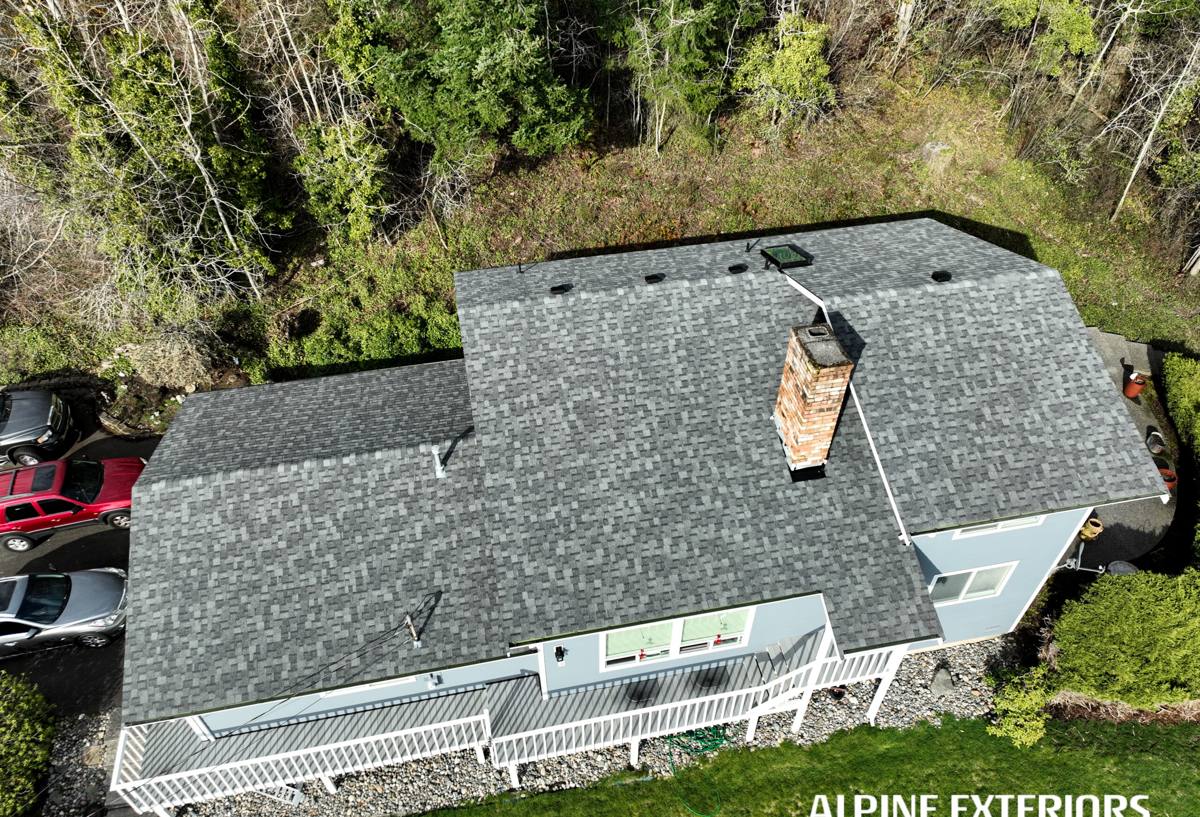
How the Local Climate Shapes the Job
Salt Air and Metal Components
Every roof has metal in it — flashing, drip edge, fasteners, vents, sometimes valleys. Close to Bellingham Bay, standard galvanized components corrode noticeably faster than they would inland. We spec corrosion-resistant flashing and fastener grades for homes in this zone as a default, not an upcharge option, because replacing a roof only to have the flashing fail in eight years defeats the purpose.
Driving Rain and Wind-Driven Water
Rain in this part of Whatcom County doesn't always fall straight down. Wind off the water pushes it sideways into valleys, around chimneys, and up under shingle edges if the underlayment and flashing details aren't built for it. This is a wind-driven-rain climate, and the installation has to treat every penetration and transition as a place water will actively try to enter, not just a spot that gets occasionally damp.
Moss and Shade
Mature trees are part of what makes Fairhaven-area neighborhoods attractive, but they also mean shaded, slow-drying roof sections. Moss thrives in that combination of moisture and shade, and once it establishes on a roof it holds water against the surface and lifts shingle tabs, which is how a moss problem turns into a leak. A new roof is the right time to address this at the source — with material choice, ventilation, and metal detailing that make it harder for moss to take hold in the first place.
Signs a Fairhaven-Area Home Needs a New Roof, Not Another Repair
Not every roof problem calls for full replacement, but in this climate certain signs mean the underlying material and structure are past the point where patching makes sense.
- Granule loss heavy enough that you're finding grit in gutters and downspouts every season
- Shingles that are curling, cupping, or cracking, especially on shaded or north-facing slopes
- Moss or dark algae staining that keeps returning within a year of cleaning
- Soft spots or visible sagging when walking the roof or viewing the deck from the attic
- Daylight visible through the roof deck, or water staining on attic sheathing and rafters
- Flashing around chimneys, skylights, or valleys that's rusted, lifted, or was never properly step-flashed
- A roof approaching or past 20–25 years old for asphalt, or showing age-related brittleness
- Repeated interior leaks in the same location despite prior patch repairs
What a Correct New Roof Installation Actually Involves
A new roof is more than laying new shingles over what's there. Every step below matters more, not less, in a coastal, high-rain climate.
Full Tear-Off and Deck Inspection
We remove the existing roofing down to the deck. This is the only way to actually see the condition of the sheathing underneath, which is especially important on older homes near Fairhaven where past moisture intrusion may have gone unnoticed under a previous layer. Any soft, delaminated, or rotted decking gets replaced before anything new goes down — installing a new roof over a compromised deck just hides the problem.
Ice-and-Water Shield at Vulnerable Areas
Valleys, eaves, and roof penetrations get a self-adhering waterproof membrane underneath the primary underlayment. In a wind-driven-rain climate this isn't optional extra protection — it's the layer that keeps water out when it's pushed sideways under the shingle edge instead of running straight off.
Synthetic Underlayment Across the Field
Synthetic underlayment holds up to the extended exposure and moisture cycling common here far better than older felt products, and it stays more stable during the install itself if weather rolls in partway through the job.
Flashing Details Built for the Site
Step flashing at walls and chimneys, proper valley metal, and corrosion-resistant drip edge around the entire perimeter. These are the components most likely to fail first in salt air if the wrong material grade is used, and they're also the most common source of leaks on roofs that otherwise look fine.
Ventilation Matched to the Attic
Balanced intake and exhaust ventilation keeps the attic temperature and moisture level in check, which does two things at once: it extends the life of the new roofing material from underneath, and it reduces the damp, shaded conditions that let moss and algae get established on the surface.
Material Options for This Climate
There's no single "best" roofing material for every home — it depends on budget, roof pitch, how much shade the property gets, and how long you plan to stay in the home. Here's how the common options actually compare for a Fairhaven-area property.
| Material | Typical Lifespan | How It Handles Salt Air & Moss | Cost Position |
|---|---|---|---|
| Architectural asphalt shingle | 25–30 years | Good with proper ventilation and algae-resistant granules; still needs periodic moss maintenance in shaded areas | Moderate |
| 3-tab asphalt shingle | 15–20 years | More prone to wind lift and granule loss in coastal conditions; not our default recommendation here | Lower upfront |
| Standing seam metal | 40+ years | Sheds moss and moisture very well when properly coated and fastened with corrosion-resistant hardware | Higher upfront |
| Synthetic/composite shingle | 30–50 years | Resists moisture absorption well; good option on heavily shaded lots | Higher |
We'll walk through which option actually fits your roof's pitch, your home's style, and your budget during the estimate — there's no one-size answer, and part of our job is telling you honestly when a lower-cost option is the smarter call and when it isn't.
Our Installation Process, Step by Step
- On-site inspection and estimate. We walk the roof and attic, check the deck where accessible, and give you a written scope and price — no pressure, no upsell script.
- Material selection. We go over the tradeoffs for your specific roof and budget so you're choosing based on facts, not just a brochure.
- Scheduling around weather. Whatcom County's wet season means timing matters. We plan tear-off in workable weather windows and protect the deck if conditions shift mid-job.
- Tear-off and deck repair. Old roofing comes off, the deck is inspected, and any damaged sheathing is replaced before we move forward.
- Waterproofing and underlayment. Ice-and-water membrane at valleys and eaves, synthetic underlayment across the field.
- Flashing and ventilation installation. Corrosion-resistant metal at every penetration and edge, intake and exhaust ventilation balanced for the attic.
- New roofing installed to manufacturer spec. Correct nailing pattern, exposure, and fastening — the details that determine whether a warranty is actually valid if you ever need it.
- Cleanup and final walkthrough. Magnetic sweep for stray fasteners, gutters cleared of debris, and a walkthrough so you know exactly what was done.
Permits, Timeline, and What to Expect
Most new roof installations require a building permit, which we handle as part of the job rather than leaving it to the homeowner. A typical single-family roof replacement in this area takes one to three days of active work depending on size, pitch, and weather, though we won't rush a job just to hit a number — getting the flashing and ventilation right takes the time it takes. We'll give you a realistic window before work starts and keep you updated if weather pushes the schedule.
During the job, expect some noise, debris in the driveway or yard staging area, and dust inside the attic space. We protect landscaping and hardscaping before work begins and do a full cleanup pass, including a magnetic sweep of the ground, before we consider the job finished.
Why a Crew That Already Works Fairhaven Matters
Roofing crews that mostly work drier, inland areas sometimes spec materials and details that are fine there but undersized for a coastal, high-moss environment. A crew that regularly works properties near Fairhaven and the rest of Whatcom County's coastline already knows to default to corrosion-resistant metal, to take moss-prone shade seriously in the ventilation plan, and to flash for wind-driven rain rather than straight-down rain. That familiarity isn't a marketing point — it shows up directly in how long the roof actually performs before you're dealing with a leak or a redo.
We're based in Ferndale and work throughout Whatcom County, including the homes and neighborhoods around Fairhaven. That means we're a short trip away for the estimate, for the install, and for a callback years later if you ever have a question about the roof we put on.
Maintaining a New Roof in This Climate
A correctly installed roof still benefits from basic upkeep, especially given the moss and moisture conditions common here.
- Keep gutters clear so water isn't backing up under the roof edge, particularly during fall leaf drop
- Have overhanging branches trimmed back to reduce shade and debris buildup on the roof surface
- Schedule a soft wash or moss treatment on a regular interval if your property is heavily shaded
- Have the roof and attic checked after any major windstorm, even if nothing looks obviously wrong from the ground
- Address small flashing or fastener issues promptly — they're inexpensive to fix early and expensive once water gets behind them
If your roof is showing its age or you're just not sure whether repair or replacement makes sense for your Fairhaven-area home, we're glad to take a look. The estimate is free, there's no pressure to commit on the spot, and you'll get a straight answer about what your roof actually needs. Use the form below to get started.