 Ferndale Siding
 Sudden Valley's Exterior Challenge
Sudden Valley sits in a different micro-climate than a lot of Whatcom County. Tree cover is heavier, lots are often shaded for a good part of the day, and homes tucked near the water or the tree line stay damp longer after a storm than a house out in the open. Add in the marine air that moves through the whole region off the Sound, and you get a combination that's tough on exterior building materials: slow-drying surfaces, a long moss season, and driving rain that finds every gap in a wall system that wasn't detailed correctly.
None of that is a reason to panic about your siding. It's a reason to be deliberate about what goes on your walls and how it's installed. We've worked on enough homes in this pocket of the county to know which sides of a house fail first, which details get skipped by crews rushing a job, and which materials actually hold up when the sun doesn't hit a wall for half the year.
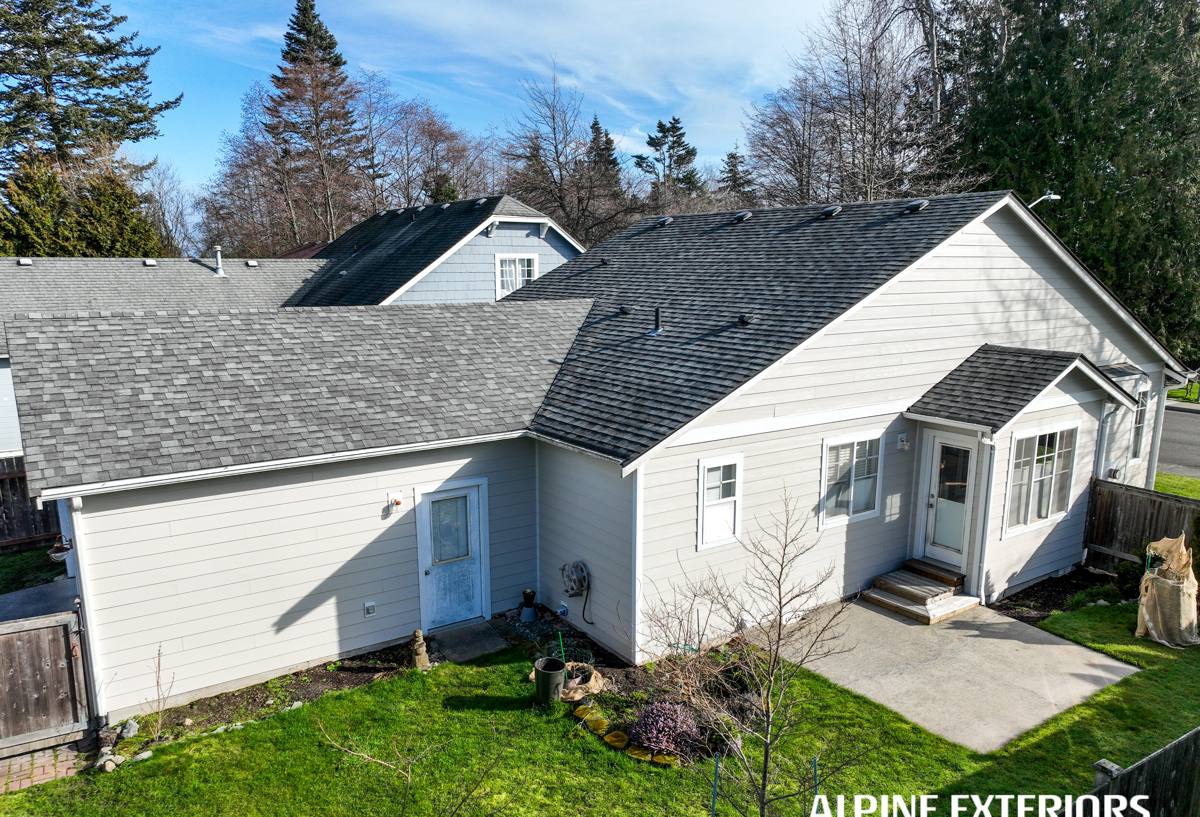
Why Shaded, Tree-Lined Lots Wear Siding Faster
Moisture that doesn't leave
Siding on a sunny, open wall gets to dry out between rain events. Siding under a canopy of Douglas fir or cedar doesn't get that break. Moisture sits in the wood, in the caulk lines, in the seams — and over months and years that constant dampness is what drives rot, paint failure, and moss growth far more than any single storm does.
Moss and organic buildup
Moss isn't just a cosmetic issue. Once it establishes on a siding surface, it holds water against the material and keeps that section wetter than the rest of the house. On a product that isn't dimensionally stable, that constant moisture cycling is what eventually causes swelling, cupping, or delamination at the seams.
Debris and physical wear
Homes close to trees also deal with needles, cones, and branch debris collecting in siding laps, window sills, and gutter lines. Left alone, that debris holds moisture right against the wall surface — one more reason material choice and installation detailing matter more here than in an open subdivision.
Why We Only Install James Hardie Fiber Cement
We made a decision a while back to standardize on James Hardie siding and stop installing everything else — no LP SmartSide, no vinyl, no Cemplank or Allura, no primed spruce or cedar. That's not a marketing angle. It's because in a climate like this one, the material you choose has to survive years of shade, moisture, and moss pressure without babysitting.
Fiber cement doesn't feed mold or fungus the way wood-based products can, and it doesn't expand and contract with moisture the way engineered wood siding does. James Hardie's ColorPlus finish is baked on at the factory under controlled conditions, which matters a lot when a house sits in shade most of the day and doesn't get the UV exposure that helps some finishes cure and hold up on sunnier lots. It's also non-combustible, which is a real consideration anywhere near wooded terrain.
We're not going to tell you every other siding product is worthless — that's not honest and it's not our call to make about a manufacturer's product line. What we will tell you is that after years of doing this work, we didn't want to keep installing materials that need more maintenance, more caulk, more repainting, and more vigilance than our customers signed up for. Hardie was the product that let us stand behind a job and mean it.
The HZ5 Climate Consideration
James Hardie engineers several of its siding lines to different climate zones. In the Pacific Northwest, that generally means the HZ5 product line, formulated for regions with sustained moisture exposure. It's a small detail that a lot of homeowners never hear about — but it's part of why we specify Hardie products rather than a one-size-fits-all siding line.
A Full Exterior Approach
Siding rarely fails in isolation. On shaded, wet lots, the roof, the windows, and even the decking all take on moisture the same way — and a weak point in one system usually shows up as damage in another. That's why we handle siding, roofing, windows, and decks as one connected exterior, not four separate trades that don't talk to each other.
| Exterior System | Common Issue on Shaded/Wet Lots | Our Approach |
|---|---|---|
| Siding | Trapped moisture, moss growth, seam failure | James Hardie fiber cement with correct flashing and clearances |
| Roofing | Moss buildup, slow-draining valleys, algae streaking | Proper underlayment, ventilation, and moss-resistant material choices |
| Windows | Failed seals, fogging, rot at old wood frames | Correctly flashed replacement windows tied into new siding |
| Decks | Softwood decay, slippery moss-covered surfaces | Materials and drainage detailing suited to shade and moisture |
When we're on a Sudden Valley property for a siding job, we're looking at the whole envelope — not just the walls the estimate covers.
What a Local Crew Actually Means Here
A lot of siding companies serving Whatcom County are based well outside it and treat every job the same regardless of where the house sits. That doesn't work well in a community with the kind of shade, drainage patterns, and access considerations you find around Sudden Valley. A crew that's actually worked this area knows which walls take the worst weather, how tree cover changes drying time, and what kind of prep a shaded, moss-prone exterior needs before new siding ever goes up.
It also matters for the practical side of the job — many neighborhoods in this part of the county have their own architectural or exterior guidelines, and it helps to work with a crew that's used to checking on that kind of thing up front rather than after material is already ordered. We're not going to claim familiarity with rules we haven't confirmed for your specific property, but we do know to ask the right questions before we start.
What the Installation Process Looks Like
Correct installation matters more than the product label on the box. Fiber cement siding installed with the wrong clearances, poor flashing, or rushed caulking will still develop problems — just more slowly than a lesser material would. Here's what we make sure happens on every job:
- Full inspection of the existing wall sheathing and framing for hidden rot before new siding goes up
- Correct flashing at every window, door, and roofline intersection
- Proper clearance between siding and grade, decks, roofing, and other transitions
- Factory-finished ColorPlus panels installed to Hardie's fastening and gapping specifications
- Ventilation and moisture management behind the siding, not just on the surface
- A final walkthrough so you know exactly what was done and why
Timeline and Disruption
Most single-family siding jobs in this size range take one to two weeks depending on square footage, wall complexity, and weather windows — and in a climate with this much rain, we plan around forecasts rather than pushing through a downpour just to hit a date. We'll walk you through the schedule before work starts so there aren't surprises.
What Affects the Cost of a Siding Project
Every home is different, and we don't publish blanket pricing because it would be misleading. That said, these are the factors that typically move the number up or down:
| Factor | Why It Matters |
|---|---|
| Home size and wall complexity | More corners, gables, and trim details mean more labor |
| Existing sheathing condition | Rot repair found during tear-off adds scope |
| Siding profile and color | Lap width, texture, and factory color options vary in cost |
| Access and site conditions | Tree-lined or sloped lots can require more setup time |
| Window and trim work bundled in | Replacing windows alongside siding is often more efficient than doing it later |
Maintenance After Installation
Correctly installed James Hardie siding is low-maintenance, but "low" doesn't mean "none," especially on a shaded lot. A simple annual routine goes a long way:
- Rinse siding gently once a year to clear pollen, moss spores, and debris before they take hold
- Keep gutters clear so water isn't overflowing directly onto wall sections
- Trim back branches and foliage that keep siding in constant shade or contact
- Watch caulking at trim and window edges and have it touched up if it starts to crack
That's a fraction of what wood-based or vinyl siding typically demands in a climate like this, which is part of why we point homeowners toward fiber cement in the first place.
Get a Local Estimate
If you're dealing with moss, moisture stains, or siding that's simply reached the end of its life in Sudden Valley, we're happy to come take a look. We'll give you a straight read on what we see, what it would take to fix it right, and a free, no-pressure estimate using the form below.