 Ferndale Siding
 Siding Built for Nooksack's Climate
Nooksack sits inland from the coast but still lives inside the same wet, marine-influenced weather system that defines Whatcom County. Homes here go months at a time under low cloud cover, with driving rain that comes in sideways during winter storms and humidity that lingers long after the rain stops. Add in the shaded, tree-lined lots common throughout the area and you get conditions that are hard on exterior building materials — especially anything with wood content or a factory finish that wasn't built for this specific climate.
We're a local exterior contractor serving Ferndale and the surrounding Whatcom County communities, including Nooksack. We install siding, roofing, windows, and decks, and we've made a deliberate decision about what goes on the walls we touch: James Hardie fiber cement, exclusively. No vinyl, no LP SmartSide, no Cemplank, no Allura, no primed spruce or cedar. That's not a marketing angle — it's a standard we hold because of what we've seen happen to other materials in this exact climate.
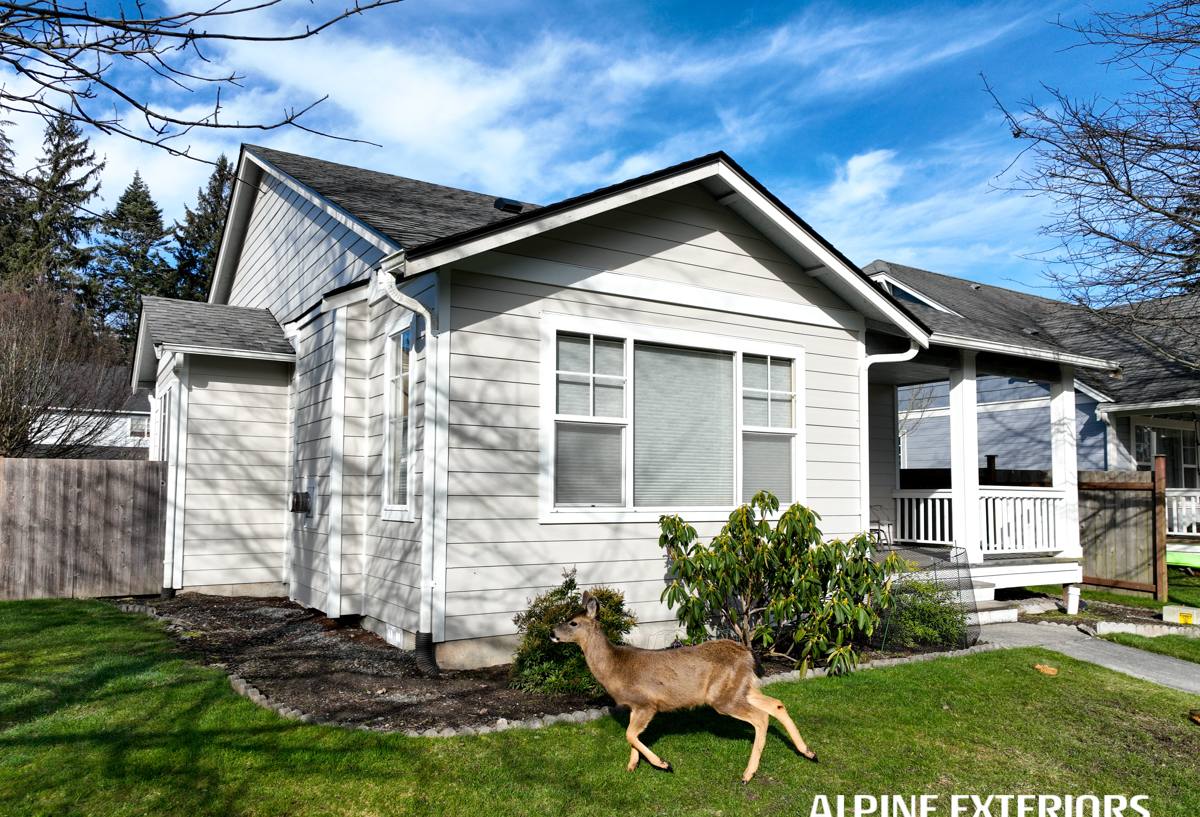
What This Climate Actually Does to Siding
Moisture That Never Fully Dries Out
Nooksack doesn't get hammered by hurricane-force storms, but it gets something arguably harder on a building envelope: sustained, low-grade moisture exposure for most of the year. Siding here rarely gets a long, dry stretch to fully shed the water it's absorbed. Materials that are even slightly moisture-sensitive — engineered wood siding, primed but unsealed wood, poorly sealed seams on any product — start to show it in swelling, soft spots, or paint failure well before a homeowner expects to be dealing with siding problems.
Moss, Algae, and the Shade Problem
Whatcom County's tree cover and long overcast season are a moss and algae factory. Any siding on a shaded or north-facing wall is going to collect organic growth over time, full stop — that's true of every exterior material. The real difference is how a material handles it. Fiber cement doesn't feed mold or rot the way wood-based products can, and a factory-cured finish resists the staining that comes from years of moss and mildew sitting against the surface. Vinyl sheds growth reasonably well but softens and warps in ways that make cleaning it aggressively risky.
Temperature Swings and Coastal Salt Air
Nooksack isn't beachfront, but Whatcom County's proximity to Puget Sound and the Strait of Georgia means salt-tinged air reaches further inland than people expect, especially on windy days. Combined with the freeze-thaw cycles of a Pacific Northwest winter, siding here is asked to expand, contract, and resist corrosion-adjacent wear year after year. Materials that aren't dimensionally stable — meaning they move a lot with temperature and moisture changes — develop gaps, cracked caulk lines, and fastener issues faster than a stable material would.
Why We Standardized on James Hardie
We didn't start out refusing to install other products. We standardized on Hardie fiber cement after years of exterior work in this exact climate, watching which materials held up and which ones needed early intervention. A few specifics:
- Non-combustible core. Fiber cement won't ignite or contribute fuel to a fire the way wood-based sidings can — a meaningful consideration as wildfire smoke seasons have become a regular part of Pacific Northwest summers.
- ColorPlus factory finish. The color is baked on in a controlled environment, not brushed or sprayed on site. That finish resists fading and chalking far longer than field-applied paint, which matters when a wall sits under moss and moisture for most of the year.
- Climate-engineered product lines. Hardie makes region-specific formulations (their HZ10 line, for example, is engineered for wetter, harsher climate zones) rather than a single one-size-fits-all board.
- Dimensional stability. Fiber cement doesn't swell and contract with moisture the way wood or engineered wood products can, which means fewer callback issues with caulking, fastener pop, and seam gaps over time.
- A real, transferable warranty. Hardie backs its ColorPlus products with a substantial warranty that can transfer to a new owner if the home sells — a detail that matters for resale in a market like this one.
None of this means other products are junk. LP SmartSide, vinyl, and cedar all have legitimate use cases and loyal installers. We simply made a call, based on this specific climate and what we're willing to warranty our own labor against, to install one material system and install it correctly rather than offer a menu of products with very different long-term risk profiles.
What a Siding Job Looks Like for a Nooksack Home
Assessment First
Before we talk product, we look at the house: what's currently on the walls, how much moisture damage exists behind it, how the roofline and gutters are managing water, and where the shaded, moss-prone sides are. A siding replacement is also the best possible time to address any sheathing or moisture barrier issues hiding behind the old material — issues that are invisible until the old siding comes off.
Installation to Spec
Fiber cement is a forgiving material in terms of longevity, but it's unforgiving of sloppy installation. Correct fastener placement, proper clearances from grade and roof lines, correctly lapped house wrap, and factory-recommended caulking and flashing details are what actually determine whether a Hardie installation performs for decades or develops problems in five years. We install to the manufacturer's specifications, not shortcuts, because a warranty is only as good as the installation behind it.
Beyond Siding
Because we also handle roofing, windows, and decks, we can look at a Nooksack home's exterior as one connected system rather than isolated projects. Roof drainage, window flashing, and siding all interact — a roof that's dumping water in the wrong place will undermine even a well-installed wall, and old windows are a common source of the moisture intrusion that shows up as siding damage years later.
Comparing Exterior Options for This Climate
| Factor | James Hardie Fiber Cement | Vinyl | Wood / Engineered Wood |
|---|---|---|---|
| Moisture resistance | High — cement-based, doesn't rot | Good on the surface, but seams and fasteners can trap moisture | Most vulnerable; prone to swelling and rot in sustained wet climates |
| Moss/algae staining | Resists staining with a factory-cured finish | Sheds growth but stains and can warp if pressure-washed | Absorbs moisture that feeds growth; harder to keep clean long-term |
| Fire resistance | Non-combustible | Melts/deforms under heat | Combustible |
| Finish longevity | Factory ColorPlus finish, long fade resistance | Color is through-body but can fade/chalk | Field-applied paint needs recoating on a regular cycle |
| Dimensional stability | High | Expands/contracts noticeably with heat | Moderate to low, especially engineered products |
Maintenance Expectations
Even the best siding material needs some upkeep in a climate like this one. Here's what we tell Nooksack homeowners to expect with a Hardie installation:
- Periodic gentle washing (garden hose and soft brush, not high-pressure) to keep moss and pollen from building up, especially on shaded walls
- Annual visual inspection of caulk lines and trim joints, particularly after the first hard winter
- Keeping gutters clear so water isn't sheeting down the wall from a clogged downspout
- Trimming back vegetation that keeps a wall section perpetually damp and shaded
- Touch-up caulking as needed at penetrations — vents, hose bibs, light fixtures
That's a meaningfully lighter maintenance list than what wood or engineered wood siding requires in this same climate, where repainting and moisture monitoring are a recurring cost, not an occasional one.
Cost Factors to Expect
Every siding quote depends on the specifics of the house, but the main drivers we walk homeowners through are:
| Factor | Why It Matters |
|---|---|
| Home size and wall complexity | More corners, dormers, and cutouts mean more labor and material waste |
| Current condition behind the siding | Rot or moisture damage found during tear-off adds repair scope |
| Siding profile and trim selection | Lap width, board-and-batten accents, and trim detail affect material cost |
| Access and site conditions | Steep lots, limited access, or heavy landscaping can add labor time |
| Paired projects | Combining siding with roofing, window, or deck work can improve overall efficiency and scheduling |
Why a Local Crew Matters
Exterior work in Whatcom County isn't the same job as exterior work in a drier climate, and it isn't the same job in every part of the county either — shaded, moss-heavy inland lots like those around Nooksack present different problems than an open, wind-exposed site closer to the water. A crew that works this region regularly knows how to sequence a job around the rain, how to protect open wall sections during a tear-off, and which details actually matter for long-term performance here versus what's just recommended for a generic climate zone. That local knowledge is part of what you're paying for, even though it never shows up as a line item.
Ready to Talk About Your Home?
If your Nooksack home's siding is showing moss staining, soft spots, cracked paint, or you're just planning ahead for a replacement, we're happy to take a look and walk you through what we'd recommend and why. There's no pressure and no obligation — fill out the form below to schedule a free estimate.