 Ferndale Siding
 Siding Built for Marietta's Waterfront Climate
Marietta sits low and close to the water on Bellingham Bay, inside Whatcom County, just outside Ferndale proper. That location is part of what makes it a great place to live — and part of what makes exterior siding work harder here than it does a few miles inland. Homes in Marietta take on salt-laden air off the bay, long stretches of wind-driven rain in the fall and winter, and a moss season that can stretch from October well into spring. We've built our siding, roofing, window, and deck work around those exact conditions, not around a generic Pacific Northwest weather sheet.
This page is about siding specifically, but it's worth saying up front: we only install James Hardie fiber cement siding. Not vinyl, not LP SmartSide, not Cemplank, not Allura, not primed spruce or cedar. That's not a marketing angle — it's a standard we settled on after weighing how each of those products actually performs over 10, 20, and 30 years in a climate like this one, and we explain our reasoning plainly below.
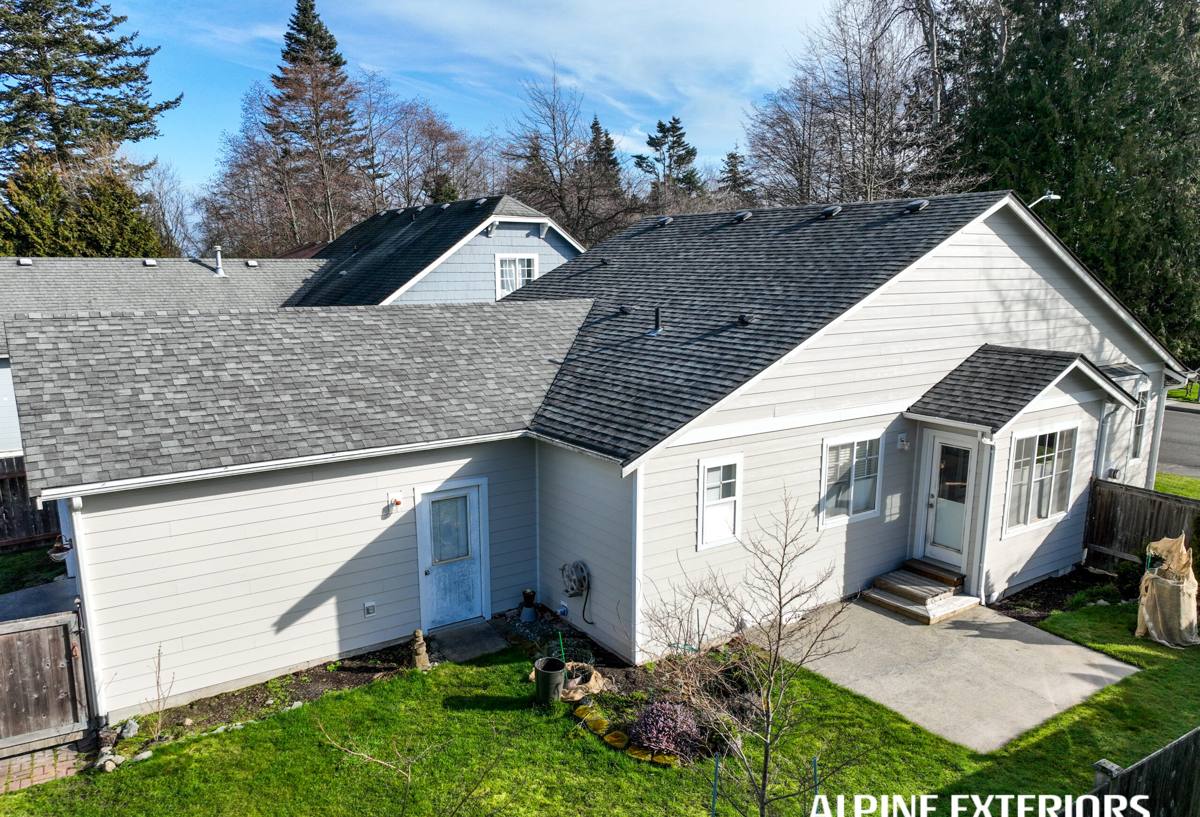
What Marietta's Climate Actually Does to Exterior Siding
Salt Air and Corrosion
Proximity to Bellingham Bay means airborne salt is a real, ongoing factor for homes in Marietta, not an occasional coastal-storm event. Salt-laden moisture settles on exterior surfaces, works into seams and fastener heads, and accelerates corrosion of anything metal that isn't rated for it — nails, flashing, trim fasteners, even some hardware behind vinyl panels. Over time it also degrades certain coatings and adhesives faster than manufacturers' inland test data would suggest. Any siding choice for this neighborhood needs to account for salt exposure as a baseline condition, not a worst-case scenario.
Moss, Algae, and a Long Wet Season
Whatcom County's wet season runs long, and homes near the water in Marietta tend to stay damp longer after a rain event than homes further inland, simply because of proximity to the bay and generally lower elevation. That extended dampness is exactly what moss and algae need to establish themselves on north-facing walls, under eaves, and anywhere siding doesn't get a chance to fully dry between storms. Left unaddressed, moss holds moisture directly against the siding surface, which shortens the life of anything that isn't inherently moisture-stable.
Wind-Driven Rain
Storms coming off the water don't just drop rain straight down — they push it sideways, into lap joints, around window and door trim, and into any gap where the siding system wasn't detailed correctly. This is where installation quality matters as much as the product itself. A siding system with excellent moisture ratings on paper can still fail early if the flashing, seams, and butt joints weren't installed to handle rain that's arriving at an angle, sometimes for days at a stretch.
Why We Install Only James Hardie Fiber Cement
We get asked regularly why we don't offer vinyl or engineered wood siding as a lower-cost option. The honest answer is that we've seen how those products age in exactly this kind of climate, and we don't want our name on a job that we expect to need premature repair or replacement.
What We Don't Install, and Why
- Vinyl siding — it's affordable and low-maintenance in dry climates, but it expands and contracts with temperature swings, can warp or crack over time, and its seams and J-channels give wind-driven rain more opportunities to get behind the panel than a properly lapped fiber cement system.
- LP SmartSide and other engineered wood products — treated wood-strand siding has improved over the years, but it's still wood-based, meaning any breach in the factory coating or field-cut edge is a path for moisture absorption and eventual swelling, especially in a salt-air, high-humidity environment like Marietta's.
- Cemplank and Allura — these are also fiber cement products and share some of Hardie's core strengths. Our decision here is less about the raw material and more about consistency: we've standardized our crews, installation details, and warranty conversations around one manufacturer's engineered system and factory finish, rather than mixing specs across brands.
- Primed spruce or cedar — real wood siding can look excellent, but it demands a maintenance commitment — repainting, caulking, moisture monitoring — that most homeowners underestimate, particularly this close to salt air and a long wet season.
James Hardie fiber cement is non-combustible, dimensionally stable across temperature and moisture swings, and comes from the factory with a baked-on ColorPlus finish rather than a field-applied paint job. Hardie also engineers specific product lines (its HZ5 designation, for example) for harsher climate zones, which matters directly for a bay-adjacent community like Marietta. It carries a strong, transferable warranty when installed by a factory-trained crew to manufacturer specification — and installation to spec is the part we control directly.
How a Marietta Siding Project Works With Us
Assessment and Moisture Check
Every project starts with a walk-around assessment of the existing siding and the wall assembly behind it. In a coastal-adjacent neighborhood like Marietta, we pay particular attention to north- and west-facing walls, areas with existing moss growth, and any spots where trim, flashing, or old caulking has failed — those are the locations most likely to have hidden moisture damage in the sheathing underneath.
Installation to Manufacturer Spec
Hardie's warranty and long-term performance both depend on correct installation: proper fastener type and placement, correct clearances at grade and roofline, properly lapped and caulked joints, and flashing details that account for wind-driven rain rather than just straight-down rainfall. This is where a lot of siding problems — on any brand — actually originate, and it's the step we don't cut corners on.
Finish and Site Cleanup
ColorPlus finishes arrive factory-cured, which cuts down dramatically on job-site painting and the weather delays that come with it. We handle site cleanup and haul-away as part of the job, not as an add-on.
Siding Doesn't Work Alone: Roofing, Windows, and Decks
Siding is one piece of a home's building envelope, and in a climate that pushes rain sideways and grows moss year-round, the pieces around it matter just as much. A roof with failing flashing at a wall intersection will feed water behind even a perfectly installed siding job. Windows with worn seals or degraded flashing tape create the same problem at every opening. Decks attached to the home create another intersection point where flashing and moisture management have to be done correctly, or the wall assembly behind the siding pays for it. Because we handle siding, roofing, windows, and decks, we look at a Marietta home as one connected system rather than four separate trades — which matters most exactly at the seams where those systems meet.
What Drives Cost on a Marietta Siding Project
| Factor | Why It Matters Here |
|---|---|
| Home size and wall complexity | More corners, dormers, and trim details mean more cutting, flashing, and labor time |
| Existing sheathing condition | Salt-air exposure and prior moss growth can mean hidden moisture damage discovered at tear-off |
| Hardie product line and profile | Lap siding, panel systems, and shingle-style profiles carry different material and labor costs |
| Trim and accessory scope | Fascia, soffit, and trim board replacement is often bundled with siding for a consistent look and moisture seal |
| Access and site conditions | Waterfront-adjacent lots, slopes, and tight setbacks can affect staging and equipment access |
We give firm, itemized quotes after an in-person assessment rather than ballpark numbers over the phone, since the condition of what's underneath the existing siding is often the biggest single cost variable.
Maintenance in a Salt-Air, High-Moss Climate
Fiber cement is far lower-maintenance than wood or engineered wood siding, but "low-maintenance" isn't "no-maintenance" in a place like Marietta. A simple seasonal routine goes a long way:
- Rinse siding surfaces (especially north- and west-facing walls) once or twice a year to clear salt residue and slow moss establishment
- Check and clear gutters before the fall rains so water isn't overflowing directly onto siding and trim
- Look at caulked joints around windows, doors, and trim annually for cracking or separation
- Trim back vegetation and tree cover that keeps siding shaded and damp longer than necessary
- Address any moss or algae growth promptly rather than letting it establish and hold moisture against the surface
Choosing a Contractor for Marietta Homes
A siding installer's experience with this specific stretch of coastline matters more than a generic "years in business" number. Before hiring anyone for exterior work in Marietta, it's worth asking:
- Are they factory-trained and certified for the specific siding product they're proposing to install?
- Do they carry current liability insurance and workers' compensation coverage?
- Can they explain their flashing and moisture-management details specifically, not just "we follow code"?
- Do they offer a written, itemized estimate rather than a verbal ballpark?
- Are they familiar with wind-driven rain and salt-air conditions specific to bay-adjacent properties, or do they mainly work further inland?
A Local Crew, Not a Rotating Subcontractor List
Ferndale and the surrounding Whatcom County communities, including Marietta, aren't a stop on a regional route for us — this is the area we work in day to day. That matters for siding specifically because so much of long-term performance comes down to installation details that are easy to get wrong if a crew doesn't regularly work this exact combination of salt air, moss pressure, and driving rain. Knowing the conditions ahead of time changes how flashing gets detailed, where extra attention goes on north-facing walls, and how a job gets sequenced around the wet season.
If you're weighing a siding replacement, or want a straight answer on whether your current siding is nearing the end of its useful life, we're happy to take a look. Reach out for a free, no-pressure estimate using the form below.