 Ferndale Siding
 Siding Built for Sumas, Washington
Sumas sits at the northern edge of Whatcom County, tucked against the Nooksack River valley and the Canadian border. It's a different kind of place than the coastal towns closer to Bellingham Bay, but it shares the same defining trait: this part of Washington stays wet for most of the year, and whatever is on the outside of your house has to be able to handle that without complaint. Homes here deal with long stretches of steady rain, heavy morning dampness that lingers in the valley, and the kind of humid, shaded conditions that let moss and algae get a foothold on siding, trim, and roofing that isn't holding up its end of the bargain.
We're a local exterior contractor working throughout Whatcom County, and Sumas is part of our regular service area. We install siding, roofing, windows, and decks, but siding is where we've drawn a hard line on what we'll put on a home: James Hardie fiber cement, exclusively. No vinyl, no LP SmartSide, no cedar, no primed spruce. That's not a marketing angle — it's a standard we set because of what we've seen hold up in this climate and what hasn't.
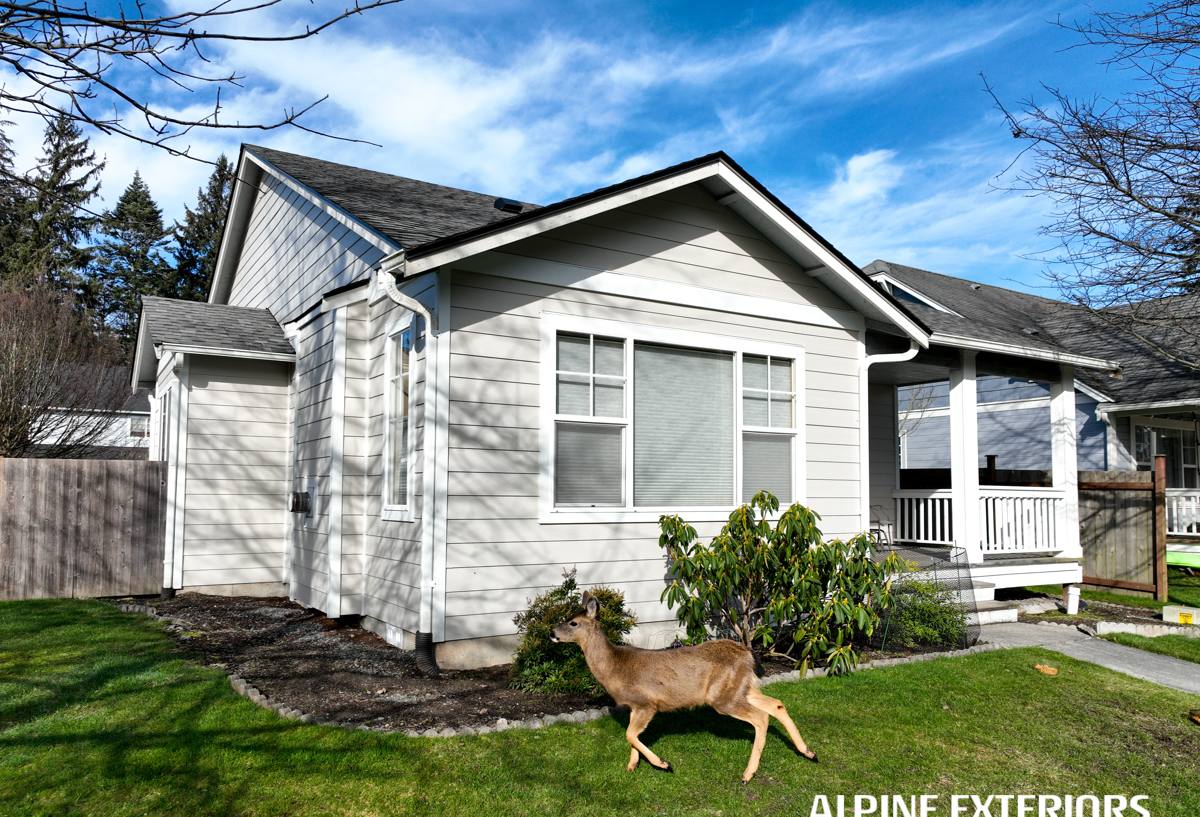
What the Local Climate Does to Siding
Whatcom County's marine-influenced weather pattern reaches well inland, and Sumas gets its share of it. The air carries moisture almost year-round, and even in a border town away from the immediate coastline, storm systems moving in off the Pacific bring the same driving rain and damp, salt-tinged air that affects siding across the broader region. Add in the tree cover and shaded lots common around Sumas, and you get long stretches where siding simply doesn't dry out between rain events.
The Three Things That Wear Siding Out Here
- Sustained moisture exposure: Extended damp periods mean siding materials that absorb water or swell at the seams stay wet longer than they were designed for.
- Moss and algae growth: Shaded, north-facing walls and areas near trees develop moss and green staining faster than in drier climates, and that growth holds moisture against the surface.
- Freeze-thaw cycling: Winters in the valley bring cold snaps that follow wet stretches. Materials that have taken on moisture and then freeze are prone to cracking, splitting, or delaminating.
None of this is unique to any one house — it's just what the region does. The difference is in how a given siding product responds to it.
Why We Only Install James Hardie
James Hardie fiber cement is engineered specifically for climates like this one. It's a cement-based product, not wood or wood-composite, so it doesn't absorb water the way wood fiber does, and it doesn't provide the organic material that moss and mildew feed on the way untreated or lightly primed wood products can. Hardie also offers a HardieZone system — HZ5 and HZ10 product lines engineered for specific regional exposure levels — which is directly relevant to a Pacific Northwest climate that swings between saturated and freezing.
We used to get asked why we don't offer more options. The honest answer is that we stopped installing several common alternatives after seeing how they perform in Whatcom County conditions over years, not months. We'd rather install one product correctly and stand behind it than offer a menu of products with different risk profiles.
What We Won't Install, and Why
| Product | What It Gets Right | Why We Don't Use It Here |
|---|---|---|
| Vinyl siding | Low upfront cost, low maintenance in mild climates | Can warp or crack in temperature swings; seams and panels allow moisture behind the surface over time |
| LP SmartSide | Engineered wood strand product, easier to install than solid wood | Wood-based core is more sensitive to sustained moisture exposure than fiber cement; edge sealing is critical and easy to get wrong |
| Cedar siding | Natural appearance, long regional tradition | Requires ongoing staining or sealing to resist moisture and moss; high maintenance burden in a wet climate |
| Primed spruce | Lower material cost | Primer is a maintenance-dependent barrier, not a permanent one; prone to swelling and paint failure once moisture gets past the primer coat |
Every product in that table has legitimate uses somewhere. Our position is narrower than "these products are bad" — it's that for the specific combination of rainfall, humidity, and freeze-thaw cycling we see in Whatcom County, fiber cement gives homeowners the best long-term outcome with the least maintenance obligation.
The James Hardie System We Install
Hardie's ColorPlus factory-finish technology bakes the color into the product at the factory under controlled conditions, rather than relying on field-applied paint that has to cure properly in variable weather — a real concern on a job site in a place that gets rain on short notice. ColorPlus finishes come with their own warranty coverage against fading and peeling, separate from the substrate warranty on the siding itself.
Common Hardie Products for This Area
- HardiePlank lap siding — the most common choice for traditional home profiles, available in multiple widths and textures
- HardieShingle siding — for homes wanting a shingle or shake look without the maintenance of real wood shakes
- HardiePanel vertical siding — often used as an accent on gables, entries, or modern-style homes
- HardieTrim — matching fiber cement trim boards so the whole exterior envelope is consistent, not just the field siding
Why Installation Quality Matters as Much as the Product
Fiber cement is only as good as the installation behind it. Hardie publishes specific requirements around clearances, fastening patterns, flashing details, and caulking, and skipping any of them shortens the life of the siding regardless of how good the material itself is. This is where a lot of siding problems actually originate — not from the product failing, but from installation shortcuts that let water get behind it.
What Correct Hardie Installation Requires
- Proper ground and roof clearances to keep the bottom edge of the siding away from standing moisture and splash-back
- Correct fastener type, spacing, and depth — over-driven or under-driven nails are a common cause of premature failure
- Weather-resistant barrier and flashing installed and lapped correctly at every window, door, and penetration
- Proper joint and butt-seam treatment, including caulking where Hardie specifies it and leaving gaps where it doesn't
- Field-cut edges sealed per manufacturer guidelines, since raw cut edges are more vulnerable to moisture intake
We install to those specifications as standard practice, not as an upgrade. A crew that's done this in Whatcom County conditions for years knows where the shortcuts tend to get taken on other jobs, and builds the process to avoid them.
Full Exterior Work for Sumas Homes
Siding is rarely an isolated project. If your siding has taken on water damage, it's common to find related issues in roofing, window flashing, or deck framing nearby, since all of it is exposed to the same conditions. We handle roofing, windows, and decks alongside siding, which means we can look at your exterior as one system instead of patching one component while ignoring what's happening next to it.
Signs It's Worth Having Your Exterior Looked At
- Visible swelling, soft spots, or bubbling paint on current siding
- Persistent moss or dark streaking that comes back shortly after cleaning
- Gaps or separation at seams, corners, or trim boards
- Water stains on interior walls near exterior corners or window openings
- Siding that's original to a home built more than 20-25 years ago
What Affects Cost on a Sumas Siding Project
Every home is different, and we don't quote sight unseen, but the factors that typically move a siding project's cost are consistent from house to house.
| Factor | Why It Matters |
|---|---|
| Home size and wall complexity | More corners, gables, and dormers mean more cutting, flashing, and labor time |
| Existing siding removal | Tear-off and disposal of failing siding adds time compared to installing over new construction |
| Underlying damage | Rot or moisture damage found once old siding comes off may need repair before new siding goes up |
| Product line and profile | HardiePlank, HardieShingle, and HardiePanel have different material and labor costs |
| Trim and accent work | Matching HardieTrim on all fascia, corners, and window trim adds cost but keeps the exterior consistent |
Why a Local Crew Matters in a Place Like Sumas
Sumas is a small community, and it doesn't always get the same attention from larger contractors based farther south in the county. A crew that regularly works this specific area understands the microclimate differences between a shaded valley lot and an open field lot just a few miles apart, and adjusts installation details — clearances, ventilation considerations, moss-prone areas — accordingly. Local also means we're a known quantity if you ever need warranty support or have a question a few years down the road, not a name you have to look up again.
If you're thinking about siding, roofing, windows, or a deck for your Sumas home, we're happy to take a look and give you a straightforward, no-pressure estimate. There's no obligation — just an honest read on what your home needs and what it would take to do it right.