 Ferndale Siding
 Window Replacement Built for Sumas, Not Just "Whatcom County in General"
Sumas sits at the edge of the Nooksack Valley, close enough to the Canadian border that a lot of homeowners here deal with a slightly different weather pattern than folks closer to the water in Bellingham or Ferndale proper. You still get the same marine-driven storm systems moving through Whatcom County, but by the time that weather reaches Sumas it's often funneled through the valley, which means longer periods of standing fog, heavier dew, and rain that seems to hang around instead of blowing through. Old, worn-out windows don't handle that kind of sustained moisture well, and it shows up as fogged glass, soft trim, and drafts that no amount of caulk seems to fix.
We treat window replacement as a local trade, not a catalog order. A window that performs fine in a dry inland climate can still struggle here if it's installed without the right flashing and sealing details for our rain patterns. This page is about what that actually means for a Sumas home — what to look for, what a correct installation involves, and how we handle the job from first look to final walkthrough.
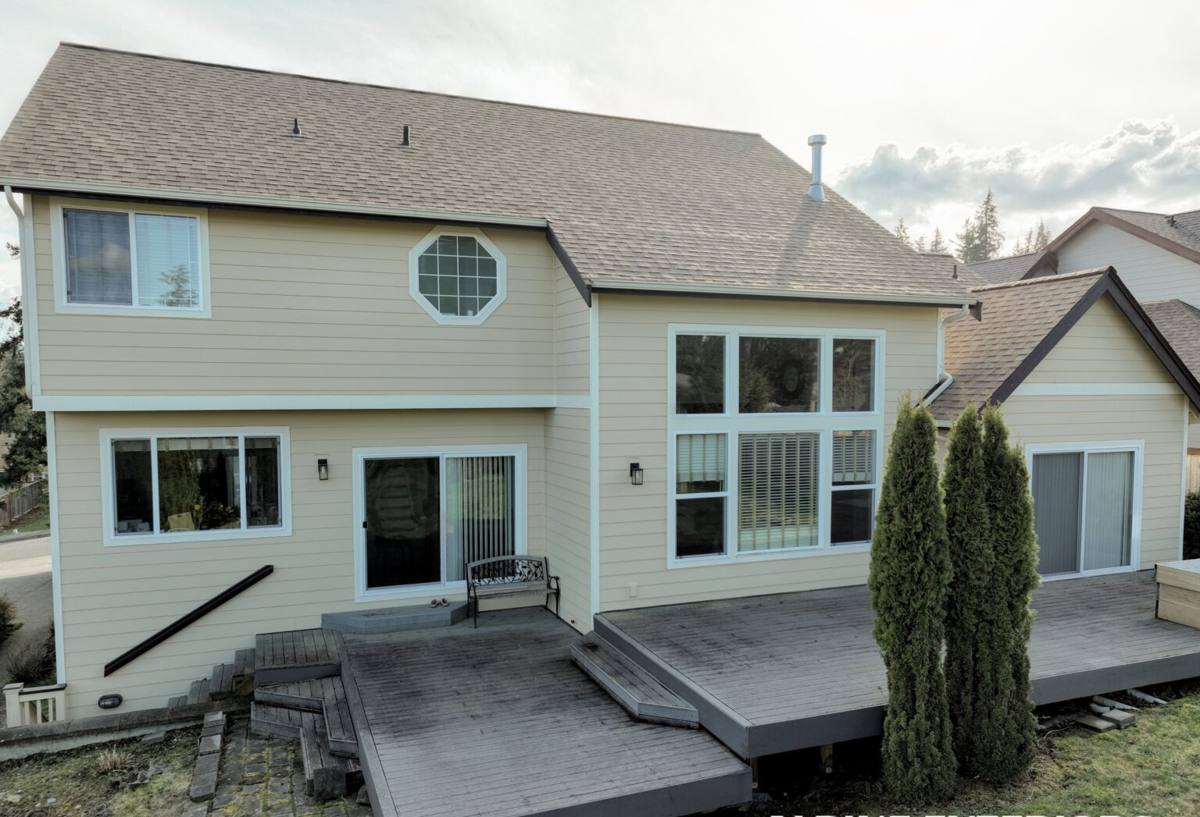
What Whatcom County's Climate Does to Old Windows
Whatcom County's marine-influenced climate — the same weather system that carries salt-tinged air off Bellingham Bay and pushes moisture inland through the valleys — is hard on building materials generally, and windows are one of the first places it shows up. A few specific ways this plays out on older window installations:
Driving Rain and Wind-Driven Moisture
Storms coming through the valley don't always fall straight down. Wind-driven rain gets pushed sideways into window frames, and if the flashing or sealant around the unit has failed, water finds its way behind the trim instead of running off the surface. That's how you end up with rot in framing that looks fine from the outside.
Long Moss Season
Whatcom County's moss season runs long — often most of the fall through spring. Moss and algae don't just grow on roofs; they take hold on window sills, in corners of frames, and in any spot where moisture sits without drying out fully between rain events. Beyond looking bad, that constant dampness accelerates wood rot and breaks down old caulk lines faster than a drier climate would.
Condensation and Temperature Swings
Valley locations like Sumas can see sharper overnight temperature drops and more persistent morning fog than areas closer to the water. That temperature swing between a warm interior and cold, damp glass is exactly what causes condensation to form on single-pane or failed dual-pane windows — and repeated condensation cycles are what eventually rot out wood sills and sashes.
Signs a Sumas Home Needs New Windows
Most homeowners don't replace windows on a schedule — they replace them when something starts failing. Here's what we'd want you to look for before it turns into a bigger repair:
- Fogging or a visible "cloudy" haze between the panes of a dual-pane window — this means the seal has failed and the gas fill is gone
- Soft or spongy wood at the sill, especially at the corners where water tends to collect
- Windows that are difficult to open, close, or lock — frames can swell and warp with sustained moisture exposure
- Visible moss, algae, or black staining building up on the sill or lower frame
- Noticeable drafts near the window even when it's fully closed and latched
- Paint that's bubbling, peeling, or cracking specifically around the window trim rather than the wider wall
- Higher heating bills without another clear explanation
- Condensation forming on the inside of the glass regularly, not just on unusually cold mornings
One or two of these on their own might just mean a repair. Several at once, especially combined with soft wood, usually means the window and possibly some of the surrounding framing needs to come out.
What a Correct Window Replacement Job Actually Involves
The window itself is only part of the job. In a climate that puts this much sustained moisture pressure on a building envelope, the installation details matter as much as the product. A correct replacement includes:
Opening Inspection
Before anything new goes in, we check the condition of the framing, sheathing, and any existing flashing around the opening. If there's hidden rot from years of water intrusion, that needs to be addressed before a new window goes in — otherwise you're sealing a problem behind a nice new unit.
Flashing and Water Management
Proper flashing at the head, jambs, and sill directs water down and out and away from the framing, rather than letting it pool or wick inward. This is the single most common thing we find missing or done incorrectly on older installs, and it's usually the root cause of the rot we uncover.
Sealing and Insulation
Gaps around the window unit get properly insulated and sealed — not just caulked on the surface, but sealed as a system so air and moisture can't track in around the edges over time.
Interior and Exterior Trim
Trim gets reinstalled or replaced to match the home, with attention to keeping any wood trim protected from direct water exposure going forward.
Choosing the Right Window for a Sumas Home
There's no single "best" window material — the right choice depends on your home's exposure, your maintenance preferences, and your budget. Here's how the common options compare for a home dealing with Whatcom County's moisture and long wet season:
| Frame Material | Moisture Behavior | Maintenance | Best Fit |
|---|---|---|---|
| Vinyl | Won't rot or absorb water; performs well in sustained damp conditions | Low — no painting or sealing required | Most homes prioritizing value and low upkeep |
| Fiberglass | Excellent moisture and temperature stability; very low expansion/contraction | Low | Homes wanting a longer-term investment and tighter tolerances |
| Wood (unclad) | Attractive but vulnerable to rot without diligent upkeep in this climate | High — regular painting/sealing needed | Homeowners committed to ongoing maintenance for a traditional look |
| Wood-clad (exterior-protected) | Exterior cladding shields wood from direct moisture exposure | Moderate | Homeowners wanting a wood interior look with better exterior protection |
For most Sumas homes, we lean toward vinyl or fiberglass on the exterior-facing side of the equation, specifically because they don't give the region's rain and moss season anything to work with over time. We'll walk through the actual trade-offs for your specific home rather than pushing one material across the board — a south-facing wall with a lot of sun exposure has different needs than a shaded, damp corner of the house.
Full-Frame Replacement vs. Insert Replacement
There are also two different ways to physically replace a window, and it matters which one is right for your situation:
- Insert (pocket) replacement: The new window fits inside the existing frame. Faster and less invasive, but only appropriate if the existing frame and surrounding wood are still sound.
- Full-frame replacement: The old frame comes out entirely down to the rough opening. Necessary when there's rot, water damage, or when you want to correct a flashing problem at the source rather than build around it.
We won't recommend an insert replacement over a window frame that's already compromised — that just traps a moisture problem behind new glass instead of fixing it.
Our Process, Start to Finish
- On-site assessment: We look at each window you're considering replacing, check the condition of the surrounding framing, and talk through what's actually needed versus what can wait.
- Honest estimate: You get a clear breakdown of material options and cost — no pressure toward the most expensive option if it isn't the right fit for your home.
- Scheduling: We plan around Whatcom County's weather patterns to minimize the amount of time your home has an open wall or window cavity exposed to the elements.
- Removal and inspection: Old windows come out, and we check the opening for hidden rot or past water damage before anything new goes in.
- Installation: New windows go in with proper flashing, insulation, and sealing — the details that actually determine how the window performs over the next 15-20+ years, not just how it looks the day it's installed.
- Trim and cleanup: Interior and exterior trim is finished to match your home, and the work area is cleaned up before we call the job done.
- Walkthrough: We go over the finished work with you and make sure everything opens, closes, and locks the way it should.
What Affects the Cost of Window Replacement
| Factor | How It Affects Cost |
|---|---|
| Number of windows | Doing multiple windows in one project generally reduces the per-window cost versus one-off replacements |
| Frame material | Vinyl is typically the most budget-friendly; fiberglass and clad-wood options cost more upfront |
| Full-frame vs. insert | Full-frame replacement costs more due to the extra labor, but is necessary when framing is damaged |
| Hidden rot or water damage | Repairing damaged framing found during removal adds cost, but skipping this repair causes bigger problems later |
| Window size and configuration | Larger windows, custom shapes, or special configurations (bay, picture, etc.) cost more than standard sizes |
| Access and site conditions | Second-story or hard-to-access windows can add labor time |
We give straightforward, itemized estimates so you can see exactly what you're paying for and where the cost differences come from between options.
Why Hire a Crew That Already Works in Sumas
A contractor who only occasionally works this far into the valley may not have a feel for how differently the weather behaves here compared to the coastal parts of Whatcom County they're more used to. We work throughout the area Ferndale Siding Company serves, including Sumas, and that means we've seen firsthand how the valley's fog, damp cycles, and long moss season affect window installations over time — not just in theory, but in the repeat calls we get from homes where the flashing detail was wrong the first time.
That local familiarity shapes real decisions on the job: how we flash around an opening, which material we'd steer you toward for a shaded or exposed wall, and how we schedule work around the wetter stretches of the year. It's the difference between a window that's installed correctly for this climate and one that's just installed.
Ready to Talk About Your Windows?
If you're dealing with drafty, foggy, or sticking windows on your Sumas home, we're happy to take a look and give you a straightforward assessment — no pressure, no upsell. Fill out the form below to request a free estimate, and we'll walk you through exactly what your home needs and what it would cost to fix it right.