 Ferndale Siding
 Kendall's Climate: What a Wooded, Shaded Setting Does to Siding
Kendall sits back from the coast in the wooded foothills of Whatcom County, and that setting changes the character of our regional climate more than it changes the climate itself. The same weather system that brings salt-tinged marine air and driving rain across the county still reaches Kendall — it just arrives differently. Mature tree cover shades roofs and walls for much of the day, slowing evaporation after every storm. Homes tucked against timber or set back from open sun stay damp longer than a house on an open lot in town, and that extra dwell time is exactly what moss, algae, and wood rot need to get established.
Add in a long, wet Pacific Northwest winter and a moss season that can stretch from fall through spring, and you get siding conditions that are genuinely harder on a building envelope than a lot of homeowners realize until they're dealing with soft trim, streaked paint, or siding that never quite dries out between rains. Any siding installed in Kendall has to be chosen and installed with that shade-and-moisture reality in mind, not just the general "it rains a lot here" version of Pacific Northwest weather.
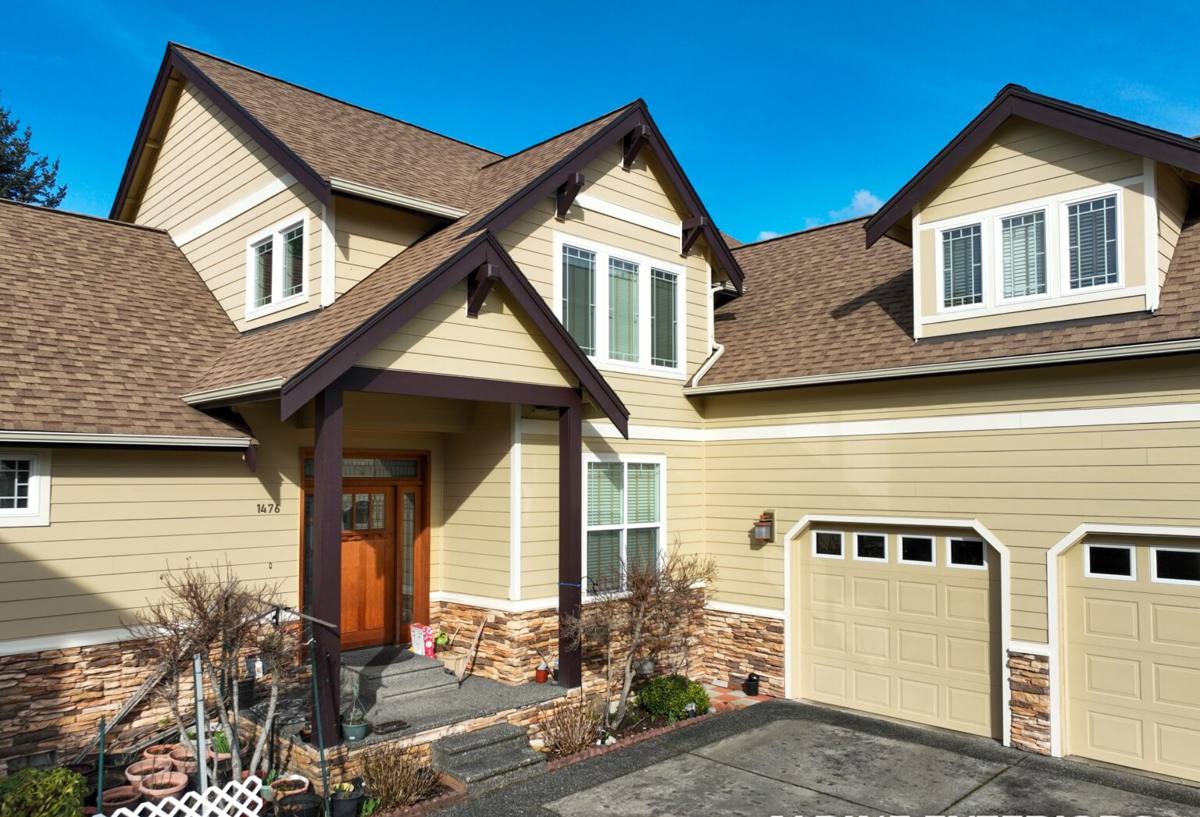
Why Fiber Cement Holds Up Where Wood and Vinyl Struggle
Wood siding and wood trim are organic material — in a shaded, moisture-retentive setting like Kendall, that means they're a food source for the fungi and moss that thrive in damp shade. Paint film on wood also has to flex with seasonal swelling and shrinking, and in a spot that never fully dries out, that film fails faster than the manufacturer's numbers assume. Vinyl siding doesn't rot, but it has its own weak point here: it expands and contracts significantly with temperature, and in shaded, moisture-heavy conditions the moss and algae that grow on its surface are difficult to fully remove without damaging the finish, since color in vinyl is only skin-deep.
James Hardie fiber cement is a cement-and-cellulose composite, not an organic building material. It doesn't feed rot fungi, and its factory-applied ColorPlus finish is baked on rather than sprayed over a raw substrate, which gives it far more resistance to the fading and staining that shaded, mossy conditions cause over time. It's also dimensionally stable — it doesn't swell and shrink with humidity the way wood does — which matters on a house that spends long stretches of the year at higher moisture content than a house in full sun.
Non-Combustible Is a Real Advantage in the Foothills
Homes closer to timber and brush carry a different wildfire exposure profile than homes in a dense, cleared subdivision. James Hardie fiber cement is non-combustible, which is one of the reasons we standardized on it rather than wood-based alternatives — it's not a fire-prevention system on its own, but it removes the siding itself as fuel, which is a meaningful difference for a property backed up to trees.
The James Hardie Product Lines That Make Sense for a Site Like Kendall
James Hardie engineers its siding by climate zone (HZ5 for our region), and within that, the product lines give us real options depending on the house and the lot.
HardiePlank Lap Siding
The standard choice for most Kendall homes — horizontal lap siding in a range of textures and exposures. It's the workhorse product: proven, widely available in factory colors, and straightforward to detail correctly around windows, doors, and trim.
HardieShingle
Individual or panelized shingle-profile siding, often used as an accent on gables or a full shingle look on a cottage-style home. On a shaded lot, shingle profiles create more horizontal ledges where moisture and debris can collect, so detailing and gapping matter even more here than on lap siding.
HardieTrim and HardiePanel
Trim boards for corners, window and door casing, and fascia, plus vertical panel siding for board-and-batten looks. Trim is where a lot of homes actually fail first — it's the smallest, most exposed piece of material on the house, and it takes the brunt of water running off a roof edge or pooling on a shaded sill.
What a Correct Installation Actually Involves Here
James Hardie siding is a good material even when it's installed poorly, but "good material, poor installation" is still how most siding failures happen. In a shaded, wet-prone location, the details matter more than they would on a dry, sunny lot, because there's less margin for error before trapped moisture becomes a problem.
- A drainage plane and weather-resistive barrier installed and lapped correctly behind the siding, not just draped over the sheathing
- A rain screen gap where the site calls for it, so water that gets behind the cladding has somewhere to drain and air behind the panel can actually dry it out
- Correct flashing at every window, door, and horizontal trim transition — this is the single most common place we find prior installation errors
- Manufacturer-specified nailing pattern and fastener type, not whatever happened to be in the gun that day
- Proper clearance between the bottom of the siding and grade, mulch beds, decks, and roof lines, since shaded ground stays damp longer and needs more of a gap to keep splashback off the plank
- Factory-cut and factory-primed edges kept intact wherever possible, with any field cuts sealed per Hardie's published detail
Skipping any one of these doesn't usually show up in year one. It shows up in year five or seven, as staining, soft trim, or paint failure at the joints — right about the time a homeowner assumes the siding itself is the problem, when it's actually the installation underneath it.
How Fiber Cement Compares to the Alternatives on a Site Like This
We only install James Hardie, but it's worth being honest about how the main siding categories actually perform against each other in a shaded, moisture-heavy setting like Kendall.
| Factor | James Hardie Fiber Cement | Vinyl | Wood / Engineered Wood |
|---|---|---|---|
| Moisture & rot resistance | Not organic; does not rot | Doesn't rot, but seams and moisture behind panels can trap water | Organic material; vulnerable in shaded, damp conditions |
| Moss & algae staining | Factory finish resists staining; cleanable | Color is surface-deep; aggressive cleaning can dull or damage it | Paint film breaks down faster under sustained moss growth |
| Dimensional stability | High — minimal swelling/shrinking | Expands/contracts noticeably with temperature | Swells and shrinks with humidity |
| Fire exposure | Non-combustible | Combustible | Combustible |
| Typical finish life before repaint/refinish | 15+ years (ColorPlus factory finish) | Does not repaint well; color fades over time | 3-7 years depending on exposure |
| Upfront cost | Mid-to-higher | Lower | Varies, often mid-range |
Our Process for a Kendall Job
Every project starts with an honest look at the house, not a sales pitch.
- Site and moisture assessment — we check existing siding, trim, and sheathing for soft spots, trapped moisture, and prior repair patches before quoting anything
- Tear-off and sheathing evaluation — once the old siding is off, we can see the actual condition of the wall behind it and repair or replace any damaged sheathing before new material goes up
- Weather barrier and drainage plane installation — built to shed water correctly given the specific shade and drainage pattern of the lot
- James Hardie installation to manufacturer spec — correct fasteners, flashing, gapping, and clearances at every transition
- Final walkthrough — trim, caulking, and touch-up checked before we call the job done
Why It Matters to Hire a Crew That Already Works Out Here
Kendall properties often mean longer driveways, well and septic systems to work around, gravel or unpaved access, and lots with real tree cover close to the house — all things that change how a crew stages material, protects landscaping, and schedules a job compared to a standard in-town lot. A crew that hasn't worked rural Whatcom County properties before can underestimate access time, drainage patterns around a shaded foundation, or how much extra care a job needs when there's no easy dumpster placement or staging area.
Permitting and inspection also run through Whatcom County rather than a city building department for many properties out this way, and knowing that process ahead of time keeps a project from stalling partway through.
Maintenance That Actually Fits a Shaded Lot
- Rinse siding and trim at least once a year, more often on the shaded or north-facing sides of the house where moss establishes first
- Keep gutters clear — overflow onto siding is one of the most common causes of staining and premature trim failure we see
- Trim back branches and brush that hold moisture against the wall or keep a section of siding in permanent shade
- Check caulking at trim joints, window heads, and butt joints annually; recaulk before gaps open up, not after water's already found its way in
- Have any soft trim or staining investigated promptly — it's almost always cheaper to address early than after it's spread
Cost Factors Worth Knowing Before You Get a Quote
Every Kendall property is different, but the same handful of factors move the price on most jobs: how much of the existing siding and trim needs to be removed versus reused, whether sheathing repair is needed once the old material comes off, how much trim and detail work the house has (multiple gables, dormers, and window returns all add labor), site access and staging difficulty, and which James Hardie profile and finish you choose. We'll walk through all of that specifically for your house rather than quoting off a generic per-square-foot number that doesn't account for your site.
If you're weighing a siding replacement in Kendall, we're happy to come take a look, walk the property with you, and put together a straightforward, no-pressure estimate — no obligation, just an honest read on what your house actually needs.