 Ferndale Siding
 Exterior Work Built for Everson's Climate
Everson sits inland from the coast but still lives inside the same weather system that soaks the rest of Whatcom County for much of the year. Homes here deal with long stretches of driving rain, humidity that never fully lets up, and a moss season that can stretch from fall through spring. Add in salt-tinged air that moves inland off the Strait of Georgia on a west wind, and you have a set of conditions that will find every weak point in a home's exterior over time. Ferndale Siding Company works throughout this part of Whatcom County, and Everson is a community we know well — the same rain patterns, the same tree cover, the same moisture problems that show up on siding, trim, and roofing here year after year.
This page covers what we see most often on Everson homes, how our siding, roofing, window, and deck work addresses those conditions, and why the products we choose matter as much as the labor.
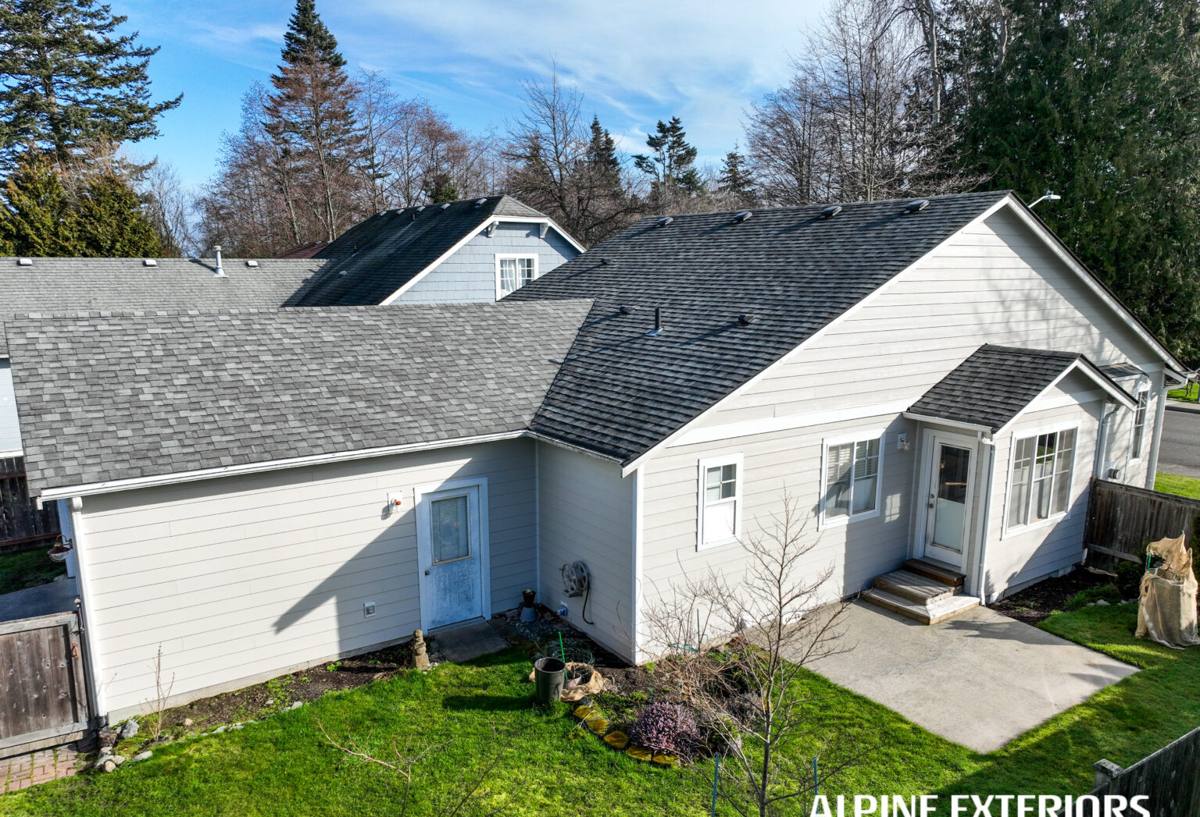
What the Local Climate Does to a Home's Exterior
Moisture That Doesn't Quit
Whatcom County gets a real wet season, and Everson's mix of open farmland and tree-lined lots means homes often sit in shade for long stretches of the day. Shaded siding dries slower after every rain event, which means more cumulative moisture exposure over a given winter than a home in full sun would see. Wood-based siding products are the most vulnerable here — any place water can get behind the surface or into a cut edge becomes a long-term problem, not a one-time repair.
Moss and Organic Growth
Moss doesn't just grow on roofs in this part of the state — it colonizes siding, trim, fascia, and anything else that stays damp and shaded. Beyond looking bad, moss and algae hold moisture against the surface underneath them, which accelerates whatever damage that surface is already prone to. Roofs with poor moss control shed granules and water problems onto the siding and gutters below, compounding the issue.
Salt Air and Wind-Driven Rain
Everson is far enough inland that salt exposure is lighter than on the immediate coast, but westerly weather systems still carry moisture and airborne salt content across Whatcom County regularly enough to matter. Combined with wind-driven rain that gets pushed sideways into wall assemblies, this is a climate that punishes any exterior product with weak seams, absorbent cores, or coatings that aren't built to handle sustained wet-dry cycling.
Why We Install James Hardie Fiber Cement — and Nothing Else
Ferndale Siding Company installs James Hardie fiber cement siding exclusively. We don't install vinyl, LP SmartSide, Cemplank, Allura, or primed wood products like spruce or cedar siding. That's not a marketing position — it's a standard we built after years of doing exterior work in exactly this kind of climate and seeing which products hold up and which ones create repeat problems for homeowners.
What Fiber Cement Gets Right for This Climate
- Non-combustible core — fiber cement doesn't burn, which matters in a region where wildfire smoke seasons have become a regular summer feature.
- Dimensionally stable — Hardie board doesn't swell, warp, or expand the way wood-based and some engineered wood products can when they take on moisture.
- Factory-applied ColorPlus finish — a baked-on finish system that resists the fading and peeling that field-applied paint struggles with under constant damp-dry cycling.
- Climate-engineered HZ product lines — Hardie manufactures HZ5 formulations specifically for the wetter, cooler Pacific Northwest, rather than a one-size-fits-all national product.
- Strong transferable warranty — a long-term, non-prorated warranty structure that stays with the home if it sells.
We're upfront that other products have their own advantages — vinyl is inexpensive and low-maintenance in the right setting, engineered wood has a warmer look for less money, cedar has genuine curb appeal for the right buyer. Our position is narrower than "these products are bad." It's that in Whatcom County's specific combination of rain volume, humidity, and moss pressure, we've chosen to stand behind one product system rather than install several and hope each one performs. Fiber cement is where we've seen the best long-term results, so it's the only siding we put our name on.
Siding Installation for Everson Homes
Correct installation matters as much as product choice, maybe more. Fiber cement siding that's installed with the wrong fastener pattern, tight butt joints, or poor flashing detail can still develop moisture problems, regardless of how good the board itself is. Our installation process is built around the realities of this climate:
- Proper rainscreen or drainage plane detailing behind the siding so any moisture that does get past the surface has somewhere to go
- Correct fastener spacing and placement per Hardie's engineering specs, not shortcuts that void the warranty
- Flashing at every horizontal transition — window heads, roof lines, deck ledgers — since these are the spots where water intrusion actually starts
- Expansion gaps and joint treatment appropriate for our seasonal temperature swings
We also account for the tree cover common on Everson lots. Homes tucked against a tree line need more attention to airflow and drainage detailing than a home standing in open sun, and we adjust our approach lot by lot rather than applying the same install everywhere.
Roofing, Windows, and Decks: The Rest of the Building Envelope
Siding doesn't work in isolation. A roof that's shedding moss and holding moisture will eventually push water problems down onto the siding and trim below it. Windows with failed seals let moisture into the wall cavity from the inside out. Decks attached to the home create a ledger connection that, if flashed poorly, becomes one of the most common sources of rot on Pacific Northwest homes. We handle all four trades — siding, roofing, windows, and decks — because treating the exterior as one connected system catches problems that a siding-only contractor would miss.
Roofing Considerations Specific to This Area
Moss control, proper underlayment, and ventilation are the three things that matter most for roofs in a climate like Everson's. A roof that traps heat and moisture in the attic accelerates moss growth from underneath as much as from rain exposure on top.
Windows in a Wet Climate
Window flashing integration with the surrounding siding is where most leaks actually originate — not the window unit itself. When we replace windows, we treat the flashing and siding tie-in as part of the job, not an afterthought.
Decks and Ledger Connections
Any deck attached directly to the house needs a properly flashed ledger board. This is one of the most common failure points we find during siding tear-off on older homes, and it's a cheap fix during construction versus an expensive one after rot has set in.
Cost Factors to Understand Before You Budget
Every home is different, but the factors that move a project's cost up or down are consistent. Use this as a general guide rather than a quote — actual numbers depend on your home's size, current condition, and access.
| Factor | Why It Matters |
|---|---|
| Tear-off vs. new construction | Removing old siding, especially if it's damaged or has hidden rot, adds labor and sometimes sheathing repair costs |
| Home size and wall complexity | More corners, gables, and trim details mean more cutting, fitting, and labor time |
| Existing moisture damage | Rot found during tear-off needs to be repaired before new siding goes on — this is common on older Whatcom County homes |
| Siding profile and color | Lap width, shingle-style siding, and custom ColorPlus finishes vary in material cost |
| Trim and accessory work | Fascia, soffit, and window trim replacement alongside siding affects total project scope |
| Site access | Tree cover, fencing, and lot layout on rural or wooded Everson properties can affect staging and labor time |
Why a Local Crew Matters
A contractor based elsewhere in the state can install siding, but they haven't necessarily spent years watching how it performs specifically in Whatcom County's rain, humidity, and moss conditions. We've done exterior work across this region long enough to know which details matter here that wouldn't matter in a drier climate — where moss tends to establish first, which lots need extra drainage attention because of tree cover, and how our winter wet-dry cycling stresses different products differently. That local knowledge shapes how we spec and install every job, not just in Ferndale but throughout the surrounding communities we serve, including Everson.
What to Look for When Hiring an Exterior Contractor
- Manufacturer certification or documented training on the specific siding product being installed
- A written scope of work that specifies flashing, drainage plane, and fastening details — not just "install siding"
- Willingness to explain product trade-offs honestly rather than pushing whatever they have in stock
- Local references and a track record of work in your specific climate zone
- Clear warranty terms, both on materials and on labor
Get a Free, No-Pressure Estimate
If you're dealing with aging siding, moss buildup, moisture damage, or you're just planning ahead for a home in Everson, we're happy to take a look and walk you through what we see — no pressure, no obligation. Use the form below to request a free estimate.