 Ferndale Siding
 Siding in Cordata: Exterior Work for Whatcom County's Wet Side
Cordata sits in the corridor between Ferndale and Bellingham, close enough to the water and the I-5 lowlands that homes here take on the same weather pattern the rest of Whatcom County deals with: long stretches of drizzle, a real wind-driven rain event a few times a winter, salt-tinged air rolling in off Bellingham Bay and the Strait, and a moss season that can run eight months out of twelve. None of that is dramatic on its own. What it does is grind away at siding, trim, roofing, and window seals year after year until a house that looked fine in June starts showing soft spots, streaking, and green growth by the following spring.
Ferndale Siding Company works this area regularly, and we look at Cordata homes the way we look at any property in this climate zone — not as a generic siding job, but as a house that's fighting moisture on multiple fronts at once. That shapes both what we recommend and how we install it.
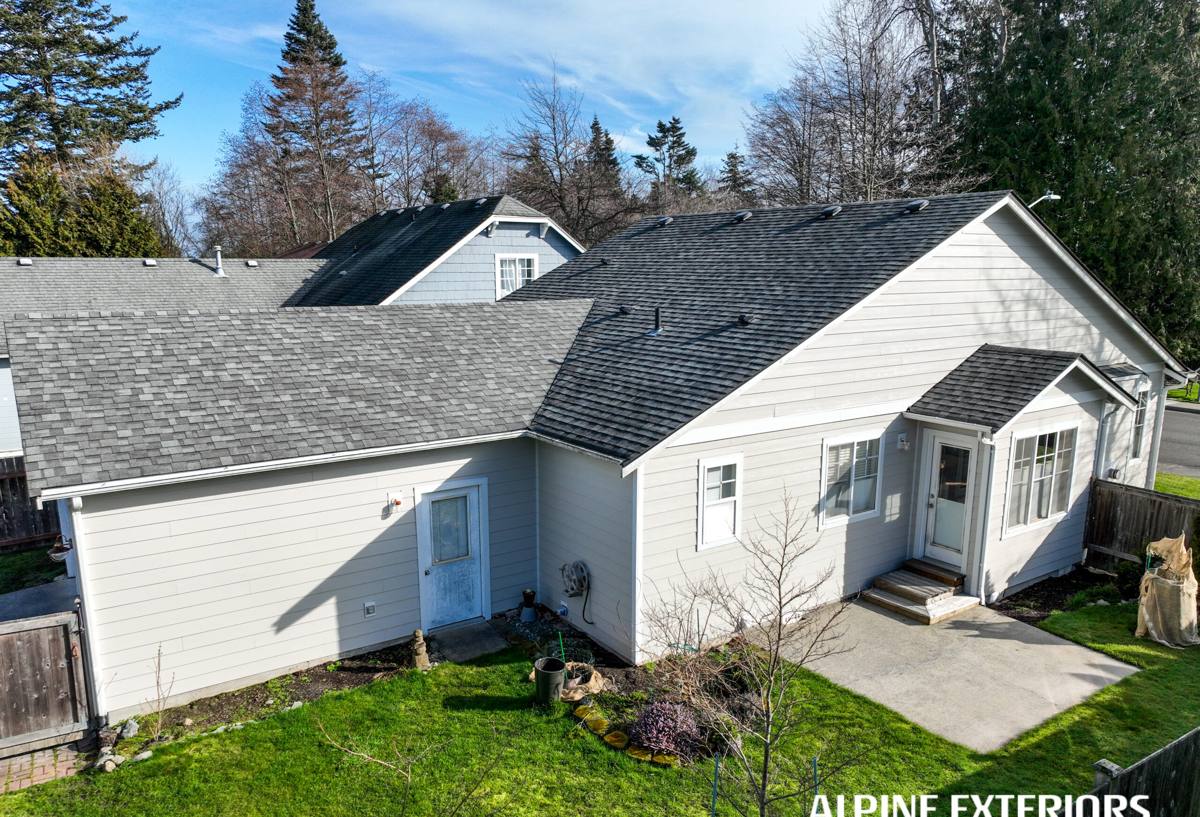
What Cordata-Area Homes Actually Face
Salt Air
You don't need to be waterfront to feel it. Marine air carries fine salt that settles on painted and coated surfaces, and over time it accelerates the breakdown of cheaper coatings, corrodes exposed fasteners, and speeds up fading on anything that isn't UV- and salt-stable. It's a slow process, which is exactly why it's easy to underestimate until a south- or west-facing wall starts chalking or discoloring years before the rest of the house.
Driving Rain
Whatcom County doesn't get the heaviest rainfall totals in the state, but it gets a lot of wind-driven rain — storms where the water isn't just falling, it's being pushed sideways into wall assemblies, window flanges, and butt joints. That kind of exposure finds every weak point in flashing, caulking, and siding laps. A product or installation that would hold up fine in a calmer, drier climate can fail here specifically because the water is being forced somewhere it normally wouldn't reach.
Moss and Sustained Dampness
Shaded north walls, tree-lined lots, and roof lines that shed onto siding all create the damp, low-sun conditions moss and algae need. On wood-based products, sustained moss growth holds moisture against the surface and can lead to soft, punky material underneath before anyone notices from the ground. On fiber cement, moss is mostly a cosmetic and maintenance issue rather than a structural one — a meaningful difference we'll come back to.
Why We Install Only James Hardie Fiber Cement
Ferndale Siding Company does not install vinyl siding, LP SmartSide, Cemplank, Allura, primed spruce, or cedar. That's a deliberate standard, not a lack of options. Every one of those products can be installed correctly and can perform reasonably well in the right conditions — but in a climate that combines constant moisture, salt exposure, and heavy moss pressure, we've seen enough real-world outcomes to settle on one material for our own installs.
Wood-based siding, including engineered wood products like LP SmartSide and untreated cedar or primed spruce, relies on an intact factory coating and diligent caulk maintenance to keep water out of the substrate. Once moisture gets past that layer — through a nail hole, a butt joint, or years of UV breakdown — the wood fiber core can swell, delaminate, or rot from the inside, and that damage isn't always visible until it's advanced. Vinyl doesn't rot, but it expands and contracts significantly with temperature swings, can crack in impact-prone areas, and fades in UV and salt air in a way that can't be touched up or repainted — the whole piece has to be replaced. James Hardie fiber cement is cement, sand, and cellulose fiber. It doesn't rot, it isn't a food source for moss or insects, and its ColorPlus factory finish is baked on and warrantied against fading and peeling in a way field-applied paint isn't.
That doesn't mean Hardie is maintenance-free, and we tell every homeowner that up front. It still needs to be installed with correct clearances, properly caulked and painted where field-cut, and periodically rinsed to keep moss and algae from taking hold cosmetically. The difference is that a lapse in maintenance on Hardie tends to stay a cosmetic problem, where the same lapse on a wood-based or vinyl product can turn into a structural one.
The Hardie Product Lines We Use Here
James Hardie makes climate-engineered product lines, and for Whatcom County we specify HZ5, the version formulated for cold, wet Pacific Northwest conditions rather than the hot-humid or freeze-thaw formulas used elsewhere in the country. Within that, homeowners in Cordata typically choose between a few Hardie profiles:
- HardiePlank lap siding — the most common choice, available in several exposure widths and a smooth or cedar-textured finish
- HardiePanel vertical siding — often used for accent gables, shed dormers, or a modern board-and-batten look
- HardieShingle siding — a shingle profile for homes going for a more traditional Northwest look without the maintenance of real cedar shakes
- HardieTrim — matching trim boards so fascia, corner boards, and window trim age at the same rate as the field siding
All of it comes with ColorPlus factory-applied finish in a range of regionally appropriate colors, backed by a Hardie limited warranty that's transferable if the home sells — something worth knowing if resale is on your mind at all.
How a Siding Project Works, Start to Finish
Every Cordata job starts with a walk-around, not a sales pitch. We're looking at drainage, roof-to-wall intersections, existing moisture damage, window flashing condition, and how much of the old siding (if any) can stay versus needs to come off. From there:
- Assessment and estimate — we identify problem areas, measure the home, and give you a written scope and price, no pressure to decide on the spot
- Tear-off and sheathing check — old siding comes off and we inspect the sheathing underneath for rot or soft spots before anything new goes up
- Weather-resistive barrier and flashing — this step matters as much as the siding itself; correct house wrap, window flashing, and rainscreen detailing is what actually keeps driven rain out of the wall assembly
- Hardie installation to manufacturer spec — correct fastener pattern, clearances from grade, roof lines, and decks, and properly sealed butt joints
- Trim, caulking, and touch-up paint — field-cut edges get sealed and matched so the whole exterior reads as one finished system
- Final walkthrough — we go over the job with you before calling it done
Beyond Siding: Roofing, Windows, and Decks
Siding doesn't fail in isolation — it fails because water got past a roof edge, a window flange, or a deck ledger and worked its way into the wall. Because Ferndale Siding Company also handles roofing, windows, and decks, we can look at a Cordata home's whole exterior envelope instead of patching one piece and leaving the actual moisture source untouched. A siding replacement is often the right time to also address an aging roof edge, a window that's no longer sealing well, or a deck ledger connection that's been letting water track into the wall behind it — fixing all of it together, with one crew, tends to cost less and leave fewer seams for water to find than tackling each system separately over several years.
Cost Factors for a Cordata Siding Project
Every home is different, but the variables that move the price are consistent. This isn't a quote — it's a guide to what actually drives cost up or down.
| Factor | Why It Matters |
|---|---|
| Tear-off vs. re-side over existing | Removing old siding adds labor and disposal cost but lets us inspect and fix sheathing damage before it's covered up |
| Home size and wall complexity | More corners, gables, and dormers mean more cutting, flashing detail, and labor time |
| Existing moisture damage | Rotted sheathing or framing found during tear-off has to be repaired before new siding goes on — this is the most common source of a mid-project cost change |
| Siding profile chosen | Lap, panel, and shingle Hardie products carry different material and labor costs |
| Trim and accent scope | Full HardieTrim packages, accent gables, or shingle detailing add cost over a straightforward lap-siding install |
| Access and site conditions | Steep lots, limited equipment access, or extensive landscaping to protect can add labor time |
Signs Your Cordata Home's Exterior Needs a Look
Most exterior problems in this climate start small and cosmetic before they become structural. Worth checking for:
- Green or black streaking on north-facing or shaded walls
- Soft or spongy siding when pressed, especially near the bottom courses or window sills
- Paint that's peeling, bubbling, or chalking off on your hand when wiped
- Visible gaps or cracked caulk at butt joints, corners, and window trim
- Warping, buckling, or waviness along a wall plane
- Persistent moss buildup that keeps coming back within weeks of cleaning
- Musty smell or discoloration on interior walls that share an exterior wall with a moisture-prone area
Any one of these on its own might be minor. Several together, especially on an older wood-based or vinyl exterior, usually means it's worth having someone look before the next wet season.
Why a Local Crew Matters
A crew that works Whatcom County year-round knows which wall orientations take the worst of the driven rain, how far moss creep tends to travel in a given season, and what correct flashing looks like for our specific rain-on-snow and wind patterns — not a generic national installation guide. That local knowledge shows up in details a homeowner might never think to ask about: how much clearance is left between siding and grade, how butt joints are staggered and sealed, and how trim is detailed around windows that are going to see real wind-driven rain more than once a year. It's also the reason we can speak plainly about a warranty claim or a maintenance question years down the road — we're not a crew that did one job in the area and moved on.
If you're weighing a siding project in Cordata — or want a second opinion on roofing, windows, or a deck while we're out there — we're happy to walk the property with you and give you a straight, no-pressure estimate. There's a form below to get that started.