 Ferndale Siding
 Asphalt Shingle Roofing Built for Cordata's Weather
Cordata sits close enough to the water and the marine air patterns of Whatcom County that roofs here take a different kind of beating than roofs further inland. Salt-laden air corrodes fasteners and flashing faster than dry-climate roofs ever see. Driving rain off Bellingham Bay doesn't just fall straight down — it gets pushed sideways under eaves and into laps that were never designed to handle wind-driven moisture. And the long, wet shoulder seasons here mean moss has months to take hold on any north-facing slope that doesn't get much sun. A shingle roof that isn't specified and installed with these three things in mind will show problems years before it should.
This page is about one job, done right, for one neighborhood: asphalt shingle roofing for homes in and around Cordata. Not a general roofing overview — the specific decisions that matter when the roof over your head has to survive a Whatcom County winter, spring, and everything the bay throws at it in between.
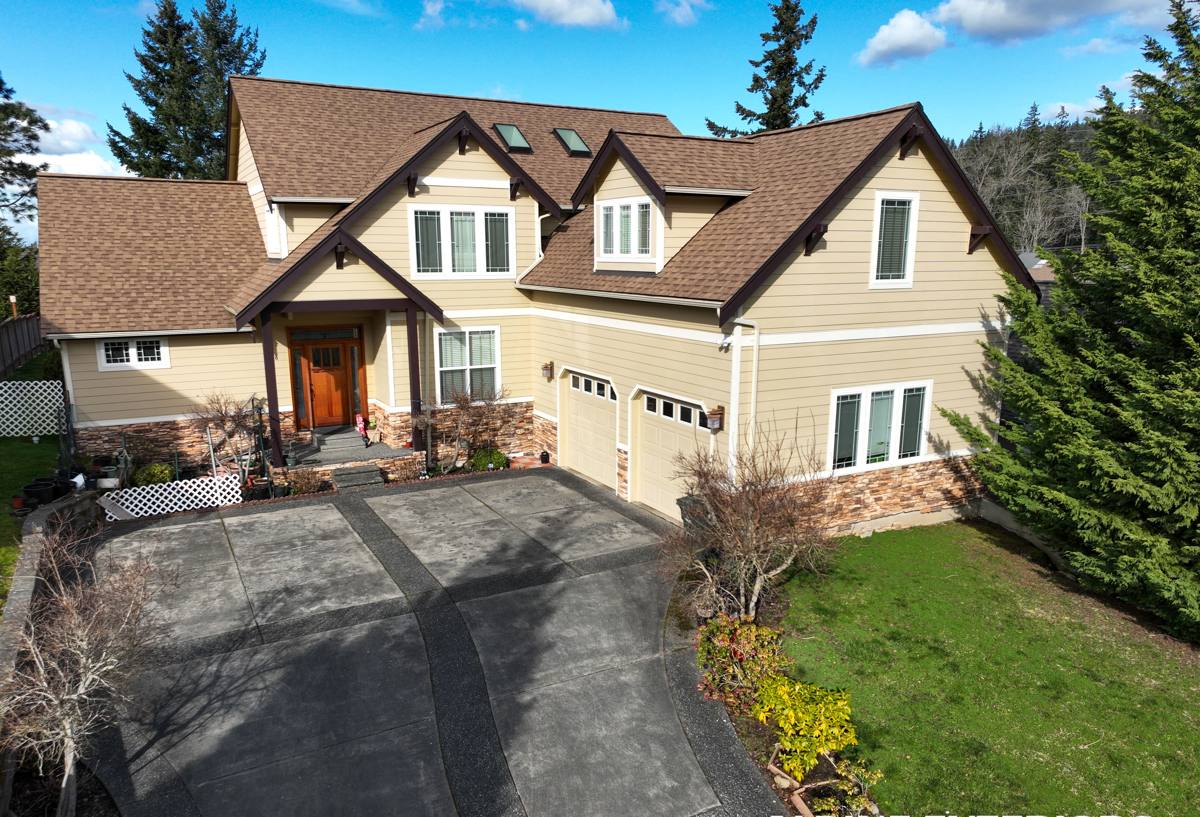
What Cordata's Climate Actually Does to a Roof
Salt Air and Metal Fatigue
Every roof has metal in it somewhere — nail heads, flashing, drip edge, vent stacks, sometimes valley metal. In coastal-influenced air, uncoated or poorly coated metal corrodes faster than manufacturers' standard warranties assume. We spec corrosion-resistant fasteners and flashing on every Cordata job, not because the shingle brand requires it, but because we've seen what standard-grade hardware looks like after a decade near the water.
Wind-Driven Rain
Whatcom County rain rarely just falls — it comes in at an angle, pushed by wind off the water. That means the details homeowners never see (ice-and-water shield at eaves and valleys, proper headlap on each shingle course, sealed penetrations) matter more here than they would in a calmer climate. A roof that would perform fine in a low-wind region can leak in Cordata if those details are shorted.
Moss and Shade
Moss needs moisture and shade to establish, and Cordata's tree cover combined with our long wet season gives it both. Once moss gets a foothold on a shingle roof, it holds water against the granules, lifts shingle tabs, and accelerates granule loss. Left unaddressed for a few seasons, a moss-covered roof ages faster than one that's been kept clear.
What a Correct Asphalt Shingle Job Involves Here
A shingle roof is a system, not a product. The shingle itself is often the least important variable in whether the roof performs for the next 25-30 years. Here's what we treat as non-negotiable on every Cordata roof:
- Full tear-off to the deck on any re-roof — never a layover, which traps moisture and voids most manufacturer warranties
- Deck inspection and repair of any soft, delaminated, or water-stained sheathing before a single shingle goes down
- Ice-and-water shield at eaves, valleys, and around penetrations, sized to our region's wind-driven rain exposure
- Synthetic underlayment across the full field, not just felt paper
- Proper starter strip at eaves and rakes — a detail that's easy to skip and directly affects wind resistance
- Correct nailing pattern and nail placement, per manufacturer spec, checked on every course
- New flashing at all valleys, walls, chimneys, and roof-to-wall transitions — reused flashing is a common shortcut we don't take
- Ridge vent or equivalent ventilation sized to the attic, so moisture doesn't build up from the inside out
Skip any one of these and the roof may look fine for a year or two. The failures that show up later — leaks at valleys, shingles lifting in wind, premature granule loss — almost always trace back to one of these steps being shorted during installation.
Choosing the Right Shingle for a Cordata Roof
Not every asphalt shingle line is built the same, and the right choice depends on your roof's exposure, slope, and how much shade and moss pressure it deals with. We walk through the real trade-offs with you rather than defaulting to whatever's cheapest or most profitable to install.
| Shingle Type | Typical Lifespan | Best Fit For | Trade-offs |
|---|---|---|---|
| 3-tab | 15-20 years | Budget-conscious re-roofs, secondary structures | Lower wind rating, less algae resistance, thinner profile |
| Architectural (laminate) | 25-30 years | Most Cordata homes — better wind and impact resistance | Higher material cost, heavier — deck should be sound |
| Algae-resistant (copper-granule) lines | 25-30 years | North-facing or heavily shaded roof sections prone to moss/algae | Slightly higher cost; effectiveness fades over the shingle's life, doesn't replace maintenance |
| Impact-rated (Class 4) | 30+ years | Homeowners wanting the longest service life and possible insurance discount | Highest upfront cost, not always discounted by every insurer — worth checking first |
For most Cordata homes, we recommend an architectural shingle with algae-resistant granules on shaded slopes at minimum. It's a modest cost difference over a basic 3-tab and it directly addresses the moss pressure this area sees. We'll never talk you into the most expensive option if your roof's exposure doesn't call for it — the goal is matching the product to your actual roof, not upselling.
Repair vs. Replacement: How We Help You Decide
Not every roofing call in Cordata ends in a full replacement. We look at the whole picture before recommending either path:
Signs a Repair Is Reasonable
- Isolated leak tied to a single flashing point or a small area of damaged shingles
- Roof is under 15 years old with no widespread granule loss
- Deck is sound and the rest of the shingle field is in good condition
Signs Replacement Is the Honest Answer
- Multiple leak points or leaks that move around after rain events
- Widespread granule loss, curling, or cracking across the roof, not just one section
- Soft or spongy deck areas found during inspection
- Roof is past 20-25 years and repairs are becoming frequent
We'll tell you straight if a repair will genuinely hold, or if you'd be spending money patching a roof that needs replacing within a year or two anyway. That's a judgment call we take seriously — nobody benefits from a repair that fails again next winter.
Our Process for Cordata Roofing Projects
Every job follows the same sequence, whether it's a full replacement or a targeted repair:
- On-site inspection — we walk the roof (not just look from the ground), check the attic for ventilation and moisture signs, and assess the deck
- Written estimate — a clear scope of work and pricing, no vague line items
- Material selection — we go over shingle options suited to your roof's specific exposure and shade patterns
- Scheduling around weather — Whatcom County's wet season means timing matters; we plan installs for dry windows whenever possible and protect the deck if weather shifts mid-job
- Tear-off and deck repair — full removal, deck inspection, and any necessary sheathing replacement before anything new goes down
- Installation to spec — underlayment, flashing, starter strip, shingles, and ventilation installed per manufacturer requirements and our own standards above them
- Final walkthrough — we go over the finished roof with you before calling the job done
Why a Crew That Already Works Cordata Matters
Roofing crews who mostly work drier, calmer climates sometimes under-spec the details that Whatcom County demands — lighter underlayment, minimal ice-and-water shield, standard-grade fasteners. It's not usually a matter of skill; it's that the roof they're used to building doesn't face the same salt air, wind-driven rain, and moss pressure Cordata sees year after year.
Working this area regularly means we've seen how roofs actually age here — which slopes moss up first, which flashing details fail under wind-driven rain, and which shortcuts show up as leaks three winters later instead of three months later. That local pattern recognition shapes every estimate and every install we do, not just the ones that go wrong.
Maintaining Your Roof After Installation
A well-installed shingle roof still needs a small amount of upkeep to hit its full lifespan in this climate:
- Keep gutters clear so water doesn't back up under the eave line
- Have moss and debris removed from shaded slopes before it builds up thick enough to lift shingles
- Trim back overhanging branches that keep sections of roof shaded and damp
- Get a quick visual inspection after major windstorms to catch lifted or missing shingles early
- Address small leaks immediately — deck damage from a slow, ignored leak costs far more to fix than the original repair would have
None of this is complicated, but it's the difference between a roof that reaches its full rated lifespan and one that starts failing early because moisture had years to work on it unnoticed.
If you're dealing with an aging roof, storm damage, or just want an honest read on where your shingles stand, we're happy to come out and take a look. Estimates are free, there's no pressure to move forward, and you'll get a straight answer about repair versus replacement — use the form below to get started.