 Ferndale Siding
 Storm Damage Roof Repair in Everson
Everson sits inland from Ferndale in the Nooksack River valley, but that doesn't mean the roof over your head gets a break from Whatcom County's weather. Storms that build over the Salish Sea push wind and driving rain across the county as they move east, and by the time they reach Everson they're often still carrying enough force to lift shingles, drive water under flashing, and strip granules off aging roofing. Add in a damp, shaded climate that keeps moss active for most of the year, and Everson roofs deal with a slow, steady kind of wear even between storms. Storm damage repair here isn't just about patching after one bad night — it's about understanding how repeated wind and moisture exposure sets a roof up to fail in the first place.
We work on homes throughout Whatcom County, including Ferndale and the smaller communities around it like Everson, and we've seen the same patterns show up again and again: wind-lifted shingle tabs that nobody notices until a leak shows up months later, moss holding moisture against the roof deck through the wet season, and flashing that was never sealed quite right to begin with. A proper storm repair addresses what actually happened to the roof, not just the spot where water is currently coming through.
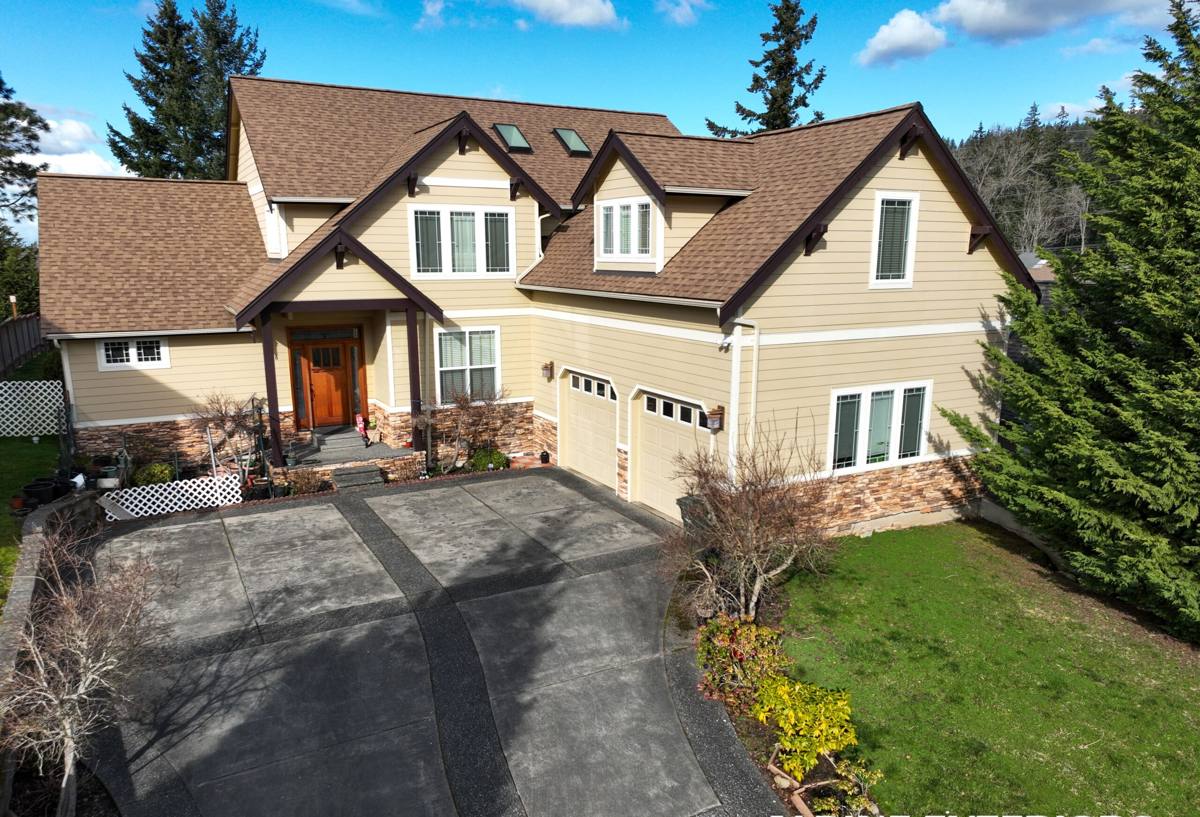
What Storm Damage Actually Looks Like
Most homeowners picture storm damage as missing shingles after a dramatic windstorm. That happens, but it's often the least common version we see. More typically, storm damage in this area shows up as:
- Shingle tabs lifted or creased by wind but not fully torn off — they look mostly fine from the ground but no longer seal properly
- Granule loss from wind-driven rain, which accelerates aging on shingles that were already getting old
- Flashing pulled loose or bent around chimneys, vents, and roof-to-wall transitions
- Moss and organic debris pushed into valleys and gutters during a storm, blocking drainage right when the roof needs it most
- Small punctures or dents from wind-blown branches and debris
- Fastener backout, where nails work loose as the roof deck flexes under wind load over multiple storms
The tricky part is that several of these don't cause a visible leak right away. A lifted tab or a loosened flashing seam can let water in gradually, and by the time a stain shows up on a ceiling, the underlayment or decking underneath may already be compromised. That's why we look at the whole roof after storm activity, not just the spot where the homeowner noticed a problem.
Why Moss Season Makes Storm Damage Worse
Whatcom County's long, damp stretch of the year keeps moss growing on north-facing and shaded roof slopes for much of it. Moss holds water against shingles and roof decking well after a storm has passed, which does two things: it accelerates rot and shingle deterioration in areas that were already stressed by wind, and it disguises early leak signs under a layer of green growth. A roof that took wind damage in October can look fine through a mossy November and December, then start leaking in earnest once winter rains saturate everything. Part of a proper storm repair is clearing and addressing moss in the damaged area so it isn't masking a repair that needs to happen.
What a Correct Storm Repair Involves
A storm repair done right is more than swapping out a few shingles. Here's what we actually check and do:
Inspection First
We walk the roof — not just look at it from the ground — and check the decking underneath any damaged area for soft spots, staining, or rot. Wind damage that looks minor on the surface can hide a wet or weakened deck underneath, and covering that up with new shingles without addressing it just guarantees a repeat call in a year or two.
Matching Materials, Not Just Covering Holes
Where possible, we match the existing shingle type, color, and exposure so the repair blends in rather than standing out as an obvious patch. On older roofs where an exact match isn't available, we're upfront about that before starting the work.
Flashing and Underlayment
Flashing around chimneys, skylights, and wall transitions is one of the most common failure points in wind events. We re-seat or replace damaged flashing and check the underlayment beneath the repair area, since underlayment is the actual water barrier — shingles alone won't stop a leak if what's underneath has been compromised.
Drainage Check
Storms that dump debris and moss into valleys and gutters set up conditions for water to back up under shingles even after the roof itself is repaired. We clear drainage paths around the repair so the fix actually holds through the next storm.
Our Process, Start to Finish
- Call or request an estimate. Tell us what you noticed — a leak, missing shingles, debris on the roof — and roughly when the damage happened.
- On-site inspection. We assess the full roof, not just the obvious damage, and check the decking and flashing in the affected area.
- Written estimate. You get a clear explanation of what's damaged, what needs to be repaired versus what can wait, and a real price before any work starts.
- Repair. We complete the work, matching materials where we can and documenting anything we find that goes beyond the original scope before proceeding.
- Follow-up. We walk you through what was done and what to watch for, especially if your roof is older and this repair is buying you time rather than resetting the clock.
Repair or Replace? What Actually Drives That Decision
Not every storm-damaged roof needs a full replacement, and not every roof is worth repairing indefinitely either. The honest answer depends on a few factors:
| Factor | Leans Toward Repair | Leans Toward Replacement |
|---|---|---|
| Roof age | Under 12-15 years, one isolated damage area | Nearing or past expected lifespan, multiple worn areas |
| Extent of damage | Localized to one slope or section | Widespread across multiple slopes |
| Decking condition | Solid, dry decking under damaged shingles | Soft spots or rot found during inspection |
| Repair history | First or second storm repair on this roof | Recurring repairs in the same or nearby areas |
| Material availability | Matching shingles still available | Discontinued product, obvious patchwork otherwise |
We'll always tell you honestly which side of that table your roof falls on. A well-timed repair on a roof with years of life left is money well spent. Patching a roof that's already at the end of its service life just delays a bigger decision — and we'd rather tell you that upfront than keep sending you a bill for small fixes.
Storm Damage and Insurance Claims
If you're filing an insurance claim for storm damage, documentation matters. We provide a written assessment describing what we found and what caused it, which your insurer will typically want alongside their own inspection. A few things worth knowing:
- Most policies distinguish between sudden storm damage and gradual wear — a clear, dated inspection helps establish which one you're dealing with
- Getting a repair estimate promptly after a storm creates a record close to the actual event, which matters if a claim is questioned later
- We won't inflate an estimate or describe damage that isn't there to help a claim along — that's not a service we offer, and it's not worth the risk to either of us
If you're not sure whether your situation is claim-worthy, we're happy to give you a straightforward read on the damage so you can make that call yourself.
Why It Matters That We Already Work in Everson
A crew that only occasionally passes through Everson doesn't know which slopes in this valley take the worst of the wind, how fast moss builds back up on shaded roofs here compared to more open areas, or which older roofing materials are common on homes in this part of Whatcom County. We do this work throughout Ferndale and the surrounding communities, which means when a storm damage call comes in from Everson, we're not learning the area for the first time — we're applying what we already know about how storms behave here and how local roofs typically hold up to them. That translates into faster, more accurate assessments and repairs that account for what's actually likely to happen to this roof again, not a generic fix.
It also means a faster response after a storm. When a wind event hits the county, we're not driving in from somewhere else and trying to fit in a new market — we're already local, which matters when you've got an active leak and don't want to wait days for someone to show up.
What to Do After a Storm, Before We Arrive
- Note when the damage occurred or when you first noticed it — this matters for insurance and for our assessment
- If it's safe to do so from the ground, take note of any visibly missing shingles, dented gutters, or debris on the roof
- Check attic spaces or ceilings for staining, especially after heavy rain following a windstorm
- Don't get on the roof yourself, especially on wet or mossy surfaces — that's a fast way to turn storm damage into a fall injury
- Avoid tarping or DIY patches unless water is actively coming into living space — a temporary fix done wrong can trap moisture and complicate the real repair
- Call for an inspection sooner rather than later — minor wind damage left alone tends to get worse with the next storm, not better
If your roof took a hit in a recent storm, or you're just not sure whether that lifted shingle or mossy patch is something to worry about, we're glad to come take a look. Request a free, no-pressure estimate using the form below and we'll give you a straight answer on what your Everson roof actually needs.