 Ferndale Siding
 Siding on Semiahmoo's Coastline Works Harder Than Siding Anywhere Else in Whatcom County
Homes along the Semiahmoo waterfront face a combination of conditions that most siding products were never engineered for: salt-laden air coming straight off the water, driving rain that hits walls sideways during winter storms, and a shade-and-moisture pattern that keeps north- and west-facing walls damp for weeks at a stretch. Add in the wind exposure that comes with being close to open water, and you have a climate that finds every weak point in a wall system faster than the more sheltered, inland parts of Whatcom County.
We're based in Ferndale and have worked this stretch of coastline long enough to know that "it looked fine when it was installed" doesn't mean much here. What matters is how a product and an installation hold up after five, ten, and twenty winters of salt, wind, and standing moisture. That's the lens we use on every Semiahmoo project, and it's why we install exclusively James Hardie fiber cement siding — not because it's the only product on the market, but because it's the one we're willing to put our name behind in this specific environment.
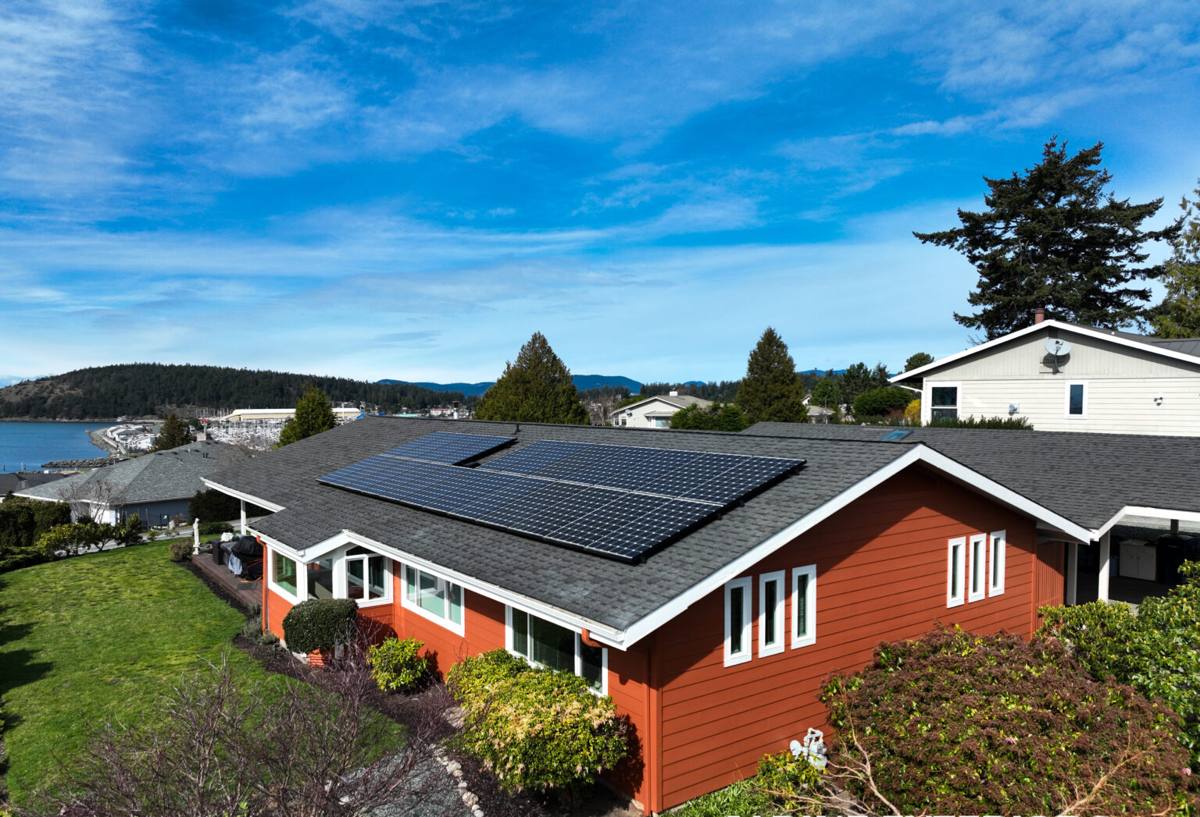
What Salt Air Actually Does to a Wall
Salt air doesn't just look and smell different near the water — it's chemically more aggressive than air a few miles inland. Airborne salt settles on exterior surfaces and accelerates corrosion of anything metal: nails, screws, flashing, and hardware. It also breaks down cheaper caulks and sealants faster, and it can dull or degrade paint finishes that weren't formulated to resist it.
Where This Shows Up First
- Exposed or under-driven fasteners that begin rusting and staining the siding face within a few years
- Caulk joints around windows, trim, and butt seams that crack and pull away earlier than expected
- Site-applied paint that chalks, fades, or loses adhesion faster than a factory-cured finish
- Corner and trim flashing that corrodes from behind, out of sight, until water finds a path inward
None of this is unique to one brand of siding — it's physics. But it's a strong argument for a siding system with a factory-applied, baked-on finish and corrosion-resistant fastening details, rather than a product that leans on job-site painting and standard fasteners to get by.
Driving Rain and Wind-Driven Water Intrusion
Whatcom County gets plenty of rain generally, but the rain that matters most for siding performance near Semiahmoo is the kind that comes in sideways during winter frontal systems off the water. Wind-driven rain doesn't just run down a wall — it gets pushed up and under laps, into seams, and behind trim if the water-resistive barrier, flashing, and lap details weren't built correctly in the first place.
This is why the installation matters as much as the material. A high-quality fiber cement board installed with tight, uneven laps, missing kick-out flashing, or caulked seams where flashing should have been used will still let water in eventually — and once water gets behind siding on a home this close to the water table and the coastline, it has a hard time drying back out.
Moss, Algae, and the Long Wet Season
Semiahmoo's tree cover, water proximity, and long stretches of overcast, damp weather create ideal conditions for moss and algae growth on north-facing and shaded walls. This isn't just cosmetic. Moss holds moisture directly against the siding surface for extended periods, and on products that absorb water or swell when saturated, that constant dampness accelerates rot, delamination, or finish failure at a much faster rate than the same product would fail in a drier climate.
Fiber cement doesn't eliminate moss and algae growth — nothing painted or textured will, given enough shade and moisture — but it doesn't feed the problem the way wood-based products can, and it holds its shape and structural integrity even when it stays damp longer than we'd like.
Why We Install Only James Hardie in This Environment
We don't install LP SmartSide, vinyl, Cemplank, Allura, or primed wood siding, and Semiahmoo is a good example of why. Each of those products has legitimate uses somewhere, but each also has a specific vulnerability that this climate tends to expose:
| Material | Coastal Vulnerability | Why It Matters Near Semiahmoo |
|---|---|---|
| Vinyl siding | Deforms under heat/wind stress, seams open over time | Wind exposure and temperature swings near open water stress seams and fastening slots |
| Engineered wood (OSB-based) | Swells and degrades if the factory finish is breached | Prolonged shaded dampness and salt-laden moisture accelerate edge swelling once compromised |
| Primed cedar/spruce | Requires ongoing site-applied paint maintenance | Salt air breaks down site-applied paint faster than a factory finish, shortening repaint cycles |
| James Hardie fiber cement | Non-combustible, dimensionally stable, factory ColorPlus finish | Resists moisture-driven swelling and holds finish integrity longer under salt exposure |
James Hardie's HZ5 product line is engineered specifically for the freeze-thaw and moisture cycling common to the Pacific Northwest, and the ColorPlus factory finish is baked on under controlled conditions rather than applied on-site — which matters when site-applied coatings are exactly what salt air degrades fastest. Fiber cement is also non-combustible, which is worth noting given how many Whatcom County properties back up to trees and brush.
What a Correct Fiber Cement Installation Involves
The product is only half the equation. A James Hardie installation that's actually built to hold up on the Semiahmoo waterfront requires attention to details that are easy to skip and hard to inspect once the wall is closed up:
Details We Don't Skip
- Correct water-resistive barrier and properly lapped house wrap behind the siding, not just "a layer of something"
- Flashing at every horizontal transition — window heads, trim boards, roof-to-wall intersections, and butt joints — installed to shed water, not caulk relied on as the primary defense
- Minimum clearance from grade, decks, and roof lines per Hardie's published specifications, which exist specifically to keep splash-back and standing moisture off the bottom edge of the board
- Fasteners installed per Hardie's nailing pattern and depth requirements, using corrosion-resistant fasteners appropriate for coastal exposure
- Properly sized gaps at butt joints and trim, caulked with a sealant rated for the movement and exposure involved, not just whatever tube was on the truck
Skipping any one of these doesn't usually cause an obvious problem in year one. It shows up in year five or eight, as staining, soft spots, or paint failure at the specific points where the shortcut was taken — which is exactly the kind of failure we get called out to diagnose and repair on other contractors' work.
Our Process for a Semiahmoo Project
Every job starts with a walkthrough of the existing wall system, not just the visible siding. We're looking at what's happening behind the current cladding, where water has been getting in if it has, how the home is oriented relative to wind and sun, and where moss and shade are likely to keep surfaces wet longest.
- On-site evaluation of the existing siding, trim, flashing, and any visible moisture damage
- A written estimate that separates material, labor, and any additional carpentry or moisture-repair work needed before new siding goes on
- Removal of old siding and inspection of sheathing, with repairs made before anything new is installed over a compromised wall
- Installation of water-resistive barrier, flashing, and James Hardie fiber cement to manufacturer specification
- Final walkthrough and punch list before the job is considered complete
We don't install over rot, and we don't cover up a moisture problem with new siding and hope it doesn't resurface. If we find deteriorated sheathing or framing during tear-off, we'll show you what we found and price the repair separately before moving forward — not as an upsell, but because siding installed over a compromised wall fails regardless of how good the siding itself is.
What to Expect for Maintenance Afterward
Fiber cement is low-maintenance, not no-maintenance, especially in a salt-air, high-moss environment. A reasonable annual routine keeps a Semiahmoo home's siding performing the way it's supposed to:
- Rinse the exterior annually, focused on shaded and north-facing walls where moss and algae take hold first
- Check caulk joints around windows, trim, and penetrations for cracking or separation every year or two
- Keep vegetation and mulch beds pulled back from direct contact with the siding's bottom edge
- Have gutters and downspouts checked and cleared so overflow isn't running directly down the wall face
- Watch for any staining at fastener heads or trim joints, which is usually the earliest visible sign of a flashing or sealant issue
Why Local Experience on This Coastline Actually Matters
A crew that mostly works inland, drier parts of Whatcom County can install siding correctly by the book and still miss the details that matter specifically near the water — how far up a wall wind-driven rain typically reaches on an exposed elevation, which sides of a Semiahmoo-area home stay shaded and damp longest, or how much clearance really needs to be built in given how close some lots sit to grade and standing water. That's knowledge that comes from working this specific stretch of coastline repeatedly, not from a general contracting background.
Being Ferndale-based means our crews are in this part of Whatcom County regularly, working with the same local permitting requirements, the same coastal exposure conditions, and the same climate stresses on every project. That familiarity shows up in the small decisions — fastener choice, flashing details, clearance calls — that determine whether siding is still performing well in fifteen years or starting to show problems in five.
If you're planning a siding project on the Semiahmoo waterfront or nearby, we're happy to walk your property, take a look at what your current siding and wall system are dealing with, and give you a straightforward, no-pressure estimate for James Hardie fiber cement siding built for this exact climate. Use the form below to get started.