 Ferndale Siding
 Deck Repair Built for Sumas' Weather
A deck in Sumas takes a different kind of beating than one in a drier climate. Whatcom County's long wet season, heavy moss growth, and the driving rain that moves through this part of Washington all work on wood and fasteners year-round, not just in the winter months. If you own a home near Sumas or anywhere in the Ferndale service area, chances are your deck has already shown some of the early warning signs: soft spots underfoot, dark streaking on the boards, or a handrail that's started to wiggle. None of that is unusual here. What matters is catching it before it becomes a structural problem instead of a cosmetic one.
We repair decks for homeowners throughout this area, and the patterns repeat. Moisture gets in where it shouldn't, sits there because the deck can't dry out fast enough between rains, and slowly breaks down whatever it's touching — usually the ledger board, the joists closest to the house, or the fasteners holding it all together. A proper repair addresses the moisture path first, then the damage it caused.
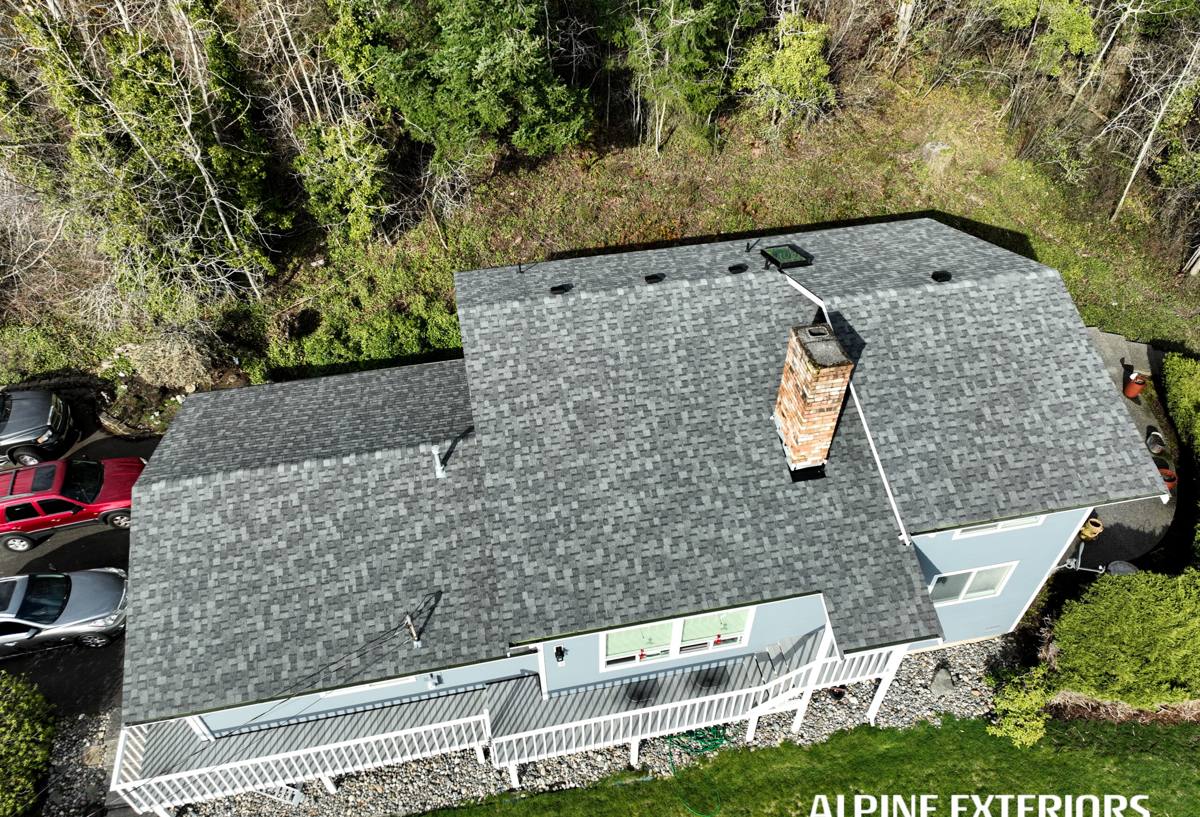
Why Decks in This Area Fail Faster
A Long, Wet Moss Season
Moss doesn't just look bad on decking — it holds water against the wood surface for days at a time, long after the rain has stopped. On horizontal deck boards, that constant dampness is worse for the wood than the rain itself. Over a few seasons, moss-covered boards start to soften, cup, and eventually rot from the top down, especially in shaded corners or under overhangs that never get direct sun to dry them out.
Driving Rain and Water Intrusion Points
Wind-driven rain finds its way into places a calm rain never would — behind ledger board flashing, into fastener holes, and under railing posts that were caulked but never properly flashed. Once water gets behind the surface of a deck, it's hidden from view while it does the most damage. This is why decks that "look fine" from a few feet away can still have serious rot underneath.
Humid, Low-Lying Ground Conditions
Homes on lower, flatter ground near the Nooksack River valley — which includes much of the Sumas area — often deal with slower-draining soil and more ambient humidity at ground level. That affects decks built low to the grade, where airflow underneath is already limited. Less airflow means slower drying, and slower drying means a shorter lifespan for any wood component close to the ground.
What a Correct Deck Repair Actually Involves
A lot of "deck repair" jobs we get called out to fix are actually second attempts — someone replaced a few visibly bad boards without ever finding out why they went bad in the first place. That approach almost always fails again within a couple of seasons. Here's what we check on every repair, regardless of how small the visible problem looks:
- Ledger board condition and flashing where the deck attaches to the house — the single most common source of hidden rot
- Joists and beams underneath, checked for soft spots, splitting, and fastener corrosion
- Post bases and footings for movement, rot at ground contact, or inadequate drainage
- Railing posts and connections, which take structural load and are frequently under-flashed
- Fastener condition — corroded screws and nails are a leading cause of surface boards working loose
- Drainage and airflow underneath the deck, especially on low decks close to grade
If we only patch what's visible and skip this list, we're not actually fixing the deck — we're delaying the next call.
Repair or Replace? How We Help You Decide
Not every deck problem needs a full rebuild, and not every "just replace a board" job is actually a simple fix once we're underneath. The honest answer depends on where the damage is and how far it's spread. The table below covers the factors we walk through with homeowners before recommending either path.
| Factor | Points Toward Repair | Points Toward Replacement |
|---|---|---|
| Ledger board condition | Solid wood, isolated surface staining only | Soft, spongy, or visibly rotted where it meets the house |
| Structural framing (joists/beams) | Framing intact, damage limited to a few boards | Multiple joists soft or failing a screwdriver test |
| Age of the deck | Under 10-12 years, built to a reasonable standard | Older deck nearing the end of typical lumber lifespan |
| Fastener and connector condition | Hardware still sound, minor surface corrosion | Widespread corrosion or undersized original hardware |
| Footings and posts | Stable, no movement or rot at ground level | Settling, rot, or footings that don't meet current standards |
In most cases, a deck that's structurally sound underneath but has surface-level wear from moss and moisture is a good repair candidate. A deck with rot at the ledger board or in multiple structural members usually isn't worth chasing with patch repairs — at that point we'll tell you plainly, because a repair that doesn't fix the underlying problem isn't a good use of your money.
Our Deck Repair Process
1. On-Site Inspection
We walk the entire deck, check underneath wherever we can access it, and probe suspect areas rather than relying on a visual look alone. Soft wood often looks fine from a distance.
2. A Straight Answer on Scope
You'll get a clear explanation of what's actually wrong, what's driving it, and what it will take to fix it correctly — including if the honest recommendation is a partial rebuild instead of a spot repair.
3. Repair the Cause, Not Just the Symptom
If the problem is moisture intrusion at the ledger board, we correct the flashing detail, not just replace the wood behind it. If it's fastener corrosion, we replace with hardware rated for exterior and treated-lumber contact. Fixing the surface without fixing the cause just resets the clock on the same failure.
4. Rebuild Damaged Sections to Match
Repaired sections are framed and fastened to match the structural standard of the rest of the deck, not just patched to look presentable. Decking boards are matched as closely as possible in species and dimension.
5. Final Walkthrough
We go over what was repaired, why, and what basic upkeep will help it hold up through the next few wet seasons.
Wood vs. Composite: Repair Considerations
Both wood and composite decking show up on homes in this area, and repair approaches differ between them.
Wood decking is the more common repair we see, and it's generally straightforward to match and replace damaged boards, provided the framing underneath is sound. The tradeoff is that wood needs a maintenance rhythm — cleaning, moss treatment, and refinishing — to keep moisture from re-entering over time.
Composite decking resists surface rot better, but it isn't immune to problems. The framing underneath composite boards is almost always still wood, and that structure is subject to the same moisture risks as an all-wood deck. We've also found that composite boards installed with inadequate gapping or poor ventilation underneath can trap moisture against the framing worse than open wood decking would. A composite deck repair often means addressing what's happening below the surface, not just the boards themselves.
Our standard on any repair — wood or composite — is to prioritize getting moisture management right first. Cosmetic fixes on top of an unresolved moisture problem don't hold up in this climate.
Keeping a Repaired Deck in Good Shape
Once we've repaired your deck, a little seasonal attention goes a long way toward avoiding a repeat call in a few years. This is the same basic checklist we leave with homeowners after a repair:
- Clear leaves and debris from between boards regularly, especially going into fall
- Treat or scrub moss growth before it has a chance to establish, particularly in shaded areas
- Check that gutters and downspouts near the deck aren't dumping extra water onto or under it
- Look at the ledger board flashing once a year for gaps or caulking that's pulled away
- Keep vegetation trimmed back so airflow and sunlight can reach damp areas of the deck
- Re-seal or refinish wood decking on the manufacturer's recommended schedule, not just when it looks worn
Why Local Experience Matters for This Job
Deck repair isn't a job where a generic approach works everywhere. A crew that regularly works in Sumas and the greater Ferndale area already knows what to expect from a deck in this climate — where moisture tends to collect, which details on older builds were never flashed correctly to begin with, and how long a repair actually needs to cure or dry before it's weather-ready. That local pattern recognition is the difference between a repair that gets it right the first time and one that has to be revisited.
We're also familiar with Whatcom County's permitting expectations for structural deck work, which matters when a repair crosses the line from cosmetic into structural — replacing footings or ledger connections, for example, can trigger permit requirements depending on scope. A contractor unfamiliar with the local jurisdiction can miss that step, which becomes your problem later, not theirs.
Get a Straight Assessment of Your Deck
If your deck in Sumas or the surrounding Ferndale area has soft spots, moss buildup that won't quit, or just feels less solid than it used to, it's worth having someone look underneath before the damage spreads further. We'll give you a clear, no-pressure estimate and an honest read on whether you're looking at a repair or something bigger — use the form below to get started.