 Ferndale Siding
 Roofing Built for Kendall's Rain and Moss
Kendall sits in the wooded, rural stretch of Whatcom County northeast of Ferndale, where tree cover runs heavier and roof planes stay shaded for much of the day. That combination of shade, standing tree canopy, and a wet marine climate means roofs out here work harder than roofs in more open, sun-exposed parts of the county. A new roof installation in Kendall isn't just about swapping old shingles for new ones — it's about building a roof system that can shed driving rain, resist a moss season that can run most of the year, and hold up under the debris load that comes with living close to the trees.
We install roofs throughout Whatcom County, and Kendall's conditions are consistently among the harder ones we plan for. That shapes real decisions on every job: how much ventilation a roof needs, where ice-and-water protection matters most, and which materials actually perform under shade and moisture instead of just looking good on a sunny installation day.
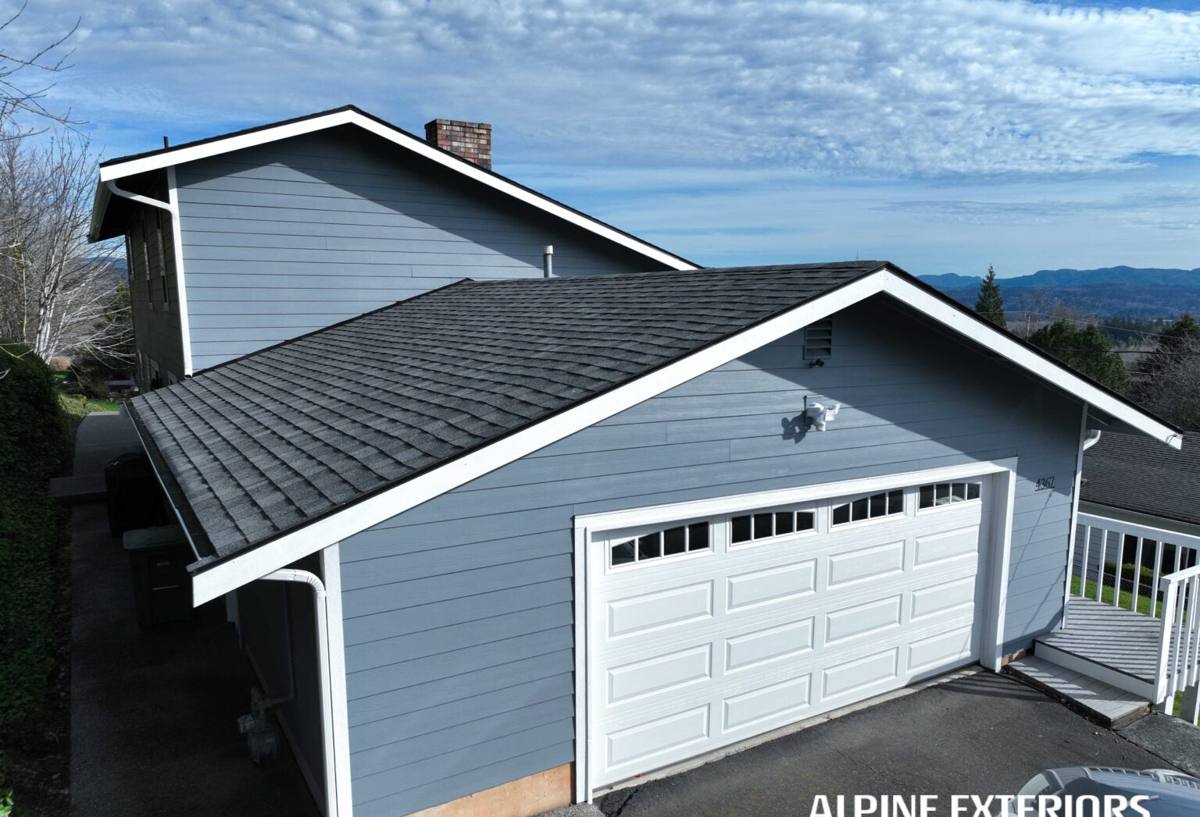
What Whatcom County Weather Does to a Roof
Whatcom County's weather is shaped by marine air moving in off the Salish Sea, and that moisture-laden air doesn't stop at the coastline — it pushes inland and up into the foothills, bringing long stretches of steady rain, wind-driven storms in fall and winter, and short summers that never fully dry things out before the next wet season starts. For a roof, that means moisture pressure nearly year-round, not just during a rainy stretch.
Driving Rain and Wind-Driven Moisture
Rain in this region rarely falls straight down. Storms moving through push rain sideways under wind gusts, which means it finds its way under poorly lapped shingles, around weak flashing, and into any gap a fair-weather installation might get away with elsewhere. Roof valleys, chimney flashing, and any place two roof planes meet are where wind-driven rain does its damage first.
Moss, Shade, and Debris
Kendall's tree cover is a mixed blessing. It's part of what makes the area appealing, but shaded roof sections dry slower after every rain, and moss and algae take hold fastest exactly where a roof stays damp longest. Left unchecked, moss lifts shingle edges, holds moisture against the roof deck, and shortens the life of even a well-installed roof by years. Add in needles, leaves, and branch debris collecting in valleys and gutters, and you have a roof environment that punishes shortcuts.
Signs a Kendall Roof Needs Replacing, Not Another Repair
Not every roof problem calls for full replacement, but there's a point where patching individual leaks costs more over time than doing the job right once. We tell homeowners the truth about which side of that line their roof is on — here's what we look for:
- Shingles that are curling, cupping, or have lost most of their granules
- Moss or algae growth covering large sections rather than isolated patches
- Daylight visible through the roof deck from inside the attic
- Soft or spongy spots when walking the roof, a sign of deck rot underneath
- Leaks that keep reappearing in the same area after repairs
- A roof approaching or past the 20-25 year mark for asphalt shingles
- Sagging rooflines or valleys, which can point to structural deck issues
If you're seeing one or two of these, a repair may still make sense. If you're seeing several at once, especially on a roof that's already into its second or third decade, it's usually time to talk about replacement.
What a Correct New Roof Installation Actually Involves
A roof is only as good as what's underneath the shingles. In a climate like ours, the details most homeowners never see are what actually determine whether a roof lasts 15 years or 30.
Tear-Off and Deck Inspection
We remove the old roofing down to the deck rather than layering over it. That's the only way to actually see the plywood or plank decking underneath, check for soft or rotted sections, and replace anything compromised before it's sealed under a new roof for the next couple of decades.
Underlayment and Ice-and-Water Protection
Synthetic underlayment goes down as the roof's real waterproof barrier, with self-adhering ice-and-water shield reinforcing the vulnerable spots — eaves, valleys, and around any roof penetration. Given how much of Kendall's roof stress comes from wind-driven rain finding its way in sideways, this layer matters more here than it does on a roof in a drier, more open part of the county.
Flashing and Ventilation
New metal flashing at chimneys, walls, and valleys — never re-using old, worn flashing to save time. We also check and correct attic ventilation as part of every install, since a roof that can't breathe traps moisture underneath the shingles, which accelerates rot and, on shaded roofs, feeds the moss and algae growth that's already working against you.
Choosing a Roofing Material for a Kendall Home
Material choice matters more in a shaded, wet climate than it does somewhere sunny and dry. We walk homeowners through real trade-offs rather than pushing whatever has the best margin.
| Material | Typical Lifespan | Moss / Moisture Behavior | Maintenance |
|---|---|---|---|
| 3-tab asphalt shingle | 15-20 years | Lower granule mass wears faster under constant moisture and shade | Regular moss and debris clearing |
| Architectural (dimensional) shingle | 25-30 years | Thicker, more moisture-resistant construction; still needs moss management in heavy shade | Periodic cleaning, algae-resistant granules on most current products |
| Standing seam metal | 40-50+ years | Sheds moisture and moss growth far better due to smooth, non-porous surface | Minimal; occasional debris clearing |
| Cedar shake | 20-30 years with upkeep | Attractive but absorbs moisture and is the most demanding in high-shade, high-moss conditions | Frequent treatment and moss control required |
For most Kendall homes, we recommend architectural asphalt shingles with algae-resistant granules as the practical middle ground, or standing seam metal for homeowners who want to minimize long-term moss maintenance and don't mind the higher upfront cost. We're honest that cedar shake, while attractive, asks the most of a homeowner in exactly the conditions Kendall has the most of — heavy shade and sustained moisture — so we make sure anyone considering it understands the maintenance commitment before they commit to the product.
Our Installation Process, Start to Finish
- On-site assessment: We walk the roof and attic, check the deck condition, ventilation, and flashing, and talk through what your specific roof needs — not a generic package.
- Written estimate: A clear breakdown of materials, scope, and cost before any work starts, with no surprise add-ons buried in fine print.
- Material selection: We help you weigh lifespan, moss resistance, and budget for your specific roof exposure, rather than defaulting to one product for every job.
- Tear-off and deck repair: Full removal of old roofing, with any compromised decking replaced before anything new goes down.
- Installation: Underlayment, ice-and-water shield at vulnerable points, new flashing, proper ventilation, and correctly installed roofing material per manufacturer specification.
- Final walkthrough: We review the completed roof with you, including gutters and any debris cleanup, before calling the job done.
Why a Crew That Already Works in Kendall Matters
A roofing crew that mostly works flat, open, sun-exposed roofs elsewhere in the county doesn't always plan the same way for a shaded, tree-lined property in Kendall. We already know to spec ventilation and underlayment for a roof that dries slower, to plan around limited sun exposure when scheduling install timing, and to talk realistically with homeowners about moss maintenance instead of pretending it isn't part of owning a home under tree cover out here.
That local familiarity also matters when something goes wrong. A crew that's worked Whatcom County's driving rain and long wet season knows what a genuine installation defect looks like versus normal wear from a tough climate — and stands behind their work accordingly.
What Affects the Cost of a New Roof
Every roof is different, but the same handful of factors drive most of the cost variation we see on Kendall jobs.
| Cost Factor | Why It Matters |
|---|---|
| Roof size and complexity | More square footage, valleys, and roof planes mean more material and labor |
| Pitch and access | Steeper roofs and limited access (common on tree-lined lots) increase labor time and safety setup |
| Deck condition | Rotted or soft decking found during tear-off requires repair before new roofing goes down |
| Material choice | Standing seam metal and premium shingles cost more upfront but reduce long-term maintenance |
| Layers to remove | A roof with multiple old layers takes longer to tear off than a single-layer roof |
We give straightforward, itemized estimates so you know exactly what you're paying for and why — no vague lump-sum numbers that hide where the money actually goes.
Ready for a Roof That's Actually Built for Kendall
If your roof is showing its age, holding onto moss it shouldn't, or you're just planning ahead before the next wet season, we're happy to take a look and give you a straight answer — no pressure, no upsell. Fill out the form below for a free estimate on a new roof installation built for the way weather actually behaves in Kendall.