 Ferndale Siding
 Siding Repair in Custer: Fixing the Damage This Climate Actually Causes
Custer sits in the flat farmland north of Ferndale, close enough to the Salish Sea and Birch Bay to catch salt-laden marine air on a regular basis, but without the wind break that hillier or more sheltered parts of Whatcom County get. That combination — open exposure plus a wet, mild climate that barely lets a wall dry out between storms — is hard on siding in specific, predictable ways. Most of the repair calls we get in this area aren't random damage. They're the same handful of failure patterns showing up on different houses, because the same weather is doing the work.
Siding repair sounds like a small job, and sometimes it is. But done wrong, it's also one of the easiest ways to trap water behind a wall and turn a $400 problem into a $9,000 one. We treat repair work with the same attention to water management that we'd give a full re-side, because in Custer's climate, that's what actually determines whether a repair holds.
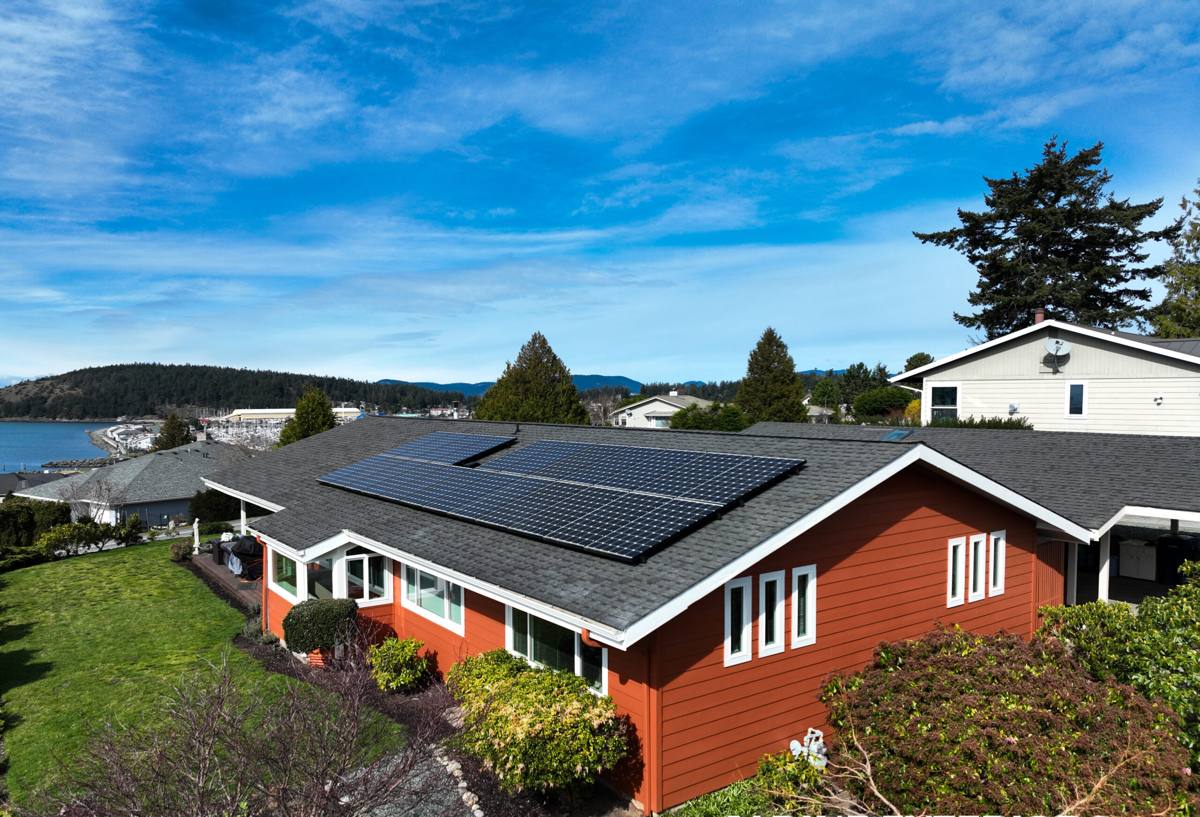
What Custer's Climate Does to Siding
Salt-Laden Air and Corrosion
Custer isn't waterfront, but it's close enough to Birch Bay and the Strait of Georgia that marine air reaches it regularly, especially during winter storms that push wind and moisture inland off the water. That salt-laden air accelerates corrosion on fasteners, trim flashing, and any metal component involved in a siding system. On repair jobs, we see this most often as rust streaking below nail heads or corroded flashing at trim joints — problems that start small and get worse every wet season they're left alone.
Driving Rain and Wind Exposure
The open farmland around Custer doesn't offer much of a windbreak, so storms coming off the water push rain sideways into wall assemblies instead of straight down. Siding systems that rely on gravity alone to shed water — laps that weren't set with the right reveal, caulk used in place of proper flashing — tend to fail here faster than they would in a more sheltered inland setting. Wind-driven rain finds gaps that would stay dry in calmer conditions.
The Long Moss Season
Mild temperatures and near-constant moisture through fall, winter, and spring give moss, algae, and mildew a growth season that stretches across most of the year in Whatcom County. North-facing walls, shaded elevations, and anywhere water sits instead of draining are the first spots to show it. On siding, that growth isn't just cosmetic — it holds moisture against the surface longer than an exposed, sun-dried wall would, which speeds up whatever damage is already underway underneath.
Signs a Custer Home Needs Siding Repair
- Soft, spongy, or crumbling siding when pressed, especially near the bottom courses or below windows
- Visible cracking, buckling, or warping in one section while the rest of the wall looks fine
- Dark streaking, persistent moss, or algae growth that keeps coming back after cleaning
- Paint or finish peeling, bubbling, or failing faster in one area than the rest of the house
- Gaps opening up at seams, corners, or where siding meets trim, window casings, or the foundation
- Interior signs — musty smell, discolored drywall, or soft spots on an inside wall that shares an exterior with damaged siding
What a Correct Siding Repair Actually Involves
Diagnosing the Cause Before Patching
A repair that doesn't identify why the siding failed in the first place usually just delays the same failure. Before we touch a damaged section, we look at what's behind it — whether water is getting in from a flashing gap, a failed seal at a penetration, poor drainage at grade, or a chronic moisture source like a leaking gutter. Patching over the visible damage without addressing the source is the single most common reason a "repaired" section fails again within a year or two.
Matching Material and Finish
Because we install only James Hardie fiber cement siding, repairs on a Hardie home are straightforward to match — the profile, reveal, and ColorPlus factory finish are consistent across the product line, so a repaired section can blend into the surrounding wall rather than standing out as an obvious patch. On homes with older or different siding material, matching is harder, and we're upfront with homeowners about that limitation rather than promising a seamless match we can't deliver.
Flashing and Water Management
Any repair that involves removing and replacing siding is an opportunity to correct the water management detailing underneath — house wrap, flashing laps, and seals around penetrations — not just reinstall the same setup that failed. We treat this as standard practice on repair work, because reinstalling new siding over the same faulty flashing that caused the original damage just resets the clock on the same problem.
Repair vs. Replacement: How We Make the Call
Not every damaged section calls for a full re-side, and we don't default to recommending one. The honest answer depends on how contained the damage is and what's happening behind the siding, not on what's easiest to sell.
| Condition | Repair Usually Makes Sense | Replacement Usually Makes Sense |
|---|---|---|
| Isolated damage to one or two sections | Yes, if the framing behind it is sound | Not necessary on its own |
| Soft or rotted sheathing behind siding | Only if damage is truly contained | Yes — the problem is bigger than the siding |
| Widespread moss, cracking, or paint failure | Rarely a lasting fix | Yes |
| Damage concentrated at one flashing detail | Yes, once flashing is corrected | Not unless it has already spread |
| Siding material is old, discontinued, or unmatched | Possible, with a visible patch | Yes, for a consistent, uniform result |
Why We Repair Exclusively with James Hardie Fiber Cement
We don't install vinyl, LP SmartSide, Cemplank, Allura, primed spruce, or cedar, and that standard applies to repair work the same as it does to a full re-side. When a section of siding needs to come off and go back on, that's the moment to put a better material in that spot — not to patch a failure-prone product with more of the same. James Hardie fiber cement is non-combustible, holds its ColorPlus factory finish far longer than field-applied paint, and is manufactured in formulations engineered for wetter climate zones like ours, which matters directly for a place with Custer's rain and moisture exposure. It also carries a strong transferable warranty, which is worth more on a home that's already had one round of siding trouble than a product with a thinner track record.
We understand that a homeowner with existing non-Hardie siding sometimes just wants the one damaged board fixed, not a conversation about a full material change. We'll always give a straight answer about what a section repair can realistically achieve versus when it's time to talk about replacing more of the wall — we'd rather tell a homeowner that up front than let a mismatched patch pass as a real fix.
Our Siding Repair Process in Custer
We start with an on-site inspection of the damaged area and the surrounding wall, not just the section that's visibly failing, since siding problems in this climate rarely stay isolated for long. From there we identify the cause — flashing, drainage, a chronic moisture source — before we talk about the repair itself. We give a written scope that spells out what's being repaired, what material is being used, and how the underlying water management is being addressed, so there's no ambiguity about what the work covers.
Once work begins, damaged siding and any compromised sheathing or house wrap behind it come out, the cause gets corrected, and new material goes back in with flashing detailed to shed water rather than trap it. We clean up thoroughly and walk the finished repair with the homeowner before calling the job done.
A Checklist Before Hiring for Siding Repair in Custer
- Ask what they found behind the damaged siding, not just what they plan to install over it
- Confirm current Washington contractor licensing and active liability insurance
- Get a written scope that separates the repair work from any underlying flashing or drainage correction
- Ask how closely a patch will match existing siding, and get an honest answer if it won't be seamless
- Ask whether they recommend repair or replacement and why, based on what they actually saw during inspection
Why a Local Crew Matters for Siding Repair
A crew that already works Custer and the surrounding stretch of Whatcom County has seen these same failure patterns enough times to recognize them fast — salt-air corrosion at fasteners, wind-driven rain finding its way past a poorly lapped flashing, moss holding moisture against a north wall long after a drier climate would have dried it out. That familiarity shows up in how thoroughly a repair gets diagnosed and how the flashing detail gets handled, and it's the difference between a repair that holds for years and one that reopens the same problem the following winter.
If you've got a section of siding that's cracked, soft, discolored, or just not holding up the way it should, we're happy to take a look and give you a straight assessment of what's going on and what it'll take to fix it right. Reach out below for a free, no-pressure estimate.