 Ferndale Siding
 New-Construction Windows Built for Point Roberts' Marine Climate
Building new on Point Roberts means dealing with a window installation problem that most inland builders never think about twice: the house is surrounded by water on three sides, sitting in one of the more exposed corners of Whatcom County. Windows going into a new build here aren't just a design choice — they're one of the first weatherproofing decisions made on the house, and they get tested by salt air, driving rain, and a long, damp moss season from day one. Getting the install right during framing is far cheaper and far more reliable than trying to fix a leaky or corroded window after the siding and trim are already closed up.
This page covers what new-construction window installation actually involves, what Point Roberts' climate demands from the windows and the install itself, and why working with a crew that already understands this specific stretch of coastline matters more than it would somewhere twenty miles inland.
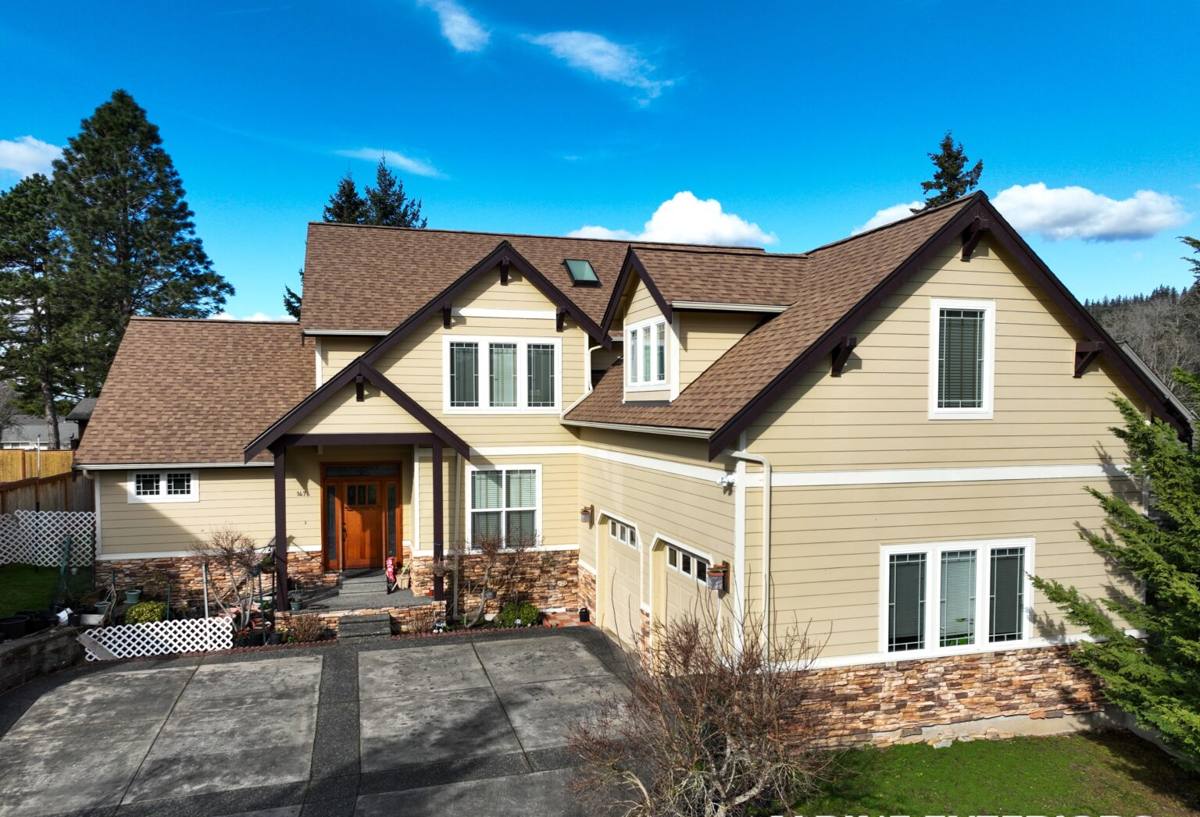
Why Point Roberts Puts Extra Stress on a New Window Installation
Salt air and corrosion
Point Roberts sits right on the water, and salt-laden air doesn't stay near the shoreline — it travels on the wind and settles on every exposed surface, including window frames, hardware, fasteners, and flashing. Over years, that salt exposure accelerates corrosion on lower-grade hardware and metal components, and it can dull or pit finishes that would hold up fine in a drier, inland climate. A new-construction install is the one chance to choose materials and fasteners rated for this kind of exposure before they're buried behind siding and trim.
Driving rain and wind-driven moisture
Storms coming off the water don't just drop rain straight down — wind pushes it sideways, driving water into any gap in the window opening that isn't properly flashed and sealed. On a new build, this is purely an installation issue: the window unit itself can be excellent and still leak if the flashing sequence at the rough opening is done out of order or skipped in a hurry.
Moss season and prolonged dampness
Whatcom County's long wet season keeps north-facing and shaded wall sections damp for extended stretches, which is exactly the environment moss and mildew need to take hold. Around window openings, that means sill flashing and drainage details matter as much as the caulk line homeowners actually see — trapped moisture behind the trim causes rot long before anything looks wrong on the surface.
New Construction vs. Replacement: Why the Installation Method Matters
New-construction windows are installed into a framed, unsided wall — there's no existing siding or trim to work around, which sounds simpler but actually raises the stakes. Everything about how water is managed at that opening for the next several decades gets decided during this one install, before the wall is closed up.
Most new-construction windows use a nailing fin (also called a flange) that gets integrated directly with the weather-resistive barrier (WRB) on the wall — the fin is fastened to the sheathing, then flashing tape and the WRB are layered over it in a specific shingle-style order so water always drains outward and downward, never behind the barrier. Skipping steps, taping in the wrong order, or using incompatible flashing tape and sealant are the most common reasons a brand-new window ends up with a water problem within a few years — and on a site exposed to wind-driven rain like Point Roberts, those mistakes show up faster than they would somewhere more sheltered.
Choosing the Right Window for a Coastal Whatcom County Build
There's no single "best" window material for every new build — the right choice depends on the wall's sun and wind exposure, the homeowner's maintenance appetite, and budget. For a Point Roberts new build, we weigh coastal durability heavily because the site's exposure is more severe than most of the surrounding county.
| Frame Material | Salt Air / Corrosion Resistance | Maintenance | Best Fit |
|---|---|---|---|
| Vinyl | Good — won't rust or pit; UV-stable formulations hold color | Low — occasional cleaning | Budget-conscious builds, most elevations |
| Fiberglass | Very good — dimensionally stable, resists warping in wet/dry cycles | Low | Exposed, wind-driven-rain elevations facing the water |
| Aluminum-clad wood | Depends on cladding quality and hardware grade — can perform well but needs correct detailing | Moderate — interior wood finish upkeep | Homeowners wanting a wood interior look with an exterior shell |
| Bare wood | Poor in direct salt/rain exposure without diligent upkeep | High | Sheltered elevations only, or homeowners committed to regular maintenance |
We also pay attention to glazing and hardware grade — insulated glass units with a durable low-E coating hold up to UV and moisture better over time, and stainless or coated fasteners resist the pitting that plain steel hardware develops near the water. None of this replaces a correct installation; it's a second layer of protection on top of it.
Our New-Construction Window Installation Process
The steps below are the sequence we follow on new builds — the order matters as much as the individual steps, because each layer has to shed water onto the layer below it.
- Verify rough openings are square, level, and sized correctly before any window arrives on site — catching a framing error now is far cheaper than after windows are on order.
- Install sill pan flashing at the base of each opening so any water that gets past the window has a dedicated path back outside.
- Set the window plumb, level, and square in the opening, and fasten per the manufacturer's specifications — over- or under-driving fasteners is a common source of frame distortion and future air/water leaks.
- Integrate the nailing fin with flashing tape and the WRB in proper shingle-lap order — head flashing last, so water always drains over the layer beneath it, never behind it.
- Check operation (opening, closing, locking) before the wall is closed up, while adjustments are still easy to make.
- Coordinate the exterior trim and siding tie-in so the finished water management path is continuous from roofline to foundation — this is where having a crew that handles siding as well as windows keeps the details consistent instead of handed off between separate trades.
Why Point Roberts' Location Changes the Planning
Point Roberts is a geographic exclave — reachable from the rest of Whatcom County only by crossing into Canada and back, or by water. That's not a small detail for a construction project. Material deliveries, crew scheduling, and any mid-project adjustments all take more lead time than they would on a typical in-county job, and a crew unfamiliar with that reality can end up scrambling — or worse, cutting corners on sequencing to make up for lost time. Building the border crossing and ferry/road logistics into the schedule from the start, rather than discovering the delay mid-install, is one of the most practical advantages of working with a contractor who already builds and installs in this community regularly.
Mistakes We Watch For on New Builds
Most window problems on new construction trace back to a handful of recurring issues, and being aware of them is useful whether you're a homeowner or working with a builder:
- Flashing tape applied in the wrong order, letting water run behind the barrier instead of over it
- Sill pan flashing skipped or improvised instead of properly formed and sealed
- Fasteners over-driven, bowing the frame and causing the sash to bind or seal poorly
- Rough openings slightly out of square, forcing shims to do work they shouldn't have to
- Incompatible sealants or tapes used together, which can fail to bond or degrade faster than expected
- Siding and trim tie-in treated as a separate trade's problem instead of a continuation of the same water-management plan
Meeting Washington's Energy Code Without Overcomplicating the Job
Washington State's energy code sets minimum performance requirements for new-construction windows, generally expressed as a maximum U-factor (how much heat escapes through the window — lower is better). Coastal Whatcom County homes benefit from meeting or beating that minimum, since the marine layer keeps humidity and temperature swings a factor even in a relatively mild climate. We select windows that clear the current code requirement for the wall assembly and orientation involved, and we build the U-factor and any solar heat gain considerations into the material discussion up front rather than as an afterthought — it affects which frame and glass combinations make sense for the budget.
A Practical Checklist Before Your Windows Go In
If you're managing a new build yourself or coordinating between trades, these are worth confirming before window installation day:
- Rough openings are framed square and to the correct dimensions for the ordered window sizes
- WRB (house wrap) is installed and ready to integrate with window flashing — not applied around the windows afterward
- Sill pan flashing material is on hand and compatible with the WRB and tape being used
- Window frame material and glazing package match the exposure of each elevation, not a one-size-fits-all order
- Delivery and crew scheduling account for Point Roberts' access logistics, especially for time-sensitive weather windows
- Siding and trim plans are coordinated with the window installer so the water management path is continuous
Ready to Talk Through Your Build?
Every new build has its own layout, exposure, and timeline, and Point Roberts' salt air, wind-driven rain, and long moss season mean the details are worth getting right the first time. If you're planning new-construction windows for a home in Point Roberts or elsewhere in the Ferndale area, we're glad to walk the plans, talk through material options, and put together a straightforward estimate — no pressure, no sales script. Use the form below to get started.