 Ferndale Siding
 Windows Built for the Fairhaven Waterfront, Not a Catalog Photo
Fairhaven sits close to the water, and that changes what a window has to survive day to day. A window that performs fine in a dry inland climate can start failing within a few years out here, where salt-laden air, driving rain off the water, and a long stretch of gray, damp months put steady pressure on frames, seals, and finishes. Ferndale Siding Company services the Fairhaven area as part of our regular coverage of the Whatcom County coastline, and window installation is one of the jobs where local exposure conditions genuinely change the right answer — not just the brand you pick, but how the window gets flashed, sealed, and tied into the wall around it.
This page is specifically about window installation for homes in and around Fairhaven. It's not a general "here's what windows cost" page — it's what we've learned matters most when the job is a few blocks from Bellingham Bay instead of a dry inland lot.
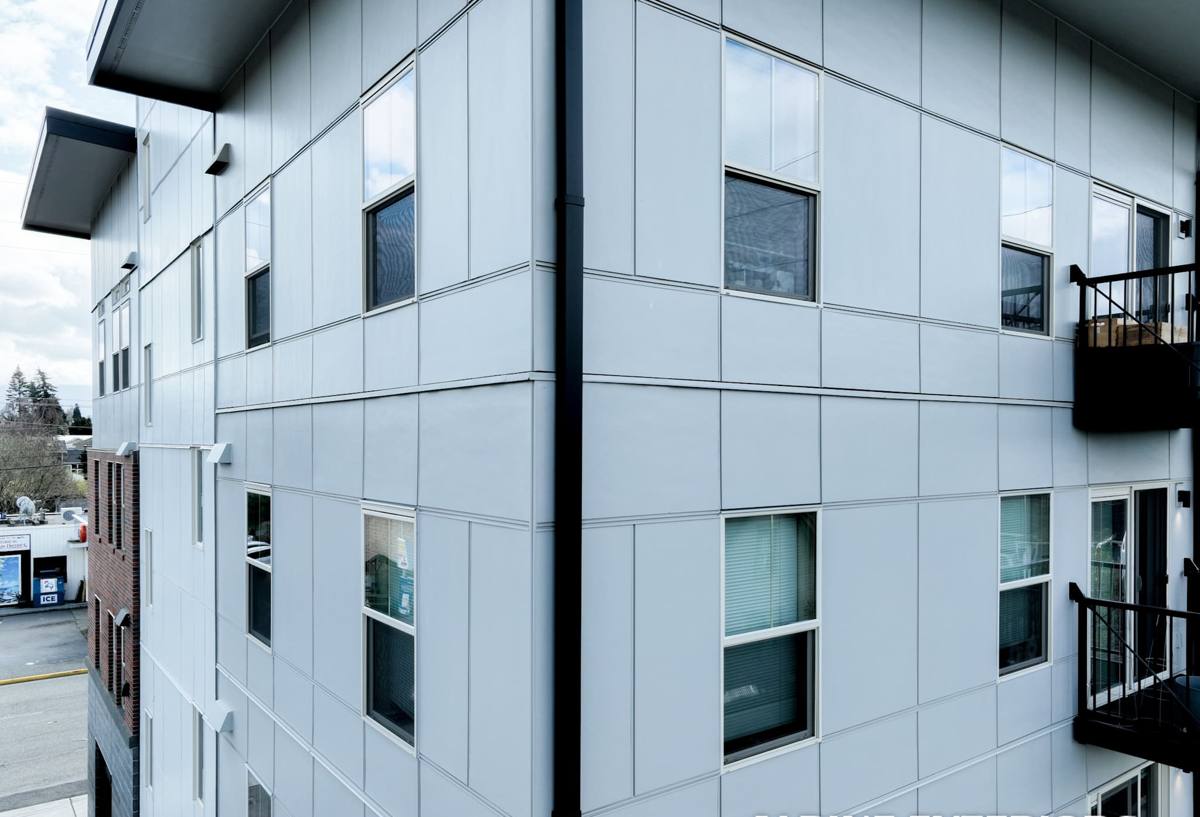
What Salt Air, Rain, and Moss Season Actually Do to a Window
None of these forces destroy a window overnight. They work slowly, which is exactly why so many window problems in this area go unnoticed until there's already water damage behind the wall.
Salt Air
Airborne salt is corrosive to exposed metal hardware — hinges, locks, cranks, and screws — and it accelerates the breakdown of some finishes and sealants faster than the manufacturer's inland test data would suggest. Homes with a direct or partial water view tend to see hardware corrosion and finish fading noticeably sooner than homes even a mile or two inland.
Driving Rain
Wind-driven rain doesn't just fall on a window — it gets pushed sideways and upward into any gap in the flashing or sealant. A window that's watertight in a light rain can still leak in a wind-driven storm if the flashing details weren't done correctly. This is the single biggest cause of the rot and mold we find when we pull old trim off a house during a window job.
Moss and Sustained Moisture
Whatcom County's long wet season keeps wood trim, sills, and siding damp for extended stretches, which is exactly the environment moss and algae need to take hold. Once moss establishes on a sill or the trim around a window, it holds moisture against the wood and paint, which shortens the life of both. It's a slow problem, but it's a steady one.
What a Correct Window Installation Actually Involves
The window unit itself is often the easy part. The installation is where a job holds up for twenty-plus years or starts leaking in five. On a coastal property, we treat a few details as non-negotiable:
- Proper flashing sequence: sill pan flashing first, then side flashing, then head flashing, layered so water is always directed outward and downward — never trapped behind the window.
- Weather-resistive barrier integration: the house wrap or building paper has to be lapped correctly with the window flashing, not just taped over it as an afterthought.
- Sealant selection and placement: not every exterior sealant holds up to salt air and constant damp cycling. We use sealants rated for the exposure, placed where they manage water rather than just filling gaps.
- Correct shimming and squaring: an out-of-square window stresses the frame, which stresses the seals, which is where leaks start.
- Insulation without over-packing: the gap around the frame needs to be filled with a low-expansion foam or backer rod and sealant — not stuffed with fiberglass, which does little to stop air and moisture movement.
Skipping or rushing any one of these doesn't usually show up as a problem on day one. It shows up two or three winters later, as a soft spot in the drywall below the window or a musty smell that won't go away.
Choosing the Right Window for a Coastal Whatcom County Home
Frame material matters more here than it does in a lot of inland markets, mainly because of how each material handles constant moisture and occasional salt exposure. We don't push one product on every job — the right choice depends on the home's exposure, your budget, and how much upkeep you want to take on.
| Frame Material | Coastal Durability | Maintenance | Typical Trade-Offs |
|---|---|---|---|
| Vinyl | Good — won't rust or rot | Low; occasional cleaning | Budget-friendly, but color/finish options are limited and it can't be repainted easily |
| Fiberglass | Very good — dimensionally stable, resists corrosion | Low | Higher upfront cost than vinyl, but holds up well long-term in salt air |
| Aluminum-clad wood | Good exterior protection, wood interior needs care | Moderate | Attractive interior finish, but any gap in the cladding lets moisture reach the wood underneath |
| Solid wood | Fair — needs consistent upkeep to resist rot near the water | High | Best traditional look, but requires the most maintenance discipline in this climate |
Glass matters too. Most homes in this area do well with a dual-pane, low-E, argon-filled unit — it manages condensation and heat loss better than older single or basic dual-pane glass, without the added cost of triple-pane, which usually isn't necessary in our climate zone. We'll walk through the actual options for your home rather than defaulting to whatever's easiest to sell.
Our Installation Process
- On-site assessment: we check existing flashing, sill condition, and any signs of past water intrusion before quoting anything.
- Measurement and product selection: exact sizing and a walkthrough of frame and glass options suited to your home's exposure.
- Careful removal: old windows come out without unnecessary damage to surrounding siding or trim, and we inspect the opening once it's exposed.
- Repair before install: any rot, soft framing, or failed prior flashing gets fixed before a new window ever goes in. We don't install over a known problem.
- Correct flashing and sealing: sill pan, side, and head flashing installed in the proper sequence, integrated with your home's water-resistive barrier.
- Set, shim, and insulate: the window is squared, shimmed, and insulated around the frame without over-compressing the material.
- Interior and exterior finish work: trim, caulking, and paint or stain matched to the surrounding surfaces.
- Final walkthrough: we check operation, seals, and finish with you before calling the job done.
Signs Your Fairhaven Home's Windows Need Attention
A lot of window problems near the water are subtle at first. Worth checking for:
- Condensation building up between the panes (a sign the seal has failed on a dual-pane unit)
- Wood trim or sills that feel soft, spongy, or show dark staining
- Moss or persistent green growth on the sill or bottom trim
- Corroded, stiff, or hard-to-operate hardware — hinges, locks, or cranks
- Drafts you can feel around the frame even with the window fully closed
- Paint or finish that's peeling or bubbling specifically around the window, not the wider wall
- A musty smell in the room near the window, especially after a stretch of wind-driven rain
Any one of these on its own isn't necessarily urgent. Several together, especially on a window facing the prevailing weather, is usually a sign the installation — not just the window unit — needs a closer look.
Cost Factors for Window Installation in Fairhaven
We don't post fixed pricing because every home and every opening is different, but these are the main factors that move the number up or down:
| Factor | Why It Affects Cost |
|---|---|
| Number of windows | Per-window cost usually drops on larger jobs due to shared setup and access time |
| Frame material | Vinyl is typically the most budget-friendly; fiberglass and clad-wood cost more upfront |
| Glass package | Upgraded low-E coatings or gas fills add modest cost but usually pay off in comfort here |
| Condition of the existing opening | Hidden rot or prior water damage adds repair time before the new window can go in |
| Trim and siding integration | Matching existing trim profiles or siding material adds finish-carpentry time |
| Access | Second-story or hard-to-reach openings take longer and may need staging or lifts |
As a general range, a straightforward single window replacement in a standard opening often runs from the high hundreds to a few thousand dollars depending on the factors above; full-home jobs scale from there. We'll give you an exact number after the on-site assessment — not a phone estimate.
Why Hiring a Crew That Already Works Fairhaven Matters
Window installation isn't a product you buy so much as a set of judgment calls made on your specific house. A crew that regularly works this stretch of the Whatcom County coastline already knows what a salt-exposed sill looks like before it fails, how to sequence a window install with siding and trim repair so water never has a path in, and when moss-season dampness means a repair needs to happen before it can be painted or sealed properly. That local pattern recognition is hard to replicate on a one-off job from a crew that mostly works dry inland lots.
It also matters for timing. Coastal weather windows for exterior work are narrower here than inland, and a contractor who plans around that — rather than getting caught mid-install by a wind-driven rain event — protects the work in progress, not just the finished product.
Get a Free, No-Pressure Estimate
If you're dealing with drafty, foggy, or hard-to-operate windows in Fairhaven, or you just want an honest read on whether repair or replacement makes more sense for your home, we're glad to take a look. Use the form below to request a free estimate — no pressure, no obligation, just a straight assessment from a crew that already knows this stretch of coastline.