 Ferndale Siding
 Bellingham's Climate Is Harder on Siding Than Most Homeowners Realize
Bellingham sits right on Bellingham Bay, which means homes here deal with a combination of weather stresses that inland Washington towns simply don't face. Salt-laden air moves off the water and settles on exterior surfaces year-round. Driving rain, pushed sideways by wind off the Strait, hits siding at angles that gravity-fed drainage systems were never designed for. And because the region rarely gets a hard, sustained dry stretch, moss and algae get months at a time to take hold on north-facing walls, under eaves, and anywhere shade keeps a wall damp longer than it should be.
None of this is exotic weather. It's just relentless. Siding in Bellingham doesn't fail because of one big storm — it fails slowly, from siding that was never built or installed to handle sustained moisture exposure. That's the problem we're solving for on every Bellingham-area job.
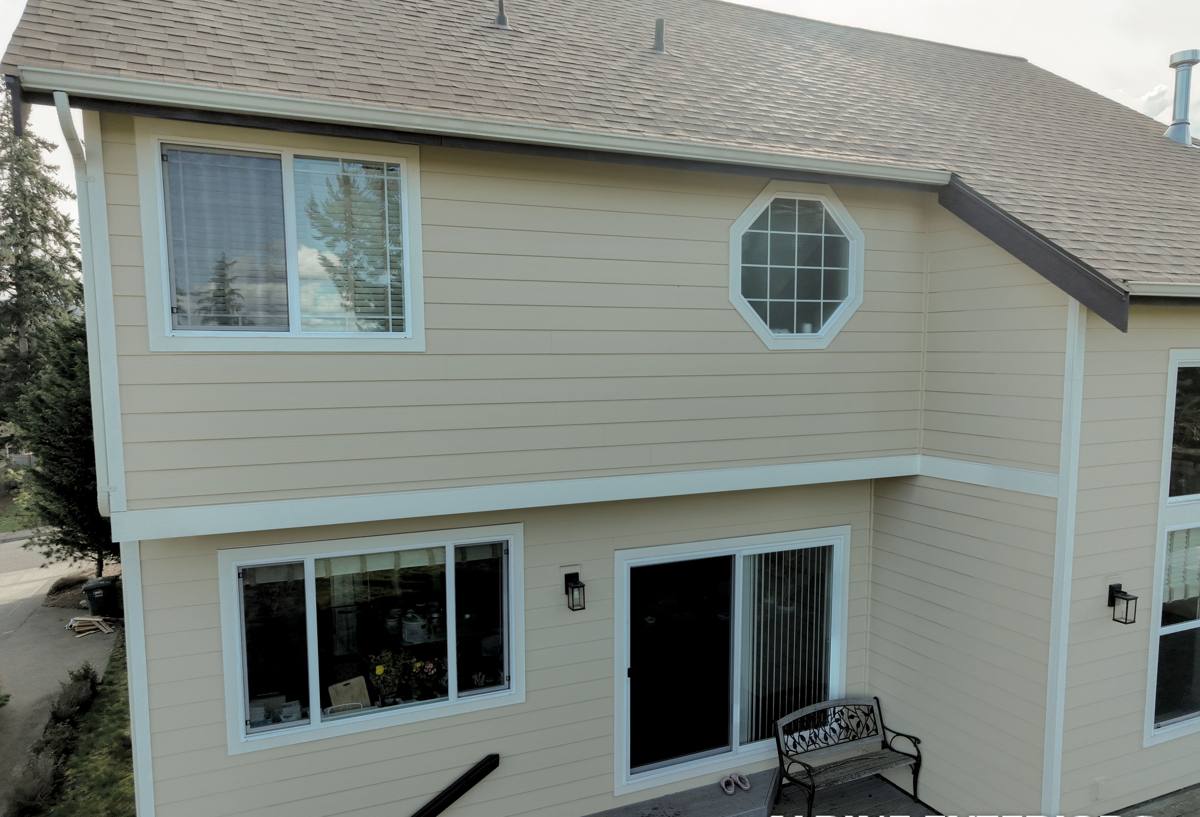
What Bellingham Homes Actually Need From Their Siding
Moisture Management, Not Just Moisture Resistance
A siding product that merely "resists" water isn't enough this close to the bay. What matters is how the whole wall assembly manages the water that inevitably gets past the surface — through a drainage gap, proper flashing, and a material that doesn't swell, rot, or delaminate when it stays damp for days.
A Finish That Doesn't Chalk or Fade in Salt Air
Salt air accelerates the breakdown of a lot of paint finishes. Field-applied paint on wood or fiber cement tends to chalk, fade unevenly, and need recoating well ahead of schedule in a marine environment. That's a maintenance cost most homeowners don't budget for until they're already paying it.
Resistance to Moss, Algae, and Biological Growth
Whatcom County's long wet season gives moss and algae a real head start compared to drier parts of the state. Siding with a smooth, factory-baked finish sheds spores and organic buildup far more easily than porous or textured surfaces that give moss something to grip.
Why We Install Only James Hardie Fiber Cement
We made a deliberate decision as a company to install James Hardie siding exclusively, and Bellingham's climate is a big part of why. James Hardie's fiber cement is non-combustible, dimensionally stable in wet-dry cycling, and comes from the factory with a ColorPlus finish baked on under controlled conditions — not brushed or sprayed on-site where weather and technique introduce variables.
We don't install LP SmartSide, vinyl, Cemplank, Allura, primed spruce, or cedar. Each of those has legitimate strengths, and we're not here to tell you they're bad products. But every one of them asks a homeowner to accept a trade-off — more frequent repainting, more caulk maintenance, more vulnerability to sustained moisture, or a shorter realistic service life in a marine climate — that we're not willing to install and then have to explain later. James Hardie's HZ5 product line is specifically engineered for climates like ours: high moisture exposure, freeze-thaw cycling, and sustained damp conditions. That engineering, plus a strong transferable warranty backing it, is why we standardized on one manufacturer instead of offering a menu of options with very different long-term outcomes.
What a Correct Installation Involves Here
James Hardie siding performs the way it's rated to perform only when it's installed correctly — and in a wet, wind-driven climate like Bellingham's, the installation details matter more than they would in a drier region.
- A drainage plane and rainscreen gap behind the siding so any moisture that gets past the surface has somewhere to go instead of sitting against the wall sheathing
- Flashing installed at every window, door, and horizontal transition — not just caulk, which degrades and shrinks over time
- Correct fastener type, spacing, and placement per Hardie's published installation specs, since improper fastening is one of the most common causes of early failure
- Proper clearance between the bottom edge of the siding and grade, decks, or roof lines, so splashback and standing water don't sit against the material
- Factory-cut and factory-primed edges wherever possible, with any field cuts properly sealed per manufacturer requirements
- Caulking used only where Hardie's specs call for it — over-caulking traps moisture instead of releasing it
Skip any one of these steps and you can end up with a product that's rated for decades performing far below that in practice. This is where a lot of "siding problems" actually start — not with the material, but with how it went on the wall.
Which James Hardie Product Line Fits Your Bellingham Home
| Product | Best Fit | Why It Works Here |
|---|---|---|
| HardiePlank Lap Siding | Most single-family homes | Classic horizontal profile, sheds wind-driven rain efficiently, widest color and texture selection |
| HardiePanel Vertical Siding | Modern builds, accent walls, gable ends | Clean vertical lines, pairs well with board-and-batten detailing |
| HardieShingle Siding | Craftsman and cottage-style homes | Staggered or straight-edge shingle look without the moisture upkeep of real wood shakes |
| HardieTrim Boards | Corners, fascia, window and door trim | Matches the siding's finish and moisture performance so trim doesn't become the weak point |
Most Bellingham projects use HardiePlank as the primary field material with HardieTrim boards finishing the corners and openings. Homes with a more contemporary design sometimes mix in HardiePanel for accent sections. We'll walk through which combination fits your home's style and exposure during your estimate.
Our Process for Bellingham-Area Siding Jobs
1. On-Site Assessment
We look at your home's actual exposure — which walls face the water and prevailing wind, where moss and staining are already showing up, and whether there's any sign of moisture getting behind the current siding. This tells us where extra attention to flashing and drainage detail is needed.
2. Removal and Wall Prep
Old siding comes off and we inspect the sheathing underneath. Any water damage or rot gets addressed before new siding goes up — covering a compromised wall with new siding just hides the problem instead of fixing it.
3. Weather Barrier and Drainage Plane
We install the water-resistive barrier and drainage gap system correctly the first time, since this layer does most of the real work of keeping your wall assembly dry over the long term.
4. Installation to Manufacturer Spec
Siding, trim, and flashing go in following James Hardie's published installation requirements, which keeps your product warranty intact and gives you the performance the material is actually engineered for.
5. Final Walkthrough
We review the finished job with you, point out anything you should know for long-term care, and make sure you're clear on what the warranty covers.
Cost Factors for a Bellingham James Hardie Project
| Factor | Impact on Cost |
|---|---|
| Home size and number of stories | More square footage and higher walls increase material and labor time |
| Condition of existing wall sheathing | Rot or moisture damage found during tear-off adds repair scope before new siding goes on |
| Product line and profile chosen | HardiePlank, HardiePanel, and HardieShingle carry different material costs |
| Trim and detail work | Homes with more corners, windows, and architectural detail require more precision cutting and trim |
| Access and site conditions | Steep lots, limited access, or extensive scaffolding needs affect labor time |
We don't publish flat pricing because these factors genuinely change the number from one house to the next — but we'll give you a clear, itemized estimate before any work starts, with no surprise add-ons buried in the fine print.
Maintaining James Hardie Siding in a Salt Air, High-Moss Climate
One of the advantages of ColorPlus-finished Hardie siding is how little maintenance it needs compared to painted wood or vinyl in this climate — but "low maintenance" isn't "no maintenance."
- Rinse the siding once or twice a year with a garden hose to clear salt residue and light organic buildup, especially on walls facing the bay
- Keep gutters clean and downspouts directed away from the foundation so runoff isn't repeatedly hitting the same section of wall
- Trim back landscaping and tree branches that keep any wall section shaded and damp longer than the rest of the house
- Watch north-facing and heavily shaded walls for early moss growth and address it before it spreads
- Inspect caulking at trim joints periodically — it's a small maintenance item, but it protects the assembly behind it
Why a Local Crew That Already Works in Bellingham Matters
Siding installation isn't one-size-fits-all across Washington. A crew that mostly works drier, inland areas doesn't always carry the same instincts around drainage detailing, flashing at wind-exposed corners, or how much clearance to leave near grade that a crew working the Bellingham Bay shoreline develops from repeated experience with this specific climate. We're based in Ferndale and work throughout Whatcom County, including Bellingham, so the moisture and wind patterns here aren't a guess for us — they're what we plan around on every job.
That local familiarity also means we're not learning your neighborhood's quirks on your dime. We already know which orientations tend to collect moss first, which areas see the heaviest wind-driven rain, and how to plan an installation schedule around this region's weather rather than fighting it.
If you're considering new siding for a Bellingham home, we're happy to take a look and give you an honest, no-pressure estimate — including what we'd recommend and why. Use the form below to get started.