 Ferndale Siding
 Roof Replacement in Sumas: Built for This Climate, Not a Generic One
Sumas sits near the Canadian border in Whatcom County, where the weather off the Salish Sea and the surrounding lowlands brings long stretches of damp, gray months, driving rain that comes in sideways during winter storms, and a moss season that can run from fall through spring. A roof here isn't just shedding water on a sunny afternoon — it's holding up under sustained saturation, freeze-thaw cycles in the colder months, and near-constant shade in spots where trees or terrain block the sun long enough for moss and moisture to take hold. Roofing systems that work fine in drier climates often fall short here because they weren't detailed for that level of prolonged wetness.
When we replace a roof in Sumas, we're not just swapping old shingles for new ones. We're building a system — deck, ventilation, underlayment, flashing, and surface material — that's meant to handle this specific climate for its full expected lifespan, not just look good for the first few years.
Signs a Sumas Roof Is Actually Due for Replacement
What shows up on the surface
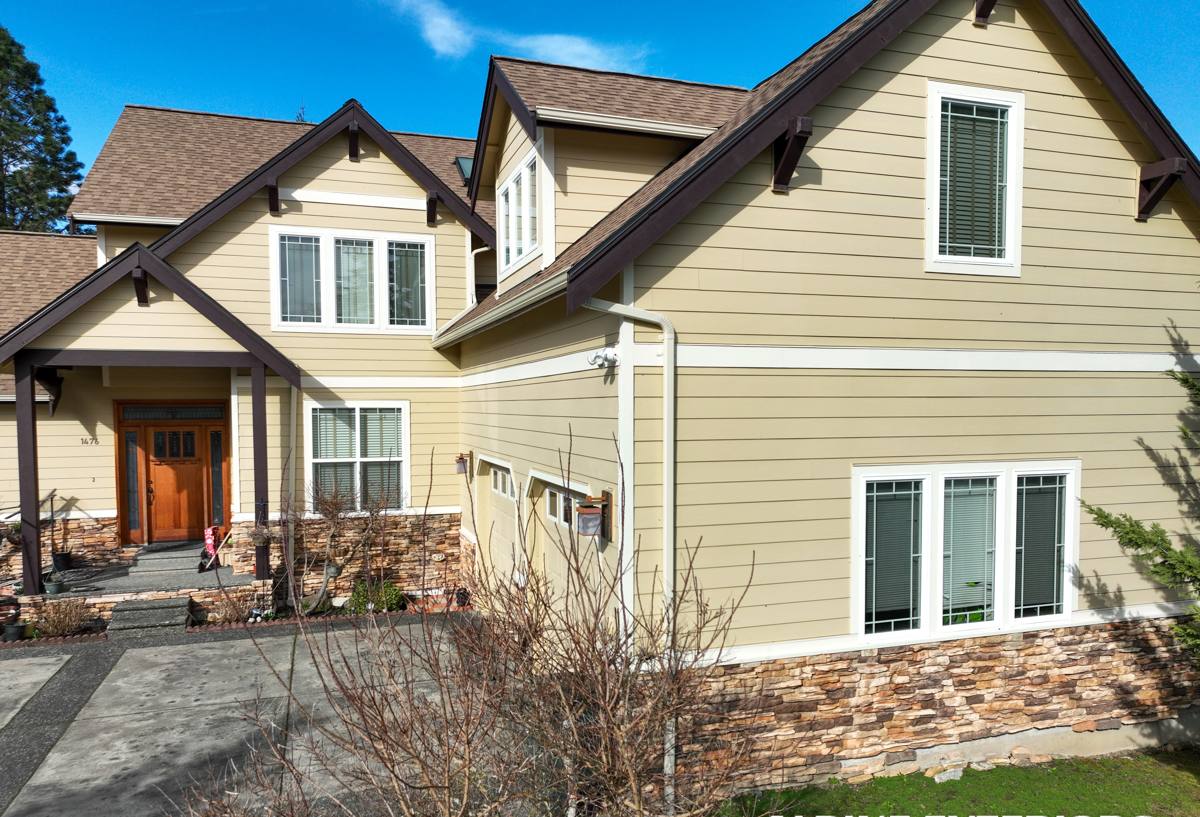
Granule loss that leaves shingles looking patchy or bald, curling or cupping shingle edges, and cracked or missing shingles after a windstorm are all common signs. Moss and algae streaking are especially common in this climate — a little surface growth on a shaded slope isn't automatically a replacement issue, but moss that's thick enough to hold moisture against the shingle mat is a different story. That moisture gets trapped under the growth and slowly breaks down the shingle from beneath, which is a much bigger problem than the cosmetic staining most homeowners notice first.
What shows up inside the house
Water stains on ceilings, a musty smell in the attic, daylight visible through the roof deck, or insulation that feels damp to the touch are signs that water has already found a way in. By the time interior symptoms show up, the underlying deck or underlayment has usually been compromised for a while — repairs at that point are often a stopgap rather than a real fix.
Age as a baseline
Most asphalt shingle roofs in this region are realistically good for 20-25 years, sometimes less if ventilation was poor or the original install cut corners on underlayment. If a Sumas roof is in that age range and starting to show wear, it's worth a real inspection rather than waiting for a leak to force the decision.
What a Correct Roof Replacement Actually Involves
A roof replacement that's built for this climate isn't just the visible shingle layer. Several layers underneath do the actual work of keeping a home dry through a wet Whatcom County winter.
- Full tear-off: We remove the old roofing down to the deck rather than layering over it, so we can actually see the condition of the wood underneath.
- Deck inspection and repair: Any deck sheathing that's soft, delaminated, or water-damaged gets replaced before anything new goes down — installing new roofing over a compromised deck just hides the problem.
- Ice-and-water barrier at vulnerable points: Eaves, valleys, and roof-to-wall transitions get self-adhering waterproof membrane, since these are the spots where wind-driven rain and ice damming are most likely to force water backward under the shingles.
- Synthetic underlayment across the field: A quality synthetic underlayment, not just old-style felt, gives a second line of defense across the whole roof.
- New flashing: Chimneys, skylights, sidewalls, and any roof penetrations get new step flashing and counterflashing rather than sealant-only patches, which fail over time.
- Ventilation correction: Intake and exhaust venting get balanced so the attic can actually breathe — more on why this matters below.
- Final shingle or material install: Installed to the manufacturer's nailing pattern and exposure specs, not just "close enough," since that's what warranty coverage actually depends on.
Choosing a Roofing Material for a Sumas Home
There's no single "best" roofing material for every house — it depends on budget, roof pitch, how shaded the lot is, and how long the homeowner plans to stay in the home. Here's how the common options compare for this climate specifically.
| Material | Typical Lifespan | Moss/Moisture Resistance | Maintenance | Relative Cost |
|---|---|---|---|---|
| Architectural asphalt shingle | 20-30 years | Good with proper ventilation; algae-resistant granules help | Periodic moss removal on shaded slopes | $ |
| 3-tab asphalt shingle | 15-20 years | Fair; thinner profile sheds moisture less effectively over time | Similar to architectural, shorter interval before wear shows | $ |
| Standing seam metal | 40-60 years | Excellent; sheds water and moss has little to hold onto | Low; occasional gutter and fastener check | $$$ |
| Composite/synthetic shake | 30-50 years | Good; engineered to resist moisture absorption | Low to moderate | $$-$$$ |
We install architectural asphalt shingle roofs most often in Sumas because they balance upfront cost with solid performance when the ventilation and underlayment underneath are done right — the shingle brand matters less than what's happening below it. Metal is a strong option for homeowners planning to stay long-term or dealing with a steep, heavily shaded roof where moss is a recurring fight. We don't push one product as universally superior; we talk through the actual trade-offs for the specific roof in front of us.
Ventilation and Moisture: The Part Most Homeowners Never See
In a climate this damp, attic ventilation is doing as much work as the shingles themselves. Warm, moist air from inside the house rises into the attic; without balanced intake vents (usually at the soffit) and exhaust vents (ridge or roof vents), that moisture condenses on the underside of the deck. Over years, that trapped moisture rots sheathing from the inside, feeds mold growth, and shortens shingle life from beneath — problems a homeowner won't see until they're already serious. A big part of doing a roof replacement correctly here is checking and correcting ventilation as part of the job, not treating it as an optional add-on.
How Our Roof Replacement Process Works
- On-site inspection: We walk the roof, check the attic, and look at flashing, ventilation, and deck condition before quoting anything.
- Written estimate: A clear scope of work and material breakdown, so there's no guessing what's included.
- Material selection: We go over the options above in the context of your specific roof, budget, and how long you plan to stay in the home.
- Scheduling around weather: Roofing in this climate means watching forecasts closely and staging the tear-off so a section is never left exposed overnight.
- Tear-off and deck repair: Old material removed, deck inspected and repaired as needed.
- Underlayment, flashing, and ventilation install: The layers that actually determine how the roof performs over the next 20+ years.
- Final material installation: Shingles or metal installed to spec, ridge and edge details finished.
- Walkthrough: We go over the finished roof with you and clean up the site fully before we consider the job done.
Why Hiring a Crew That Already Works in Sumas Matters
A roofing crew that's worked across Whatcom County knows what this weather does to a roof over time — which slopes hold moss longest, where wind-driven rain tends to find weak flashing, and how to sequence a tear-off so a home isn't sitting exposed when a storm rolls in off the water. That's different from following a generic install manual written for a drier region. Local crews also know the realities of scheduling around this region's rain patterns, and they're around after the job is done if a question comes up — not a crew that worked one job in the area and moved on.
What Affects the Cost of a Roof Replacement
Every roof is different, so we don't quote real numbers until we've actually inspected the property, but these are the main factors that move the price up or down:
- Roof size and number of squares (100 sq. ft. per "square") to be replaced
- Roof pitch and how steep or difficult the roof is to safely access
- Number of valleys, penetrations (vents, skylights, chimneys), and roof planes
- Condition of the existing deck — how much sheathing repair or replacement is needed
- Material chosen (asphalt shingle vs. metal vs. composite)
- Whether ventilation needs to be added or corrected, not just replaced in kind
- Tear-off complexity — how many existing layers are coming off
- Local permitting and disposal costs
Rather than a per-square-foot number pulled from a national average, we give homeowners a real range after seeing the actual roof, because two houses of the same size can cost meaningfully different amounts depending on pitch, deck condition, and detailing.
Ready When You Are
If your Sumas home has a roof that's showing its age, moss that keeps coming back no matter what you try, or you just want an honest read on how many years it has left, we're happy to take a look. There's no pressure and no obligation — just a straightforward inspection and a written estimate you can actually use to make a decision. Fill out the form below to get started with a free estimate.