 Ferndale Siding
 Energy-Efficient Windows for Sumas Homes
Sumas sits at the edge of Whatcom County, close enough to the Fraser Valley that homes here take weather from two directions: the wet, marine-influenced systems that move through the county most of the year, and the harder, drier wind that funnels down out of the valley during cold snaps. That combination is tough on windows. A window that's fine in a sheltered subdivision closer to the water can still leak air and fog up within a few years out here if it wasn't installed with this specific exposure in mind. We install and replace energy-efficient windows for homeowners in Sumas as part of our regular service area, and this page covers what actually matters for this location — not a generic rundown of window brands.
Why "energy-efficient" means something different here
Every window sold today is marketed as energy-efficient. The label on the glass tells you almost nothing about how that window will actually perform once it's set into a wall in Whatcom County. What matters is the combination of the glass package, the frame material, and — more than either of those — how well the unit is sealed and flashed into the wall opening. A well-installed mid-grade window will outperform a premium window that was installed carelessly, every time. We treat the installation as the product, not an afterthought to it.
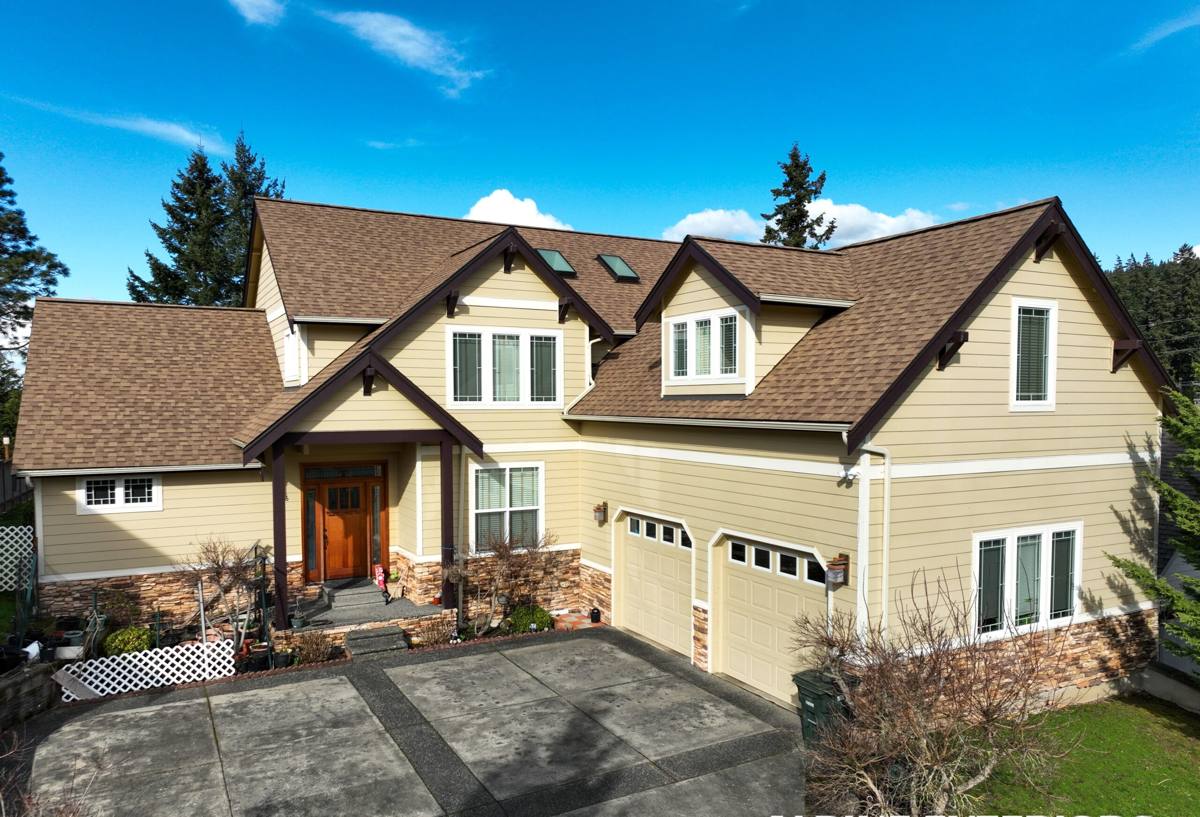
What Local Climate Does to Windows Over Time
Whatcom County's long wet season, driving rain, and extended moss and algae growth season aren't just a nuisance for roofs and siding — they affect windows too, in ways that show up slowly.
- Driving rain pushed by wind finds any weak point in a window's flashing or sealant long before it ever shows up as a visible leak. By the time you see a stain on the interior sill, water has usually been getting behind the frame for a while.
- Persistent humidity keeps wood-frame windows and their surrounding trim damp for long stretches, which accelerates rot at the sill and corners if the original flashing detail wasn't right.
- Moss and algae that colonize north-facing walls and shaded trim also hold moisture against window frames and exterior casing, which shortens the life of caulking and paint faster than most homeowners expect.
- Cold outflow wind that moves through this part of the county in winter finds every gap in a window's weatherstripping and pushes cold air straight into the room — this is usually what homeowners actually notice first, as a draft near an old window on a windy night.
None of this means windows in Sumas fail faster than windows anywhere else in the Pacific Northwest. It means the installation details that don't matter much in a dry climate matter a great deal here, and cutting corners on flashing or sealant shows up as a real problem within a handful of years instead of decades.
What a Correct Window Installation Actually Involves
A window replacement is not just "remove old window, set new window, caulk the edges." Done correctly, it's a sequence of steps where each one protects the next.
The steps that matter most
- Opening inspection. Before anything goes in, we check the rough opening for rot, soft wood, or prior water damage. A brand-new window installed into a compromised opening will fail regardless of the window's quality.
- Flashing, not just caulk. Proper flashing — sill pan, jamb flashing, and head flashing integrated with the house wrap or building paper — is what actually keeps wind-driven rain out. Caulk is a backup layer, not the primary defense.
- Correct shimming and squaring. A window that's out of square binds, doesn't seal evenly, and stresses the frame over time. This is a slow, careful step, not one to rush.
- Insulating the gap correctly. The space between the window frame and the rough opening needs to be filled with a low-expansion foam or backer rod and sealant designed for that gap — not packed solid with standard expanding foam, which can bow the frame.
- Interior and exterior air sealing. Both sides of the window need to be sealed, not just the exterior. Interior air sealing is what actually stops the draft you feel in the room.
- Final weatherproofing. Exterior trim, caulking, and touch-up paint or capping are finished last, once we've confirmed the window operates correctly and sits flush and square.
Skipping or rushing any one of these steps is how a window ends up with a soft sill, a foggy pane, or a persistent draft within a few years — even if the window itself was a good product.
Choosing the Right Window for a Sumas Home
There's no single "best" window for every house. The right choice depends on the home's exposure, its existing frame material, and what the homeowner is trying to solve — drafts, noise, condensation, or just an old window that's failing.
| Frame Material | How It Handles Local Weather | Maintenance |
|---|---|---|
| Vinyl | Handles moisture well, doesn't rot; can flex slightly in temperature swings if not installed square | Low — occasional cleaning, no painting |
| Fiberglass | Very stable in temperature swings, strong seal retention over time | Low — durable finish, rarely needs attention |
| Wood (clad exterior) | Good insulator, warm appearance, but exterior cladding is what protects it from driving rain | Moderate — interior finish care, exterior cladding limits upkeep |
| Wood (unclad) | Most exposed to this region's moisture; requires diligent upkeep to avoid rot at the sill | High — regular painting/sealing, especially on wet-facing walls |
| Aluminum | Strong but a poor insulator and prone to condensation in humid, cool conditions | Low — but thermal performance is the trade-off |
For most Sumas homes, we steer homeowners toward vinyl or fiberglass frames with a quality low-E, argon or krypton-filled double-pane (or triple-pane, where budget and the home's design support it) glass package. That's not a brand endorsement — it's a reflection of what holds up best against this area's combination of humidity, driving rain, and wind exposure with the least ongoing maintenance. Clad-wood windows remain a solid option where a homeowner specifically wants a wood interior appearance and is willing to keep up with the exterior cladding.
Signs a Window Replacement Is Overdue
Homeowners often live with a failing window for years before replacing it, because the signs are gradual rather than sudden. Watch for:
- Condensation or fogging between the panes (not on the interior surface) — this means the seal has failed and the insulating gas has escaped.
- A noticeable draft near the window frame on windy days, even with the window fully latched.
- Difficulty opening, closing, or latching — often a sign the frame has shifted or the opening has settled.
- Soft or discolored wood on the interior sill or exterior trim.
- Visibly higher heating bills in winter with no other explanation.
- Paint or caulk that's cracking and separating from the frame within a year or two of being applied.
Any one of these on its own isn't necessarily urgent. Several together, especially on a window facing the prevailing wind and rain, usually means it's time to stop patching and plan a replacement before the surrounding wall framing gets involved.
Our Process for Sumas Window Projects
We keep the process straightforward and communicate clearly at each step, since window work touches the inside of your home as well as the outside.
What to expect
- On-site assessment. We look at each window individually — exposure, frame condition, and how it's performing — rather than quoting a blanket price for "all the windows."
- Honest recommendation. If a window can be repaired or resealed instead of replaced, we'll say so. Not every window on a house needs to go at once.
- Written estimate. Clear scope, materials, and price before any work starts — no surprises added mid-project.
- Careful removal. We protect interior floors and finishes and remove old units without unnecessary damage to surrounding trim, where it can be reused.
- Correct installation following the sequence described above — flashing, shimming, insulating, and sealing, not just setting a window in place.
- Cleanup and walkthrough. We test operation, check the seal, and walk the finished work with the homeowner before calling the job done.
Why Local Installation Experience Matters
Window installation isn't complicated in theory, but the details that keep a window performing for twenty-plus years are learned by seeing what actually fails in this specific climate — not from a manufacturer's install manual alone. A crew that's done this work across Whatcom County has already seen which flashing details hold up against driving rain, which frame materials handle temperature swings without binding, and where moss and moisture tend to collect on a typical wall assembly out here. That experience shows up as fewer callbacks, not fewer photos on a brochure.
We're based in Ferndale and work throughout Whatcom County, including Sumas, so we're not learning the region on your project. We stand behind the installation work we do, and if something isn't sealing or operating the way it should, we come back and make it right.
A Note on Cost
Window replacement pricing varies with the size and number of openings, frame material, glass package, and how much repair the surrounding opening needs once the old window comes out. Rather than post a number that won't reflect your actual home, we'd rather walk your windows in person and give you a written estimate based on what we see — including flagging any openings that may need extra framing or flashing repair before the new window goes in.
If you're dealing with a drafty window, a foggy pane, or you're just planning ahead for a full window replacement in Sumas, we're happy to take a look. Reach out for a free, no-pressure estimate — the form below gets you started.