 Ferndale Siding
 Siding Repair for Sumas Homes
Sumas sits in a part of Whatcom County that gets more than its share of wet weather. Long stretches of driving rain, short winter days, and a moss season that seems to start earlier every year all put steady pressure on the outside of a house. Siding repair out here isn't just about patching a cracked board or covering up a dent — it's about figuring out why that board failed in the first place and making sure the fix actually holds up through another Whatcom County winter.
We work throughout the Ferndale service area, including Sumas and the smaller communities around it, and the failure patterns we see are consistent. Water finds a weak seam, sits there through weeks of overcast days, and slowly turns a small cosmetic issue into a structural one. A repair that doesn't address moisture movement is a repair that will need to be done again in a few years.
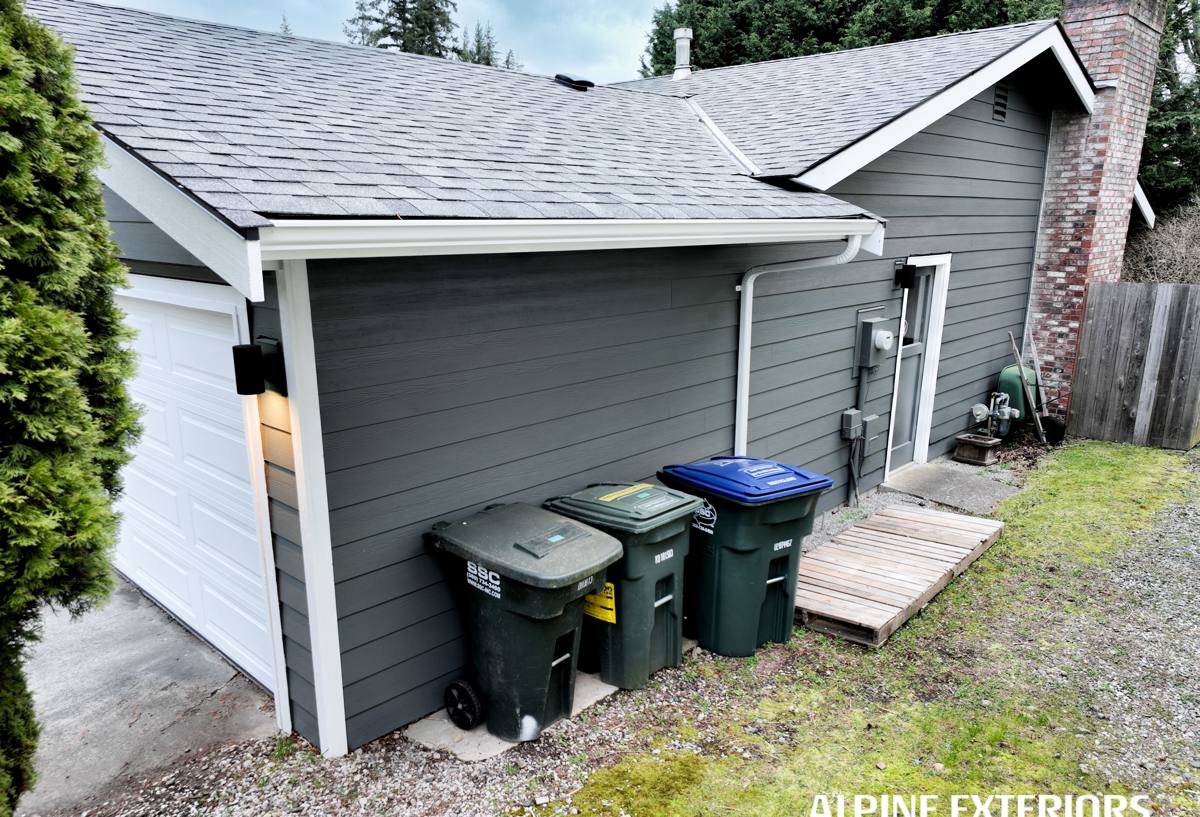
What This Climate Does to Siding Over Time
Whatcom County weather is rarely dramatic, but it's relentless. That's actually harder on a house than the occasional big storm.
- Driving rain pushed by wind finds horizontal seams, unsealed trim joints, and butt joints that weren't properly flashed, driving water behind the siding rather than just running down the face of it.
- Moss and algae take hold anywhere siding stays damp and shaded for extended periods — north-facing walls, areas under trees, and spots where gutters overflow are the usual first spots to show it.
- Salt-influenced air is part of the picture for homes closer to the water in this region, accelerating corrosion on fasteners, flashing, and any exposed metal trim, and shortening the service life of materials that aren't rated for coastal-adjacent exposure.
- Freeze-thaw cycling, while milder here than in the mountains, still opens up small cracks in caulk and trim over several winters, giving water a new way in each season.
None of these are dramatic on their own. Together, over ten or fifteen years, they're why a house that looked fine five years ago can suddenly have a soft spot near a downspout or a stretch of siding that's swollen and discolored.
Signs a Sumas Home Needs Siding Repair
Most siding damage doesn't announce itself. It shows up as small clues that are easy to write off as cosmetic until they're not. Before scheduling anything, walk the exterior and check for:
- Soft or spongy spots when you press on a wall, especially near the bottom courses or under windows
- Visible cracking, splitting, or bowing in individual boards or panels
- Paint that's peeling, bubbling, or failing in a localized patch rather than evenly across the whole wall
- Streaks of moss, algae, or dark staining concentrated in one area rather than spread generally
- Gaps opening up at seams, corners, or where siding meets trim, windows, or doors
- Any siding that feels noticeably heavier or looks swollen compared to the surrounding panels
- Interior clues — a musty smell, a discolored patch on drywall, or peeling interior paint on an exterior-facing wall
Any one of these on its own might be minor. Two or three in the same area, especially near a roofline, downspout, or window, usually means water has already been getting behind the siding for a while.
Repair vs. Replace: How We Make the Call
Not every problem area needs a full re-side, and not every damaged board can be safely patched. The honest answer depends on how far the damage has spread and what's happening underneath the siding, not just what's visible on the surface.
| Situation | Usually Repair | Usually Replace |
|---|---|---|
| Damage limited to one or two boards/panels | Yes | No |
| Water has reached the sheathing or framing | No | Yes |
| Damage is spread across multiple walls | No | Yes |
| Siding is under 10 years old and otherwise sound | Yes | No |
| Original material is failing as a system (not isolated) | No | Yes |
| Matching material is still available | Yes | N/A |
That last row matters more than most homeowners expect. If your siding is an older product, a discontinued color, or a different material than what we install, an exact match may not exist. In those cases we'll tell you honestly whether a close match is good enough or whether the repair will always look slightly different — that's your call to make, not ours to hide.
What a Correct Repair Actually Involves
A repair that's only skin-deep tends to fail again within a couple of seasons. Doing it right means treating the visible damage as a symptom and checking what's behind it.
1. Diagnose before touching anything
We remove the damaged section carefully and inspect the sheathing, house wrap, and flashing underneath before deciding on a fix. If there's rot or persistent moisture, that gets addressed first — patching over a wet wall just traps the problem.
2. Fix the water path, not just the symptom
If damage traces back to a missing kick-out flashing, a gap in the house wrap, or a seam that was never sealed correctly, we correct that detail as part of the repair. Otherwise the same spot fails again.
3. Match material and reveal
New boards or panels get matched to the existing siding's exposure, profile, and color as closely as the product line allows, so the repair blends in rather than standing out as an obvious patch.
4. Reseal and re-flash correctly
Proper flashing at joints and openings, correct fastener placement, and appropriate caulking at the right joints — not every joint — keep water moving out and away from the wall instead of getting trapped behind it.
5. Verify before we leave
We check that the repair sits flush, the seams are tight, and the surrounding areas weren't disturbed in a way that creates a new weak point.
Our Process for Sumas Siding Repairs
- On-site assessment — We look at the full exterior, not just the spot you called about, since related issues often show up nearby.
- Honest scope and estimate — You get a clear explanation of what's causing the damage and what it will take to fix it correctly, including whether repair or partial replacement is the better call.
- Scheduled repair — We work around Whatcom County's weather windows so materials and sealants cure properly rather than rushing a job into a rain system.
- Cleanup and walkthrough — We show you the completed work and explain what was done and why.
Why We Only Repair With James Hardie Fiber Cement
When a repair calls for new material — whether it's a few boards or a full wall section — we use James Hardie fiber cement, and we don't install vinyl, LP SmartSide, or wood siding as part of a repair, even as a patch. There's a reason for that beyond preference.
Fiber cement doesn't absorb water the way wood-based products can, and it doesn't warp or buckle with the temperature swings that come with our marine-influenced climate. Hardie's ColorPlus factory finish also holds color more consistently over time than field-applied paint, which matters if you're trying to match new material to a wall that's been up for several years. And because Hardie is non-combustible, a repair using it doesn't introduce a different fire-performance material into an otherwise consistent exterior.
If your existing siding is a different product entirely, we'll be upfront about what a Hardie-based repair will look like next to it, and whether it's the right approach or whether a broader replacement makes more sense down the line.
Why Hire a Crew That Already Works This Area
Siding repair is detail work, and the details that matter here are specific to this climate. A crew that mostly works drier regions may not think twice about a seam detail that's fine in a dry climate but a guaranteed callback in Whatcom County. We service Sumas and the surrounding Ferndale-area communities regularly, so we're not guessing at how a repair will hold up through a wet fall and winter — we've seen how these repairs perform in this exact weather over multiple seasons.
That local track record also means we're realistic with you. If a repair is genuinely enough to solve the problem, we'll say so. If the damage points to something bigger, we'll tell you that too, with a clear explanation of why — not an upsell.
Get a Straightforward Repair Estimate
If you're seeing soft spots, cracked boards, or moisture damage on your Sumas-area home, it's worth getting a professional look before the next wet season makes it worse. We offer free, no-pressure estimates — use the form below to schedule a visit and get an honest read on what your siding actually needs.