 Ferndale Siding
 Composite Decking Built for Cordata's Weather, Not Just Its Looks
Cordata sits close enough to the water and low enough in elevation that decks here deal with a specific combination of punishment: salt-tinged air drifting in off the Strait, long stretches of driving rain from fall through spring, and a moss season that can stretch six months or more if a deck sits shaded or under trees. A composite deck installed correctly for this climate will outlast one built to a generic spec sheet. A composite deck installed poorly will show problems in the first year or two — usually moisture trapped where it shouldn't be, or fasteners and hardware that weren't rated for a marine-influenced environment.
We install composite decking throughout the Ferndale area, including Cordata, and this page covers what actually matters for a deck that has to survive Whatcom County weather year after year, not just look good the day it's finished.
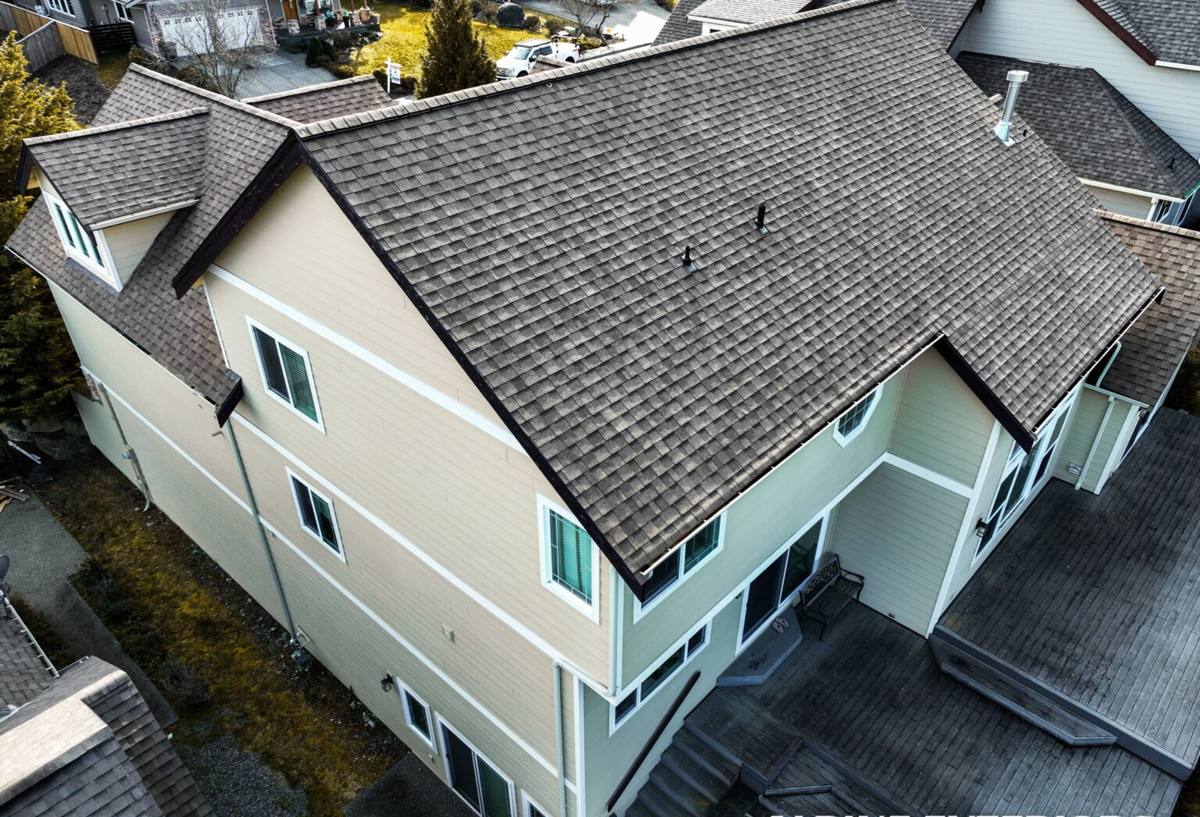
What This Climate Actually Does to a Deck
It helps to be specific about the forces at work, because they shape almost every decision in a proper installation.
Moisture load
Whatcom County gets a lot of slow, sustained rain rather than short heavy downpours. That means wood and framing components stay damp for extended periods instead of getting wet and drying out quickly. Any part of a deck system that traps water against wood — a ledger board, a joist, a support post base — is at risk of rot even if the decking surface itself is a composite material.
Moss and organic growth
Moss doesn't need standing water to take hold. It needs shade, moisture, and time — all three of which are in steady supply here for much of the year. Left unaddressed, moss on a deck surface isn't just a cosmetic issue; it holds moisture against the board and creates a genuinely slick, unsafe walking surface.
Salt-influenced air
Homes near the water deal with airborne salt that accelerates corrosion on fasteners, brackets, and other exposed metal hardware. Standard galvanized hardware can start showing rust streaks and pitting well before the decking itself shows any wear.
Temperature swings
Our winters aren't brutally cold, but freeze-thaw cycles still happen, and composite material expands and contracts with temperature more than most homeowners expect. Gaps and fastening methods have to account for that movement or the deck surface will buckle or gap unevenly over a few seasons.
Composite vs. Wood: An Honest Comparison for This Climate
Wood decking has a place, and some homeowners prefer the look and lower upfront cost. But for this specific climate, the maintenance burden and moisture behavior of composite material make a strong case, especially for a deck that gets limited sun exposure.
| Factor | Composite Decking | Pressure-Treated Wood |
|---|---|---|
| Moisture absorption | Very low; won't swell, cup, or splinter from repeated wetting | Absorbs water readily; prone to cupping and splitting over time |
| Moss and mildew resistance | Resists staining better; moss still needs regular cleaning but doesn't penetrate the board | Moss and algae can work into the wood grain and hold moisture against the fibers |
| Annual maintenance | Periodic washing; no staining or sealing required | Needs re-staining or sealing every 1–3 years to hold up in this climate |
| Fastener/hardware exposure | Hidden-fastener systems reduce exposed metal on the walking surface | Typically face-screwed or nailed, more exposed hardware |
| Upfront material cost | Higher | Lower |
| Long-run cost over 15–20 years | Lower once maintenance labor and refinishing are factored in | Higher when repeated staining, sealing, and board replacement are included |
Neither option is wrong on its own — the decision usually comes down to how much upkeep a homeowner wants to do and how long they plan to stay in the home.
What a Correct Composite Deck Installation Involves
The composite boards get most of the attention, but the substructure underneath is what actually determines whether a deck lasts. In this climate, we pay particular attention to a handful of details that are easy to skip and expensive to fix later.
Ledger attachment and flashing
Where the deck ties into the house is the single most common failure point on decks in this region. If the ledger board isn't properly flashed to shed water away from the house rim joist, moisture works its way behind the siding or into the framing over time — a slow leak that can go unnoticed for years. Correct flashing detail here matters more than almost anything else on the project.
Joist protection
Composite decking is moisture-resistant, but the joists underneath it are still typically wood. We use joist tape or an equivalent protective barrier on top of every joist to keep standing water from sitting directly against the wood, which is one of the more common shortcuts we see skipped on lower-cost installs.
Drainage and airflow underneath
A deck built low to the ground or over a patio needs a real plan for where water goes — proper slope, drainage gaps, and enough airflow underneath to let framing dry out between rain events. Decks that trap moisture underneath are the ones that develop hidden rot fastest, especially in a climate where things rarely get a long dry stretch to recover.
Fastener and hardware selection
Given the salt-air exposure in this area, we use corrosion-resistant, coated fasteners and structural hardware rated for exterior and coastal-adjacent use, not standard interior-grade or minimally coated options.
Expansion gaps
Composite boards need consistent, correctly sized gaps at butt joints and along the perimeter to handle seasonal expansion and contraction. Gaps that are too tight cause buckling; gaps that are too wide look sloppy and catch debris.
Choosing the Right Composite Board for a Shaded, Wet Lot
Not all composite decking performs the same way in a moss-prone environment. A few practical considerations we walk homeowners through:
Capped vs. uncapped composite
Capped composite boards have a protective outer shell that resists staining and moisture penetration far better than older-generation uncapped composite. For a lot with heavy shade or tree cover, capped composite is worth the difference in price.
Color and grain pattern
Lighter, more variegated colors tend to show moss growth and water spotting more readily than darker, multi-tonal boards. This isn't a reason to avoid light colors if that's the look a homeowner wants, but it does mean a light-colored deck in a shaded yard will need cleaning more often to look its best.
Surface texture
A slightly textured, grooved surface provides better slip resistance in wet conditions than a smooth, glossy finish — worth prioritizing on stairs and any section of deck that stays shaded most of the day.
How Our Process Works
- On-site assessment — we look at sun exposure, tree cover, drainage patterns, and the existing structure (if replacing an old deck) to understand what this specific lot needs.
- Design and material selection — board style, color, railing, and fastening system chosen together, with tradeoffs explained honestly rather than upsold.
- Permitting — we handle the permit process where required, including any structural review tied to ledger attachment or deck height.
- Demolition and site prep (if applicable) — old decking and framing removed, with a check for any hidden rot or damage before rebuilding.
- Framing and flashing — ledger, joists, posts, and footings built or reinforced to code, with flashing and joist protection installed before any decking goes down.
- Decking installation — boards installed with hidden fasteners where the product allows, correct expansion gaps, and attention to fastener corrosion resistance.
- Railing, stairs, and trim — finished to match the decking system and manufacturer specifications so warranty coverage stays intact.
- Final walkthrough — we go over basic care and cleaning expectations specific to this climate before we consider the job done.
Living With Composite Decking Here: Realistic Maintenance
Composite decking is lower-maintenance than wood, not maintenance-free. In a climate with a long moss season, a homeowner should expect:
- A rinse or light wash a few times a year, more often in shaded areas, to keep moss and organic buildup from taking hold
- Prompt clearing of fallen leaves and debris, especially in gaps between boards where they trap moisture
- Occasional use of a composite-safe cleaner for stubborn moss or mildew staining — avoid pressure washing at close range, which can damage the board's cap layer
- A seasonal check of railing connections and stair hardware for any early signs of corrosion, particularly on homes closer to the water
- Keeping nearby vegetation trimmed back to reduce shade and improve airflow across the deck surface
Why It Matters That We Already Work in This Area
Composite decking installation isn't exotic work, but doing it correctly for this specific climate takes local judgment: knowing how much slope and drainage a deck actually needs given how much rain this area gets, knowing which fastener and hardware grade holds up against salt air, and knowing how to detail a ledger connection so it doesn't turn into a hidden leak behind the siding. A crew that installs decks across Ferndale and the surrounding Whatcom County communities, including Cordata, has already seen how these choices play out five and ten years down the line — not just at handoff.
Questions Worth Asking Before You Hire Anyone
- Will you flash the ledger board connection, and can you explain how?
- What fastener and hardware grade do you use, and is it rated for coastal or salt-air exposure?
- Do you install joist protection under the decking boards, not just on top of the framing?
- What slope and drainage plan do you use for decks with limited airflow underneath?
- Is the composite product capped, and what does the manufacturer warranty actually cover?
- What does a realistic maintenance schedule look like for my specific yard and sun exposure?
If a contractor can't answer these clearly, it's worth pausing before signing anything — these details are what separate a deck that lasts fifteen-plus years from one that needs repairs in three.
If you're weighing a new composite deck or replacing an aging one in Cordata or elsewhere around Ferndale, we're happy to take a look and talk through what your specific lot needs. Use the form below to request a free, no-pressure estimate.