 Ferndale Siding
 Building New in Sumas? The Windows Matter More Than the Brand Name
When a home is going up from the studs out, the window installation is one of the few construction steps you genuinely cannot fix later without tearing into finished walls. Once siding, trim, and interior finishes are in place, a poorly flashed window becomes a hidden problem — one that usually doesn't show itself until there's already rot in the sheathing. For homeowners and builders working on new construction in Sumas and the surrounding Whatcom County area, getting this step right the first time is worth far more attention than most people give it.
Sumas sits in a part of Whatcom County that deals with a real amount of wind-driven rain, a marine-influenced climate that carries moisture inland, and a moss season that can run nine or ten months of the year on anything that stays damp. None of that is dramatic on its own, but over years it exposes every shortcut in a window installation — gaps in flashing, missed sealant lines, house wrap that wasn't lapped correctly. New construction gives you the one chance to build the water management right into the wall assembly before it's covered up.
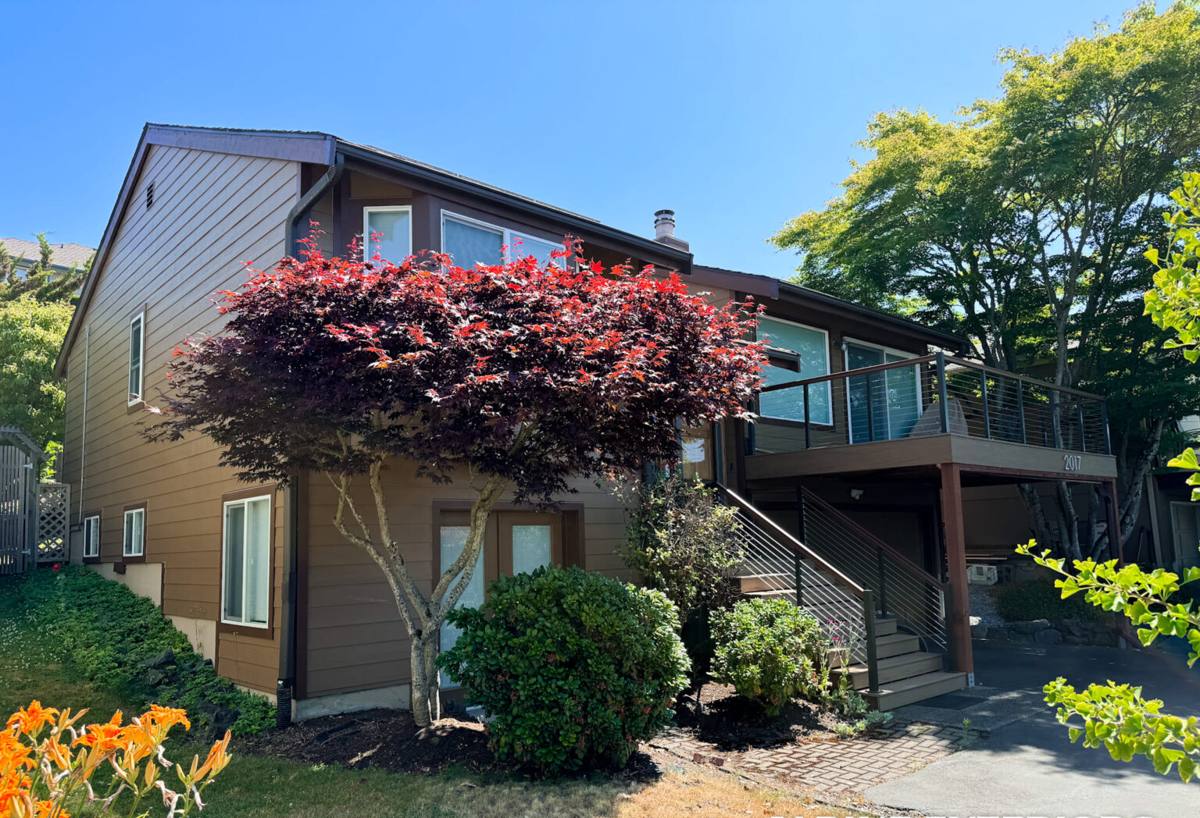
What "New-Construction" Windows Actually Means
New-construction windows are built with a nailing fin (sometimes called a flange) around the perimeter of the frame. That fin gets integrated directly into the house wrap and flashing system during framing, before siding goes on. This is different from a replacement or "pocket" window, which is designed to slide into an existing frame without disturbing the exterior finish.
The distinction matters because the two approaches solve different problems:
- New-construction windows rely on a layered flashing system — sill pan, side flashing, head flashing, and house wrap — to shed water down and out, away from the framing.
- Replacement windows depend more on sealant and the condition of the existing frame, since the original flashing typically stays in place.
- On a new build, we have full access to the rough opening, which means the flashing detail can be done correctly instead of worked around.
For a new build in Sumas, there's no excuse for cutting corners here — the wall is open, the sequence is in our control, and the cost difference between doing it right and doing it wrong shows up only after the drywall is hung.
Why Whatcom County's Climate Changes the Installation Sequence
Wind-Driven Rain and Sill Pan Flashing
In a lot of the country, a basic strip of flashing tape under the window is enough. In Whatcom County, where storms regularly push rain sideways against west- and south-facing walls, we treat sill pan flashing as non-negotiable on every new-construction window, not just the exposed elevations. A proper sill pan creates a sloped, sealed pocket under the window so any water that gets past the sash — through condensation, a failed seal down the road, or wind-driven rain finding a gap — drains back out to the exterior instead of sitting on the framing.
Moss, Algae, and Moisture Retention
Sumas gets long stretches of gray, damp weather where surfaces simply don't dry out for days at a time. That's exactly the environment moss and algae need. It's not usually a structural threat on its own, but it holds moisture against materials longer, which is why we pay close attention to keeping window sills, trim, and the transition between window and siding shedding water rather than trapping it.
Marine Air and Material Choices
Whatcom County's proximity to the Salish Sea means the air carries more moisture and salt influence than an inland climate would. That affects which fasteners, flashing tapes, and sealants hold up over time — we use corrosion-resistant fasteners and flashing products rated for coastal-influenced climates rather than generic interior-grade materials, because the failure mode out here is slower corrosion and adhesive breakdown, not a single bad storm.
What a Correct New-Construction Window Installation Involves
There's a specific order of operations that has to happen for a new-construction window to perform the way it's designed to. Skipping or reordering any of these steps is where most long-term leaks originate.
- Rough opening is checked for square, level, and correct size — not just "close enough."
- Sill pan flashing is installed first, sloped slightly to the exterior, with corners sealed rather than folded and hoped for.
- House wrap is cut and integrated so the top flap laps over the head flashing later — water management only works if every layer overlaps the one below it correctly, shingle-style.
- The window is set, checked for level and plumb, and fastened through the nailing fin per the manufacturer's schedule.
- Side flashing goes over the nailing fin, followed by head flashing that laps over the top of the side flashing and under the house wrap above.
- Backer rod and exterior-grade sealant are applied at the trim-to-window joint — not as a substitute for flashing, but as a second line of defense.
- Interior shimming and insulation around the frame are completed before drywall, so the window isn't left to rack or bind over time.
Any one of these steps done out of sequence — house wrap taped over the nailing fin instead of under it, for example — can turn the whole assembly into a funnel for water instead of a barrier against it.
Choosing Window Products for a Sumas Build
We install a range of vinyl, fiberglass, and wood-clad windows depending on the homeowner's budget, style, and performance goals. For new construction specifically, the material trade-offs come down to a few honest factors:
| Frame Material | Typical Advantage | Trade-Off to Consider |
|---|---|---|
| Vinyl | Lower cost, low maintenance, good energy performance | Fewer color and profile options; can look less refined on higher-end builds |
| Fiberglass | Very stable in temperature swings, strong, paintable | Higher upfront cost than vinyl |
| Wood-Clad | Traditional interior look, clad exterior resists weather | Highest cost; clad seams need correct detailing to stay watertight |
We don't push one brand as the only option — we walk through what fits the home's design, the budget, and how much long-term maintenance the homeowner actually wants to take on. What we do insist on is correct flashing and installation practice regardless of which product is chosen, because even a premium window installed with a shortcut flashing detail will eventually leak.
Energy Performance in a Marine Climate
Whatcom County isn't the coldest climate in the country, but the combination of persistent damp air and temperature swings between day and night means condensation control matters as much as raw insulation value. We look at U-factor and the window's condensation resistance rating, not just the glass package, when helping a homeowner choose between options. Properly installed low-E glazing helps, but it only performs as advertised if the frame is sealed and insulated correctly during the rough-in — another reason the installation sequence matters as much as the product spec sheet.
Our Process for Sumas New-Construction Projects
Whether we're coordinating directly with a general contractor or working with a homeowner managing their own build, the process follows the same basic shape:
- Plan review — we confirm window sizes, rough opening dimensions, and elevation-specific exposure before ordering.
- Scheduling around the framing timeline — windows go in after sheathing and house wrap, before siding, so we coordinate closely with the framing and siding crews to avoid gaps in the schedule.
- Flashing and installation — done to the sequence outlined above, with attention to the elevations that take the most wind-driven rain.
- Walkthrough — before siding closes everything in, we do a visual check of flashing laps and sealant lines while it's still accessible.
That last step is one a lot of installers skip because it takes an extra hour. On a new build, it's the last chance to catch a flashing mistake before it's buried under siding for the next several decades.
Why Local Experience on Sumas Builds Actually Matters
A window flashing detail that works fine in a dry inland climate can fail in a few years out here if it wasn't designed for wind-driven rain and sustained damp weather. Crews who haven't worked in Whatcom County regularly don't always know that a standard flashing tape schedule needs upgrading, or that certain elevations on a Sumas lot need extra attention based on prevailing wind and rain direction. We've built our process around the conditions this region actually produces, not a generic national standard, because that's what determines whether a new-construction window installation is still watertight in year fifteen.
If you're planning a new build in Sumas and want windows installed the right way from the start, we're happy to walk the plans with you and give you a straightforward, no-pressure estimate — just fill out the form below.