 Ferndale Siding
 Roof Repair in Sumas: What the Local Climate Puts Your Roof Through
Homes in and around Sumas deal with a specific combination of weather that's harder on a roof than most homeowners realize. Whatcom County sits close enough to the water that salt-laden air works its way into fasteners, flashing, and any exposed metal, slowly accelerating corrosion in places you can't see from the ground. Layer on driving rain that comes in sideways during winter storms, and you've got water finding its way into laps and seams that would stay dry in a calmer climate. Then there's the moss — Sumas roofs spend a good chunk of the year damp enough for moss and algae to take hold, and once it does, it holds moisture against the roofing material long after the rain stops.
None of this means every roof in Sumas is in trouble. It means small problems don't stay small for long. A lifted shingle tab or a hairline crack in flashing that might sit harmless for a season in a drier climate can turn into a rotted deck or a stained ceiling here in a fraction of the time. Roof repair in this area is as much about understanding that timeline as it is about the repair itself.
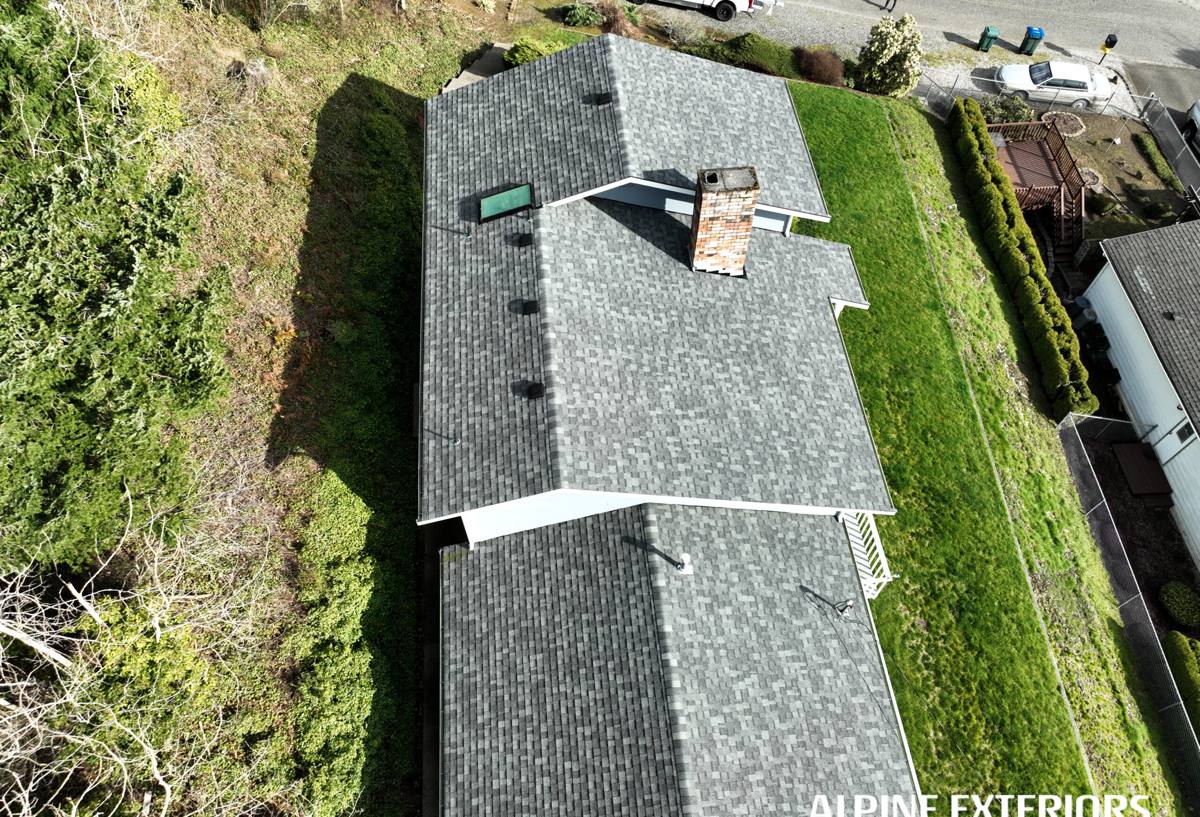
Signs a Sumas Roof Needs Repair
Most roof problems don't announce themselves with a dramatic leak. They show up as small, easy-to-miss signs first:
- Granules collecting in gutters or at downspout outlets
- Shingles that look cupped, curled, or cracked, especially on south- and west-facing slopes
- Dark streaking or thick moss growth, particularly on the shaded north side of the roof
- Soft or spongy spots underfoot (our crew checks this — not something to test yourself)
- Water stains on interior ceilings or in the attic near roof penetrations
- Daylight visible through the roof deck from inside the attic
- Flashing that's separated from a chimney, skylight, or sidewall
- Nails backing out or popping through shingles
Any one of these on its own might be a minor fix. Several at once, or any sign paired with an active interior leak, usually means water has already gotten past the surface layer and into the roof assembly underneath.
What a Proper Roof Repair Actually Involves
Finding the real source, not just the visible symptom
Water travels. A stain on a bedroom ceiling might trace back to a roof penetration several feet away, following a rafter or the underside of the sheathing before it shows up indoors. A repair that only patches the spot where water is visible inside, without tracing it back to where it's actually entering the roof, tends to fail again within a season or two. Doing this correctly means opening up the area enough to see the underlayment, decking, and flashing condition, not just the shingles on top.
Matching materials and technique to what's already there
A repair that doesn't tie into the existing roofing correctly — wrong shingle exposure, flashing that isn't properly stepped and lapped, or a patch that isn't woven into the surrounding courses — creates a new place for water to get in, even if it looks fine from the ground. Good repair work respects how the original roof was built and ties in cleanly, so the repaired section sheds water exactly the way the rest of the roof does.
Addressing what let the damage happen in the first place
If moss build-up trapped moisture against a section of shingles, or a clogged valley backed water up under flashing, repairing the visible damage without addressing the underlying cause just resets the clock on the same problem. We look at ventilation, drainage paths, and moss or debris buildup during the same visit, not as an upsell afterward.
Roofing Materials We Work With for Sumas Repairs
Most homes in this area are roofed in composition (asphalt) shingles, with a smaller number of cedar shake, metal, or flat/low-slope membrane roofs on additions and outbuildings. Repair approach differs by material:
| Roofing Type | Common Repair Needs Locally | What Matters Most |
|---|---|---|
| Composition/asphalt shingle | Wind-lifted or cracked tabs, granule loss, nail pops, flashing leaks | Matching shingle profile and color for a clean tie-in |
| Cedar shake | Split or curled shakes, moss holding moisture against the wood | Replacing individual shakes without disturbing surrounding courses |
| Metal panel | Loose fasteners, sealant failure at seams and penetrations, minor denting | Correct fastener type and sealant compatible with the panel coating |
| Low-slope/flat membrane | Seam separation, ponding water, punctures | Proper seam welding or sealing rated for the membrane type |
Whatever the material, we repair with products built to hold up to the same rain and salt-air exposure the original roof has already been dealing with, not the cheapest match available.
Our Roof Repair Process
- Inspection. We get on the roof, weather permitting, and in the attic if there's interior evidence of a leak, documenting what we find.
- Honest diagnosis. We tell you what's actually wrong, what caused it, and whether repair is the right call or a section has reached the point where replacement makes more sense.
- Written scope and estimate. You'll know what's being done, what materials are being used, and roughly what it will cost before any work starts.
- Repair. We remove and replace only the damaged material, tie flashing and underlayment in correctly, and match shingle or panel type as closely as possible.
- Cleanup and check. Debris and old material are hauled off, and we do a final check of the repaired area and surrounding roof before calling the job done.
Moss, Algae, and the Long Wet Season
Moss doesn't just look bad — it's one of the more common reasons a repairable roof turns into a replacement job in this part of Whatcom County. Moss holds water against the roofing surface long after a storm passes, which keeps shingles or shakes damp for days at a time instead of drying out. Over months and years, that constant moisture breaks down the granule coating on asphalt shingles and can rot the wood on cedar roofs from the surface down.
Removing moss the right way matters as much as removing it at all. Aggressive scraping or pressure washing can strip granules and shorten a roof's remaining life just as much as the moss would have. We remove growth carefully, treat the roof to slow regrowth, and check for damage moss may have been hiding underneath before we call a repair finished.
What Affects the Cost of a Roof Repair
Every roof and every leak is different, so we don't quote a flat number without seeing the roof — but a few factors consistently drive repair pricing up or down:
| Factor | Effect on Cost |
|---|---|
| Size and number of damaged areas | A single flashing repair costs far less than repairs spread across multiple sections |
| Roof pitch and access | Steep or hard-to-access roofs take longer and require more safety setup |
| Extent of hidden damage | Rotted decking or sheathing found once shingles are pulled back adds material and labor |
| Material match | Older or discontinued shingle lines can be harder and pricier to match cleanly |
| Underlying cause | Repairs that also address ventilation, moss treatment, or drainage cost more upfront but reduce repeat calls |
As a rough guide, many straightforward, single-area repairs land in the few-hundred-dollar range, while repairs involving rotted decking, extensive flashing work, or multiple sections of roof can run into the low thousands. We'll give you the real number in writing before we start, not a ballpark that changes once work begins.
Why Hiring a Crew That Already Works in Sumas Matters
A roofer unfamiliar with this area is starting from zero on things a local crew already knows: how fast moss regrows here, which flashing details tend to fail first under driving rain, and how much salt-air exposure a given roof orientation typically sees. That local knowledge shows up as fewer surprises during the repair and fewer callbacks after.
It also matters for accountability. We're not a crew that repairs a Sumas roof once and moves on to the next county. If something about a repair doesn't hold up the way it should, we're close enough to come back and make it right, and our reputation in this community depends on doing exactly that.
A Quick Roof Check You Can Do From the Ground
You don't need to get on a ladder to catch early warning signs. From the ground or a safe upstairs window, look for:
- Streaks of dark green or black on the roof surface
- Visible moss clumps, especially near valleys and the north-facing slope
- Sagging or uneven roof lines
- Shingles that look patchy in color or texture compared to the rest of the roof
- Gutters overflowing during rain, which can point to granule loss or debris buildup
- Any ceiling stains after a heavy storm, even ones that seem to dry up on their own
If you notice any of these, it's worth getting a roof looked at before the next storm season rather than after a leak shows up indoors.
If you're seeing any of these signs on a home in Sumas, or you'd just like an honest read on where your roof stands, we're happy to take a look. Reach out for a free, no-pressure estimate — we'll tell you straight what we find and what it would take to fix it.