 Ferndale Siding
 Decking Built for How Kendall Actually Weathers
Kendall sits inland from Ferndale proper, closer to the Nooksack River and the wooded foothills that lead up toward Mt. Baker. That changes what a deck has to deal with. You get less of the open coastal wind that dries things out fast in town, and more of what shade, tree cover, and river-valley humidity do to a structure over a Whatcom County winter: standing damp, slower drying times, and moss that gets a real head start on any surface that holds moisture. Add in the driving rain that comes through this whole corridor and the salt-tinged marine air that reaches even the inland parts of the county on a west wind, and you've got a climate that's genuinely tough on outdoor structures, just not in the exact way people picture "coastal weather" damage.
A deck built to a generic spec sheet doesn't account for any of that. A deck built correctly for a Kendall lot accounts for all of it — from the ledger connection to the fastener choice to how air moves underneath the boards. That's the difference we're describing on this page.
Why Composite Makes Sense Here
We install a lot of composite decking in this area for a simple reason: wood decking in a wet, shaded, moss-prone environment is a maintenance commitment, and composite isn't. Composite boards don't need annual staining or sealing, they don't splinter as they age, and they resist the moss and algae growth that wood picks up fast under tree cover or on the shaded side of a house. That doesn't mean composite is maintenance-free — nothing outside is — but it shifts the maintenance from "redo the finish every year or two" to "hose it off and check the fasteners."
The trade-off worth being honest about: composite costs more upfront than pressure-treated lumber, and it needs a correctly built substructure underneath it just like any decking material does. Composite doesn't fix a bad frame. It just means the surface you see isn't the part that fails first.
Where Composite Struggles If It's Installed Wrong
Composite boards expand and contract with temperature more than people expect, and they don't tolerate standing water at end cuts or around fasteners the way people assume a "synthetic" product should. Uncapped composite in particular can wick moisture at cut ends if they aren't sealed. In a climate with as much sustained dampness as Kendall gets through fall and winter, those installation details matter more here than they would in a drier region.
What a Correct Installation Actually Involves
The board you see is the last five percent of the job. Everything that determines whether the deck lasts happens underneath it.
- Ledger attachment and flashing: where the deck meets the house has to be flashed correctly so water is directed away from the wall assembly, not trapped behind it. This is the single most common failure point we find on older decks in this region.
- Joist spacing matched to the board: composite manufacturers specify tighter joist spacing than typical wood decking, especially on diagonal patterns or stairs. Installing composite on joist spacing meant for wood leads to bounce and long-term sag.
- Ground clearance and airflow: low decks built tight to damp, shaded ground are exactly where we see the worst moss buildup and slowest drying. Correct clearance and skirting that still allows airflow makes a real difference over a wet season.
- Hidden fastener systems: used properly, these keep water from sitting in screw holes on the deck surface — a common spot for algae and moss to take hold first.
- Stainless or coated fasteners throughout: in a climate this damp, standard fasteners corrode faster than people expect, especially near the ground or under snow load in a wet winter.
Choosing the Right Board for a Kendall Property
Not every composite product is the same, and the right choice depends on how much shade and moisture the specific deck location deals with. A deck on the sunny side of the house has different needs than one tucked under tree cover, which is common on the larger, more wooded lots around Kendall.
| Board Type | Moisture Resistance | Moss/Algae Resistance | Upkeep |
|---|---|---|---|
| Uncapped composite | Moderate — can absorb moisture at cut ends if unsealed | Fair | Occasional cleaning; watch cut ends and fastener holes |
| Capped composite | High — polymer shell resists moisture intrusion | Good | Low; periodic wash-down |
| Capped composite with textured/streaked finish | High | Best — texture and color variation hide surface staining and early moss growth | Low |
| Pressure-treated wood (for comparison) | Depends entirely on sealing schedule | Poor without regular treatment | High — annual cleaning and refinishing recommended |
For shaded, tree-covered lots we generally steer people toward capped composite with a textured or multi-tonal finish. It's not just cosmetic — the surface texture actually helps hide the early stage of moss and algae growth that shows up fastest in low-light, high-moisture spots, buying you more time between cleanings before it's visibly a problem.
Framing and Drainage: The Part Nobody Sees
Most deck failures we get called out to inspect in this part of Whatcom County aren't board failures — they're framing failures that the composite surface was hiding. Rim joists and beams that sit too close to grade, footings that were undersized or set too shallow for the frost and saturation cycle this area gets, and ledger boards attached without proper flashing all show up as soft spots, sag, or movement long before the composite decking itself shows any wear.
On a property with heavier tree cover or a lot near the river valley's water table, we also pay attention to how water moves under and around the deck itself — not just off it. A deck that traps runoff underneath stays damp for the entire wet season, which accelerates corrosion on fasteners and hardware even if the visible surface looks fine.
Footings and Frost
Footings need to be set below the frost line and sized for the actual load, including snow load in a heavier winter. This is a code requirement, not an upsell, and it's one of the areas we see cut corners on older or owner-built decks that come up for a repair or a rebuild.
Railing, Fascia, and Trim That Actually Hold Up
Railing systems and fascia boards take more direct weather exposure than the deck surface itself, especially driving rain coming in at an angle, which is common through this corridor in fall and winter storms. We match railing hardware and fascia fasteners to the same corrosion-resistant standard as the deck's structural fasteners — mixing standard hardware into an otherwise well-built deck is a common shortcut that shows up as rust streaks and loosening connections within a few seasons.
Composite fascia boards are worth the small upcharge over painted wood trim in this climate for the same reason composite decking is worth it: less annual upkeep, and no repainting cycle to keep up with as moss and mildew take hold on a shaded elevation.
Our Process
- On-site assessment: we look at sun exposure, tree cover, drainage patterns, and existing structure (for replacements) before recommending a board.
- Design and layout: board direction, railing style, stair placement, and how the deck ties into the house are worked out with you, not assumed.
- Permitting: most deck work in Whatcom County requires a permit; we handle that process rather than leaving it to you.
- Demolition (if replacing an existing deck): we inspect the substructure once the old decking is off, since that's often where the real condition of the deck is revealed.
- Framing: footings, ledger flashing, joists spaced to the composite manufacturer's spec, and proper ground clearance.
- Decking installation: hidden fasteners where applicable, sealed cut ends, correct expansion gaps for temperature swings.
- Railing and trim: installed with matched corrosion-resistant hardware.
- Final walkthrough: we go over care and cleaning specific to the board you chose and the amount of shade your deck gets.
Living With Composite Decking in This Climate
Composite is low-maintenance, not no-maintenance. In a long moss season like this region gets, a little seasonal attention keeps a composite deck looking and performing the way it should for the long run.
- Sweep or blow off leaf litter and debris regularly, especially under tree cover — trapped organic matter is what feeds moss and algae growth.
- Wash the deck surface with a soft-bristle brush and a mild deck cleaner once or twice a year, more often on heavily shaded sections.
- Keep gutters and downspouts clear so runoff isn't dumping directly onto or under the deck.
- Check railing and fastener hardware annually for early signs of corrosion, especially after a wet winter.
- Avoid pressure-washing at close range or high PSI — it can damage the cap layer on composite boards over time.
- Keep planters and other items that trap moisture off the boards for long stretches, particularly in shaded corners.
What Affects the Cost
Every deck is different, but the same handful of factors drive the price on most composite decking projects in this area.
| Factor | Why It Matters |
|---|---|
| Deck size and shape | More linear feet of framing, decking, and railing; complex shapes add labor for cuts and layout |
| Board tier (uncapped vs. capped vs. premium textured) | Material cost scales with moisture and moss resistance |
| Height off grade | Taller decks need more substantial framing, footings, and often stairs |
| Site access and tree cover | Wooded or tight lots common around Kendall can add time for material staging and demolition |
| Existing structure condition | Replacing decking on a sound frame costs less than a full tear-off and rebuild |
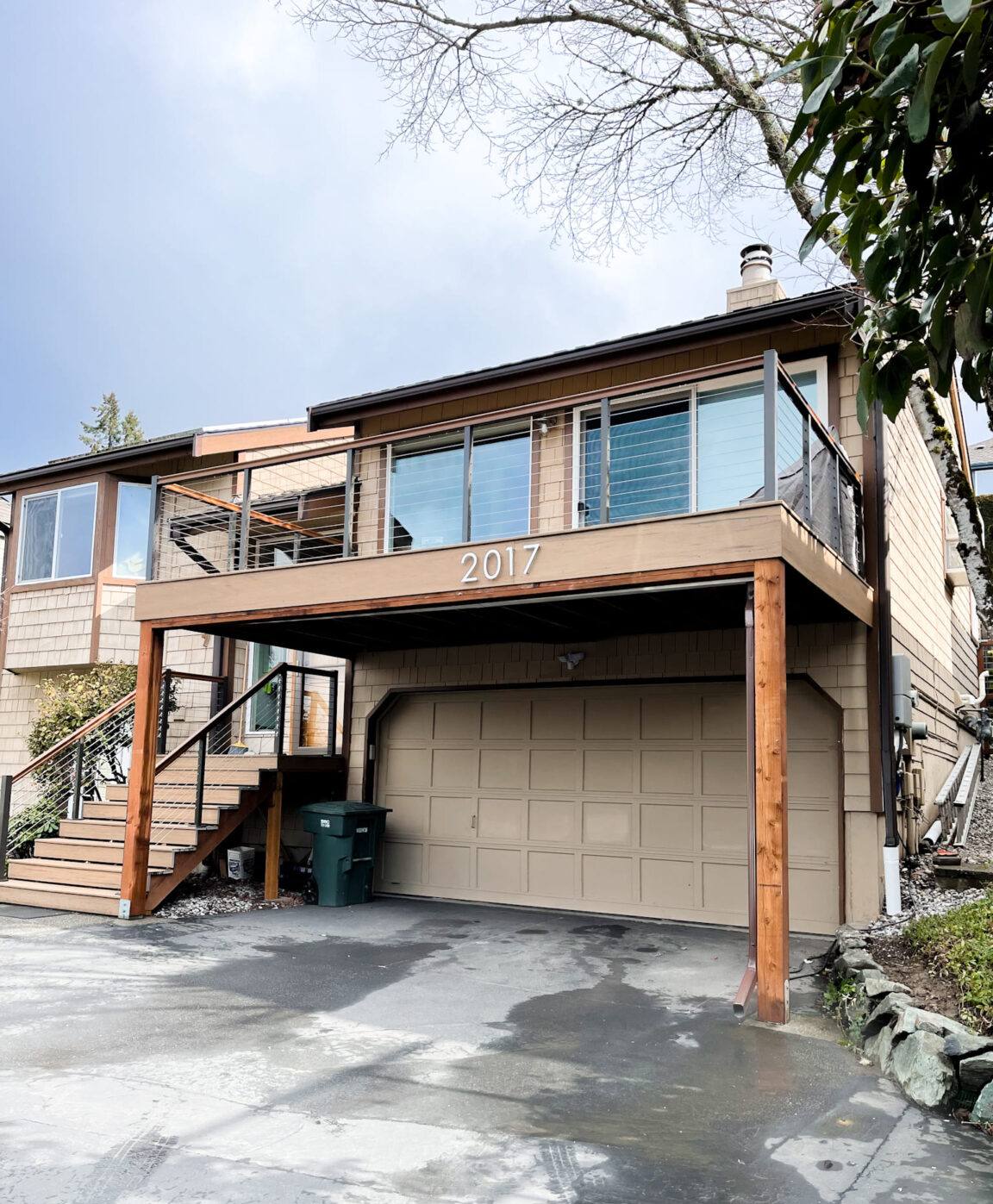
| Railing style | Composite, aluminum, or cable railing all price differently and affect total cost |
We won't quote a number on this page because every property is different, but a straightforward composite deck replacement generally runs into the low-to-mid five figures once you include quality boards, proper framing work, and railing — full rebuilds or larger footprints run higher. The estimate we give you is based on your actual deck, not an average.
Why Local Experience with Kendall Properties Matters
A crew that already works in and around Kendall knows the practical realities of building here: the drainage behavior of river-valley lots, how much shade and tree cover a given property typically deals with, and what Whatcom County's permitting and code requirements actually call for on deck footings, railings, and guard heights. That's not something you get from a general contractor who occasionally does a deck on the side. It shows up in fewer surprises during framing, a board recommendation that actually fits your site's sun and moisture exposure, and a deck that's built to hold up through this region's wet season rather than one that looks fine the first summer and starts showing problems by the second winter.
If you're planning a new composite deck or replacing an aging one in Kendall, we're happy to come take a look and walk you through what your specific property needs. The estimate is free, there's no pressure, and you can use the form below to get started.