 Ferndale Siding
 Composite Decking for Sumas Homes
Sumas sits out at the eastern edge of Whatcom County, in the flat farmland near the Canadian border, a good distance inland from the salt air that rolls in off Bellingham Bay closer to Ferndale. That doesn't mean a deck out here has it easy. What a Sumas property loses in direct coastal salt exposure, it makes up for in driving rain, low-lying ground that holds moisture longer than a well-drained hillside lot, and a moss season that runs longer here than in drier parts of the state. An outdoor deck sits directly in the path of all of it — sun, standing water, freeze-thaw cycling — with nowhere to hide from the weather the way a wall behind siding does. We build and replace decks for homeowners in Sumas and the surrounding area regularly, and composite decking has become the material we recommend, for the simple reason that it holds up to this specific mix of conditions with a lot less upkeep than a wood deck asks for.
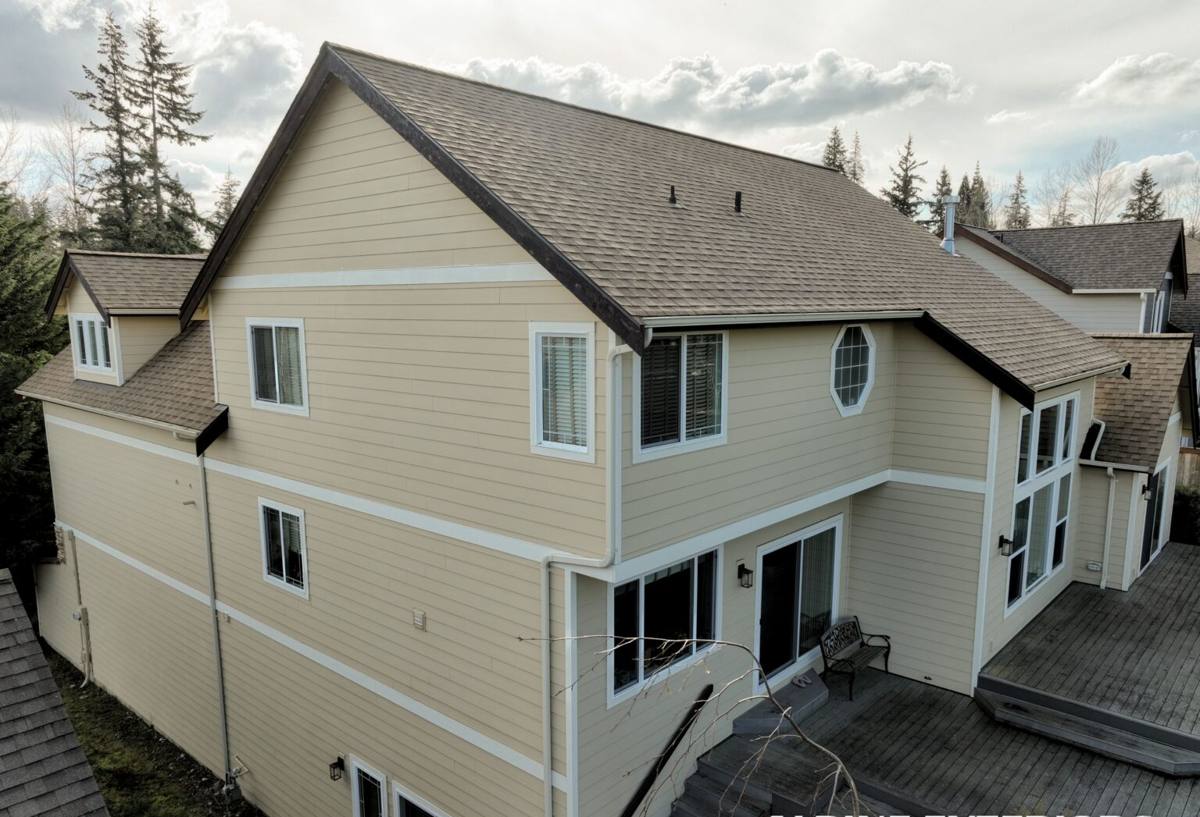
What Sumas Conditions Do to an Outdoor Deck
Driving Rain and Low-Lying Ground
Storms moving through this part of the county tend to push rain sideways rather than let it fall straight down, and a deck built low to the ground on flat valley terrain doesn't drain as fast as one built on a slope. Deck boards that sit in standing water or trap moisture between them are the first to show damage — cupping, splitting, and soft spots in wood, or surface staining and mold buildup in a poorly capped composite product.
Freeze-Thaw Cycling
Sumas sees more hard frosts and cold snaps than the milder towns closer to the water, and that adds a freeze-thaw dimension on top of all the moisture. Water that's soaked into a porous decking material and then freezes expands, which speeds up cracking and surface failure over a handful of winters rather than a decade or two.
Moss, Algae, and Shade
Persistent regional dampness and mild temperatures add up to a long moss and algae season, and a deck under trees or on the shaded side of a house holds onto that growth longer than open ground does. Beyond just looking bad, a mossy deck surface gets slick underfoot and can trap moisture against the boards underneath it.
Sun and UV Exposure
When the sun does come out, Whatcom County summers still put real UV load on an uncovered deck. Wood finishes chalk and fade without regular refinishing, and lower-grade composite can fade unevenly too if it wasn't built with real UV-stable cap stock in the first place.
Wood vs. Composite Decking, Honestly
Wood decking has a place, and plenty of homeowners like the look and the lower upfront cost. But for a Sumas property dealing with this much sustained moisture, freeze-thaw, and shade, the maintenance gap between wood and a good composite system is real, and it's worth laying out plainly rather than glossing over.
| Factor | Wood Decking | Composite Decking |
|---|---|---|
| Upfront cost | Lower | Higher |
| Annual maintenance | Staining or sealing every 1-2 years | Occasional washing, no staining or sealing |
| Moisture behavior | Can cup, splinter, or rot without regular upkeep | Capped boards resist moisture absorption |
| Moss and algae resistance | Porous surface holds growth | Capped surface sheds growth more easily, still needs occasional cleaning |
| Expected lifespan in this climate | Roughly 10-15 years with regular upkeep | 25-30+ years with minimal upkeep |
| Appearance over time | Grays and weathers without refinishing | Holds color consistently with quality cap stock |
None of this makes wood a bad material — it's a legitimate, lower-cost option for a homeowner willing to keep up with it. We install composite because, for the way this specific climate treats an exposed outdoor deck, it's the system that holds up with the least homeowner upkeep over the years that follow.
What a Correctly Built Composite Deck Requires
Composite boards are only as good as what's underneath them. A lot of deck problems we get called out to look at aren't a board problem at all — they're a framing, flashing, or fastening problem that just happens to show up on the surface first.
Substructure and Framing
Joists and beams need to be sized and spaced correctly for the composite product going on top, since composite boards flex differently under load than wood, and manufacturer spacing specs exist for a reason. On a Sumas property, protected or pressure-treated framing matters more than usual given how long ground moisture lingers under a low deck on flat terrain.
Ledger Attachment and Flashing
Where a deck attaches to the house is one of the most important, and most commonly rushed, details on the whole project. A poorly flashed ledger board is a direct path for water to get behind the siding and into the wall framing, and that kind of hidden damage can go unnoticed for years in a climate this wet. We flash ledger connections the way they're supposed to be flashed, not the way that's fastest to close up.
Fastening and Board Layout
Composite boards expand and contract with temperature more than most homeowners expect, and gapping, fastening pattern, and board direction all need to account for that movement. Hidden fastener systems give a cleaner surface with no exposed screw heads to trap moisture or catch a bare foot, and on most projects the extra labor is worth it.
Drainage and Airflow Underneath
A deck built low to flat, wet ground needs somewhere for water to go and enough airflow underneath to let the structure dry out between storms. Skipping proper grading or venting under a low deck is one of the more common shortcuts that causes trouble a few years down the road, especially on this kind of low-lying valley lot.
Choosing Boards, Colors, and Railing
Composite decking today comes in a wide range of colors and grain patterns, from traditional wood-tone boards to more contemporary solid colors, and most quality lines offer both grooved-edge boards for hidden fasteners and square-edge boards for face-screwing where needed, such as at stair treads. Railing deserves just as much thought as the decking itself — composite, aluminum, and cable rail systems all hold up better in this climate than a painted wood rail, which needs the same repainting cycle a painted wood surface anywhere else on the house does. We'll walk through the realistic options for a given home rather than defaulting to whatever's easiest to source that week.
Our Process for a Sumas Deck Project
Site Visit and Assessment
We start by looking at the existing deck or build site in person — checking the condition of any existing substructure, how the ground actually drains, where the ledger connects to the house, and how much sun and shade the space gets through the year.
Design and Permitting
We lay out board direction, railing, stairs, and any built-in features, and handle the permitting that Whatcom County requires for a project of this scope, so the homeowner isn't left chasing that paperwork down separately.
Build Day
Framing and flashing go in first and get checked before a single composite board goes down, since that's the part of the job nobody sees again once it's covered up.
Final Walkthrough
We walk the finished deck with the homeowner, confirm railing and stair dimensions meet current code, and go over the genuinely minimal care a composite deck needs going forward.
Deck Readiness Checklist
- Existing substructure checked for rot, soft spots, or undersized framing
- Ledger board and flashing inspected where the deck meets the house
- Grade and drainage checked underneath low decks for standing water
- Railing and stair rise/run reviewed against current code
- Board spacing and fastening plan confirmed for the specific composite product chosen
- Shaded and north-facing sections flagged for extra moss and moisture attention
Cost Factors for Composite Decking in Sumas
| Factor | What It Affects | Why It Matters Here |
|---|---|---|
| Substructure condition | Whether framing is reused or rebuilt | Low-lying, damp ground shortens the service life of unprotected framing |
| Deck size and layout | Board and labor quantity | Multi-level decks and stairs add framing and railing complexity |
| Railing type | Material and installation cost | Composite and aluminum rail avoid the repainting cycle wood rail needs in this climate |
| Ledger vs. freestanding design | Structural design and flashing scope | Ledger decks need careful flashing to protect the house wall behind them |
| Site access | Labor time and equipment needs | Rural Sumas properties can have longer driveways or tighter staging areas than in-town lots |
Exact pricing depends on the specific property and its condition, so we walk the site in person and give a real number rather than quoting off a generic price list.
Repair, Resurface, or Rebuild?
Not every aging deck needs to come out entirely. If the substructure is sound and only the surface boards or railing have failed, resurfacing with composite over solid existing framing can be a reasonable middle ground. But if the ledger connection has been letting water in, or the framing has been sitting in ground moisture for years without protection, resurfacing just puts new boards over a problem that's still there underneath. We'll tell you honestly which situation a given deck is actually in before recommending either path.
Why a Local Crew Matters for Sumas Deck Projects
A crew that works this part of Whatcom County regularly knows how driving rain, valley damp, and a long moss season actually behave on a deck over a full year, not just how a product performs on a spec sheet. That shows up in real decisions on build day — where extra flashing attention pays off, which framing details need upgrading versus which can be safely reused, and how to lay out a deck so shaded, moisture-prone sections don't turn into a maintenance headache two winters in. Sumas sits far enough inland that its exposure looks a little different from the rest of the Ferndale area, and we build for the conditions actually on that lot rather than applying a one-size-fits-all approach meant for a milder coastal property.
What to Expect When You Call Us
- A walk-through of the existing deck or build site to check substructure, drainage, and how the space actually gets used
- An honest assessment of whether you're looking at a repair, a resurface, or a full rebuild
- A clear explanation of the board, color, and railing options that fit the home and budget
- A written estimate with no pressure to sign on the spot
If you're thinking about a new composite deck in Sumas, or want an honest look at whether your current deck is still structurally sound, we're glad to take a look. Reach out using the form below to schedule a free, no-pressure estimate.