 Ferndale Siding
 Custom Decks for Sumas, Built for This Climate
A deck in Sumas has to earn its keep differently than a deck in a dry inland state. Whatcom County sits close to the water and close to the mountains, which means homes here deal with driving rain for months at a time, salt-laden air that eats at fasteners and finishes, and a moss season that can start in October and not let go until May. A deck that isn't built with that reality in mind will look fine for a year or two and then start showing problems: soft spots, green film on the boards, rust bleeding out of screw heads, rails that wobble because the posts never dried out between storms.
We build and repair custom decks for homeowners in Sumas and the surrounding Ferndale area, and we design every project around the weather it's actually going to face, not the weather on a spec sheet from somewhere sunnier.
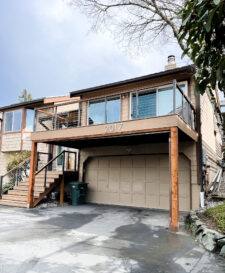
What Whatcom County Weather Actually Does to a Deck
Before talking materials or process, it helps to understand the specific ways this climate wears a deck down. It's not one big failure — it's a handful of small, steady problems that add up over years.
Moisture that never fully leaves
In a lot of the country, a deck gets soaked and then gets weeks of dry heat to bake it back out. Here, a deck can stay damp for days between rain events, especially in shaded yards or under tree cover, which is common on Sumas-area lots. Wood that stays wet longer starts to check, cup, and eventually rot from the inside of the board out, not just the surface.
Moss and algae
Moss doesn't just grow on roofs in this county. Any horizontal wood surface that stays shaded and damp — deck boards, stair treads, the tops of rails — will grow a slick layer of moss or algae if it isn't detailed to shed water and get airflow underneath. Beyond looking bad, that layer holds moisture against the wood and becomes a slip hazard on stairs.
Salt air and metal fatigue
Being close to the Strait of Georgia and Puget Sound means airborne salt reaches inland further than people expect. Salt air accelerates corrosion on any exposed metal — screw heads, joist hangers, railing hardware — which is why fastener choice matters more here than it would in a landlocked climate.
Freeze-thaw cycling on footings
Whatcom County gets enough cold snaps in winter that ground moisture can freeze and thaw repeatedly around footings that aren't set to the correct depth. Over several seasons that cycling can heave a footing just enough to throw a deck out of level.
Choosing Decking Material for a Sumas-Area Home
There's no single "right" decking material — there's a right material for your budget, your maintenance appetite, and how much sun or shade your yard actually gets. Here's how the common options hold up in this specific climate.
| Material | Upfront Cost | Maintenance in This Climate | Moisture Behavior | Typical Lifespan |
|---|---|---|---|---|
| Pressure-treated lumber | Lowest | Needs cleaning and resealing every 1-2 years to resist moss and checking | Absorbs water; prone to cupping if not sealed regularly | 15-20 years with upkeep |
| Cedar | Moderate | Needs regular sealing or staining; naturally moss-resistant but not moss-proof | Handles wet-dry cycling better than most softwoods | 15-25 years with upkeep |
| Composite decking | Higher | Periodic washing to prevent surface algae film; no staining or sealing | Doesn't absorb water or rot, but can still grow surface algae if shaded | 25-30+ years |
| PVC decking | Highest | Occasional washing only | Fully moisture-resistant; best choice for deeply shaded, damp yards | 25-30+ years |
We don't push homeowners toward the most expensive option by default. A well-built, well-maintained pressure-treated or cedar deck can serve a Sumas home for decades. Where we do steer people toward composite or PVC is on decks with heavy shade, low airflow, or ground-level contact with soil — situations where wood is going to fight a losing battle against moisture no matter how well it's sealed.
What a Correctly Built Deck Involves
A deck that's going to hold up here needs a handful of details done right from the start. These aren't upgrades — they're the difference between a deck that lasts and one that needs major repair inside ten years.
- Footings set below frost depth and sized for the actual load, not guessed at.
- Ledger board flashed correctly where it attaches to the house, with proper waterproof membrane behind it — this is the single most common failure point we find on older decks in this area.
- Joist tape or flashing on top of every joist to keep water from pooling in fastener holes and rotting the joist from the top down.
- Corrosion-resistant fasteners and hardware rated for coastal or treated-lumber exposure, not standard interior-grade hardware.
- Proper board spacing so water and debris drain through instead of collecting and feeding moss.
- Airflow underneath the deck, especially on lower decks close to grade, so the framing has a chance to dry between rain events.
- Stair treads and rail caps detailed to shed water rather than trap it against end grain, which is where rot starts fastest.
Skip any one of these and the deck can still look good on install day. The problems show up two, three, or five winters later, usually as soft spots near the house or a rail post that's gone spongy at the base.
Our Process, Start to Finish
1. On-site assessment
We walk the property, look at drainage, sun and shade exposure, and how the deck will tie into the house, then talk through material options that fit the site and your budget honestly.
2. Design and permitting
Most new decks and many major rebuilds in Whatcom County require a permit, particularly anything attached to the house or built above a certain height. We handle that process rather than leaving it on the homeowner.
3. Framing and structural work
Footings, posts, beams, and joists go in first, built to code for our snow and wind loads, with every moisture-management detail — flashing, joist tape, proper fastener choice — done as part of the framing, not as an afterthought.
4. Decking, stairs, and railings
Boards, treads, and rail systems go in with attention to drainage and airflow, whether you've chosen wood, composite, or PVC.
5. Final walkthrough
We go over the finished deck with you, explain what maintenance it needs and on what schedule, and make sure you know what a healthy deck looks like versus a warning sign.
Deck Maintenance for a Wet Climate
Even a well-built deck needs seasonal attention here. This is the honest maintenance rhythm we tell homeowners to expect, not a sales pitch for a service plan.
- Sweep debris out from between boards regularly — trapped leaves and needles hold moisture and feed moss growth.
- Rinse or lightly scrub moss and algae film off boards and stairs before it gets slick, especially on shaded sections.
- Check the ledger board flashing area once a year for any sign of staining or gaps.
- Inspect fasteners and hardware for rust bleed, particularly on older decks or ones close to the coast.
- Reseal or restain wood decking on the schedule appropriate to the product — don't wait until it's visibly gray and dry.
- Check post bases and any wood-to-concrete contact points for softness, which is often the first sign of rot.
- Confirm water is draining away from footings and not pooling against posts after heavy rain.
What It Costs to Build a Deck in This Area
Every deck is priced around its own footprint, framing complexity, and material choice, so we won't put a number here that doesn't apply to your project. What we can walk through is what actually moves the price.
| Cost Factor | Why It Matters |
|---|---|
| Size and shape | Square footage and the number of angles or levels directly affect framing time and material use. |
| Height above grade | Taller decks need more substantial framing, railing (often required by code above a certain height), and sometimes stairs with landings. |
| Footing depth and soil conditions | Rocky, wet, or sloped Sumas-area lots can require more excavation and larger footings than a flat, well-drained yard. |
| Decking material | Pressure-treated lumber costs less upfront than composite or PVC, but the lifetime cost gap narrows once maintenance is factored in. |
| Railing style | Basic wood rail systems cost less than metal-and-cable or composite rail systems. |
| Attachment to the house | A properly flashed ledger connection takes more time than a freestanding deck, but it's what keeps water out of your home's framing. |
Why Hire a Crew That Already Works in Sumas
Deck-building isn't unique to this county, but building one that survives this county's weather takes some local judgment. A crew that mostly works drier climates may not think twice about flashing details, fastener grade, or airflow under the framing — because where they usually work, those shortcuts don't get punished as fast. Here, they do.
Working regularly in Ferndale and communities like Sumas means we've seen how decks in this specific climate actually fail over time — where moss takes hold first, which fastener types hold up and which don't, how shaded lots behave differently than open ones. That's the kind of judgment that doesn't come from a spec sheet; it comes from being local and staying local.
Common Deck Problems We Get Called About in This Area
A lot of our deck work isn't new builds — it's repair or rebuild calls on decks that were built without this climate in mind. The recurring issues we see:
- Soft or rotted framing near the ledger board, from missing or failed flashing.
- Rusted-out fasteners and hardware on older decks, especially closer to the coast.
- Heavy moss buildup on shaded decks with poor board spacing or airflow.
- Wobbly rail posts caused by water intrusion at the post base.
- Footings that have shifted slightly from freeze-thaw cycling over the years.
Most of these are catchable early with a straightforward inspection, and far cheaper to fix at that stage than after a board or post fails outright.
If you're planning a new deck in Sumas or want an honest look at whether your current one needs repair or replacement, we're happy to come take a look. The estimate is free, there's no pressure, and you'll get a straight answer about what your deck actually needs — just fill out the form below to get started.