 Ferndale Siding
 Siding Repair in Lynden: Built Around What Whatcom County Weather Actually Does
Lynden sits a little inland from the coast, but it doesn't escape the weather pattern that defines siding wear across this part of Washington. Long stretches of driving rain, a moss season that can run most of the year in shaded spots, and the general dampness that settles over Whatcom County all work on a house's exterior whether it's three blocks from the water or well up the valley. We're based in Ferndale and have handled enough repair calls in Lynden to know the pattern isn't identical everywhere — but the underlying problem, moisture finding a way behind the cladding, is the same one we're solving on almost every job.
This page is specifically about siding repair for homes in and around Lynden — not a general repair overview, and not a sales pitch for a full replacement you don't need. A lot of siding problems are legitimately fixable without tearing off a wall, and knowing the difference is most of the job.
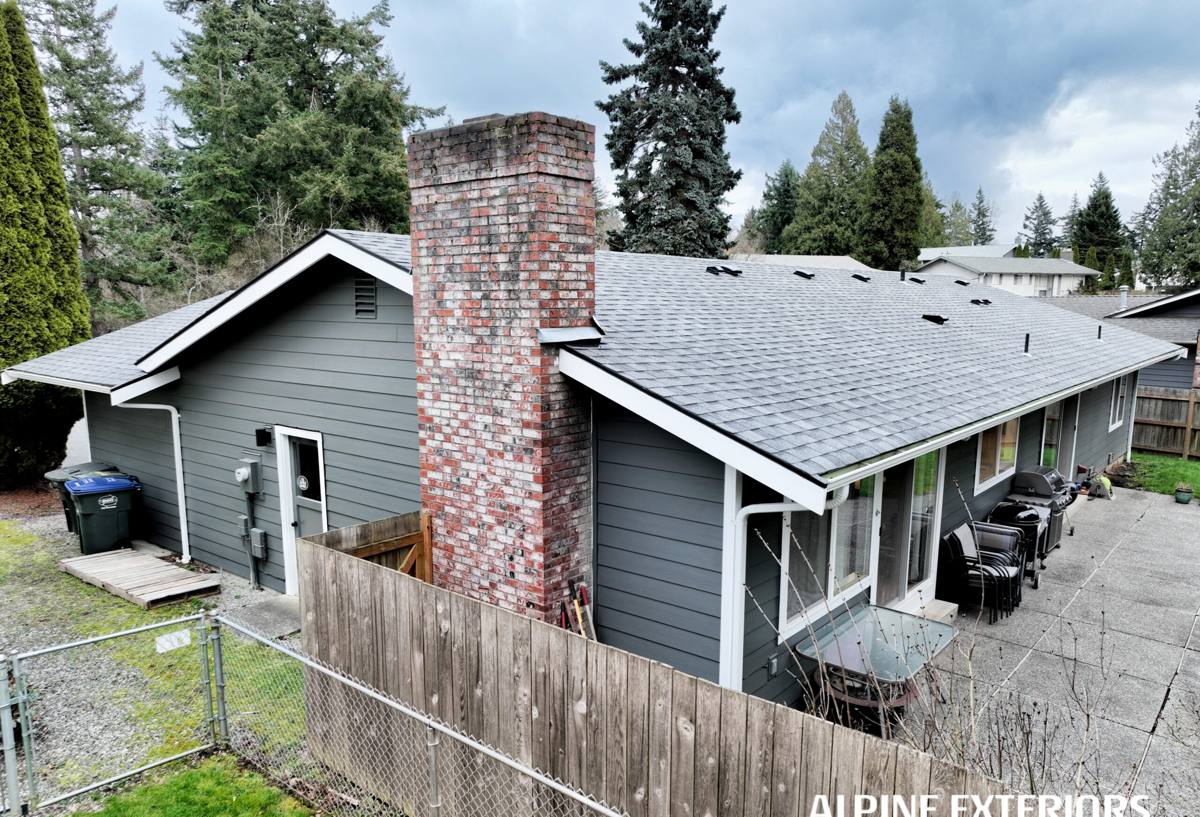
Why Repair Calls in Lynden Look a Little Different
Tree Cover and Shade
Many properties around Lynden have more mature trees and larger lots than you'd find on a tighter in-town street. That's good for privacy and shade, but it also means certain walls — usually north- and east-facing sections — stay damp longer after a storm passes. Less direct sun and airflow slows drying time, and slower drying time is exactly what moss, algae, and soft trim need to get established.
Driving Rain and Wind Exposure
Whatcom County storms don't just drop rain straight down — wind pushes it sideways into siding laps, trim joints, and anywhere caulking has started to fail. Over years, that wind-driven rain finds the small gaps most homeowners never notice, which is why a lot of repair calls start as "just a stain" and turn out to be an active water path.
Salt Air's Broader Reach
Direct salt exposure is heavier right along the coast, but the damp, salt-tinged marine air that moves through this whole region still plays a role further inland, especially on hardware, fasteners, and caulking that was never rated for it. It's one more reason generic materials and generic caulk don't hold up as long here as they might somewhere drier.
Signs Your Lynden Home Needs Siding Repair, Not Just a Wash
Pressure washing and repainting can make tired siding look better for a season, but they don't fix an underlying problem. Here's what actually points to a repair need:
- A single cracked, split, or missing plank, usually from impact or age
- Soft or spongy spots when you press on the siding, especially near the bottom courses or window trim
- Staining or discoloration that comes back within weeks of cleaning it off
- Visible gaps or separation at butt joints, corners, or trim boards
- Caulk that's cracked, shrunk, or pulled away from a joint
- Peeling or bubbling paint in one concentrated area (often a sign of moisture pushing out from behind)
- Warping, buckling, or a section that looks wavy compared to the wall around it
Any one of these on its own might be a simple fix. Several showing up in the same area usually means water has had time to work on something behind the surface, and that changes the scope of the repair.
What a Correct Siding Repair Actually Involves
Diagnose Before You Patch
The single biggest difference between a repair that lasts and one that fails again in a year is whether anyone bothered to find out why the damage happened in the first place. A patch over a hidden flashing problem or a compromised water-resistive barrier just buys a little time before the same spot fails again — often worse, because the damage kept spreading underneath while it looked fine from the outside. A real repair starts with removing enough material to see what's actually going on behind the siding, not just covering the visible symptom.
Matching Material, Fastening, and Finish
Once the cause is addressed, the repair itself needs to match the surrounding wall in three ways: the material itself, how it's fastened, and how it's finished. Mismatched material telegraphs immediately, especially in raking light. Fastening matters because improperly nailed or screwed fiber cement can crack or work loose over time. And finish matters because a factory-matched color reads very differently than a field touch-up, especially after a year or two of Whatcom County weather.
Checking What's Around the Repair, Not Just the Repair Itself
A damaged section rarely exists in isolation. Good practice is to check the flashing above and below the repair area, the caulking at adjacent joints, and the condition of trim boards nearby. Fixing one plank while ignoring a failing kick-out flashing two feet away just means we'll be back for a different repair next year.
Repair vs. Replace: How We Help You Decide
Not every damaged section needs a full wall replacement, and not every "small" repair should actually stay small. Here's how we generally think through it:
| Factor | Spot Repair Usually Makes Sense | Larger Replacement Is Usually Warranted |
|---|---|---|
| Damage pattern | One plank, one impact area, isolated trim rot caught early | Multiple planks affected, damage recurring in the same zone year after year |
| Moisture source | Identified and simple to correct (a caulk joint, a single fastener) | Traced to a flashing or water-resistive barrier failure affecting a broad area |
| Age of existing siding | Siding is otherwise sound and well within its expected service life | Siding is near or past its practical lifespan and other sections are starting to show similar wear |
| Underlying sheathing | Sheathing behind the damage is dry and solid | Sheathing shows rot, softness, or staining once opened up |
| Cost over time | Lower upfront cost, addresses the immediate issue | Higher upfront cost, but avoids paying for repeated repairs to the same wall |
We'll always tell you honestly which category your situation falls into. A repair-only house doesn't need a sales pitch for a full re-side, and a house with a real underlying problem doesn't need a repeated patch that won't hold.
Our Process for Siding Repair Calls in Lynden
1. On-Site Inspection
We look at the damaged area and the wall around it, not just the spot you called about. That includes checking trim, flashing, and adjacent joints for early signs of the same problem.
2. Honest Diagnosis
Before we talk about a fix, we tell you what we think caused the damage. If it's straightforward, we say so. If it points to something bigger, we explain what we found and why it matters.
3. A Written Scope
You get a clear description of what's being repaired, what material will be used, and what the work will cost — before anything is removed from the wall.
4. The Repair Itself
We remove only what needs to come off, address the underlying cause, and install matched material with correct fastening and flashing detail — not just a cosmetic patch.
5. Finish and Follow-Up
We match color and finish as closely as the product allows, clean up the site, and walk you through what was done so you know exactly what's behind that section of wall now.
Why We Only Repair What We Install: James Hardie Fiber Cement
We install James Hardie fiber cement siding exclusively, and that shapes how we approach repairs too. Hardie's factory-applied ColorPlus finish is engineered to a consistent formula, which means a repaired section can be matched far more reliably than trying to blend a field-mixed paint into an aging, weathered surface. The material itself is non-combustible and engineered for the kind of wet, marine-influenced climate Whatcom County sees, which is a large part of why we standardized on it in the first place. If your home currently has a different siding product and you're weighing a repair against a longer-term plan, we'll talk through that honestly — including what fiber cement does differently and why it's what we recommend when the time comes to replace rather than patch.
Why Hiring a Crew That Already Works Lynden Matters
Siding repair is a trade where local familiarity actually changes the outcome. A crew that regularly works Lynden and the surrounding Ferndale area has already seen how tree cover, wind direction, and the region's wet season play out on real walls nearby — which means less guesswork diagnosing your specific situation and a faster, more accurate scope from the first visit. It also means a shorter distance for follow-up if you have a question after the work is done, and a crew that isn't learning the region's quirks on your dime.
If you've got a siding issue on a Lynden-area home — whether it's one damaged plank or a wall that's been giving you trouble for a couple of seasons — we're happy to take a look and give you a straight answer about what it needs. Reach out for a free, no-pressure estimate using the form below.