 Ferndale Siding
 Deck Building in Lynden: Built for the Weather You Actually Get
Lynden homeowners ask for a lot of things in a deck — space for a table, a spot for the grill, somewhere the kids and the dog can go straight from the kitchen without tracking mud through the house. What most people don't ask about, until it's too late, is what happens to that deck after five or six wet Whatcom County winters. That's the part we think about first, because it's the part that decides whether you're enjoying your deck in ten years or tearing it out and starting over.
We build decks for homes throughout the Ferndale service area, and Lynden jobs come with their own set of conditions worth planning around: long stretches of steady rain, shoulder seasons where moss and algae get a real foothold on any horizontal wood surface, and the kind of persistent dampness that finds every gap in flashing or fastening a builder didn't take seriously. None of that is exotic — it's just normal Pacific Northwest weather — but it punishes shortcuts, and a deck is one of the easiest things to build wrong without it showing up for a year or two.
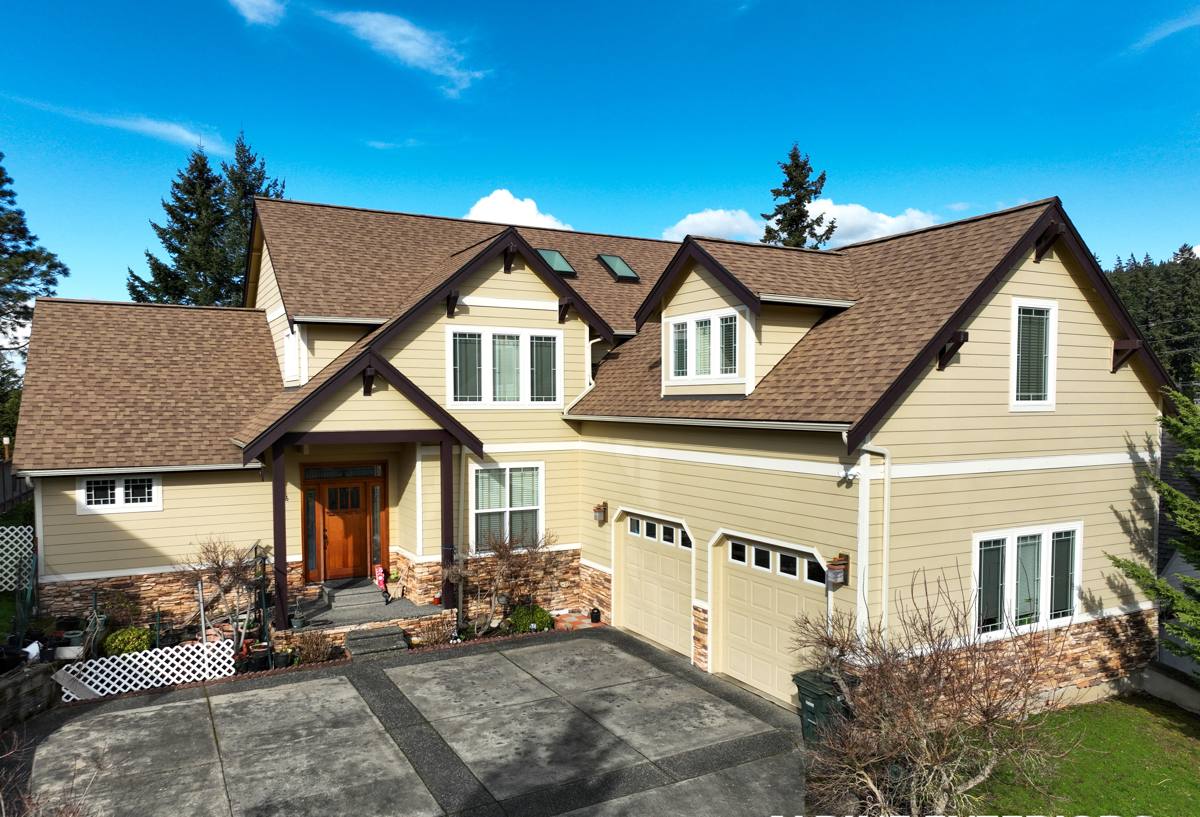
What Local Conditions Do to a Deck Over Time
A deck fails from the ground up and from the inside out, almost never from the top down. The boards you can see are the last thing to show damage — by the time a surface board is visibly cupping or spongy, the framing underneath has usually been wet for a while.
Moisture Is the Real Enemy
Driving rain doesn't just fall on a deck, it blows sideways into ledger connections, gets driven under railing posts, and pools wherever drainage wasn't planned for. Add a long stretch of overcast, humid days each fall and spring, and any wood surface that isn't shedding water efficiently starts growing moss and algae — which then holds even more moisture against the wood and accelerates rot underneath it.
Freeze-Thaw and Ground Movement
Whatcom County isn't extreme cold country, but we do get enough freeze-thaw cycling each winter to matter. Footings that aren't poured below frost depth, or posts set in soil that heaves even slightly, will work a deck loose over a few seasons — loose railings, squeaky boards, gaps that weren't there when it was built.
Wood-to-Ground and Wood-to-House Contact
Almost every deck failure we get called out to inspect traces back to one of two spots: the ledger board where the deck meets the house, or a post base sitting in standing water or buried soil contact. Both are 100% preventable with the right flashing and hardware — and both are exactly where corner-cutting is easiest to hide until the damage is already done.
Choosing Decking Material for a Lynden Property
There's no universally "best" decking material — there's the material that fits your budget, your maintenance appetite, and how the deck actually gets used. Here's how the common options stack up against our climate specifically.
| Material | Upfront Cost | Maintenance | How It Handles Our Wet Climate |
|---|---|---|---|
| Pressure-treated lumber | Lowest | Annual cleaning, re-staining every 2-3 years | Good if properly sealed and maintained; neglect shows fast in moss and graying |
| Cedar | Moderate | Regular sealing to hold color and resist decay | Naturally rot-resistant but still needs upkeep against constant moisture |
| Composite decking | Higher | Occasional washing, no staining or sealing | Excellent moisture resistance; some early-generation boards can hold surface algae if not cleaned periodically |
| PVC decking | Highest | Lowest — soap and water | Fully synthetic, doesn't absorb moisture, best long-term option for heavy rain and moss exposure |
We don't push one product line on every job. What we do push is being honest about trade-offs: composite and PVC cost more up front but take moisture out of the equation almost entirely, which matters a lot here. Wood costs less initially but only performs well if you're genuinely going to keep up with sealing and cleaning on schedule — and most homeowners underestimate how often that needs to happen in a climate this wet.
What a Correctly Built Deck Actually Involves
A deck is a structure, not a surface — the decking boards are the least important part of whether it lasts. The parts that determine longevity are almost all things you won't see once the project is finished.
Footings and Framing
Footings need to go below frost depth and bear on solid, undisturbed soil, not fill. Joist spacing and beam sizing have to match the actual load and span, not just what's fastest to frame. We use fasteners and structural hardware rated for exterior, ground-contact exposure — not standard interior-grade hardware that starts corroding in this climate within a couple of seasons.
Ledger Flashing
This is the single most important detail on an attached deck and the most commonly botched one. The ledger board bolts to your house, and if the flashing behind and above it isn't installed correctly — proper metal flashing, correct lap order, sealed penetrations — water works its way behind the siding and into the rim joist and wall framing. That kind of hidden rot is expensive to find and expensive to fix, and it starts from a detail that takes an extra hour to do right the first time.
Drainage and Ventilation Underneath
Standing water or trapped moisture under a deck is a slow rot factory. Grading away from the house, keeping the underside ventilated, and in some cases adding an under-deck drainage system all matter more here than they would in a dry climate.
Railings and Stairs
Beyond code minimums for height and baluster spacing, railing posts need solid blocking and proper attachment — not just lag screws into a rim joist. A railing that flexes when leaned on isn't just annoying, it's a liability.
Our Deck Building Process in Lynden
- On-site assessment — we look at grade, drainage, sun and rain exposure, and how the deck will attach to your home before we talk materials.
- Design and material selection — layout, size, and material recommendations based on your budget and how you'll actually use the space.
- Permitting — we handle the permit application and coordinate any required inspections through the local building department.
- Site prep and footings — excavation, footing placement, and inspection sign-off before framing starts.
- Framing and flashing — structural framing, ledger flashing, and all hardware installed to exterior-rated standards.
- Decking, railing, and finish work — surface installation, railings, stairs, and any fascia or skirting detail.
- Final walkthrough — we go over the finished deck with you, including what maintenance it needs and when.
Permits and Code in Whatcom County
Most deck projects above a certain height or attached to the house require a building permit, and requirements can vary depending on your specific property and jurisdiction within Whatcom County. Setback rules, guardrail height requirements, and footing depth standards all get checked during inspection, and skipping the permit process can turn into a real problem at resale when a buyer's inspector flags unpermitted work. We pull the necessary permits as part of our process rather than leaving that step to you.
Maintaining a Deck Through Lynden's Wet Seasons
Whatever material you choose, a little seasonal attention goes a long way in this climate. Here's what we recommend to every homeowner we build for:
- Sweep debris off the deck regularly — trapped leaves and needles hold moisture against the surface
- Clean moss and algae off boards and stairs at least once a year, before it gets slick and hazardous
- Check and clear drainage paths under and around the deck each fall
- For wood decking, reseal or restain on the schedule your material actually needs — don't wait for visible graying
- Inspect ledger flashing and post bases annually for any sign of water staining or soft wood
- Tighten or replace any loose railing hardware as soon as you notice movement
Signs Your Existing Deck Needs Attention
Soft or spongy spots underfoot, dark staining around the ledger board, railings that flex, or persistent moss that comes back within weeks of cleaning are all signs worth having looked at before they become structural. Catching moisture problems early is almost always cheaper than replacing rotted framing later.
Why a Crew That Already Works in Lynden Makes a Difference
Building a deck that holds up here isn't about exotic technique — it's about not skipping the boring details that matter in a wet climate: real ledger flashing, exterior-rated hardware, footings set correctly, and drainage that's actually planned for instead of assumed. A crew that works Whatcom County regularly has already seen what fails and why, because we've been the ones called out to fix decks that were built without those details in mind. That's not something you can fully verify from a bid sheet — it shows up in how a deck holds up five winters in.
We're a local siding and exterior contractor, and we approach deck building the same way we approach the rest of a home's exterior: as a system that has to manage water correctly, not just look good on installation day.
If you're planning a new deck or want an honest look at whether an existing one needs repair, we're happy to come take a look. Reach out for a free, no-pressure estimate — fill out the form below and we'll get in touch.