 Ferndale Siding
 Windows Built for the Lummi Nation Climate
Homes in and around Lummi Nation sit close to the water, and that proximity shapes everything about how windows perform here. Salt-laden air off the Salish Sea works on hardware and finishes year-round. Driving rain off Bellingham Bay tests every seal and flashing detail a window has. And the shaded, damp stretches of fall through spring in Whatcom County grow moss and mildew on anything that stays wet too long — including window sills, trim, and the wood framing behind them if water gets in. A window that's a good fit in a drier inland climate can fail early out here if it wasn't chosen and installed with this specific exposure in mind.
We install windows throughout Ferndale and the surrounding Whatcom County communities, including homes in and near Lummi Nation. That means we're used to the wind-driven rain angles, the salt exposure on west- and south-facing walls, and the slower drying times that come with our marine climate. This page covers what that means for your windows specifically — not siding, not roofing, just windows, done right for this location.
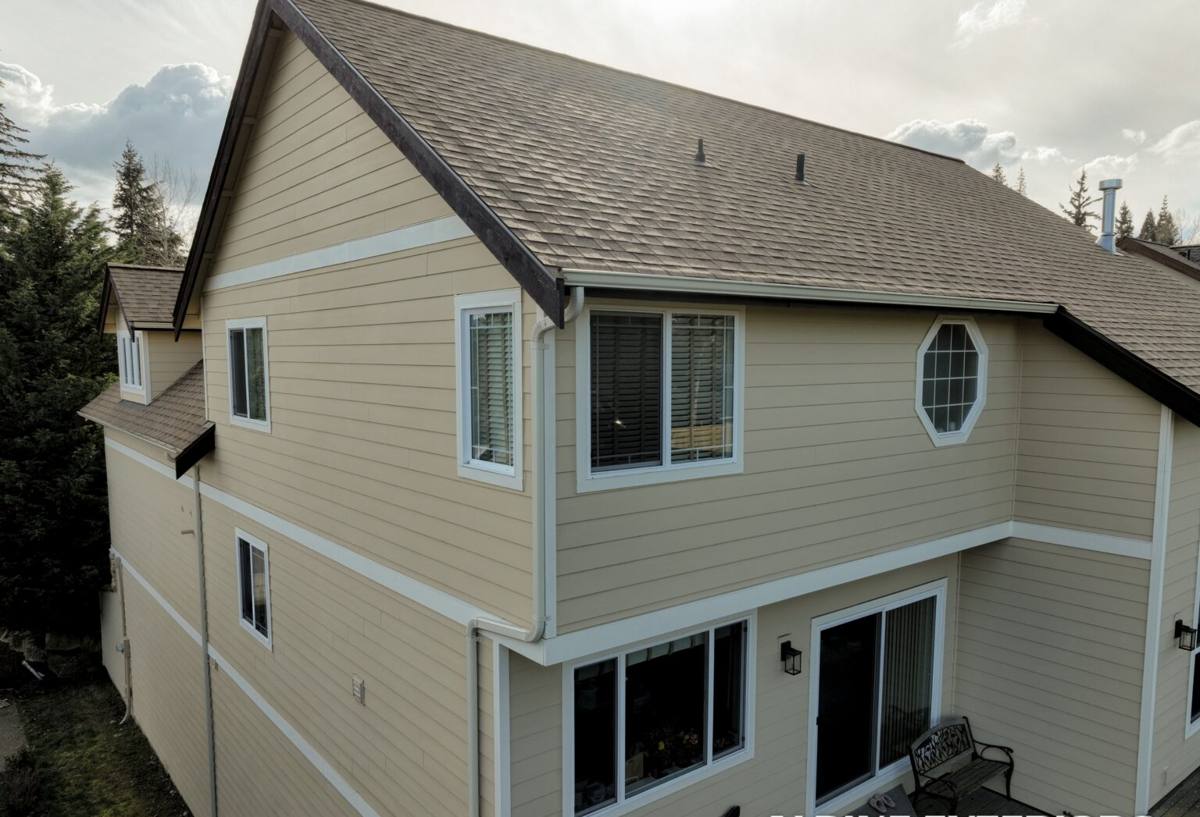
How This Climate Actually Damages Windows
It helps to know what you're up against before you decide on a product or a contractor. The failures we see most often in this area trace back to a handful of causes:
- Salt air corrosion — window hardware, screen frames, and unprotected fasteners near the water corrode faster than they would inland.
- Wind-driven rain — storms off the water don't just fall, they push sideways into wall assemblies, finding any gap in flashing or sealant.
- Prolonged dampness — shaded north and east walls, common on treed lots, stay wet longer and grow moss and algae on sills and trim.
- Wood rot behind the frame — this is the expensive one. It's rarely the window glass that fails first; it's water getting behind the frame through bad flashing and rotting the framing before anyone notices.
- Condensation — older single-pane or poorly sealed windows fog and sweat in our humid, mild-temperature swings, which feeds mold growth on sills and casings.
None of these are exotic problems. They're the predictable result of a marine climate meeting an ordinary window installation. The fix isn't a mystery product — it's disciplined installation practice and materials chosen for this exposure.
Signs Your Windows Need Attention
Most window failures give warning signs well before a full replacement becomes urgent. Walk your home's exterior and check for these:
- Soft or discolored wood trim around the window frame
- Paint or caulk that's cracked, peeling, or pulling away at the corners
- Moss or dark staining building up on sills, especially on shaded walls
- Visible daylight or a draft you can feel around the frame edges
- Condensation or fogging between panes on double-pane units — a sign the seal has failed
- Windows that stick, won't latch fully, or have visibly warped sashes
- Higher heating bills without another clear explanation
One or two of these on an otherwise sound window might mean a repair or a re-seal is enough. Several of them together, or any sign of soft framing wood, usually means it's time to talk about replacement before the damage spreads into the wall structure.
What a Correct Window Installation Actually Involves
The window unit itself is only part of the job. In our climate, the flashing and sealing details around it matter as much as the window's quality rating — a premium window installed with careless flashing will leak just like a cheap one. A correct installation follows this order, regardless of brand:
Removal and Opening Prep
The old window comes out and we inspect the rough opening for hidden rot, water staining, or insect damage before anything new goes in. This is often where a "simple window swap" turns into a bigger conversation — if the framing underneath is compromised, we address that first. Covering over damaged wood is how small problems become big ones.
Flashing, Not Just Caulk
Caulk alone is not a weather barrier — it's a backup. The primary defense is proper flashing: a sill pan to direct any water that gets past the window back outside, and flashing tape integrated with the house wrap so water sheds down and over, never behind, the water-resistive barrier. This is the single detail most likely to be shortcut on a rushed job, and it's the detail most responsible for rot claims years later.
Air Sealing and Insulation
The gap between the window frame and the rough opening gets sealed with low-expansion foam or backer rod and sealant — enough to stop air and moisture movement without bowing the frame out of square, which can bind the sash or crack the seal.
Exterior Trim and Finish Sealant
Exterior sealant at trim joints and the window perimeter is the last line of defense against driving rain. We use sealants rated for exterior, UV, and moisture exposure — not general-purpose caulk that will crack and shrink within a season or two out here.
Interior Finish and Function Check
Once the window is set, we check that it opens, closes, and locks smoothly, then finish the interior trim and confirm there are no drafts or light gaps before we call the job done.
Choosing a Window Frame Material for This Location
Frame material is the biggest factor in how a window holds up to salt air and moisture over time. There's no single "best" choice for every home — it depends on your budget, your home's style, and how exposed the window is to weather. Here's how the common options compare for a Lummi Nation home:
| Frame Material | Salt Air / Moisture Resistance | Maintenance | Typical Trade-offs |
|---|---|---|---|
| Vinyl | Very good — won't rot or corrode | Low; occasional cleaning | Fewer color options; can look less premium on higher-end homes |
| Fiberglass | Excellent — very stable in temperature and moisture swings | Low | Higher upfront cost than vinyl |
| Wood-clad (exterior clad, wood interior) | Good on the clad exterior; interior wood needs the exterior seal to stay intact | Moderate — exterior clad is low-maintenance, but any breach exposes wood | Higher cost; classic look many owners want |
| Solid wood | Poor without diligent upkeep in this climate | High — regular repainting and sealing required | We're honest with clients that solid wood needs real commitment out here; clad options give a similar look with far less maintenance risk |
| Aluminum | Fair — prone to corrosion pitting near salt air unless marine-grade and well finished | Moderate | Thermally less efficient unless thermally broken; less common for residential in this climate |
For most homes near Lummi Nation, we steer clients toward vinyl or fiberglass for straightforward reliability, or clad-wood when the look matters and the owner understands the maintenance difference. We'll walk through your specific home and exposure rather than recommend the same thing for every job.
New Construction vs. Replacement Windows
These are genuinely different jobs, and it's worth knowing which one you need before getting quotes:
- New construction windows have a nailing fin and are installed before siding goes on, with flashing integrated directly into the wall assembly. This is the more thorough approach and the one we prefer whenever siding is being replaced at the same time.
- Replacement (insert) windows fit into the existing frame without disturbing the surrounding siding or trim. This is faster and less invasive, and it's the right call when the existing frame and flashing are still sound. If they're not sound, an insert window just traps the existing problem behind new glass.
Part of our job during the estimate is telling you honestly which category your project falls into — not defaulting to whichever is faster for us.
What Affects the Cost
| Factor | Why It Matters |
|---|---|
| Window count and size | More or larger openings mean more material and labor |
| Frame material | Vinyl is generally the most affordable; fiberglass and wood-clad cost more |
| New construction vs. replacement | New construction involves more flashing and trim work if siding is disturbed |
| Condition of the existing opening | Rotted framing found during removal adds repair scope before the new window goes in |
| Access and height | Second-story or hard-to-reach openings take more time and equipment |
| Glass package | Upgraded low-E coatings or gas fills add cost but improve comfort and energy performance |
We give a straight, itemized estimate rather than a vague ballpark, so you know exactly what's driving the price on your project.
Our Process
- Free on-site assessment — we look at each window opening, the surrounding trim and framing, and the wall's exposure to wind and rain.
- Honest recommendation on frame material and window type based on that specific opening, not a one-size answer.
- Written, itemized estimate before any work begins.
- Removal with a check for hidden rot or moisture damage in the opening.
- Installation with proper sill pan flashing, air sealing, and exterior-grade sealant at every unit.
- Function check and interior/exterior finish work.
- Walkthrough with you before we consider the job complete.
Why Hire a Crew That Already Works This Area
Window installation instructions in a manufacturer's manual are written for average conditions, not for a marine climate with driving rain and salt exposure. A crew that's done this work around Ferndale and Lummi Nation before knows which walls in this area take the worst weather, where moss buildup signals a bigger moisture issue behind the trim, and which flashing details actually hold up here versus which ones look fine on install day and fail two winters later. That local track record is worth more than a lower bid from a crew unfamiliar with Whatcom County's marine exposure.
Keeping New Windows Performing Long-Term
A correctly installed window in this climate still needs a little seasonal attention:
- Rinse salt residue off exterior frames and hardware periodically, especially on water-facing walls
- Clear moss or debris from sills before it holds moisture against the frame
- Check exterior sealant annually for cracking, and address it before water gets behind it
- Operate locks and hardware a few times a year so they don't seize from corrosion or disuse
- Watch for condensation between panes — it means a seal has failed, and the insulated glass unit likely needs replacing
None of this is heavy maintenance, but skipping it is how a well-installed window ends up with the same problems as a poorly installed one, just a few years later.
If you're weighing whether it's time to replace windows on your Lummi Nation home, we're glad to take a look and give you a straight answer — no pressure, no upsell. Fill out the form below for a free estimate.