 Ferndale Siding
 Lynden's Climate Asks More of a Window Than People Expect
Lynden sits inland from the coast, so it doesn't deal with the salt-laden air that hits homes closer to Ferndale's shoreline and Cherry Point. But don't mistake that for an easy ride. Whatcom County's marine climate still delivers long stretches of driving rain, heavy fall and winter humidity, and shaded, damp conditions that keep moss and algae active on north- and east-facing walls for most of the year. Windows in this area take on water from every angle — wind-driven rain against the glass, splash-back off soffits and trim, and slow moisture creep around frames that were never sealed quite right to begin with.
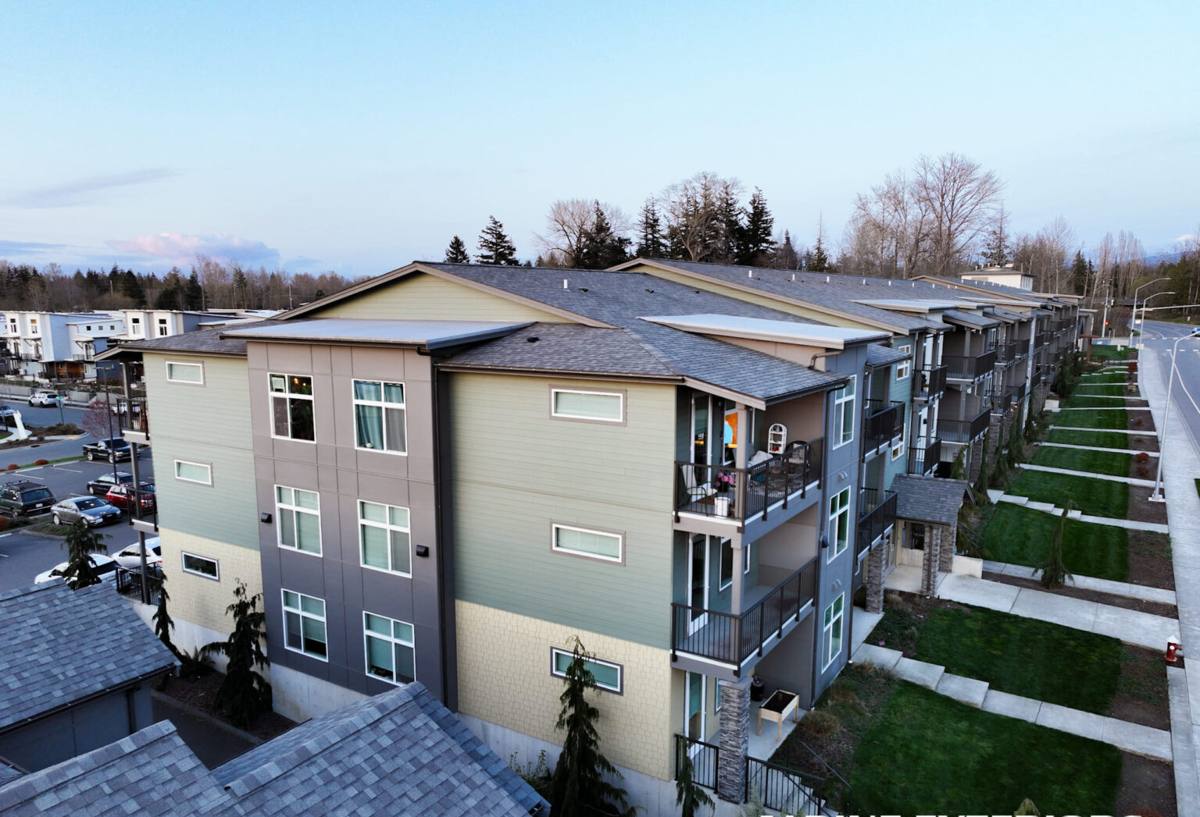
On older farmhouses and original homestead-era homes common around Lynden, window openings have often settled or gone slightly out of square over the decades. That's a different problem than what you'll find on a newer build in one of the area's residential developments, where the windows are usually the original builder-grade units just reaching the end of their service life. Either way, a window that isn't matched correctly to the opening and the climate ends up as a slow, ongoing moisture problem long before anyone notices a visible leak.
What "Custom" Actually Means for a Window Job
"Custom" doesn't have to mean an unusual shape or a high-end architectural feature, though we do that work too. Most of the custom window jobs we do around Lynden fall into one of two categories:
- Custom-sized replacements — built to the exact, as-measured dimensions of an existing opening, including openings that have shifted out of square over time. This is the right approach for most older homes in the area.
- True custom units — new openings, resized openings, bay or bow configurations, picture windows, or non-standard shapes that don't exist in a stock size at all.
The distinction matters because a "close enough" stock window forced into an out-of-square opening is one of the most common causes of early window failure we see. Shims and extra caulk can hide a poor fit for a while, but they don't stop water from finding the gap eventually.
Choosing the Right Frame Material
Frame material affects how a window handles moisture, temperature swings, and years of exposure to a wet climate — not just how it looks. We walk every Lynden customer through the real trade-offs rather than pushing one option:
| Material | Moisture Behavior | Maintenance | Best Fit |
|---|---|---|---|
| Vinyl | Won't rot; can flex slightly in temperature swings | Low — occasional cleaning | Most standard replacements, budget-conscious jobs |
| Fiberglass | Very stable, minimal expansion/contraction | Low | Larger units, custom shapes, long-term durability |
| Wood-clad | Good insulator, but exposed wood is vulnerable if seals fail | Higher — needs monitoring at joints and sills | Homes prioritizing a traditional wood interior look |
| Aluminum | Conducts cold and can condense moisture in this climate | Moderate | Limited use; we recommend it sparingly here |
We're generally cautious about clad-wood and aluminum in a climate that stays wet as long as Whatcom County's does — not because either product is bad, but because both put more of the moisture-management burden on a perfect installation and consistent upkeep. Vinyl and fiberglass simply give a wider margin for error over 15-20 years of Pacific Northwest weather.
Signs Your Current Windows Are Already Working Against You
Most window failure doesn't show up as a dramatic leak. It shows up gradually, and homeowners often live with it longer than they need to. Signs worth walking your home for:
- Fogging or a permanent haze between the panes (a failed seal on a double-pane unit)
- Soft or spongy trim and sill wood around the window frame
- Visible gaps, cracked caulk, or daylight showing at the frame edges
- Difficulty opening, closing, or locking — often a sign the frame has shifted
- Moss or dark streaking building up on the sill or directly below the window
- Noticeably colder air near the window even with it fully closed
- Condensation forming on the inside of the glass regularly in cooler months
Any one of these on its own might just mean a caulk touch-up. Two or three together, especially on a north- or west-facing wall, usually means the window itself is past the point where sealant and weatherstripping can fix it.
How We Handle a Custom Window Job, Start to Finish
- On-site assessment. We measure every opening individually — we don't assume uniform sizing, especially on older homes where openings have shifted over the years.
- Material and configuration selection. We go over frame material, glass package, and operating style (double-hung, casement, sliding, picture) based on the wall's sun and rain exposure.
- Opening preparation. Any damaged sheathing, sill framing, or trim is addressed before the new window goes in — installing a good window into a compromised opening just relocates the problem.
- Air and moisture barrier detailing. Proper flashing and sealing at the frame is what actually keeps driving rain out over the long run, not just the caulk bead you can see.
- Install and interior/exterior finish work. Trim, sill, and siding tie-ins are finished to match the surrounding wall, not left as a visibly separate patch.
- Final walkthrough. We check operation, seals, and finish work with you before we call the job done.
What Actually Drives the Cost
Window pricing varies a lot from house to house, and we'd rather explain why than throw out a number that doesn't hold up once we're on site. The honest cost drivers are:
| Factor | Why It Matters |
|---|---|
| Opening condition | Rot, out-of-square framing, or damaged sheathing add prep work before the window can even go in |
| Frame material | Vinyl, fiberglass, and wood-clad sit at different price points, as shown above |
| Size and configuration | Standard rectangular units cost less than bay, bow, or oversized picture windows |
| Glass package | Low-E coatings and gas-filled panes cost more upfront but reduce condensation and heat loss |
| Number of openings | Whole-house jobs typically bring a better per-window price than one-off replacements |
| Access and site conditions | Second-story or hard-to-reach openings take more time and equipment |
We give real, project-specific numbers after we've actually measured and looked at the openings — not a phone estimate that changes once we show up.
Why It Matters That We Already Work in Lynden
A crew based in Ferndale that regularly works the Lynden area knows what to expect before we even pull up. We're familiar with Whatcom County permitting requirements for window replacement and structural opening changes, and we know the difference between a straightforward swap and a job that needs a building permit because the opening size is changing. That's not a small detail — pulling the wrong permit, or skipping one that was required, can turn into a real headache at resale.
We also know the housing stock. Older farmhouses, mid-century homes, and newer development builds around Lynden each come with their own quirks — different framing standards, different original window brands, different common failure points. A crew that's done this work locally, repeatedly, isn't guessing at any of that.
Because we're also a siding company, we look at the whole wall assembly, not just the window opening in isolation. Flashing details, house wrap integration, and trim tie-ins get handled correctly the first time, instead of being a mismatch between a window installer's work and a separate siding crew's work later.
Keeping New Windows Performing Year After Year
Even a correctly installed window benefits from a little seasonal attention in this climate:
- Rinse sills and tracks periodically to keep moss and algae from getting established, especially on shaded sides of the house
- Check exterior caulk lines once a year, typically before the wet season sets in, and touch up any cracking
- Keep gutters and downspouts clear so overflow isn't running down the wall and pooling at window heads
- Operate every window through its full range a few times a year — a window that's never opened is where you're least likely to notice an early problem
None of this is heavy maintenance. It's the same kind of basic upkeep that separates a window that looks and performs well at year 15 from one that's already showing problems at year 7.
Get a Straight Answer on Your Windows
If you're dealing with drafts, fogged glass, moss buildup, or windows that just don't operate like they used to, we're happy to take a look and tell you honestly what we see — whether that means a full custom replacement or something simpler. Request a free, no-pressure estimate using the form below and we'll get you scheduled.