 Ferndale Siding
 Decking Built for the Way Lynden Actually Weathers
Lynden sits inland from Bellingham Bay but still gets the full Whatcom County treatment: long stretches of gray, wet winters, a spring and fall that never quite dry out, and enough shaded, damp corners around most lots to grow moss on anything that sits still. Add in the driving rain that comes sideways off a west wind and the salt-tinged air that drifts inland from the Strait on a lot of days, and you've got a climate that is genuinely hard on outdoor wood. A deck built here doesn't fail because the homeowner did anything wrong — it fails because it was built for a drier climate, or built fast, or built without attention to how water actually moves across and under the boards.
Composite decking earns its keep in this environment when it's specified and installed correctly. That's the operative phrase — "specified and installed correctly." The material itself doesn't fix bad drainage, and a good board over a bad substructure is still a deck that will disappoint you in five years. This page is about what a composite deck actually needs to hold up around Lynden, not just a sales pitch for the material.
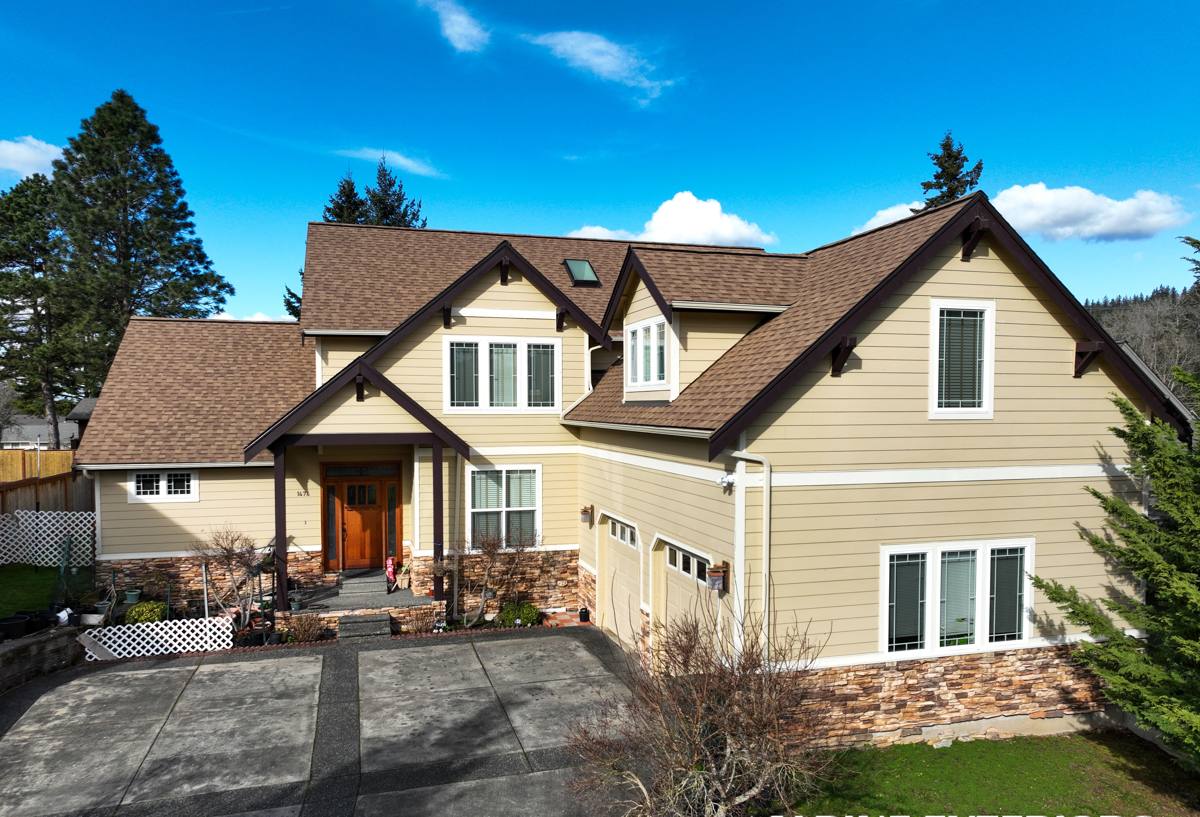
What Lynden's Climate Actually Does to a Deck
Three things drive most of the deck problems we see in this area:
- Persistent moisture. Whatcom County doesn't get flash floods so much as it gets weeks of steady dampness — the kind that never lets wood framing or fasteners fully dry out between rain events.
- Moss and algae. Any shaded, north-facing, or tree-covered section of a deck becomes a moss farm if the surface can hold moisture and organic debris. Moss doesn't just look bad — it holds water against the surface and makes boards slick and dangerous underfoot.
- Wind-driven rain and salt-influenced air. Rain rarely falls straight down here. It gets pushed under rail caps, into end grain, and into any gap that wasn't flashed or sealed. Combined with the mineral content in coastal-influenced air, unprotected metal fasteners and connectors corrode faster than homeowners expect.
None of this is unique to composite decking — it's the same climate that rots untreated wood joists and rusts cheap hardware. The difference is that composite boards, if the substructure underneath them is done right, don't care about moss, rot, or splintering the way wood does. They just need a builder who respects the water underneath them as much as the surface on top.
Why Moss Season Matters More Than It Looks Like It Should
"Moss season" in this part of Washington runs longer than most homeowners think — realistically, anywhere from late fall through early spring, and even into summer on shaded decks. A deck board that traps water (poor spacing, poor slope, debris-clogged gaps) will grow moss regardless of material. The fix isn't a different board — it's airflow underneath, correct gapping between boards, and a surface texture that sheds water instead of holding it. This is a design and installation issue as much as a material one.
What a Correct Composite Deck Installation Actually Involves
A composite deck is only as good as what's under it. Here's what we treat as non-negotiable on every job:
Substructure and Framing
Joists and beams get sized for the actual span and load, not the minimum the board manufacturer's warranty will tolerate. In a climate this wet, we favor treated lumber rated for ground contact where it's near grade, and we pay close attention to any spot where two pieces of framing meet — those joints are where trapped moisture does its damage.
Joist Protection
Composite boards last decades. Untreated or unprotected joists underneath them often don't, especially in a climate where the wood underneath a deck rarely gets a real chance to dry. Joist tape or an equivalent moisture barrier over the top of every joist is standard practice on our composite installs — it's a small material cost that prevents the framing from becoming the weak link in an otherwise long-lived deck.
Ventilation and Ground Clearance
Low, tight-to-grade decks are common on Lynden lots, and they're also the ones most likely to have moisture and moss problems underneath. Proper ventilation gaps, correct clearance from grade, and grading or drainage so water doesn't pool under the deck are part of doing this right — not upgrades.
Fasteners and Hardware
We use fasteners and structural connectors rated for exterior, corrosion-prone environments — stainless or coated hardware where it matters, hidden fastener systems compatible with the specific board profile, and correct fastener spacing so boards aren't fighting expansion and contraction over time. Composite boards move seasonally with temperature; hardware and gapping have to account for that or you get buckling and squeaks.
Flashing at the Ledger
Where a deck attaches to the house, the ledger board connection is the single most common source of hidden water damage in this region. Proper flashing — not just caulk — keeps water from working its way behind the ledger and into the house's rim joist. This is code-required and it's also just good practice in a climate that gets this much sustained rain.
Comparing Decking Materials for This Climate
Homeowners in Lynden usually end up choosing between three real options. Here's an honest comparison, not a sales pitch:
| Material | How it handles PNW moisture | Maintenance | Typical lifespan here |
|---|---|---|---|
| Pressure-treated wood | Absorbs moisture, prone to splintering, cupping, and moss growth if not resealed regularly | Annual cleaning and re-staining/sealing | 10–15 years before major repair or replacement |
| Capped composite | Moisture-resistant cap layer sheds water and resists moss adhesion; core doesn't rot | Periodic wash-down, no staining or sealing | 25–30+ years, backed by manufacturer warranty |
| PVC (cellular) | Fully synthetic, excellent moisture resistance | Low, similar to composite | Comparable to composite; different feel and cost structure |
We install capped composite decking on most Lynden jobs because it's the best balance of moisture performance, low maintenance, and cost for this specific climate. We're happy to talk through PVC as an option too — it has its own trade-offs in feel underfoot and price, and the right call depends on your budget and how the deck will be used.
Our Process, Start to Finish
- On-site assessment. We look at your existing deck or the build site, note drainage, sun/shade exposure, ledger condition, and any moss or moisture issues already present.
- Design and board selection. We talk through board color, profile, and railing options, and size the substructure for your specific layout and load.
- Tear-out (if replacing). Old decking and, where needed, old framing come out. We inspect the ledger connection and framing underneath — this is often where we find the real story behind why the old deck failed.
- Framing and moisture protection. New or reinforced framing goes in, joist tape goes down, ledger flashing gets done correctly.
- Decking installation. Boards go down with correct gapping and hidden fasteners, working around any framing irregularities so the finished surface is flat and even.
- Rail, stair, and trim work. Railings, fascia, and stairs are finished to match the deck system.
- Final walkthrough. We go over the finished deck with you, including basic care so it stays looking right through the wet months.
What Drives the Cost of a Composite Deck
Every deck is different, but these are the factors that actually move the price up or down:
| Factor | Why it matters |
|---|---|
| Deck size and shape | Square footage and the number of angles, cutouts, or curves affect both material and labor |
| Height off grade | Taller decks need more substructure, stairs, and often railing — all add cost |
| Board tier and brand | Composite lines range from entry-level to premium; cap technology and color depth vary the price |
| Railing system | Composite or aluminum rail packages cost more than basic wood or cable but need far less upkeep |
| Tear-out complexity | Removing an old deck, especially one with hidden rot, adds labor before rebuilding even starts |
| Site access | Tight side yards or second-story decks slow material handling and add time |
We don't quote composite decking off a per-square-foot rule of thumb pulled from a national average — costs here depend on the specifics above, and we'll walk through them with you before giving a number.
Living With a Composite Deck in Whatcom County
The appeal of composite is low maintenance, not zero maintenance. A few honest realities:
- Boards still need an occasional wash-down — a garden hose and soft brush handle most of it; a pressure washer on a low setting works for buildup, but too much pressure can damage the cap surface.
- Leaves, needles, and organic debris that collect between boards or in corners should be cleared periodically, especially heading into the wet season — that's what feeds moss growth even on a moisture-resistant surface.
- Furniture, planters, and grills should have breathable feet or pads so trapped moisture doesn't sit in one spot for months.
- Even capped composite can develop a light surface film in constantly shaded, damp areas — a simple deck cleaner handles it; it doesn't mean the board is failing.
Ice and Freeze-Thaw
Lynden gets cold snaps most winters, and composite decking handles freeze-thaw cycling well — it doesn't crack or split the way older wood decking can once water gets into the grain and freezes. That said, ice melt products should be used sparingly and only ones labeled safe for composite surfaces; some chemical de-icers can affect the cap finish over time.
Why Hiring a Crew That Already Works in Lynden Matters
A lot of what makes a deck last here isn't in the manufacturer's install guide — it's knowing how water moves on a specific lot, how much sun a given yard actually gets through the year, and which framing details hold up against this particular climate versus a drier one the manufacturer's spec sheet was written for. A crew that works this area regularly has already seen what happens to decks that skip joist protection, skimp on ledger flashing, or get built too close to grade — and builds around those failure points as a default, not an upgrade.
It also matters for warranty support and follow-up. If a question comes up two years in — a squeak, a section that's holding water, a railing connection that's loosened — a local crew can get back out to your property without a multi-hour drive being part of the equation, and without having to relearn your deck's layout from scratch.
Questions Worth Asking Any Contractor Before You Hire
- Do you use joist tape or an equivalent moisture barrier under composite boards?
- What fastener and hardware grade do you use, and is it rated for this climate?
- How is the ledger board flashed where the deck meets the house?
- What's the ventilation and clearance plan for low decks or shaded areas?
- What does the manufacturer's warranty actually cover, and does your installation meet its requirements?
- Can you show examples of decks you've built in this area, not just in the region generally?
Ready for an Honest Look at Your Deck
Whether you're replacing a tired wood deck that's finally lost the fight with the weather, or building new, we'll walk your property, talk through what your specific lot needs, and give you a straightforward estimate — no pressure, no upsell on things you don't need. Fill out the form below and we'll get back to you to schedule a time to take a look.