 Ferndale Siding
 Deck Repair in Lynden: Built for Whatcom County Weather
Lynden sits inland from the salt water but still gets plenty of the same weather that beats up decks all over Whatcom County: long stretches of driving rain from October through May, heavy dew and fog off the surrounding farmland, and a moss season that can run nearly nine months of the year on anything that doesn't get direct afternoon sun. Add in salt-laden air that drifts in off Bellingham Bay and the Strait of Georgia on windy days, and you've got a climate that is quietly hard on wood, fasteners, and finishes even when a deck looks fine from a distance.
A deck that was built or last refinished more than five or six years ago in this area is usually further along in its decline than the homeowner realizes, because the damage that matters most — ledger board rot, joist decay, corroded hardware — happens underneath the boards you can see. This page is specifically about repairing decks for homes in and around Lynden, not a general overview of deck work. If you're trying to figure out whether your deck needs a patch job or a rebuild, this is written for you.
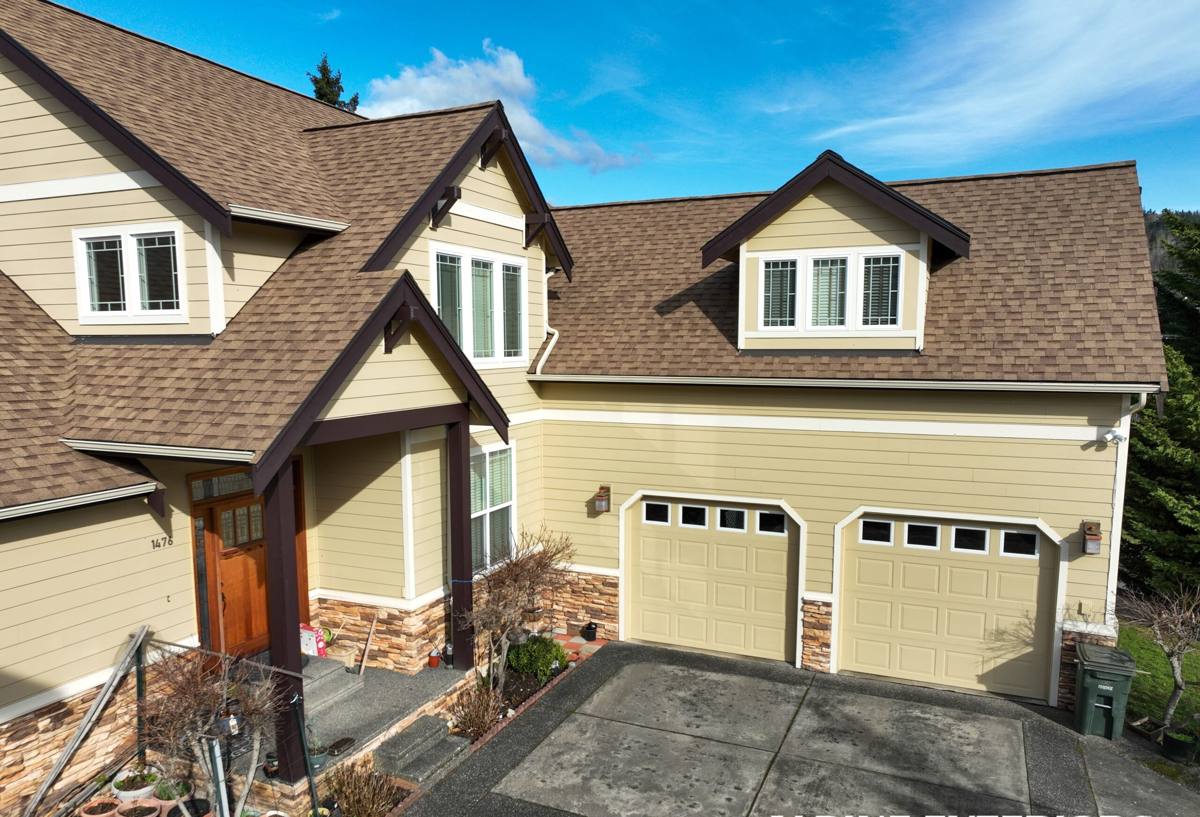
What Ferndale and Whatcom County Weather Does to a Deck Over Time
Every deck problem we see in this area traces back to one of three things: standing moisture, trapped moisture, or moisture combined with dirt and organic debris that never gets a chance to dry out.
- Driving rain pushes water sideways under railings, into end-grain cuts, and behind fascia boards where it has no easy way to evaporate.
- Moss and algae hold water against the wood surface and boards, keeping them damp long after a storm has passed — this is the single biggest reason decks in this area rot faster than the same deck would in a drier climate.
- Salt air accelerates corrosion on fasteners, joist hangers, and any exposed metal hardware, which weakens connections well before the wood around them looks bad.
- Freeze-thaw cycles, while milder here than east of the Cascades, still open up small cracks in finishes and caulking that let water in deeper each season.
None of this means a deck in Lynden is doomed — it means repairs have to address moisture management, not just cosmetic wear, or the same failure comes back in a year or two.
Signs a Lynden Deck Needs Repair
Most homeowners call us for one of two reasons: something obviously failed (a board gave way, a railing wobbled loose), or a home inspection or insurance review flagged the deck during a sale or renewal. Either way, these are the signs worth acting on before they become a safety issue:
- Soft or spongy decking boards, especially near the house or around stair stringers
- Visible gaps, cupping, or splitting in boards that weren't there a year or two ago
- Rust streaks running down from screws, nails, or joist hangers
- Railings or posts that move when pushed, even slightly
- Persistent green or black staining that comes back within weeks of cleaning
- A ledger board (where the deck attaches to the house) that looks discolored, swollen, or separated from the siding
- Stairs that feel uneven or have visible daylight between treads and stringers
The ledger board deserves special attention. It's the connection point between the deck and the house structure, it's usually the last part of the deck to dry after rain, and a failure there is a structural and safety issue, not a cosmetic one.
What a Correct Deck Repair Actually Involves
A repair that just replaces the boards you can see and skips everything underneath is a repair that fails again within a season or two around here. A proper job works from the structure out:
1. Structural Inspection First
Before any board comes off, we check the framing: joists, beams, posts, and the ledger connection. We're looking for soft spots, rot, and corroded or undersized hardware — not just for what's visibly broken, but for what's trending that direction.
2. Fasteners and Hardware
In this climate, hardware often fails before the wood does. Joist hangers, structural screws, and post connectors that have been sitting through repeated wet seasons frequently show corrosion that isn't visible until you're standing underneath looking up. Repair work should use hot-dip galvanized or stainless fasteners rated for ground contact and coastal exposure — not whatever matches what's already there if what's already there was part of the problem.
3. Decking Boards and Ledger Flashing
Individual board replacement is straightforward, but the ledger board area needs flashing that actually sheds water away from the house — a detail that's easy to skip and is the source of a lot of hidden rot we find on older Whatcom County decks.
4. Railings and Stairs
Railings take a lot of lateral stress and are often the first thing to loosen. Posts need solid blocking below the deck surface, not just surface-level screws into a rim joist.
5. Finish and Moisture Protection
New or replaced wood needs a finish suited to this climate — one that handles UV, moisture cycling, and won't need re-coating every single year to stay protective.
Repair vs. Replace: How We Help You Decide
Not every deck with problems needs a full rebuild, and not every deck that looks rough is actually in bad shape structurally. The honest answer depends on how much of the framing is still sound.
| Condition Found | Typical Path | Why |
|---|---|---|
| Surface boards worn, framing solid | Board replacement + refinish | Structure is fine, only the wear layer needs attention |
| A few soft joists or hangers, rest solid | Targeted structural repair | Localized rot can be cut out and reframed without touching the whole deck |
| Ledger board rot or separation | Ledger repair, mandatory | This connection affects the safety of the whole structure |
| Widespread rot in joists/beams | Partial or full rebuild | Patching individual members doesn't restore overall structural margin |
| Deck older than 20+ years, multiple issues stacking up | Full replacement usually more cost-effective | Repeated repairs on an aging structure often cost more over time than one rebuild |
We'll always tell you honestly which category your deck falls into rather than defaulting to the larger job.
Cost Factors for Deck Repair in This Area
Deck repair pricing varies a lot based on scope, so broad ranges are more useful than a flat number. What actually drives the cost on a Lynden repair job:
| Factor | Why It Matters |
|---|---|
| Extent of hidden rot | Framing repairs cost more than surface board swaps, and you often don't know the full extent until boards come off |
| Ledger board condition | Ledger repair involves siding and flashing work, not just deck framing |
| Decking material | Wood, composite, and PVC boards have different material costs and different labor time to install correctly |
| Railing and stair scope | Code-compliant railing and stair repair takes more time than flat deck surface work |
| Access and deck height | Elevated decks or ones with limited underside access take longer to inspect and repair safely |
Most straightforward board and hardware repairs land in the low-to-mid thousands; jobs that uncover structural rot in the ledger or framing run higher because they involve more demolition and rebuilding before the visible finish work even starts. We'll give you real numbers after we've actually looked at your deck, not before.
Our Process for Lynden Deck Repairs
- On-site inspection. We check framing, hardware, ledger connection, and surface condition before quoting anything.
- Honest scope conversation. We walk you through what we found, what's optional, and what's a safety item that shouldn't wait.
- Written estimate. Clear line items so you know what you're paying for and why.
- Repair work. Structural fixes first, then decking, railings, and finish — in that order, so nothing gets covered up before it's addressed.
- Final walkthrough. We show you what was done and what to keep an eye on going forward.
Moss, Mildew, and Salt Air: Ongoing Care After Repair
A repair is only as good as the maintenance that follows it in a climate like ours. A few habits make a real difference in how long a Lynden deck stays sound between service calls:
- Sweep leaves and organic debris off the deck regularly, especially in fall — this is what feeds moss growth
- Keep gutters and downspouts clear so water isn't dumping directly onto or near the deck
- Rinse off salt residue and grime after windy weather if the deck is exposed to open air
- Check railings and stair connections for movement once or twice a year
- Reapply finish on the schedule appropriate to the product used, not just when it visibly looks worn
- Watch the ledger board area specifically — it's the hardest spot to inspect yourself and the most consequential if it fails
Why a Local Crew Matters for This Job
Deck repair looks similar on paper everywhere, but the failure patterns we see on Lynden and greater Ferndale decks are specific to this corner of Whatcom County — the combination of persistent moss growth, salt-influenced air, and long rainy stretches produces different wear patterns than you'd see in a drier inland climate. A crew that works this area regularly knows where to look first, which hardware actually holds up here, and which finishes are worth the money versus which ones need redoing every year. That translates into fewer surprises during the inspection and a repair that's sized correctly the first time — not over-scoped to be safe, and not under-scoped in a way that has you calling again next season.
Get a Free Estimate for Your Lynden Deck
If your deck has soft spots, loose railings, or you're just not sure whether it needs a repair or a rebuild, we're happy to take a look. Fill out the form below for a free, no-pressure estimate — we'll tell you honestly what we find and what it would take to fix it right.