 Ferndale Siding
 Building a Deck That Can Actually Handle Lummi Island
A deck on Lummi Island lives a harder life than a deck built ten miles inland. The island sits out in the salt air off Whatcom County, catching wind-driven rain off the water and holding onto shade and moisture longer than mainland lots do. We build decks around Ferndale and out to Lummi Island regularly, and the difference in how a structure ages out there compared to a dry, sheltered lot in town is not subtle. Fasteners corrode faster. Wood stays damp longer between storms. Moss and algae get a head start every fall and don't let go until well into spring. None of that means you can't have a great deck on the island — it means the deck has to be built with those conditions in mind from the footings up, not patched later once problems show up.
This page is specifically about deck building for Lummi Island homes. If you're looking for general deck information for the Ferndale area, that's a separate conversation — what follows here is what changes when the site is an island property exposed to salt air and sustained coastal weather.
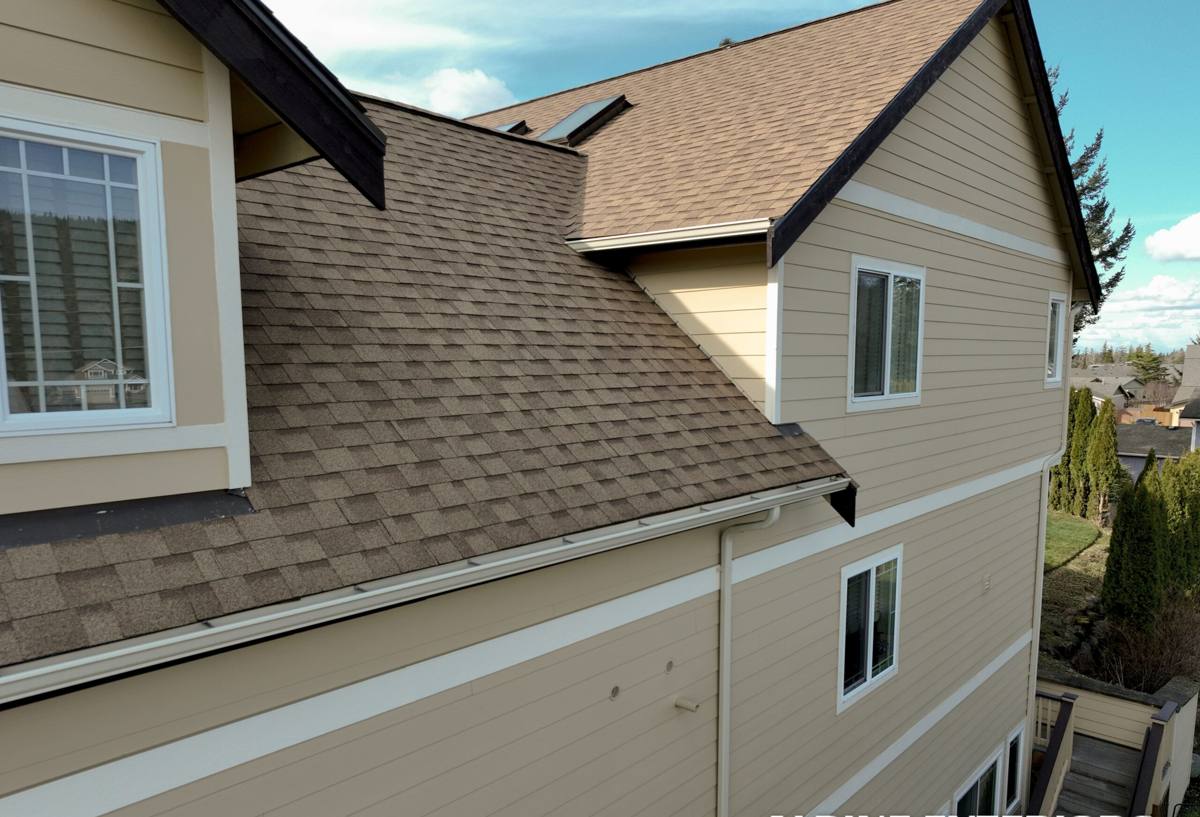
What Salt Air and Coastal Rain Actually Do to a Deck
It helps to understand the specific ways the island's environment attacks a structure, because it explains almost every material and construction choice we make out there.
Salt Air and Metal Corrosion
Airborne salt doesn't need direct ocean spray to do damage — it travels on wind and settles on any exposed metal, where it accelerates oxidation far faster than inland air does. Standard construction fasteners, brackets, and hardware that would last for decades in a dry inland yard can start showing rust and pitting within a few seasons this close to the water. Once corrosion sets into a structural fastener, it's not a cosmetic issue — it's a load-bearing one.
Driving Rain and Wood Moisture
Lummi Island gets its share of straight-down rain like anywhere in Whatcom County, but wind-driven rain off the water pushes moisture into places a calm rain never would — end grain, fastener holes, the underside of ledger boards, gaps between deck boards. Wood that stays wet longer between dry spells is wood that's more prone to rot, cupping, and fastener pull-through over time.
Extended Moss Season
Moss and algae need shade and sustained moisture to establish, and island lots with tree cover or north-facing exposure give them exactly that for a much longer stretch of the year than a sun-exposed inland deck. Left unaddressed, moss holds moisture directly against decking material and turns walking surfaces slick and slippery well past when a mainland deck would have dried out and shed it.
Decking Material Choices for a Marine Environment
There's no single "best" decking material for every situation, but some options handle salt air and prolonged moisture noticeably better than others. We walk through the real trade-offs with homeowners rather than pushing one product as a default.
| Material | How It Handles Salt Air & Moisture | Maintenance |
|---|---|---|
| Pressure-treated lumber | Resists rot with proper treatment, but fasteners and connectors need to be corrosion-rated to match | Periodic sealing/staining; inspect for surface checking |
| Cedar | Naturally moisture- and insect-resistant, ages gracefully, but softer and needs upkeep to hold color | Regular cleaning and refinishing to prevent graying and moss uptake |
| Composite decking | Won't rot or splinter; performs well against sustained dampness, though board core matters | Low — periodic washing to keep moss/algae from gaining a foothold |
| Tropical hardwoods | Very dense and naturally decay-resistant, handles moisture well | Occasional oiling; heavier and pricier to source and install |
Whatever the surface material, we're just as focused on what's underneath it. A composite deck surface over corroding hardware, undersized joists, or a poorly flashed ledger is still a deck that will fail early — the visible boards are only part of the equation.
Fasteners, Hardware, and Framing That Match the Environment
This is where a lot of decks built without coastal conditions in mind start to fail first, and it's usually invisible until something gives way.
- Stainless steel or hot-dip galvanized fasteners rated for coastal/marine exposure, not standard exterior-grade hardware
- Corrosion-resistant joist hangers, post bases, and structural connectors sized correctly for the actual load, not just "close enough"
- A properly flashed ledger board where the deck meets the house, since this is one of the most common points where wind-driven rain finds its way into framing
- Adequate airflow underneath and around the structure so framing can dry out between rain events instead of staying damp
- Footings set to the correct depth and bearing for the soil conditions on the lot, not a generic minimum
None of this is glamorous, and most of it disappears once the decking goes down. But it's the difference between a deck that's still solid in fifteen years and one that starts needing structural repairs in five.
Managing Moss, Algae, and Drainage Long-Term
Board Spacing and Airflow
Deck board spacing has to account for wood movement and drainage together. Gaps that are too tight trap debris and moisture between boards, which is exactly what moss and mildew need to take hold. We space and orient boards to let water shed and air move, which matters more on a shaded or tree-covered island lot than it does on an open, sun-exposed one.
Surface Drainage and Grading
Where the deck sits relative to grade, and how water moves underneath and around it, affects how quickly the structure dries out after a storm. A deck that pools water against posts or footings is one that stays wet far longer than it should.
Realistic Maintenance Expectations
No decking material on Lummi Island is going to be maintenance-free given the moss season the area gets. What changes by material and build quality is how much maintenance, and how forgiving the structure is if a homeowner falls behind on it for a season. We're upfront about that during the estimate rather than promising a deck that never needs attention.
Our Deck Building Process for Lummi Island Homes
The build process itself follows the same core steps as any well-built deck, but each step gets adjusted for the site and the environment.
- Site visit and assessment — evaluating sun/shade exposure, prevailing wind and rain direction, soil conditions, and existing drainage patterns on the lot
- Design and material selection — walking through decking, hardware, and framing options against your budget and how much upkeep you actually want to take on
- Permitting — handling the Whatcom County permit process for the project, including any additional review that applies to shoreline or waterfront-adjacent properties
- Foundation and framing — footings, ledger flashing, and structural connections built to marine-grade standards, not minimum code
- Decking installation — board spacing and fastening set up for drainage and airflow, not just appearance
- Final walkthrough — reviewing the finished deck with you, including a maintenance rundown specific to the material you chose
Access, Logistics, and Permitting Specific to the Island
Building on Lummi Island isn't the same logistical exercise as building on a mainland Ferndale lot, and it's worth being upfront about that. Getting crews, equipment, and material to the island depends on ferry access, which affects scheduling and how a project timeline gets planned out — we build that into the schedule from the start rather than treating it as a surprise delay. Material deliveries in particular need to be planned around ferry capacity and timing, especially for larger orders like framing lumber or bulk hardware.
On the permitting side, Whatcom County governs the process, and waterfront or near-waterfront properties on the island can be subject to additional shoreline or critical-area review depending on the specific lot. We handle that permitting process as part of the job rather than leaving it for the homeowner to sort out.
What a Lummi Island Deck Project Typically Costs
Every deck is different, but a few factors consistently move the price more on an island project than they would on a comparable mainland build.
| Cost Factor | Why It Matters on Lummi Island |
|---|---|
| Decking material | Composite and hardwood options cost more upfront but typically hold up longer against salt air and moisture |
| Hardware and fasteners | Marine-grade, corrosion-resistant hardware costs more than standard exterior-rated hardware, but it's not optional here |
| Site access and logistics | Ferry scheduling and delivery logistics can affect labor time and material handling costs |
| Foundation conditions | Soil and site conditions on the specific lot determine footing depth and framing requirements |
| Permitting scope | Shoreline or critical-area review, where it applies, adds time and sometimes design requirements |
We give straightforward, itemized estimates so you can see where the money is going and where you have real choices — and where corners simply shouldn't be cut given the environment.
Why It Matters to Hire a Crew That Already Works on the Island
A contractor who mostly builds decks on dry, inland mainland lots isn't necessarily equipped for what an island build in Whatcom County actually demands — not because the carpentry skills are different, but because the judgment calls are. Knowing to spec marine-grade hardware without being asked. Knowing how ferry logistics affect a realistic timeline. Knowing which lots need extra drainage attention because of shade and tree cover. Those aren't things you learn from a spec sheet — they come from having built and maintained decks in this specific environment before.
We work throughout Ferndale and the surrounding Whatcom County area, including Lummi Island, and we build every coastal-exposed deck to the same standard: hardware and framing that match the environment, not the minimum code requirement. If you're planning a new deck or replacing one that's showing its age out on the island, we're happy to take a look and put together a straightforward, no-pressure estimate using the form below.