 Ferndale Siding
 Windows Built for the Lummi Nation Waterfront Climate
Homes in and around Lummi Nation sit closer to salt water and open wind than almost anywhere else in Whatcom County. That location is part of what makes the area beautiful, and it's also exactly why windows fail here faster than they do ten miles inland. Salt-laden air corrodes hardware and finishes. Driving rain off Bellingham Bay and the Strait pushes water sideways into gaps that would stay dry on a more sheltered lot. And the long, damp moss season we get here means anything with a flat sill, an unsealed corner, or a weak drainage path is going to hold moisture for months at a stretch, not days.
Custom windows aren't a luxury upgrade in this setting — they're the only realistic way to get a window that actually fits the opening, seals correctly, and holds up to what this specific stretch of coastline throws at a house year after year. Off-the-shelf standard sizes force a contractor to pack shims and caulk around gaps, and every one of those gaps is a future leak point once the caulk ages out.
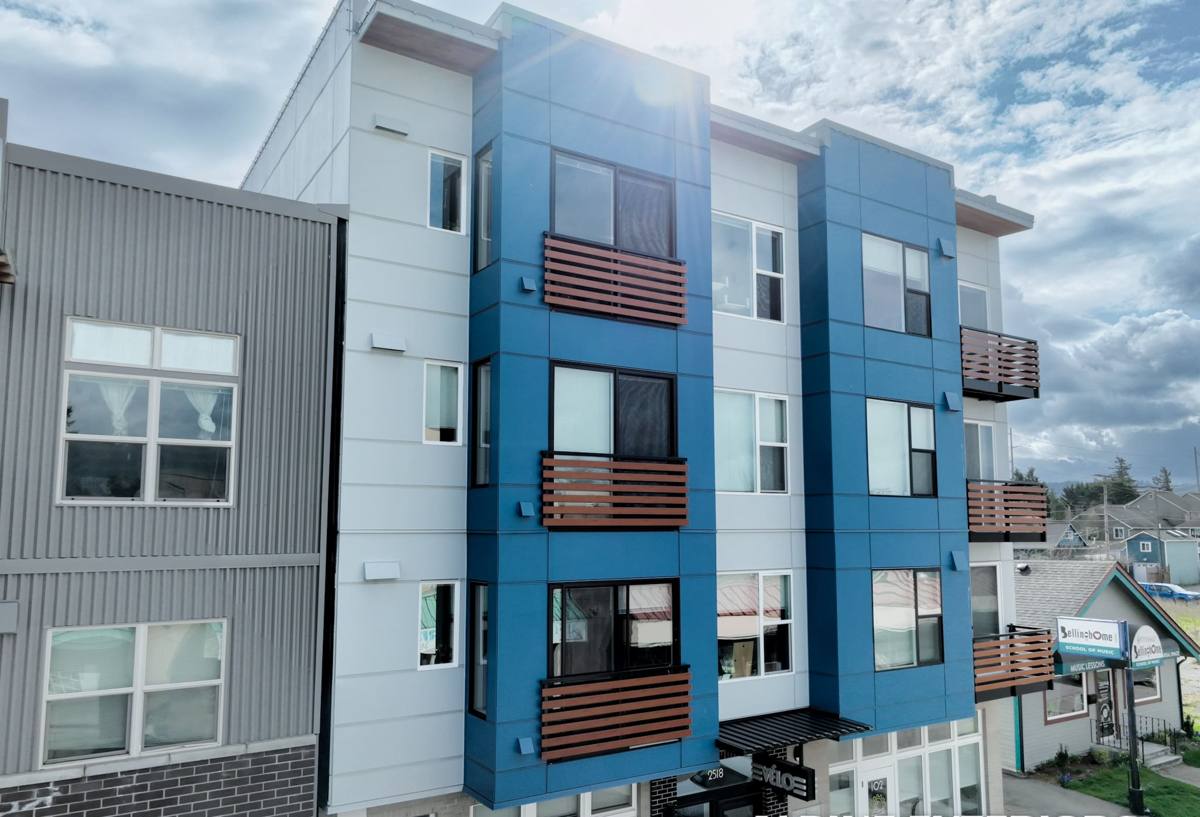
What "Custom" Actually Means on a Job Like This
Custom doesn't just mean a bigger price tag or a fancier catalog. It means the window is built or ordered to the exact rough opening of your house, not the other way around. For older homes around Lummi Nation — many built decades before current window standards — openings are rarely square, rarely a standard size, and often have settled slightly over the years. A custom window process accounts for that instead of forcing a stock unit to work.
Where custom sizing matters most
Bay and bow windows, older single-pane wood-frame openings being converted to modern glass, additions where the framing doesn't match the rest of the house, and any wall facing prevailing weather off the water. In all of these cases, a stock size either leaves a gap that needs to be built out with extra framing and flashing, or it doesn't fit at all.
How Salt Air, Rain, and Moss Actually Damage Windows
It helps to understand the failure pattern, because it explains why the fix has to be more than "put in a new window."
- Salt air: accelerates corrosion on hinges, cranks, screws, and aluminum cladding faster than standard warranty testing assumes for most of the country.
- Driving rain: wind-driven rain doesn't fall straight down — it gets pushed sideways and upward under sills and around trim, which is why flashing detail matters as much as the window unit itself.
- Moss and damp shade: tree cover and marine humidity keep exterior wood trim and sills wet for extended stretches, which is exactly the condition that lets rot start at any seam that isn't properly sealed or ventilated.
A window can be a good product and still fail early if the flashing, sill pan, and sealant details around it weren't done correctly for this climate. That's the part that separates a correct installation from a fast one.
Our Process for Lummi Nation Window Jobs
1. On-site assessment and precise measurement
We measure every opening individually — width, height, square, and depth — and check the condition of the framing and sill underneath the old window. On coastal homes, this step often reveals moisture damage that isn't visible from inside the house.
2. Material and glass selection
We walk through frame material, glass package, and hardware finish options based on the exposure of that specific wall — a window facing prevailing wind and rain off the water gets different treatment recommendations than one on a sheltered side of the house.
3. Removal and opening prep
Old windows come out carefully to protect interior and exterior finishes. We inspect the rough opening for rot or soft wood at this stage — this is the point where hidden water damage from years of a poor seal usually shows up, and it needs to be addressed before anything new goes in.
4. Sill pan and flashing installation
This is the step that gets skipped most often on lower-quality jobs and matters most in our climate. A proper sill pan gives any water that does get past the window a path back out, instead of a place to collect and rot the framing.
5. Window setting and sealing
The window is set plumb, level, and square, shimmed correctly so it isn't stressed out of shape, then sealed with materials rated for exterior, marine-adjacent exposure — not generic hardware-store caulk that dries out and cracks within a couple of seasons.
6. Interior and exterior finish work
Trim, casing, and any siding tie-in around the new window gets finished to match the rest of the house, with attention to keeping water shedding away from the new seams.
7. Final check
We confirm smooth operation, a tight seal, and that drainage paths are clear before we call the job done.
Frame Material Comparison for This Climate
| Material | Salt Air Performance | Maintenance | Typical Trade-Off |
|---|---|---|---|
| Vinyl | Good — won't corrode or rust | Low; occasional cleaning | Fewer color/finish options than wood or fiberglass |
| Fiberglass | Very good — dimensionally stable, resists corrosion | Low | Higher upfront cost than vinyl |
| Aluminum-clad wood | Fair to good if properly sealed and maintained | Moderate — exposed wood interior needs periodic attention | Classic look, but more sensitive to installation quality |
| Bare wood | Poor without diligent upkeep in this climate | High — regular painting/sealing required | We generally steer coastal clients away from this unless it's a historic-accuracy requirement, given the maintenance burden in salt air and moss season |
None of these are wrong choices in every situation — the right one depends on your home's style, your budget, and how much upkeep you actually want to commit to. We'll give you a straight answer on what fits your house rather than steering you toward whatever's easiest for us to install.
What Drives Cost on a Custom Window Job
| Factor | Why It Matters |
|---|---|
| Number and size of openings | More and larger windows mean more material and labor |
| Frame material | Vinyl, fiberglass, and clad-wood carry different unit costs |
| Condition of existing framing | Rot repair at the opening adds time and material beyond the window itself |
| Glass package | Double vs. triple pane, and coatings for sun or noise, change unit price |
| Access and site conditions | Second-story or hard-to-reach openings take longer to work safely |
| Trim and finish scope | Matching existing trim or siding around the new window adds labor |
Generally speaking, a single custom window replacement including proper flashing and finish work runs from the low thousands into the mid thousands depending on size, material, and site conditions — full-house jobs scale from there. We'll give you a specific number after we've actually looked at your openings, not a phone-quote guess.
Signs Your Current Windows Are Failing
- Fogging or moisture trapped between panes of double-glazed glass
- Visible gaps, drafts, or daylight around the frame
- Soft or discolored wood trim near the sill or corners
- Difficulty opening, closing, or locking the window
- Moss or persistent green staining building up on sills or trim below the window
- Noticeably higher heating bills compared to similar-sized homes nearby
- Paint bubbling or peeling on interior trim near the window
Any one of these on its own isn't necessarily an emergency, but a few of them together usually means water has been getting past the seal for a while.
Why a Crew That Already Works Lummi Nation Matters
A contractor who works this stretch of Whatcom County regularly already knows how exposed different sides of a lot tend to be, what flashing details hold up here versus what fails in a couple of years, and how to sequence work around our wet season instead of getting caught mid-job by a marine storm system. That's not something a crew commuting in from outside the area picks up on the first visit.
It also means accountability. If a seal doesn't hold or trim work needs a follow-up look, a local crew is a short drive away, not a phone number attached to a company that already moved on to the next region.
Maintaining New Windows in a Coastal, Mossy Climate
Even a correctly installed custom window benefits from basic upkeep in this environment. Rinse salt residue off exterior frames and hardware periodically, especially after storms. Keep gutters and any drainage near window sills clear so water isn't sitting against the frame. Check caulking annually for cracking, since even good sealant has a service life. And keep an eye on moss buildup on sills or nearby trim — catching it early is a lot easier than dealing with the wood damage that follows months of unchecked growth.
Get a Straight Answer for Your Home
If you're dealing with drafty, foggy, or hard-to-operate windows on a Lummi Nation property, we're happy to come take a look, measure your openings, and give you an honest assessment of what's actually going on — no pressure, no upsell. Fill out the form below to schedule a free estimate.