 Ferndale Siding
 Roof Repair Built for Lynden's Weather, Not a National Playbook
Lynden sits inland from Ferndale but still gets the same wet, marine-influenced weather pattern that defines Whatcom County: long stretches of drizzle, heavier driving rain off the fall and winter storm systems, and a moss season that can run eight months or more if a roof gets no sun exposure. Add in salt-tinged air moving up from the Strait of Georgia and Bellingham Bay on windier days, and you've got a climate that is genuinely harder on a roof than most manufacturers' warranty language assumes. We repair roofs in this area because we work in this area — not as a stop passing through.
A roof repair here isn't just patching a leak and moving on. It's understanding why that specific spot failed, whether the cause is still active, and whether a repair is even the right call versus a partial or full replacement. That's the approach behind every job we take on in Lynden and greater Ferndale.
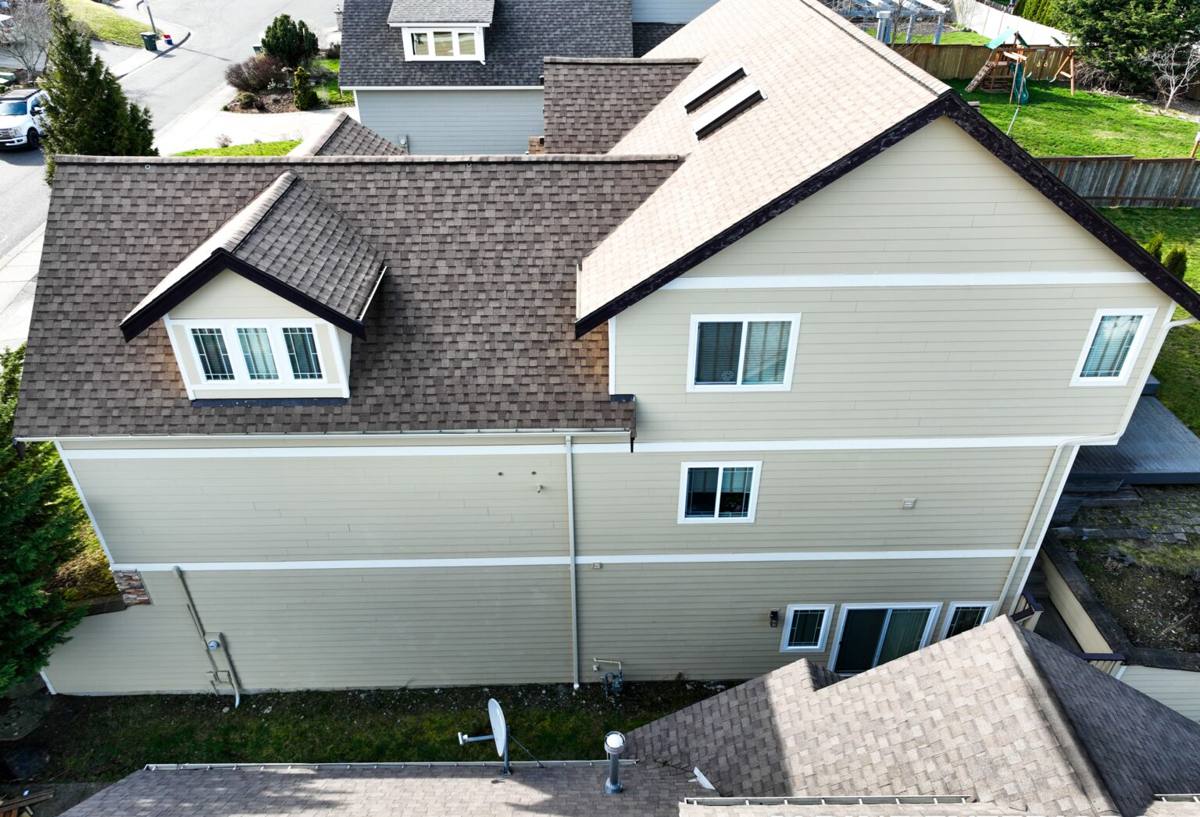
Why Local Roofs Fail Here Specifically
Moss and Organic Growth
Moss doesn't just look bad — it holds moisture against the roofing material long after the rest of the roof has dried out, and its root structure works into shingle granules and seams over time. North-facing slopes and roofs shaded by mature trees, common in and around Lynden's more wooded lots, are the first to show it. Left unmanaged for a few seasons, moss growth can lift shingle edges and create channels for water to travel sideways under the roofing layer instead of running off.
Driving Rain and Wind-Driven Water
Straight-down rain rarely causes leaks on a roof in decent condition. The damage shows up when wind pushes rain sideways and up under flashing, ridge caps, and shingle laps — exactly the kind of weather Whatcom County sees several times a winter. Repairs that don't account for wind direction and pressure just fail again in the next storm.
Salt Air and Metal Fatigue
Homes closer to the water carry a low but steady salt content in the air, which accelerates corrosion on exposed metal — flashing, fasteners, vent boots, and gutter hardware. It's a slower failure mode than a storm-torn shingle, but it's a common root cause when a roof develops a leak with no obvious impact damage.
Temperature Swings and Material Aging
Whatcom County doesn't get extreme heat, but the freeze-thaw cycles in winter and the expansion-contraction cycle roofing materials go through year-round both add up. Sealants dry out and crack, nail heads back out slightly, and shingle edges curl. None of that is dramatic on its own, but it's usually where a repair starts.
Signs a Lynden Roof Needs Repair Now
- Water stains on interior ceilings or upper walls, especially after a windy rain event
- Granules collecting in gutters or at downspout discharge points
- Visible moss or dark streaking concentrated on one slope
- Curling, cupping, or missing shingles, particularly around ridges and edges
- Flashing that looks lifted, rusted, or separated around chimneys, skylights, or wall intersections
- Soft or spongy spots when walking the roof (a job for us, not a DIY inspection)
- Daylight visible through the roof deck from inside an unfinished attic
Any one of these on its own doesn't necessarily mean a major problem. Several together, or anything involving interior water stains, usually means it's time for an actual inspection rather than a guess.
What a Correct Roof Repair Actually Involves
A roof repair done right starts with figuring out the actual water path, which is not always where the stain shows up inside the house. Water can travel along rafters or sheathing for several feet before it drips somewhere visible. We trace the problem back to its source before opening anything up.
Our Repair Process
- Inspection. We walk the roof (weather permitting) and check flashing, penetrations, valleys, ridge lines, and the general condition of the field shingles or roofing material — not just the area where the leak showed up.
- Diagnosis. We identify the actual cause — failed flashing, aged sealant, wind-lifted shingles, moss-related deck saturation, or something else — and explain it in plain terms.
- Scope and estimate. You get a clear, written explanation of what needs to happen and why, including whether a targeted repair makes sense or whether the roof's overall condition means a repair is a short-term fix at best.
- Repair. Matching materials as closely as possible, proper flashing technique (not just caulk over a gap), and attention to how the repair integrates with the surrounding roofing so it sheds water the way the rest of the roof does.
- Cleanup and check. Debris cleared, gutters checked for blockage from the work, and a final look to confirm the fix is sound.
We do not caulk over symptoms and call it done. A bead of sealant over a cracked pipe boot might buy a season, but it's not a repair — it's a delay, and we'll tell you that up front if that's what's being offered elsewhere.
Repair vs. Replacement: How We Help You Decide
Not every roof problem needs a full replacement, and not every leak should be patched indefinitely. The honest answer depends on the roof's age, how localized the damage is, and what shape the rest of the roofing and decking are in.
| Situation | Repair usually makes sense | Replacement worth discussing |
|---|---|---|
| Roof age | Under 15-18 years, otherwise sound | Approaching or past expected lifespan |
| Damage extent | Isolated — one slope, one penetration, one valley | Spread across multiple areas or slopes |
| Moss/organic growth | Light, treatable, no deck saturation | Heavy, long-term, deck showing soft spots |
| Underlying material | Shingles/decking still flexible and intact | Widespread granule loss, brittle material |
| History | First repair in this area | Same spot repaired more than once already |
If a roof is genuinely repairable, we repair it — a full replacement isn't the right recommendation just because it's a bigger job. But if a roof has reached the point where repairs are just chasing new leaks every season, we'll say so plainly and lay out what replacement would look like, with no pressure either way.
Materials and Techniques We Use for Repairs
Most homes in the Lynden and Ferndale area are roofed in asphalt composition shingles, with some metal roofing on newer builds or outbuildings. Repair materials need to match or closely complement what's already on the roof — mismatched shingle profiles or inconsistent flashing metal can create new water paths instead of closing old ones.
- Flashing repair/replacement: Step flashing, counter-flashing, and valley flashing done in corrosion-resistant metal, properly layered with the roofing material rather than sealed on top of it.
- Shingle replacement: Matched as closely as possible in style and, where the roof isn't too weathered, color — with proper nailing pattern and sealant strip activation.
- Vent boot and penetration seals: Rubber and plastic boots degrade faster than the shingles around them and are a very common repair on roofs 10+ years old.
- Ridge cap repair: Ridge caps take the most direct wind exposure on the roof and are often the first thing to lift in a storm.
- Moss treatment and prevention: Careful removal (not aggressive scraping that damages granules) plus zinc or copper strip installation where appropriate to slow regrowth.
A Note on Moss Control
Pressure washing a mossy roof is one of the fastest ways to strip granules and shorten a roof's remaining life. We use low-impact removal methods and, where it makes sense, install zinc or copper control strips near the ridge — rain washing over these strips releases a small amount of metal ion that inhibits regrowth over time. It's not an instant fix, but it's a maintenance approach that doesn't damage the roof to solve a cosmetic and moisture problem.
Why It Matters That We Already Work in Lynden and Ferndale
A roofing crew that only shows up in this area once doesn't carry the local knowledge that actually speeds up diagnosis — which slopes in this part of the county take the worst wind-driven rain, how fast moss regrows on a shaded lot near tree cover, which flashing details tend to fail first on homes built in a particular era locally. That knowledge shortens the time between "we have a leak" and "here's exactly what's wrong and what it costs to fix."
It also means we're not disappearing after the invoice is paid. If a repair doesn't hold — which is rare, but weather is weather — we're a local call, not a number that rings a call center three states away.
What to Expect on Cost
Roof repair costs vary a lot based on what's actually wrong, and we don't think it's honest to publish a flat number that doesn't reflect that. Broadly:
- Minor repairs (a section of flashing, a few shingles, a vent boot) tend to be the least expensive category of roofing work.
- Repairs involving a valley, chimney flashing, or a larger area of shingle replacement cost more due to the labor and material matching involved.
- Roofs needing access equipment for steep pitch or height, or with layered/older roofing underneath, can run higher regardless of the repair size.
We give a firm, written estimate after inspection — not a phone-quote guess — so you know what you're agreeing to before anything starts.
Simple Maintenance That Extends Your Roof's Life Here
- Keep gutters clear so water isn't backing up under the roof edge, especially during fall leaf drop and after windstorms
- Trim back tree limbs that shade a roof slope, which reduces both moss growth and debris buildup
- Have flashing and penetrations checked every few years, not just after a leak shows up
- Address moss while it's light rather than letting it establish over multiple seasons
- Get a post-storm check after any significant windstorm, even if nothing looks obviously wrong from the ground
None of this replaces a professional inspection, but it's the difference between catching a small issue early and discovering it as a ceiling stain in February.
If you're dealing with a leak, moss buildup, or storm damage on a roof in Lynden or the Ferndale area, we're glad to take a look and give you a straight answer — repair, monitor, or replace. Reach out below for a free, no-pressure estimate.