 Ferndale Siding
 Composite Decking Built for Sudden Valley's Lake Whatcom Conditions
Sudden Valley sits in one of the shadiest, dampest pockets of Whatcom County. Between the tree canopy, the humidity coming off Lake Whatcom, and the long stretch of gray months every year, decks here take a beating that decks in drier, sunnier parts of the county simply don't. We build and replace composite decks for homeowners throughout this area, and almost every job starts with the same conversation: the old deck failed early because it was built for a different climate than the one it actually sits in.
Composite decking done right holds up to that environment far better than wood, but "composite" isn't one product with one installation method. The board you choose, the substructure underneath it, and the way it's fastened all matter more here than they would somewhere drier. This page covers what actually makes a composite deck last around Sudden Valley, and what we do differently because of it.
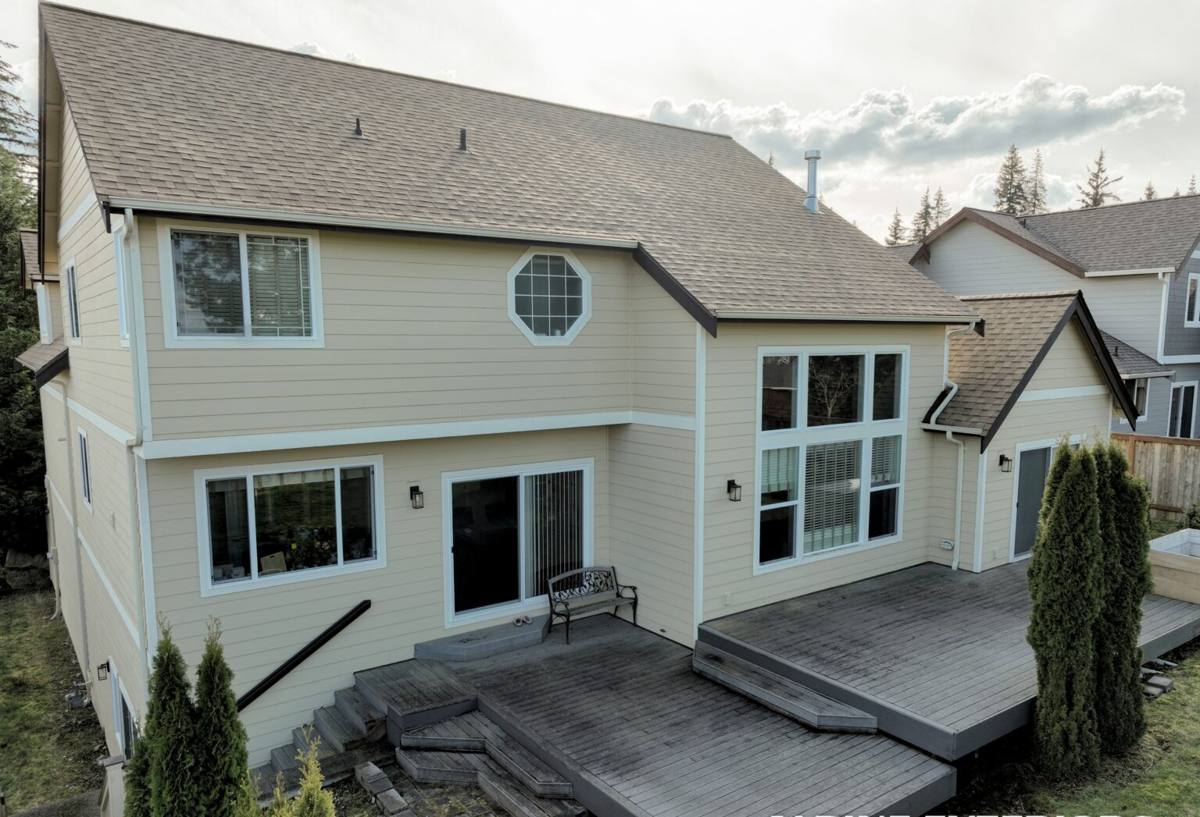
Why This Climate Is Hard on Decks
A few things stack up against decks in this part of Whatcom County:
- Shade and moisture retention. Tree cover keeps decking wet longer after rain, which is exactly the condition moss, algae, and mildew need to take hold.
- Long moss season. Much of the year is cool and damp enough for moss to establish on any surface that doesn't dry out quickly or shed water well.
- Driving rain and wind off the lake. Wind-driven rain gets pushed sideways into railings, fascia boards, and ledger connections — areas that stay dry on a more sheltered lot.
- Salt-tinged air. Whatcom County's marine air carries enough salt content to accelerate corrosion on the wrong fasteners and hardware over time, even away from the immediate shoreline.
None of this is unique to Sudden Valley on its own, but the combination — shade, moisture, wind exposure, and salt air together — is what separates a deck that looks good for two years from one that holds up for two decades.
What Happens When a Deck Isn't Matched to This Environment
The failures we see most often here aren't dramatic. They're slow: a green film building up on boards that never fully dry, fasteners bleeding rust stains into the decking, a substructure that stays damp long enough to rot from below while the top surface still looks fine. By the time a homeowner notices something's wrong, the damage is usually already under the boards, not on top of them.
What a Correct Composite Deck Installation Involves Here
Substructure First
The framing underneath a composite deck matters as much as the decking itself, arguably more in a shaded, damp setting. We use pressure-treated or composite-compatible framing, keep joist spacing tight enough to prevent flex and board creep, and make sure there's real airflow underneath the deck instead of a sealed, damp cavity. Ledger board attachment to the house gets flashed and sealed properly — this is the single most common failure point we find on older decks in this area, and it's invisible until there's a real problem.
Hardware That Matches the Air
Standard fasteners corrode faster in this county's marine-influenced air than most homeowners expect. We use corrosion-resistant, coated fasteners and hidden fastening systems rated for the exposure, not whatever's cheapest at the hardware store. It costs a little more up front and saves the deck from rust streaking and loosening boards years down the road.
Board Selection for Shade and Moss
Not every composite board handles a shaded, damp lot equally well. Capped composite boards — with a plastic polymer shell wrapped around a wood-plastic core — resist moisture absorption and give moss and algae less to grip onto compared to uncapped composite or traditional wood decking. Surface texture matters too: a deeply grained or heavily textured board can trap moisture and organic debris longer than a board with a cleaner surface profile.
Drainage and Airflow
Water has to have somewhere to go. We grade and gap decking correctly, keep the substructure ventilated, and where a covered or low-clearance deck is involved, we plan for drainage underneath so water isn't sitting against framing after every rain.
Comparing Decking Options for a Sudden Valley Lot
| Material | Moisture / Moss Resistance | Maintenance | Typical Lifespan |
|---|---|---|---|
| Pressure-treated wood | Absorbs moisture, needs regular sealing to resist moss and rot | Annual cleaning, periodic sealing/staining | 10–15 years in shaded, damp settings |
| Uncapped composite | Moderate — core can absorb some moisture at cut ends and fastener points | Occasional washing | 15–20 years |
| Capped composite | High — polymer shell sheds water and resists moss/algae growth | Periodic rinsing, minimal upkeep | 25+ years, backed by manufacturer warranty |
Cost follows the same pattern: pressure-treated wood is the cheapest material to buy but the most expensive to maintain over time. Capped composite costs more upfront but is the option we recommend for lots with heavy shade and lake-driven humidity, simply because it needs the least fighting against the climate to stay looking right.
Cost Factors Specific to This Area
Every deck quote depends on a handful of variables, but a few come up more often on Sudden Valley properties than elsewhere in the county:
| Factor | Why It Matters Here |
|---|---|
| Site access and slope | Many lots have sloped terrain toward the lake, which affects footing and substructure work |
| Existing structure condition | Older decks in shaded areas often have hidden rot in framing that needs replacing, not just the surface boards |
| Board and hardware grade | Capped composite and marine-rated fasteners cost more but reduce long-term maintenance and callbacks |
| Drainage or under-deck work | Covered or low-clearance decks may need added drainage systems to keep the space below usable and dry |
Permits and Whatcom County Requirements
Deck work in unincorporated Whatcom County, including the Sudden Valley area, typically requires a building permit once the deck exceeds a certain height or is attached to the home — the specifics depend on size, height above grade, and whether it's a replacement or new structure. We handle the permit process as part of the job so homeowners aren't left figuring out county requirements on their own, and so the ledger attachment and framing are inspected and documented correctly.
Our Process
- On-site assessment. We look at sun exposure, drainage, existing structure condition, and how the deck will actually be used before recommending a board or layout.
- Honest material recommendation. We'll tell you where a lower-cost option makes sense and where it doesn't, based on how shaded and damp your specific lot is.
- Permitting. We pull the necessary Whatcom County permits and schedule inspections as required.
- Demo and framing. Old decking and any compromised framing come out; new substructure goes in with proper spacing, flashing, and ventilation.
- Decking installation. Boards go down with corrosion-resistant hardware and correct gapping for drainage and expansion.
- Final walkthrough. We go over care and cleaning specific to a shaded, lake-adjacent lot before we call the job done.
What to Check Before Hiring Anyone for This Kind of Job
- Do they ask about sun exposure and drainage, or just quote off square footage?
- Do they specify fastener and hardware type, or leave it vague?
- Will they pull the required county permit, or expect you to handle it?
- Do they explain framing and ledger work, not just the visible decking?
- Can they speak specifically to moss and moisture issues in shaded, damp settings — not just generic deck-building?
Why Local Experience Matters for This Job
A deck contractor who mostly works drier, sunnier lots elsewhere in the county may not think twice about board texture, fastener grade, or under-deck airflow — because on those jobs, it doesn't matter as much. Around Sudden Valley, those details are the difference between a deck that needs pressure-washing and moss treatment every year and one that stays clean with minimal upkeep. We work in this area regularly, so the substructure ventilation, hardware selection, and board choice aren't afterthoughts — they're the starting point for every quote we give.
Maintenance Once It's Installed
Even the best composite deck benefits from a little seasonal attention in this climate:
- Rinse or sweep off accumulated debris and standing moisture after long wet stretches, especially in shaded corners.
- Check gaps between boards periodically to make sure they haven't filled with debris that traps moisture.
- Inspect railing posts and stair connections yearly for any looseness, since wind-driven rain hits these points hardest.
- Address any moss on adjacent surfaces (walkways, stairs) promptly so it doesn't spread onto the deck itself.
If your deck in Sudden Valley is aging, moss-covered, or you're planning a new build on a shaded lakeside lot, we're happy to take a look and give you a straightforward, no-pressure estimate. Use the form below to get started.