 Ferndale Siding
 Storm Damage Roof Repair for Lynden Homes
Lynden sits in the open farmland east of Ferndale, in Whatcom County, and that open exposure changes how storms treat a roof. Where homes closer to the water deal with salt-laden air off Bellingham Bay, Lynden roofs take the fuller force of wind coming across flat fields with nothing to break it up, along with the same driving rain systems that move through the whole county. The result is a specific pattern of damage: wind-lifted shingle edges, debris strikes from trees and outbuildings, and a long, damp moss season that works into every seam a storm has already loosened. We repair roofs in Lynden and the surrounding Ferndale area regularly, and the calls we get after a wind event or heavy rain almost always show the same handful of problems.
Why the Same Storm Hits Differently Here
A storm that causes minor cosmetic wear on a sheltered roof can strip shingles clean off a roof with a long, unbroken wind run across a field. Lynden's mix of older farmhouses, newer developments, and outbuildings means we see everything from steep older roofs with decades of moss buildup to newer low-slope sections that trap water differently. What they share is exposure — to wind, to standing moisture, and to the freeze-thaw cycles that hit Whatcom County in the colder months and can turn a small crack into a real leak.
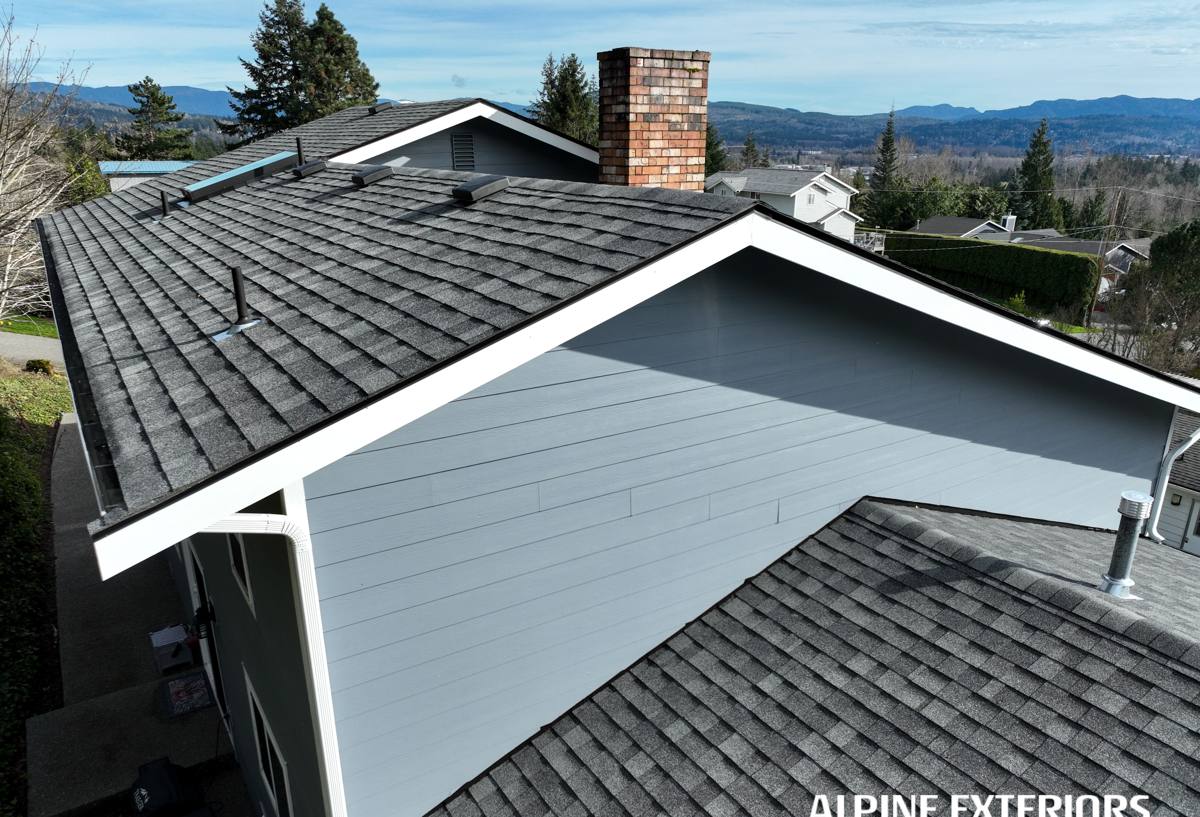
What Actually Counts as Storm Damage
Homeowners often assume storm damage means missing shingles, but a lot of the damage we find is less obvious and easier to miss from the ground.
- Wind-lifted or creased shingles — the sealant strip breaks even if the shingle doesn't blow off, leaving it vulnerable to the next storm.
- Granule loss from wind-driven rain and hail-adjacent debris, which shows up as bald patches and shortens the shingle's remaining life.
- Flashing separation around chimneys, vents, and valleys — often the actual source of a leak, even when the shingles nearby look fine.
- Impact damage from branches, cones, or debris carried by wind, which can crack shingles or dent metal flashing and vents.
- Moss and moisture intrusion that a storm accelerates by lifting shingle edges and letting water sit longer than it should.
Some of this is visible from the driveway. Most of it isn't, which is why a proper storm damage assessment means getting on or near the roof, not just looking up from the yard.
Why Waiting Costs More Than the Repair
A damaged roof section doesn't stay the same size. Water that gets under a lifted shingle during one storm has an easier path in during the next one, and Whatcom County's rain doesn't give a roof much recovery time between events. What starts as a small flashing gap can turn into saturated sheathing, insulation damage, or interior staining over the course of a wet winter. Moss compounds this — a moss mat holds water against the roofing material long after the storm has passed, which is exactly the kind of prolonged moisture exposure that shortens a roof's life even when the original storm damage was minor.
The practical takeaway: a roof that looks "mostly fine" after a storm is worth a real inspection, not a guess. Catching a lifted shingle or a cracked flashing seal early is a small repair. Catching it after a winter of rain has worked its way into the deck is a much bigger job.
What a Correct Storm Damage Repair Involves
Full Inspection, Not a Patch Job
We start by identifying every point of entry, not just the one that's dripping into the attic. That means checking shingle seals across the whole affected slope, flashing at every penetration, valleys, and the ridge line — because storm wind doesn't damage a roof in one neat spot, and a repair that only addresses the obvious symptom tends to fail again in the next storm.
Matching Materials and Method to the Roof
A repair should match the existing roofing in material, weight, and installation method — mismatched shingles or improperly fastened flashing create new weak points instead of fixing the old one. On older Lynden roofs with significant moss history, we also look at whether the decking underneath has held up, because a beautiful shingle repair over soft sheathing isn't a real fix.
Sealing, Not Just Covering
Proper flashing work, correct nail placement, and sealed transitions matter more than how the repair looks from the ground. We'd rather do a repair that's slightly less visible but fully sealed than one that looks tidy and leaks again in six months.
Our Process for a Lynden Storm Damage Call
- Assessment and documentation — we inspect the full roof, photograph the damage, and note anything relevant for an insurance claim, not just the repair itself.
- Honest repair-or-replace conversation — if the damage is contained and the roof has useful life left, we recommend a repair. If the storm exposed a roof that was already near the end of its service life, we'll say so plainly rather than patching something that needs full replacement.
- The repair — matched materials, proper flashing, and attention to the areas most exposed to wind and standing water on that specific roof.
- Cleanup and moss consideration — clearing debris from the repaired area and, where it makes sense, addressing existing moss so it doesn't undo the repair over the next wet season.
Repair vs. Replacement: What Actually Drives the Decision
Not every storm-damaged roof needs full replacement, and not every roof is worth repairing. These are the factors that actually decide it, not the size of the visible damage alone.
| Factor | Leans Toward Repair | Leans Toward Replacement |
|---|---|---|
| Age of roofing | Roof is well within its expected service life | Roof was already near end of life before the storm |
| Extent of damage | Damage confined to one section or slope | Damage spread across multiple slopes or the ridge |
| Decking condition | Sheathing underneath is sound and dry | Sheathing shows rot or prolonged water exposure |
| Moss history | Minor, surface-level growth | Long-term moss growth that's degraded the material |
| Cost range | Typically a few hundred to a few thousand dollars | A larger investment, but resets the clock on the whole roof |
We'll walk through where your roof actually falls on this table before recommending anything — the goal is the right call for the roof in front of us, not the bigger job.
Storm Damage and Insurance Claims
Many storm damage repairs are at least partly covered by homeowner's insurance, but coverage depends on your policy and the cause of the damage. What we can do is document the damage clearly with dated photos and a written assessment that you can bring to your adjuster. We're not your insurance company and won't promise a specific outcome, but a thorough, honest assessment tends to make the claims process smoother than a vague description of "storm damage."
Why Local Experience in Lynden Matters
A roofer who works this part of Whatcom County regularly knows the difference between damage caused by this storm and wear that was already building from years of moss and rain exposure — which matters both for the repair and for how the claim gets described. We also know which materials hold up to the wind exposure common on Lynden's open lots versus the more sheltered lots closer to Ferndale, and we're set up to respond quickly when a storm comes through, rather than adding you to a queue behind jobs across the whole region.
Reducing Storm Damage Before the Next One Hits
Some storm damage is unavoidable, but a roof in good condition going into a storm generally comes out better than one that was already compromised. A few things worth checking regularly, especially given Whatcom County's long wet season:
- Look for lifted or curling shingle edges after any significant wind event, even if nothing looks obviously wrong from the ground.
- Keep an eye on moss buildup — a thin layer is cosmetic, but a thick mat holds moisture against the roof and should be addressed before it spreads.
- Check that gutters are clear so storm water actually drains instead of backing up under the roof edge.
- Have flashing around chimneys and vents checked periodically — these are the most common leak points after a storm, even on roofs with healthy-looking shingles.
- Trim back branches that overhang the roof, since falling limbs are one of the most common causes of impact damage in wind events.
If you've had a storm come through Lynden or the Ferndale area and you're not sure whether what you're seeing is real damage or just cosmetic wear, we're glad to take a look. The estimate is free, there's no pressure to move forward, and you'll get a straight answer about what the roof actually needs. Fill out the form below to get started.