 Ferndale Siding
 Custom Decks Built for Lynden's Climate
A deck in Lynden lives a different life than a deck in a dry inland climate. Between the marine-influenced air moving in off the Salish Sea, the long stretch of wet months, and the moss and algae growth that comes with shade and standing moisture, an outdoor structure here is under near-constant pressure. A deck that looks fine the first summer can start showing soft spots, corroded hardware, or slick green film within a few seasons if it wasn't built with this specific climate in mind. We build and repair decks throughout Lynden and the rest of Whatcom County, and everything about how we frame, fasten, and finish a deck here is shaped by what this weather actually does to wood, composite, and metal over time.
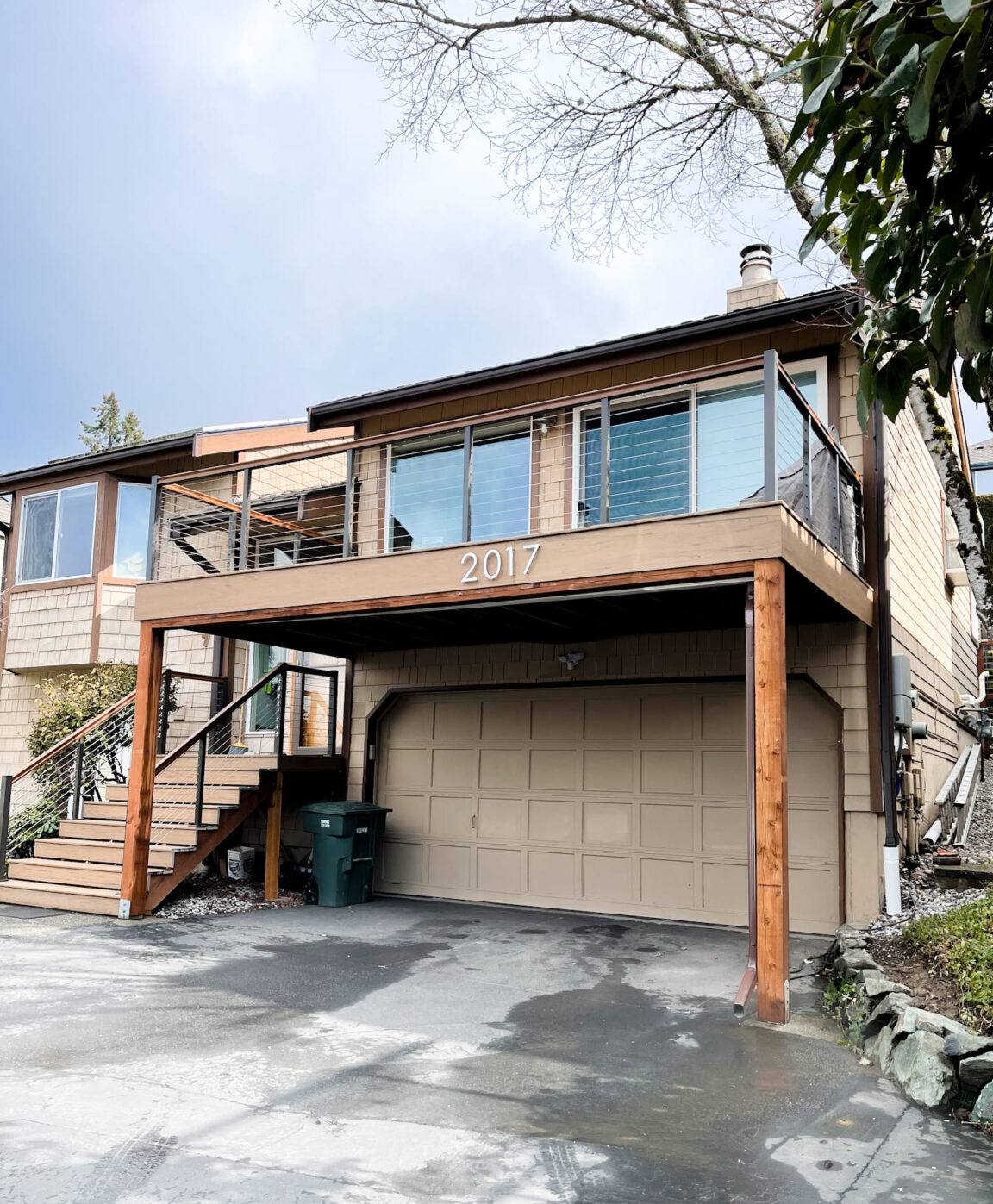
What Lynden's Weather Does to a Deck Over Time
Whatcom County's climate is defined by long wet seasons, salt-influenced air pushing in from Bellingham Bay and the broader Salish Sea, and short, mild summers. None of that is unusual for the Pacific Northwest, but it does mean a deck here needs to be built to shed water fast, resist corrosion, and stay clean enough to be safe underfoot.
Moisture Intrusion and Ledger Board Rot
The single most common failure point on a deck isn't the decking boards — it's the ledger board, the piece that bolts the deck to the house. If it isn't properly flashed and sealed against the siding, water works its way behind it every time it rains, and in this climate that's most of the year. Over time that moisture rots the ledger, the rim joist behind it, and sometimes the wall framing inside the house. This is the failure we see most often on older or DIY-built decks in this area, and it's almost always preventable with correct flashing detail.
Moss, Algae, and Slip Hazards
Lynden's shaded yards, tree cover, and long damp season are ideal conditions for moss and algae to take hold on horizontal wood and composite surfaces. Beyond the cosmetic issue, a mossy deck surface gets genuinely slick, especially on stairs. Board spacing, surface texture, and drainage underneath the deck all affect how fast moss establishes and how easy it is to keep clean.
Salt Air and Fastener Corrosion
Proximity to the Salish Sea means the air here carries more salt than a purely inland location, and salt accelerates corrosion in fasteners, joist hangers, and railing hardware. A deck built with standard interior-grade hardware will show rust bleed and weakening connections years earlier than one built with fasteners rated for coastal or wet-climate exposure. This is one of the most common shortcuts we see on decks that weren't built by a local crew.
Choosing the Right Decking Material for This Climate
There's no single "best" decking material for Lynden — the right choice depends on budget, how much upkeep you're willing to do, and how the deck sits relative to sun and shade. Here's how the main options compare for a Whatcom County property.
| Material | Moisture Behavior | Moss Resistance | Maintenance | Typical Lifespan |
|---|---|---|---|---|
| Pressure-treated wood | Resists rot with proper sealing; end grain still vulnerable | Low — needs regular cleaning | Annual sealing/staining recommended | 15-20 years with upkeep |
| Cedar | Naturally rot- and insect-resistant, but softer surface | Moderate | Periodic staining to maintain color and protection | 15-25 years |
| Composite decking | Does not rot; can trap surface moisture if not capped | Moderate to good depending on brand and texture | Occasional washing; no sealing/staining | 25-30+ years |
| PVC decking | Fully moisture-resistant, no organic material to rot | Good — smoother surfaces resist moss buildup | Lowest — soap and water cleaning | 30+ years |
We install all of these depending on what the homeowner wants, but we're upfront about trade-offs. Composite and PVC cost more up front and reduce the maintenance burden considerably, which matters in a climate where moss and moisture are constant. Wood costs less initially but only performs well long-term if it's actually maintained on schedule — and we're honest with clients that a wood deck left unsealed in this climate will show problems faster than the same deck inland.
What a Correctly Built Deck Actually Involves
A deck is a structure, not just a surface, and most of what determines whether it lasts happens below the boards you walk on.
Footings and Framing
Footings need to be sized and set below frost depth and bear on solid, undisturbed soil — something we check on site rather than assume, since drainage and soil conditions vary lot to lot even within the same neighborhood. Framing lumber should be rated for ground contact or exterior exposure where it's close to grade, and joist spacing should match the decking material's span rating, not just a generic standard.
Ledger Flashing
As covered above, this is the detail that determines whether the house stays dry. Correct ledger flashing integrates with the existing siding's water management, not just caulk applied over the top.
Fasteners and Hardware
We use corrosion-resistant, coastal-rated fasteners and joist hangers throughout, not just at points that are visible. Hidden hardware corroding out of sight is how structural failures happen years down the line without warning.
Drainage and Airflow Underneath
Decks built low to the ground or over patios need a plan for where water goes — proper slope, gapping, and sometimes a below-deck drainage system so the space underneath doesn't stay saturated and start growing moss or rotting framing from below.
Railings, Stairs, and Local Code
Railings and stair details aren't optional design flourishes — they're governed by building code, and Whatcom County enforces permitting on most new deck construction and significant deck replacements. Requirements typically address railing height, baluster spacing, stair rise and run, and guard requirements based on deck height above grade. We handle the permitting process as part of the job so homeowners in Lynden don't have to navigate county requirements on their own, and we build to code rather than to whatever looks acceptable, since a railing that doesn't meet spacing requirements is both a liability and a problem at resale.
Our Process From Estimate to Finished Deck
- On-site assessment: We walk the property, look at grade, drainage, sun/shade exposure, and how the deck will tie into the house.
- Design and material selection: We talk through layout, decking material, and railing style based on your budget and how much maintenance you want to take on long-term.
- Permitting: We handle the Whatcom County permit application and inspections tied to the project.
- Demolition of existing structure (if applicable): Old decking, framing, and any compromised ledger connections are removed and the area is checked for hidden rot before rebuilding.
- Framing and flashing: Footings, framing, and ledger flashing are installed first and inspected before decking goes down.
- Decking, railing, and stairs: Final surface material, railings, and stairs are installed and detailed.
- Final walkthrough: We go over the finished deck with you, including care instructions specific to the material you chose.
Maintaining a Deck Through Lynden's Moss Season
Even a well-built deck needs some seasonal attention in this climate. What that looks like depends on material, but the general checklist is similar across the board:
- Sweep leaves and debris off the surface regularly, especially in fall — trapped organic matter holds moisture and feeds moss growth
- Wash the deck surface at least once a year with a deck-safe cleaner to remove early moss and algae before it establishes
- Check and clear gaps between boards so water can drain through rather than pool
- Inspect railings and stair connections annually for looseness or corrosion at fastener points
- For wood decking, reseal or restain on the schedule recommended for the product — skipping a cycle in this climate shows up fast
- Keep the area underneath the deck clear of stored debris that blocks airflow and traps moisture
Cost Factors for a Lynden Deck Project
Every deck is priced based on its own specifics, but the main variables that move a project's cost are consistent across jobs.
| Factor | How It Affects Cost |
|---|---|
| Size and square footage | Larger decks require more framing, footings, and material |
| Decking material | Pressure-treated costs least up front; PVC and premium composite cost more but reduce maintenance |
| Height above grade | Taller decks need more substantial framing, stairs, and guard rails per code |
| Site access and grade | Sloped or hard-to-access lots increase labor and equipment needs |
| Railing style | Cable, glass, and custom railing systems cost more than standard baluster railings |
| Permitting complexity | Larger or higher decks typically require more inspection steps |
We give homeowners a real, itemized number for their specific property rather than a rough range pulled from a website, because the variables above genuinely change the total.
Why a Local Crew Matters for This Job
Deck building looks straightforward on paper, but the details that make a deck last in Whatcom County — flashing that handles this much rain, hardware that resists salt-influenced air, drainage that accounts for local soil, and permitting that matches county requirements — are things a crew learns by working here repeatedly, not by reading a general framing guide. We work in Lynden and Ferndale regularly, which means we already know how this climate treats a deck over its first five winters, not just its first summer. That's the difference between a deck that needs major repair in year six and one that's still solid at year twenty.
If you're planning a new deck or need to replace one that's showing its age, we're happy to walk your property and put together a straightforward, no-pressure estimate. Use the form below to get started.